Ghosts to Carry, Stories to Keep

Where memory meets the page, one moment at a time.

  • No Longer Just a Visitor: I

    The Move and Arrival in Łabędy

    I didn’t realise, not fully, how much of my future I had already set in motion. Those Polish lessons I’d taken — the ones I treated as a curiosity, a polite nod to a country I often visited — suddenly revealed themselves as preparation. Not deliberate or strategic or sensible, but the quiet kind that builds in the background while you’re busy doing something else. I had learned just enough Polish to feel brave, and nowhere near enough to be safe.

    Looking back now, the clues were everywhere. I just didn’t fully recognise them at the time. The decision to leave the Police came like a trapdoor opening beneath me. In 2009, I was planning seven more years of service; the next, I was staring at a pension calculation that said I could walk away in 2010. I remember the shock more than the freedom. What now? And then the suggestion — half‑serious, half‑hopeful — from Polish friends: “Come to Poland. Teach English. We’ll help you.”

    It sounded mad. It sounded perfect.

    I had spent three years visiting Poland, eating obiad in warm kitchens, being fed, guided, and looked after. I knew Katowice, Gliwice, Bytom. I knew zapiekanka and schabowy and the strange comfort of Polish fast food. I knew the rhythm of Polish hospitality, the way people fed you before they asked questions. But visiting is not living. I didn’t fully understand that yet.

    Two days after leaving the Police, I landed in Poland with two jobs lined up, a handful of phrases, and the belief that offers of assistance would smooth the way. In reality, I was painfully unprepared. I had underestimated everything — the language, the bureaucracy, the loneliness, the sheer weight of starting again.

    My first home was the small hotel — or rather hostel — in Łabędy. It wasn’t glamorous, but it was mine. A room, a bed, a door I could close. I bought a bułka and a banana from the nearby Biedronka store because I didn’t know what else to buy. I didn’t know how to order anything more complicated. But that wasn’t entirely true.

    The strange thing was… I did know some Polish. I knew how to ask for things. I could manage simple phrases. Later, I even became good at coping — holding out coins for a cashier to choose the right amount, rehearsing twenty everyday sentences until they came out fluently. But in those early days, knowledge wasn’t the problem. Confidence was. And something else too: I didn’t want to ask for help. I didn’t want to seem helpless, or be a burden, or admit how lost I really was.

    Asking if someone spoke English was too easy, and once a lady threw the question straight back at me: “Why should I speak English? I’m Polish. In Poland. You should speak Polish too.”

    She had a point.

    I didn’t want to ask for help.

    And then — as so often happens in Poland — someone stepped in.

    The details are simple: a meal offered, a gesture of concern, a kindness that arrived without ceremony. In those early days, food was not just food. It was rescue. It was reassurance. It was the reminder that I wasn’t entirely alone. The hospitality I had known as a visitor returned, but now it carried a different weight. It wasn’t just generosity; it was survival.

    Those first meals kept me afloat when everything else felt uncertain. They were the bridge between the life I had left and the life I was trying to build. Slowly, I began to understand something important: I hadn’t simply chosen Poland. In its own quiet way, Poland had made room for me too.

    Standing in that small hotel room, I realised something that had been building for years:

    This wasn’t a visit any more.

    This was my life now.

    And it would begin, as so many Polish stories do, with acts of friendship, extraordinary kindness — and food.

    The Hostel, the Restaurant, and the Awkward First Meals

    The hostel in Łabędy had a small restaurant attached. I remember it being divided into two areas, though I couldn’t tell you now what the difference was. I used it rarely, and I still don’t fully understand why. It would have made life easier. But something in me hesitated.

    Maybe it was shyness.

    Maybe it was the feeling of being an outsider.

    Maybe it was the atmosphere.

    In the evenings the place was busy, filled with men who seemed to be staying there to be close to the huge industrial zone down the road. Many were from other countries — Germans especially — and the whole place reminded me faintly of a motorway service‑station canteen. Not unfriendly, not unpleasant, just… functional. A place for people who knew exactly why they were there.

    Some days I didn’t know why I was there.

    Not yet.

    Breakfast was usually scrambled eggs and sausages, served without fuss by two young ladies, identical twins. Half-awake most mornings, I found myself wondering whether they ever swapped places just to confuse the guests. In my head they became “The Breakfast Twins”.
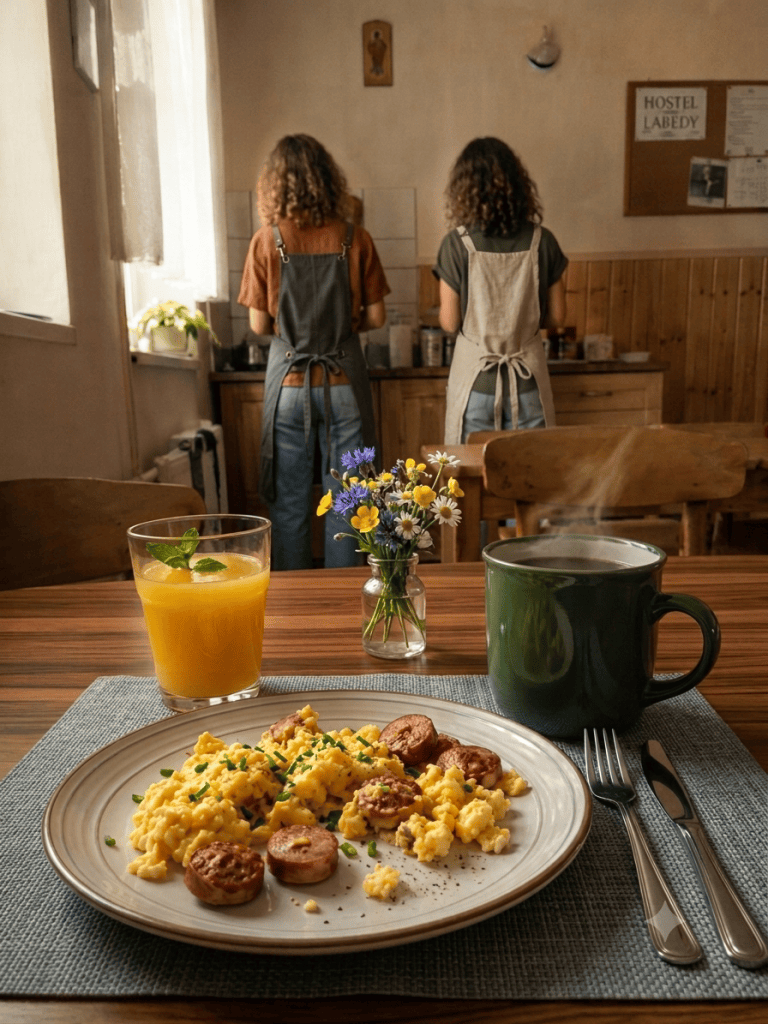
    Śniadania with the twins

    In the evenings, until ten., they served Polish dishes — proper meals — but I was teaching most afternoons and often didn’t return until after nine, and by the time I returned I felt too awkward to walk into a room full of strangers who all seemed to belong there more than I did. I used to look longingly through the window as I passed. There was draught beer, a television on the wall, people relaxing after work. It seemed impossibly easy for them. I often thought to myself that I might pop down later, but once I closed the door to my room, I never did.

    So I made do.

    Most evenings I bought a packet-soup, a banana and a bułka — if there were any left — from Biedronka and called it dinner. It wasn’t a choice. It was a retreat — a way of avoiding embarrassment, avoiding conversation, avoiding the possibility of getting something wrong.

    And of course, I did get things wrong.
  • Box 477: A change of life begins.
    • File Box: 477 | Archive Entry
    • FILE REF: 477-01
    • LOCATION: North Wales & Katowice, Silesia (2010)
    • TOPIC: From Police to TEFL Teacher. The Corporate Gloss & The Film-Noir Corridor. Outed By A Wristwatch.
    • READ TIME: 5–7 Minutes

    From Police to TEFL Teacher

    How did I retire from a highly skilled and vocational job I’d been doing for 23 years, leave on a Wednesday, and arrive in Poland two days later to work for a small language school in Gliwice? And how did I then, through another school — EMPIK, based in Katowice — end up teaching English to a group of remarkable people before I even stepped into a proper civilian classroom?

    The short version is this: four Polish friends I’d met in the UK were delighted that I wanted to experience life in their country. I’d grown close to two of them in particular through my police work in North Wales. They had volunteered to work with me on community cohesion projects, giving up their spare time and going far beyond what was expected. By 2010, they were back home, but when I mentioned my plan to retire and move, they promised to help in any way they could.

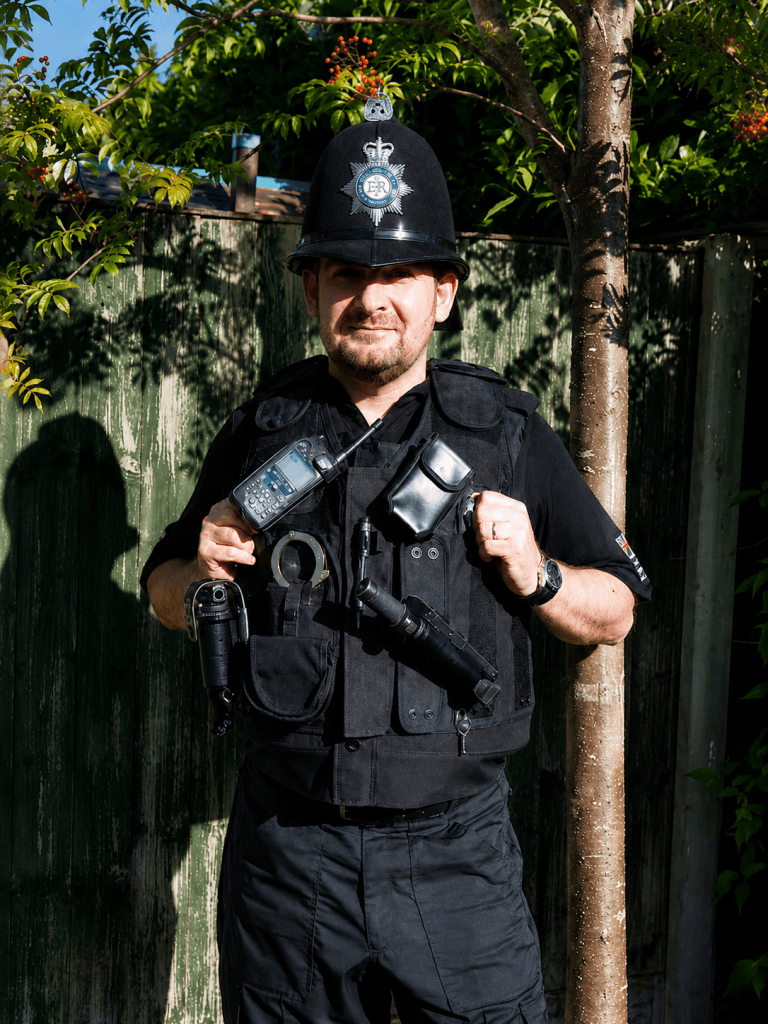
    Last day in uniform complete with non-issue wristwatch

    I didn’t rely solely on being a native speaker. I completed a TEFL qualification, extra modules on classroom management, and observed teaching practice at a local college. I wasn’t naive enough to think I could instantly transform into a seasoned educator, but I hoped my life experience and native accent might see me through. Still, after two decades in policing, nothing prepared me for the realisation that I didn’t actually know why half the things I said in English were grammatically correct. So I studied hard.

    True to their word, my friends arranged interviews, and I secured work with two schools: EMPIK in Katowice and Britam in Gliwice. The two couldn’t have been more different.


    The Corporate Gloss & The Film-Noir Corridor

    EMPIK was a large national chain — polished, corporate, and modern. It had glossy posters, glass doors, and a confident buzz that made you feel as if you’d walked into a lifestyle brand. Even the security guard wore a full uniform; she turned out to be one of the warmest people in the building, always greeting me with genuine kindness.

    My very first contract wasn’t inside a school at all — it was inside the Police Headquarters at Katowice. I was assigned to guide a group of officers through a grammar book ahead of the Euro 2012 tournament. The brief was strict: minimum two pages per lesson, review everything, answer all grammar points.

    “How many students?” I asked.

    “Eight police officers. Some have a very high command rank. Don’t let EMPIK down — this is an important contract.”

    I later learned I was replacing a native speaker who had simply stopped showing up to avoid answering complex linguistic questions. So, no pressure at all.

    I wouldn’t have survived those first visits without the guidance of Stefan. A spirited native of Katowice — a no-nonsense English philologist and a true force of nature. He had a class at HQ at the same time. He would meet me in Katowice centre, walk with me to HQ, and afterwards stand waiting on the freezing train platform just to ensure I caught the right train home. Sometimes his partner Jolanta joined us. Their loyalty was extraordinary.

    Inside headquarters, everything felt surreal. The sign-in book at the front desk was a masterpiece of bureaucratic precision. One evening I accidentally wrote on the wrong line; the desk officer huffed as if I’d defiled a national monument, prompting Stefan to turn crimson while explaining in rapid Polish that I was new.

    After signing in, Stefan would head up to his floor while I walked down endlessly silent corridors. I passed heavy doors sealed with wire and what looked like red sealing wax. The quiet was cinematic — pure Polish film noir.


    Outed by a Wristwatch

    I arrived at the briefing room with no intention of revealing my past. I wanted a clean slate. It felt absurd to walk in and announce, “Good evening — I used to do your job.”

    For weeks, they were polite, formal, and slightly amused by my attempts to explain conditionals. Then one evening, as we wrapped up, I felt a sudden shift in the room. One of the senior officers leaned forward, squinted at my arm, pointed directly at my wrist, and asked:

    “Pan Gary…We are curious… why does your watch say POLICE?

    I froze. My wristwatch — an inexpensive, sturdy model I’d bought off-duty in the UK simply because I liked the design — had the word POLICE printed across the face in bright, bold lettering.

    “Oh, it’s just a brand,” I stammered, trying to laugh it off. “Italian, I think.”

    She raised an eyebrow. “Tak, tak… but why buy a watch that says POLICE?”

    The entire class leaned in.

    I took a deep breath.

    “Well… actually, it might be a good time to tell you. I used to be a Police Officer. I was given all manner of uniform and equipment, but never a wristwatch. Not only that, but I only retired a month ago.”

    Grammar homework evaporated instantly. The formality dissolved into a barrage of genuine questions:

    “Where in the UK?”
    “Is British paperwork worse than ours?”
    “Did you have our kind of drunks?”

    Then came the big question: “Did you really patrol unarmed?”

    I explained that throughout my 23 years — mostly spent patrolling rural North Wales — like the majority of British police officers, I chose to work unarmed and often solo. My best tools for getting home safely weren’t firearms; they were communication, common sense, and building respect in the community.

    The room went quiet. Heads shook in disbelief. One senior detective admitted softly that while he had drawn his sidearm many times, he had never needed to fire it, but was always prepared to do so. In that short ten-minute exchange, something fundamental shifted. The invisible wall vanished, replaced by mutual professional respect.

    When our course finished at the end of spring, the final class was unexpectedly moving. As we parted ways, a divisional commander handed me his official business card, saying quietly, “Any problems. Anything you need. Please call me.”

    When I think back to those cold nights in Katowice now, the grammar rules blur. What remains is the sound of footsteps in echoing corridors, eight officers who trusted a stranger, and the glint of an old watch face catching the light.

    The worn POLICE watch

    The original POLICE watch, sadly no longer in working order

    Follow the story:

  • Morning Rain
    Morning Rain

    A quiet moment for a quiet morning.

    Morning Rain — Extended Yohaku

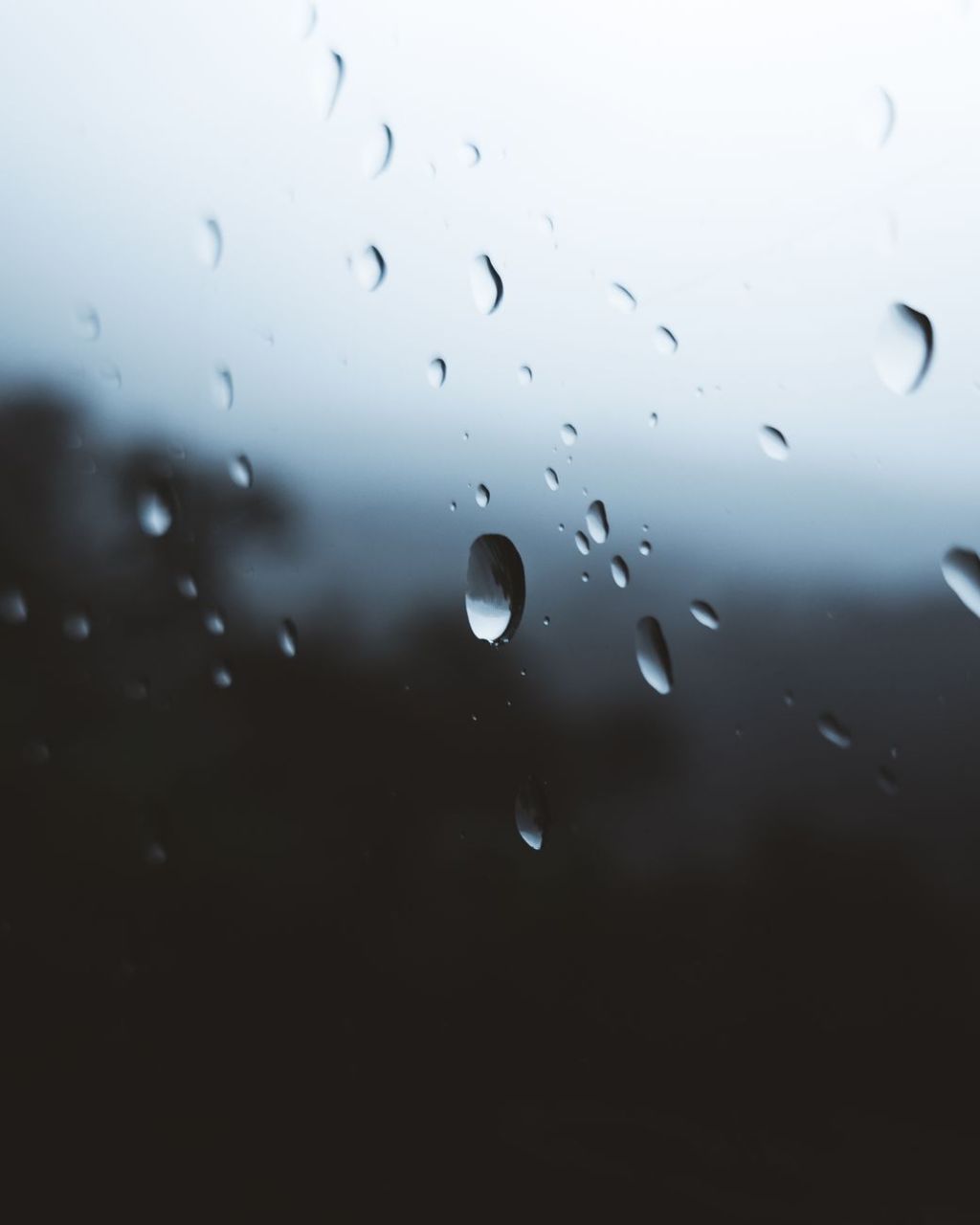
    I heard the rain first —
    soft taps against the bedroom window,
    a gentle insistence
    that morning had already begun
    without me.

    Still warm from deep sleep,
    I reached for my coat,
    dragging it with me
    as I stepped outside,
    half-dreaming,
    half-drawn by the sound.

    The rain was softer out there,
    a quiet falling
    that made no claim on the world.
    The only sound
    was the delicate drumming
    on the hood of my coat—
    a private rhythm,
    meant only for the one who listens.

    I stood still.
    Cool drops gathered on my face,
    each one loosening
    the last threads of sleep,
    washing them gently away.

    So I lifted my face to the sky,
    letting the morning rain
    wake me fully—
    body,
    mind,
    and soul—
    in the simplest way it knows.

    Five minutes,
    nothing more.


    Today the rain woke me. I put on a coat, stepped into dawn… and looked like a man who had forgotten slippers exist!

    Poranny deszcz — yohaku

    Usłyszałem deszcz —
    ciche stukanie o szybę,
    jakby poranek
    zaczął się beze mnie.

    Wciąż ciepły od snu
    sięgnąłem po płaszcz
    i wyszedłem,
    prowadzony dźwiękiem.

    Na zewnątrz deszcz był łagodny,
    spadał cicho,
    nie domagał się niczego.
    Tylko rytm na kapturze —
    dla tego, kto słucha.

    Stałem nieruchomo.
    Chłodne krople
    zmywały resztki snu
    z mojej twarzy.

    Unoszę głowę,
    pozwalając deszczowi
    obudzić mnie —
    ciało,
    umysł
    i duszę —
    w jedyny sposób, jaki zna.

    Pięć minut,
    nie więcej.


    Dziś obudził mnie deszcz. Założyłem płaszcz, wyszedłem na świt… i wyglądałem jak człowiek, który zapomniał, że istnieją kapcie!

    Morning Rain Illustration
  • Carried Forward: I, II, III

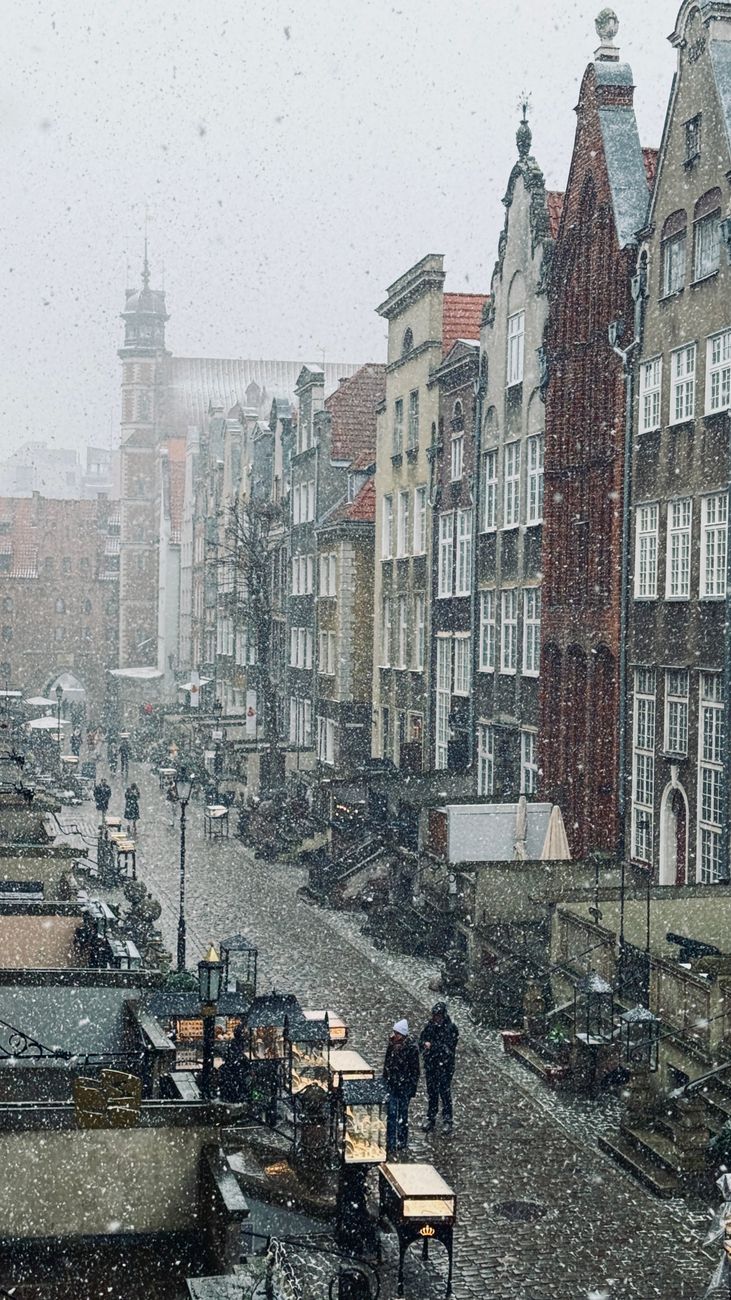
    Sometimes a memory returns the way snowfall does — quietly, without urgency, settling only where it’s welcome. I’ve been thinking about how certain people stay with us not through grand gestures, but through the small, unhurried ways they once shaped our days. This piece belongs to that kind of remembering: the kind that asks for nothing, carries no ache, and simply warms the room for a moment before moving on.

    There’s a Japanese concept, 余白 (yohaku) — the beauty of space, the meaning held in what is not said. This is a version of an earlier poem that I wrote that leans into that. It unfolds in three movements — a small triptych of remembering.

    I. The Soft Beginning

    If I speak your name now,
    it is only in the quiet —
    the way one touches a book
    long after the story has ended,
    still feeling the warmth of its pages,
    a light that arrived unexpectedly,
    staying just long enough
    to change the shape of my days —
    a shape I still recognise
    even if part of it still presses lightly on me.

    Slowly:
    faith first,
    then laughter,
    then the soft beating of your heart —
    where nothing needed to be said.

    Even now,
    when the world moves quickly,
    a thought of you returns
    like a hand on my shoulder —
    gentle, familiar,
    asking nothing.

    May joy find you —
    a light that lingers softly,
    easing the edges of the world,
    content to remain.

    And if a memory of us
    ever crosses your path,
    let it be a warm pulse,
    a quiet yes,
    a reminder that once,
    in the wide and restless world,
    we met with open hearts
    and were not afraid.

    II. The Held Moment

    There was a winter on the 7:14 train
    when I kept writing your name
    in the condensation on the window,
    tracing it with an index finger
    only to wipe it away with the back of my hand
    the moment someone turned their head.

    I did it in shower stalls, on steamed glass,
    a petty, repetitive crime
    long after you had stopped answering to it.
    I don’t do that any more.

    Now the habit has nowhere to put its hands.
    It stays inside the quiet:
    the specific rhythm of walking beside you,
    the sound of your coat against mine,
    the reflex of turning to speak
    into an empty kitchen.

    Even on the days that move too fast,
    you return like a flat palm
    between the shoulder blades—
    heavy enough to notice,
    asking for nothing.

    Let whatever you have now be easy.
    And if the thought of me catches you off guard,
    let it not be an apology or an ache—
    only the stubborn fact that once,
    in the middle of a noisy carriage,
    we looked straight into each other
    and did not turn away.

    III. The Peace After

    There came a time
    when the memory no longer leaned
    so heavily against the door —
    when it stopped asking
    for explanation,
    or apology,
    or anything at all.

    It didn’t vanish.
    It simply settled,
    like dust after a long breath,
    softening into the corners
    of ordinary days.
    I still think of you,
    but the thought arrives lightly now —
    not a pull,
    not a question,
    just a small warmth
    passing through the room
    without needing to stay.

    Whatever I once carried
    has thinned into something gentler,
    a shape without weight,
    a quiet recognition
    that what mattered
    doesn’t need tending any more.

    And if your name
    ever crosses my mind,
    it does so without ache —
    only the simple truth
    that we lived a moment
    that asked to be remembered,
    and I am at peace.

  • Day 3: A Snowy Trip to Wrocław: Part 2
    4–6 minutes

    Soon after, the train arrived.

    An emerging shape in the whiteness, slow and deliberate, like a creature pushing its way out of a snowdrift. The front was plastered in ice, snow packed into every crevice, the sides streaked white as if it had been travelling through a blizzard for hours.

    I was stunned. It didn’t look like public transport. It looked like a survivor. Something out of a European film — a post‑apocalyptic epic where trains still run because they must.

    I felt a jolt of awe. A kind of respect. One of my friends had once described being on a train that was forced to stop in deep snow, and how she and the other passengers had to walk through drifts carrying their luggage. She told me that story as we stood waiting for our own delayed train — opóźniony, a word I wrote down in the notes section of my phrasebook the moment I heard it. A rare event, she said, but real enough that it lived in the collective memory. Fingers and toes crossed it wouldn’t happen to us today, but it wasn’t impossible.

    I shouldn’t have been surprised to see the train arrive in conditions that back in the UK would have probably ground everything to a halt. But I was. Because this wasn’t the UK. This wasn’t a place where snow meant surrender. This was Silesia — stubborn, practical, quietly heroic.

    The doors opened with a groan. Warm air rushed out, fogging my glasses.

    And then — the part that felt so strangely European — you had to climb the steps to get inside. Not a smooth, level boarding like at home, but a proper step up into a carriage that felt older, heavier, more real. And it was the moment the adventure began.

    Inside the carriage, we found a compartment to ourselves. Once the door had been pulled shut, coats taken off, and we settled into the comfortable seats, it was wonderfully warm in that old railway way, radiators clanking with heroic inefficiency.

    The journey to Wrocław felt dreamlike.

    Outside, the snow softened everything into silhouettes: fields, factories, trees, villages sliding past in silence. Inside, my friends talked in Polish while I caught the occasional familiar word and pretended progress. One of my friends wore a red sweater — that detail alone is enough to anchor the whole scene in my memory. Her white coat hung up behind her.

    Red against white. Warmth against winter. A person against a landscape.

    Books and a bottle of iced tea on the small table.

    She sat by the window, and the snow outside wasn’t just falling — it was moving sideways, thick and relentless, as if the world beyond the glass had been erased and replaced with a white curtain. The train crawled through it, slow enough that you could feel every curve of the track, every hesitation of the engine. A gentle rocking motion, and beneath it a slow, subdued da‑dum — the wheels sounding half‑lulled by the snow.

    Inside, though, it was surreal. Quiet. Cocooned. Almost intimate.

    The compartment lights cast a soft yellow glow, and the red of her sweater seemed to absorb it, radiate it. She looked like the only point of colour in a monochrome world.

    I sat by the window feeling oddly peaceful, looked after, suspended between places.

    A remarkable journey, unhurried, moving at a speed allowed by the weather conditions outside.

    Wrocław itself was magical. Snow on the Rynek. Coloured buildings muted by winter light. Coffee and cakes in a café while flakes drifted past the windows. A city that felt elegant, theatrical, and faintly enchanted.

    I fell for it immediately.

    By the time we reached the Rynek, the day had caught up with me and was now several paces ahead, looking back with mild disappointment. Three days of new experiences, food, drink, history, the cold, the travel, the sheer sensory overload — all of it forming an orderly queue to remind me I was not, in fact, the rugged adventurer I’d imagined on the plane. A new country, a different culture, a language I’d only ever practised safely with friends suddenly alive all around me, a completely unfamiliar way of navigating trains and tickets and timetables. And this was still only halfway through the third day of my visit.

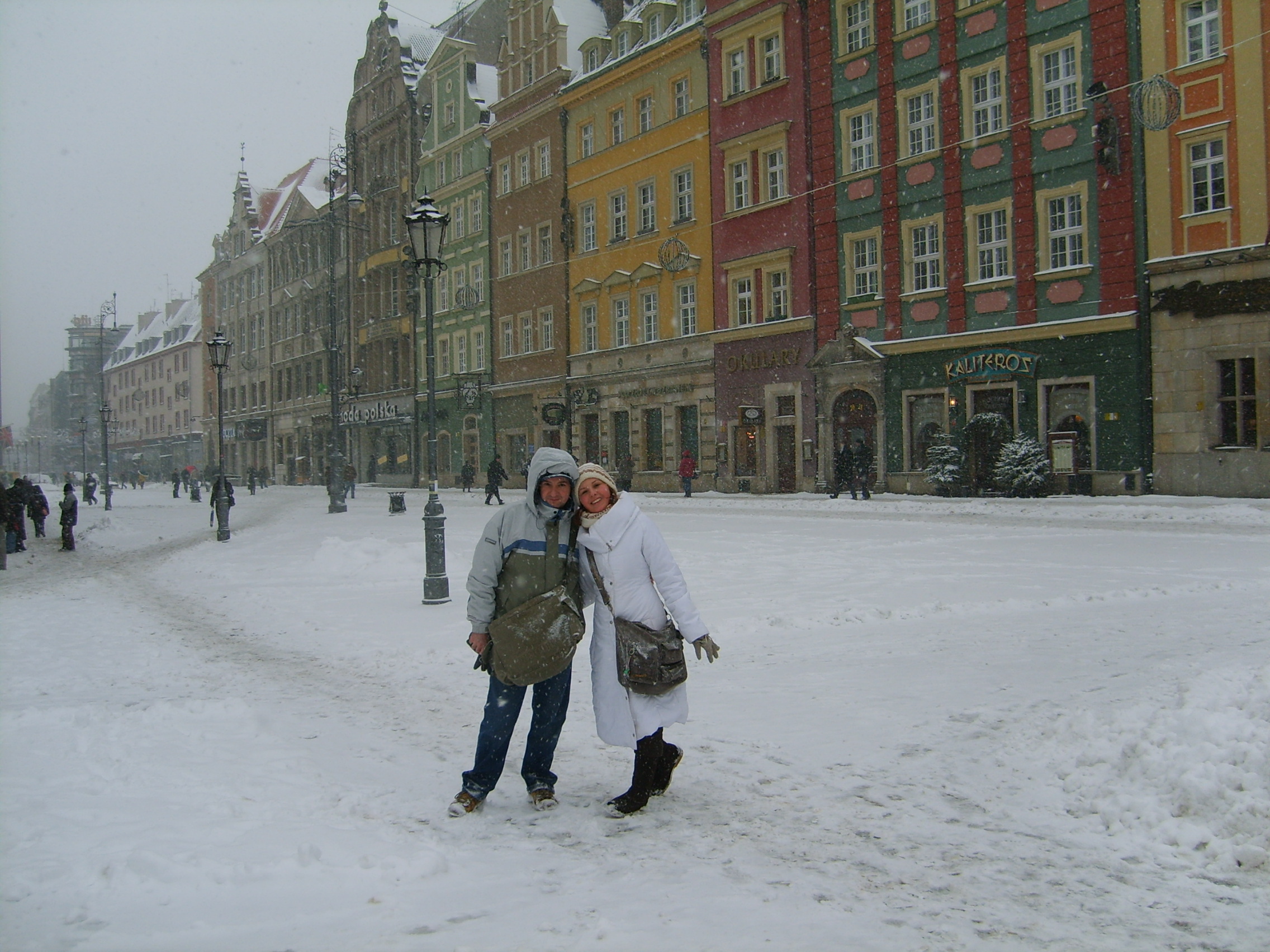
    Gary and Friend in Wrocław

    A photo from that moment: the friend who’d travelled from Bytom by bus and tram, having begun her journey a lot earlier than I had; rosy‑cheeked, glowing, beautiful, full of life. And then there’s me beside her, looking more than slightly bewildered, unsure of where I was, and failing to smile for the camera. It still makes me laugh. It’s a special photograph of a fascinating, slightly surreal trip.

    Before leaving the city to catch our return train, we ducked into a Czekoladziarnia to warm up.

    Hot chocolate — thick, rich, almost a meal in itself — steaming in front of us. I remember holding the cup in both hands, letting the heat soak into my fingers, watching the snow fall outside the window. Everything felt slowed down, softened, peaceful.

    It was a magical day. Simple. Cold. Beautiful.

    But what stayed with me most was the journey there. I don’t remember much about the return journey; it was dark outside, and we were all exhausted.

    Because somewhere between Wrocław station, the early morning at Gliwice, a drive through the snow, a mouthful of coffee grounds, the friend arriving through the snow, and that warm carriage heading west, something had shifted. For the first time, I saw Silesia not as a place I’d landed in accidentally, but as a landscape with its own quiet dignity.

    I pressed my forehead to the glass and thought: I could stay here.

    Poland stopped being simply a place I thought I’d just visit.

    I didn’t know then — how could I — that years later I’d be living in Gliwice, taking trains through Silesia as part of my daily life, navigating stations alone, rehearsing Polish phrases, teaching lessons throughout the region, shopping trips to Katowice, and collecting stories that would stay with me forever.


  • Snow? Not a problem.

    I woke to the sound of movement downstairs — soft, deliberate, domestic. When I pulled back the curtain, I realised why the house felt so different.

    The first flakes of snow had begun falling the previous evening during our visit to Katowice, sticking to our coats before tailing us all the way on the journey back to Gliwice. By the time we reached my friend’s home tucked away in her small village, the flurry had turned into a slow, steady, quiet and gentle snowfall,

    By morning, the snowfall had finally stopped, leaving behind a world buried in pure, deep white.
    Not the decorative British kind that flirts with the ground for ten minutes before causing national paralysis.

    Real snow.

    Snow with intent.

    Outside had been completely transformed overnight. Back home, winter mornings are a damp, apologetic grey. Here, the light was a bright, heavy white that forced its way through the fabric of the curtains, carrying that profound stillness only fresh, heavy snow can produce — an absolute quiet, as if the entire world were holding its breath. Every roof, fence post, and branch carried a thick, sculpted layer of winter, turning the quiet Polish countryside into something straight out of a fairy tale.

    Downstairs, the house had already settled into its quiet rhythm: the muffled clink of porcelain, the low hum of Polish morning radio, the soft shuffle of someone already dressed and caffeinated. Outside, the landscape had vanished under a thick, deliberate blanket of snow — the kind that doesn’t merely fall but commits.

    I washed, dressed, and made my way down.

    “Wrocław trip off then?” I asked, assuming the obvious.

    “No worries,” my friend said, barely glancing up from her coffee.

    “Winter tyres.”

    And that, apparently, was the end of the matter.

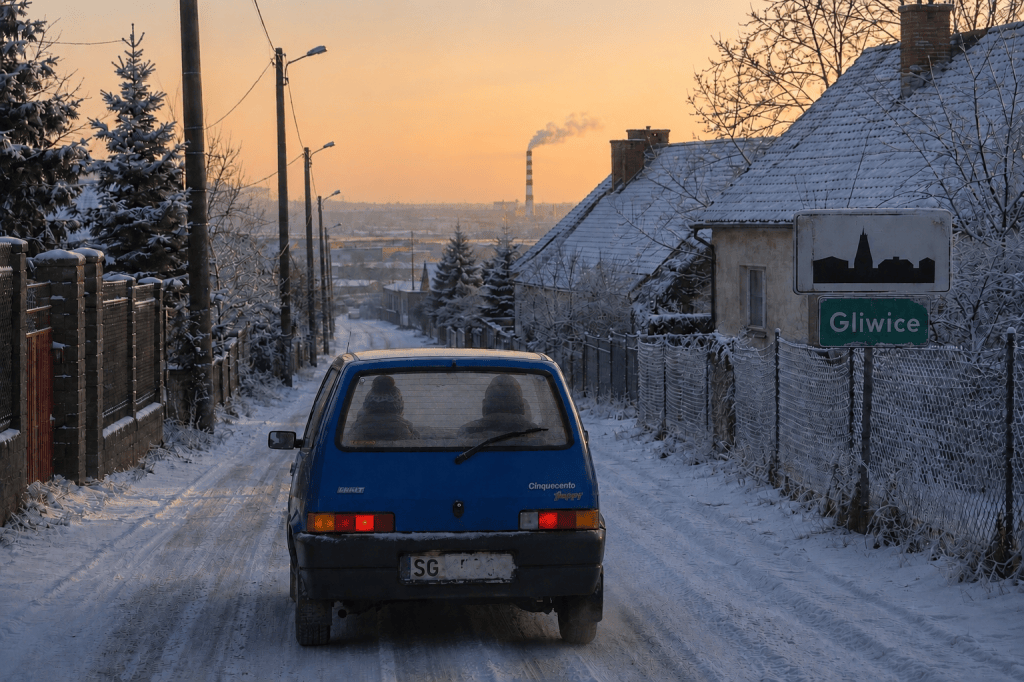
    Outside sat my friend’s car: a tiny, lightweight Fiat Cinquecento 700, born and bred just down the road at the factory in Tychy. Blanketed completely in its own miniature snowdrift, it looked impossibly small against the landscape — less like a car, more like a geological garden feature. A soft, rounded mound of white with only the faintest suggestion of mirrors and door handles.

    My friend had already carved a narrow path from her front steps to the car, a trench of determination through the snow. All that remained was to free the Fiat from its blanket of the driest powder snow I’d ever seen outside the Canadian Rockies.

    Of course, I helped — or rather, I tried to help.

    She emerged carrying the sort of brush that, in Britain, would be used to clean a stable or sweep a patio.
    She handed me a second one — a far smaller, broad, stiff‑bristled hand brush, and wonderfully utilitarian. In Poland, it’s simply standard winter equipment that is kept in the car. My usual British ice scraper suddenly felt like a novelty toy. The snow wasn’t wet or slushy; it was that dry, powdery kind that lifts off in sheets, like brushing flour from a counter top. Roof, bonnet, windscreen, lights, door seams — each surface had its own technique, its own rhythm.

    By the time we finished, we looked like aircrew preparing a Sopwith Camel for takeoff. Layers upon layers, scarves wound high, hats pulled low, boots built for tundra. The cold wasn’t biting — it was structural, the kind that shapes how you move, how you dress, how you think.

    She climbed into the driver’s seat with the composed seriousness of someone who understood exactly what the road demanded. She sat bolt upright, both hands firmly on the wheel, eyes forward, fully present. If she was nervous, she didn’t show it. If she was confident, she didn’t flaunt it. She simply concentrated.

    I settled into the passenger seat, mirroring her posture without meaning to. Upright, alert, trying not to interrupt her focus. The Fiat’s tiny engine buzzed beneath us, a soft mechanical hum swallowed by the heavy snowfall outside.

    In Britain, winter, usually meant a quick dash to my car — either without a coat, carrying one or having worn a coat, removing it before getting in — and the screen heater clearing the windscreen in seconds. In Gliwice, we climbed into the Fiat wrapped in layers of heavy clothing, scarves and gloves included, and waited while the heater slowly coaxed warmth into the cabin. Even that small moment made me realise how far from home I really was.

    As we eased off her drive and onto the narrow single‑track road, the little Fiat struggled for a moment. I thought, “Right… at least we tried. I wonder if we have a plan B.’” I hadn’t thought of one.”

    Travelling on the right side of the road felt strange — a quiet, persistent wrongness tugging at my British instincts — but I kept my thoughts to myself. Every so often, I offered a small, encouraging comment: I genuinely was very impressed.

    “Oh, that was good driving.”

    “Well done.”

    “No worries.”

    Little acknowledgements, nothing that might break her concentration.

    Meanwhile, the snow on my boots had begun to melt. Slowly, inevitably, it pooled into a small lake trapped by the rubber mat in the foot well. I felt a creeping embarrassment about it — a private shame at my failure to brush myself off properly before getting in. I tried to keep my feet still, as if that might somehow stop the water spreading.

    Outside, the village roads were white corridors, the car gliding through them with a kind of determined fragility. She handled each corner with careful precision, easing the Fiat through the snow‑choked streets as though guiding a small boat through ice floes. No frantic movements, no sudden braking — just steady, methodical driving.

    Reaching Gliwice, I was amazed, but after ten minutes of witnessing her driving, not surprised we’d managed to make it. Despite the work done by snow ploughs, the main roads still seemed undrivable by UK standards. Eventually, she eased the Fiat into a tight, snow‑choked side street off Zwycięstwa, navigating the high banks piled up by the ploughs. With a practised flick of the wheel, she guided the car into a narrow parking space that most UK drivers wouldn’t attempt on a dry summer afternoon.

    She killed the engine.

    Silence — the same muffled quiet as the snowy city outside.

    And just like that, the journey was over.

    I stepped out into the crisp Polish air, profoundly impressed and entirely safe, and finally letting go of the bag I’d been clutching on my knees.

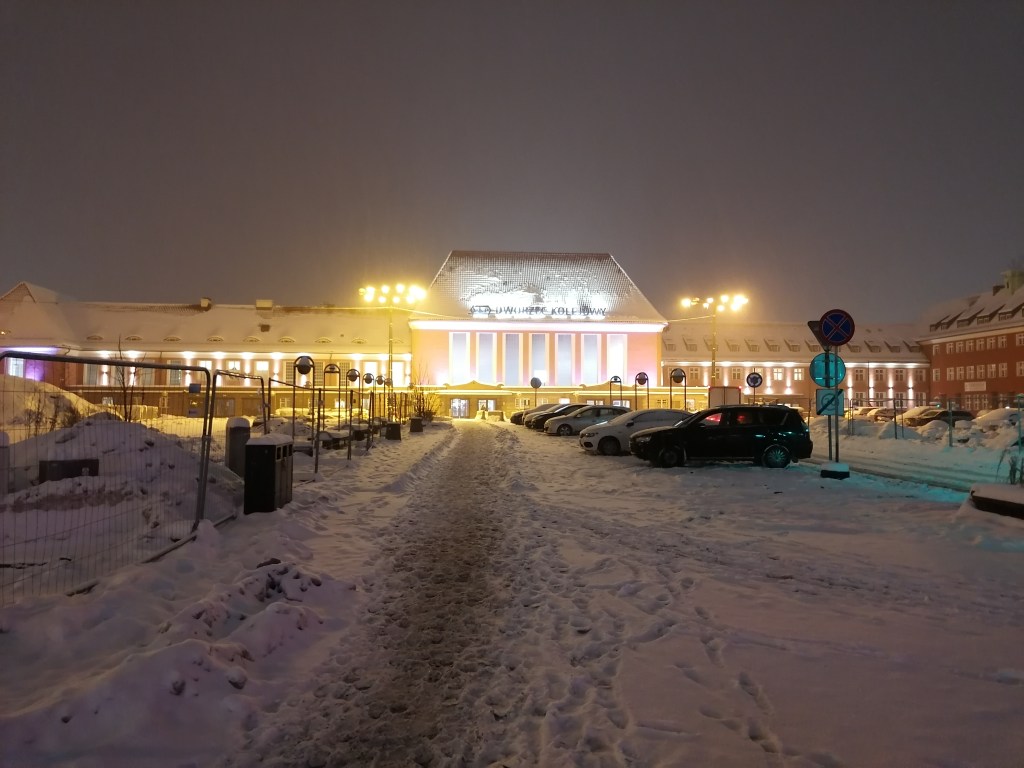
    When we reached Gliwice station, the entrance floor was wet with melted snow. I did not know then that this surface, once damp, possessed the frictional properties of polished ice. I would learn that later, on another day, by landing squarely on my backside with considerable force and very little dignity.

    But that first morning, I was still innocent.

    Years later, I found photographs of the inside of Gliwice station on Wikimedia Commons, taken in 2013. Seeing them felt like opening a sealed room in my own memory.

    There was the polished stone floor. The vast mural high above the hall. The long rows of plastic seats. The old departures board. The clock, strangely ordinary for something so important. And that light pouring down from the high windows.

    Meanwhile, our other friend was making her own journey through the snow from Bytom. At the time, I had no idea what that really meant. I did not understand the early buses, the tram connections, the waiting in freezing weather, the uncertainty. I only knew we were waiting for her, and I hoped she would make it.

    Then she appeared in the ticket hall, cheeks red from the cold, a covering of fresh snow on the hood of her coat, smiling as if crossing half of Silesia in winter were the most ordinary thing in the world.

    Looking back, I understand far more than I did then.

    She had made a serious effort for me. That kind of friendship reveals itself quietly. No speeches. No drama. Just someone deciding to show up, then doing exactly that.

    I remembered standing there as a newcomer, trying to look as though I knew what I was doing. I did not. Not remotely. Everyone else seemed purposeful, fluent, certain. My friends moved easily through the system while I hovered behind them, nodding at moments that felt appropriate.

    The station felt enormous then. Not only in size, but emotionally. It was a place full of movement and intention. Everyone appeared to know where they were going. I didn’t. But I didn’t need to. Not yet.

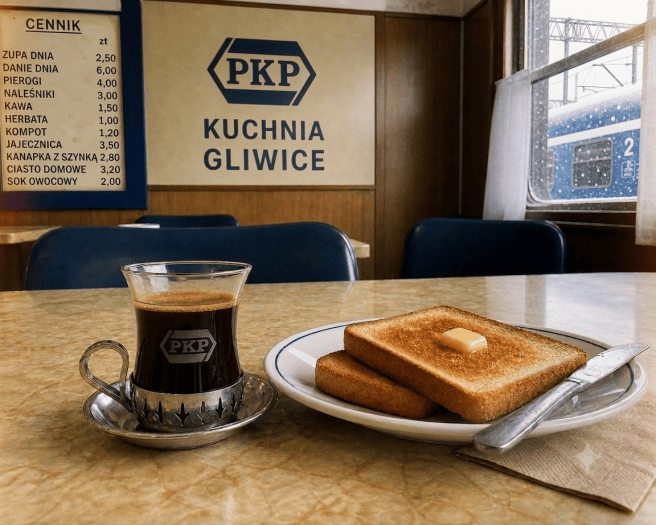
    Before the train arrived, we went into the PKP canteen just off the main hall. It was my first experience of that style of Polish railway eatery, and it left an impression.

    Behind the counter stood a team of women who appeared to be wearing what looked like white lab coats. Unknown to me at the time, a white coat or smock was classic Polish kitchen workwear. There was a selection of soups and stews on offer which, considering it was still breakfast, surprised me. I hadn’t expected anything quite so substantial at that hour — especially not while slightly hungover.

    One of the women, whom I assumed to be the head cook, answered my friends’ questions about what was on the hot plate. I distinctly remember her gently stirring one of the pots, a slight skin having formed on the surface, and telling my two friends what was inside. They paused, checked with each other, and then translated it for me.

    It was lung soup.

    Real lung soup — I’m sure it contained other ingredients, including some vegetables — a soup offering an authentic nose‑to‑tail eating experience. My friends, however, had suddenly adopted the alert posture of people who fear a British man is about to agree to something out of sheer politeness. I could almost feel them willing me not to nod.

    I declined as politely as international diplomacy allowed. Furthermore, I’d never eaten offal in my life — not even as a child — and the idea of starting that journey at second breakfast defeated me.

    The head cook looked relatively disappointed, and I felt a small, unexpected flicker of shame, despite having been nothing but courteous.

    My friends ordered something safer, and I followed their lead. Buttered toast and coffee. I especially remember the coffee — vividly so. It arrived in a glass, boiling hot, with a thick layer of grounds floating on top like industrial peat.

    Determined not to offend local custom, I lifted the glass and attempted to drink it exactly as served. I was rewarded with a mouthful of coffee grounds. My friends burst out laughing.

    “Gary, stir it.”

    Apparently, this was known to everyone except me.

    I stirred cautiously, like a man handling unstable chemicals, and watched the grounds sink to the bottom. Then came the second lesson: never drink the last centimetre.

    The railway was educating me already.

    Photo: Gliwice train station in snow (2022) by Abraham, licensed under CC BY‑SA 4.0. Source: Wikimedia Commons.

  • First Visit: Lost in Translation

    Triangles and Circles

    4–7 minutes

    Public transport in Britain was never really my world. I cycled locally, or used a motorcycle or car for most of my adult life. Occasionally, I caught the bus into Chester, which did little to improve my opinion of buses. Trains, though, I liked. There was something civilised about them. A seat by the window, the quiet promise of movement, the sense that someone else was handling the difficult parts.

    So it still amuses me that my real education in public transport happened not in Britain, but in Poland.

    There, buses, trams and trains were not occasional conveniences. They were woven into daily life. In Silesia, they formed a kind of circulatory system, carrying people steadily from town to town, district to district, through weather that would have caused a national incident back home.

    I could have driven. I was offered the use of a car, and I drove occasionally. But I found myself drawn instead to stations, timetables, ticket windows, and the peculiar freedom of letting the railway decide the route.

    In time, I became confident enough to travel from Kraków Airport into the city, then onwards to Gliwice. First class, naturally. Why crawl into competence when you can arrive with style? The trains were often slow, but I never minded. I could sit by the window and watch Silesia pass in long grey-green paragraphs.

    But before all that came the visitor years: 2007-2009.

    Back then, I understood very little, at least not in the way I thought I did.

    I travelled with Polish friends who bought the tickets, found the platforms, translated announcements and quietly ensured I did not board something heading for the far side of Europe. I was still a tourist then, wrapped in other people’s competence.

    And yet, even in those early days, something unexpected happened — something that didn’t rely on anyone else’s competence at all, but on a fragment of history I had carried with me since childhood.

    I’d like to share a short story first, it seems remarkable despite all the tourist guides I’d bought, I didn’t know about two small signs.

    My first full day in Poland had already been extraordinary — a visit to Radiostacja and an unexpected, but fascinating, guided tour of the control room there, and not even my two friends had imagined that might occur. A wander around the Rynek and stop for refreshments in the kawiarnia located inside the Ratusz in Gliwice, and the slight panic of being unable to decipher the signs for the male and female toilets located there. No one had ever mentioned it. Not once. And despite carrying three phrase books like a diligent Boy Scout, not one of them thought to warn me that Polish toilets sometimes used geometric symbols instead of words. I had been very proud of myself to ask in Polish where the toilets were, and had merely followed a pointed finger to the stairs that descended below.

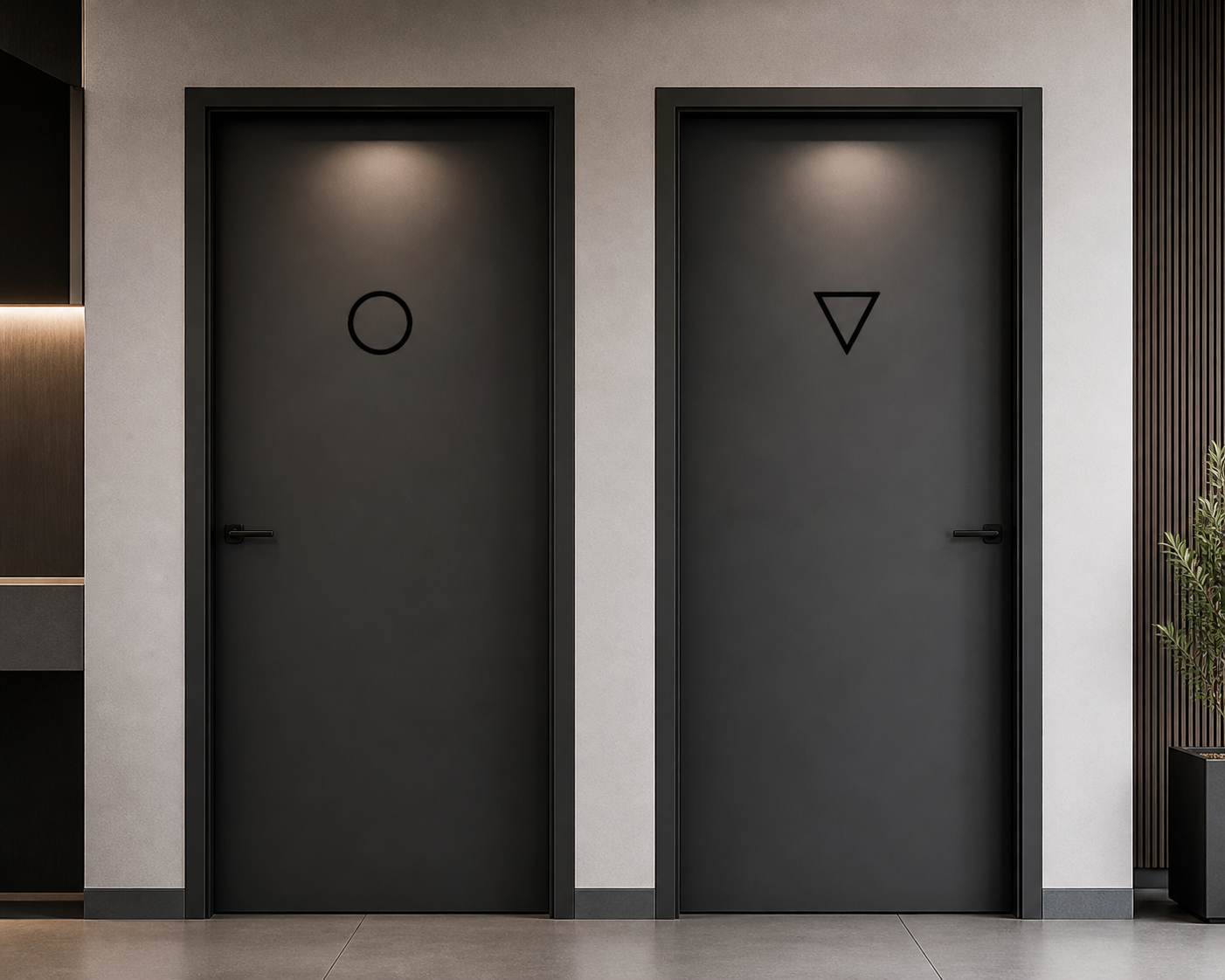
    So there I was, increasingly desperate, staring at two doors, neither with symbols which appeared to have any obvious relationship to human anatomy.

    A simple circle on one door and an inverted triangle on the second.

    Bathroom Symbols Sketch

    Rather than walk back and ask my friends — which would have required admitting I couldn’t even find the correct door — I took a punt on the circle. I knocked and eased it open slowly, ready to retreat if anything inside hinted I’d made a terrible mistake. It was very modern, spotlessly clean, industrial‑style stainless-steel and black fixtures — just cubicles — and it didn’t look or feel right.

    A quick retreat felt wise.

    I knocked on the triangle door, slowly pushed it open, and there it was — the familiar, reassuring outline of male‑oriented fixtures. I let out a quiet, grateful sigh of relief — and with it, the sense of stepping into a place that was both foreign and strangely familiar.

    I returned to my friends and told them the whole story. They laughed — loudly, joyfully — the kind of laughter that comes not from mockery but from recognising a classic “first time in Poland” moment. They said they were surprised the Kawiarnia had kept the old geometric symbols at all. It had recently undergone extensive modernisation, and everything else inside was sleek and contemporary. You’d think, they said, that someone would have replaced the triangle and circle with something a little more obvious. I thought it was remarkable, unique and very creative. My two friends seemed unable to offer an explanation as to what the symbols were supposed to represent. “Just learn it, Gary — you’ll probably not see it used again” was the best answer they could offer.

    I made a note in the back of my go-to phrase book, right next to the page where I’d written down the words for “Pracuję w policji północnej Walii” and “opóźniony,” and underlined it twice. In the four years I lived there, I rarely saw those symbols again—but from that day on, I was prepared. At some point, one of my friends had placed a small paper note into the phrase book and written, “wypadki się zdarzają“. I only recently rediscovered this note. In English, it means ‘accidents will happen’. Very appropriate. I still keep it tucked into the phrase book.

    The day ended with us tucked into a small Polish pizza‑chain restaurant, the kind of place I’d grew to adore far more than I expected. The warmth of the room wrapped around us as we shared incredible pizza, the kind that somehow tastes better when you’re laughing with two remarkable friends. At that moment — between the laughter, the clatter of plates, and the soft hum of conversations around us — I felt something shift inside me. I wondered what other adventures were waiting just beyond tomorrow, what pieces of myself I might discover next.

    My friends had already decided that the second day of my visit would be a trip to Katowice, but it was the third day—the one they teased with knowing smiles—that would end up sealing something deep within me, something I hadn’t yet found the words for.


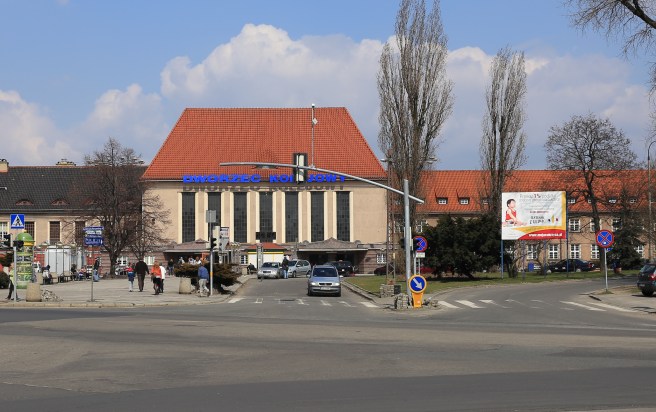
    Railway station, Gliwice
    Gliwice Railway Station 2013

    First Visit to Katowice

    Photo: Gliwice, Dworzec – panoramio by Roton Piotr, licensed under CC BY‑SA 3.0. Source: Wikimedia Commons.

  • Radiostacja: The Visitor Years, 2007

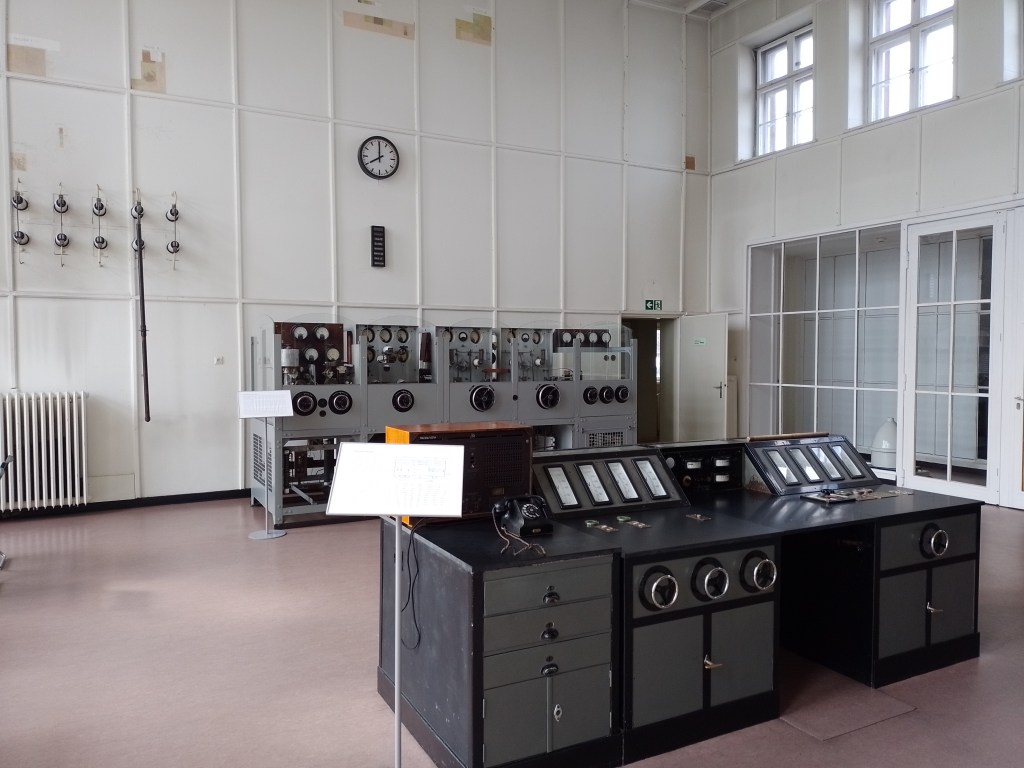
    Inside, the first thing that struck me was the light. I had imagined the control room and broadcasting desk to be in a building that was dark, cramped, intimate — a place of shadows and secrecy. Instead, it was filled with natural light. Windows ran up both the front and rear walls, tall panes that made the room feel almost airy. The ceiling was higher than I expected, giving the space a strange openness… beside me, my two Polish friends stood completely speechless. Only moments ago, seeing the awe on my face at the sight of the radio tower, and agreeing to walk through the gates, they had been gripped by a sudden panic that we might be trespassing.

    What fascinated me most was that neither of my friends had ever visited. One I understood; she lived in Bytom. But the other grew up in a small Silesian village only a few kilometres away. The tower had stood on the edge of her world all her life. To me it was history. To her it was simply part of the landscape.

    Back then, I only knew a fragment of the story. “WW2 began here,” that was the extent of it. And yet here I was, standing in the very room where that fragment had once lived.

    I hadn’t even known the tower still existed until the night before, when it rose out of the pitch-blackness.


    In 2007 I was invited to stay with the families of two close Polish friends I’d met in the UK. I arrived tired but wide‑awake in the way you get when everything around you is new. Arriving at Katowice airport, I emerged from behind the arrivals gate to find my friends waiting to greet me, each waving a Polish flag, laughing, excited, and soon I found myself in the front passenger seat of her father’s car, heading toward a small village outside Gliwice where I would be staying.

    We made a quick stop in Bytom to drop off our other friend, and now it was just the three of us — her father driving, my friend resting in the back, and me still in the front passenger seat watching the landscape unfold through the windscreen. I couldn’t speak a great deal of Polish, so I was content to just watch.

    Wide open countryside.

    Strip‑farmed fields.

    Dense dark belts of forest bordering the road.

    Pit heads in the distance, their steel frames cutting aginst the evening sky.

    Silesia was heavy with industry, yet interrupted by sudden urban pockets.

    Modern shopping malls with huge car parking.

    Bytom, Zabrze, Gliwice — names I barely knew, places layered like palimpsests.

    Old and new pressed together.

    Tram tracks cut through cracked asphalt. Neon advertising hoardings glared down at peeling plaster and neglected courtyards, while apartment blocks bristled with satellite dishes and loops of cable. Old and new seemed permanently pressed together.

    One of the billboards was enormous — devoted entirely to a brand of mayonnaise.

    Mayonnaise.

    I remember thinking: What kind of country advertises mayonnaise at that scale?

    And then immediately: Whatever this place is, it’s nothing like the Britain I left this morning — it felt loud, new, and even colourful at times, then subdued and slightly depressing, neglected buildings and industry, wide open spaces and entirely not what I expected.

    Everything was unfamiliar, but not in a frightening way, more in a what-else-am-I-going-to-see way. My friend’s father drove calmly through the dark, and I sat there, absorbing a world that didn’t match anything I thought I knew about Poland.

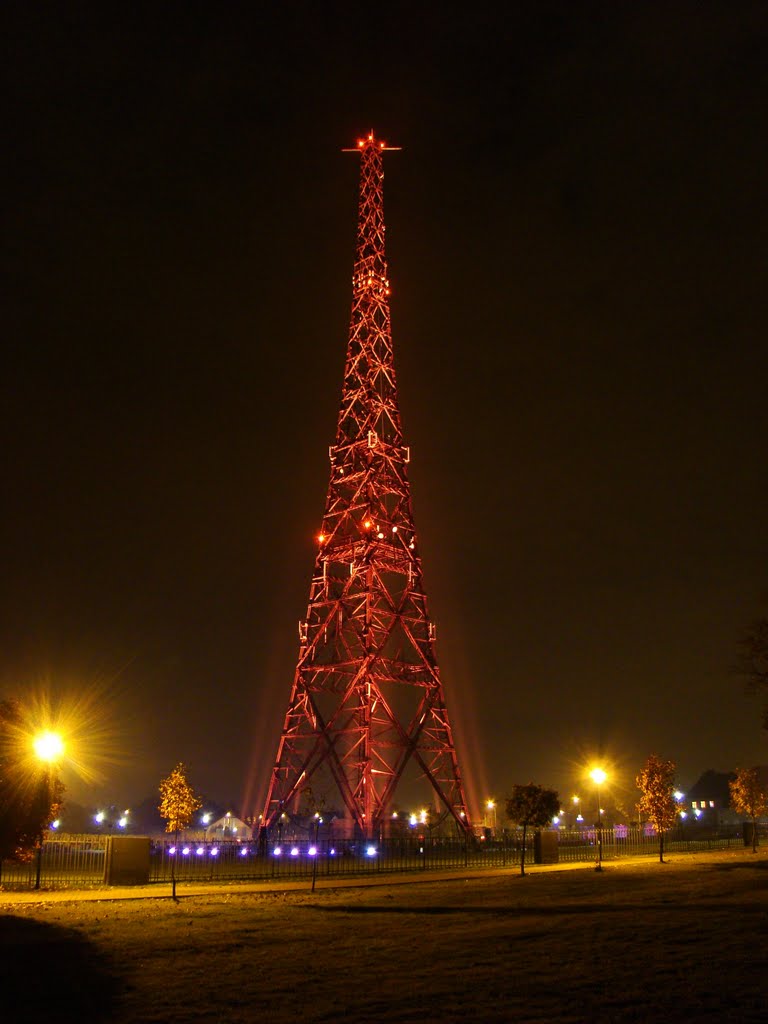
    We had passed through Gliwice and were slipping toward the edge of the city when the tower appeared. It rose out of the darkness with a kind of solemn presence… Red lights blinked high above, slow and patient, like something breathing in the night.

    Radio Tower at night, Illuminated by lighting and red navigation lights

    The sight caught me completely off guard. It was familiar in a way that reached past thought — straight into memory, into childhood, into the part of me that had once sat at a school desk trying to understand how a war could begin.

    I hadn’t expected to feel anything. I hadn’t even known the tower still existed. But the moment I saw it, something inside me tightened. It was as if a page from a history book had stepped out of its flat, printed world and into the road ahead of us.

    I heard myself ask, quietly, “Is that the radio station?”

    My friend answered from the back seat. Her voice held a small, unmistakable note of surprise — gentle, almost protective, as though she hadn’t realised this place might mean something to me. Her father glanced over, curious. They exchanged a few words behind me, soft and quick, and I felt suddenly aware of the space between us: them in their world, me in mine, and the radio mast bridging the two for a moment.

    I didn’t ask what they said. I didn’t want to disturb whatever had passed between them.

    The car moved on, headlights sweeping over the empty road. After a while, I tried to explain — haltingly, almost apologetically — the fragments I remembered. The Gleiwitz Incident — A staged attack. A spark that grew into something terrible. A name that had stayed with me long after the rest of the lesson faded. I asked if we might visit the tower in the coming days.

    My friend seemed taken aback. Her father listened to her translation, nodded once, and let the matter rest. Their quiet acceptance made the moment feel even more fragile.

    I realised then how carefully they had planned to show me their world, and how unexpectedly I had reached for something from my own distant past — a radio mast I had only ever known as a grainy photograph in a book. I had come to Poland with a handful of memories, none of them sharp, none of them complete. And now, in the dark, as a passenger in their car, one of those memories had risen out of the night and met me halfway.

    It felt like recognition, and loss, and wonder, all at once.

    That night, the tower had been a sudden silhouette in the darkness. But the next day, the daylight changed everything.


    The Visit

    The next day was bitterly cold, the air sharp enough to ache in the lungs, and overhead the sky stretched out in such a way that it made the Silesian plain feel twice as wide as anything I was used to back home. My friend’s mother had been fretting since breakfast, worried I hadn’t eaten half enough, that the weather was turning, and with snow forecast, I needed dressing properly against the cold. Once my friend translated all of that maternal anxiety into something actionable, we left to drive to Gliwice. We met up with our friend waiting outside the railway station and drove out towards the outskirts, and in bright unfiltered daylight I was completely stunned.

    The radio mast was wooden.

    I had imagined steel — something industrial, modern, metallic. Instead there it stood: tall, dark, entirely wooden, fenced off with what looked like allotment gardens inside the grounds. No visitors. No obvious signs of staff. Just the tower and a cluster of buildings that looked unmistakably German in their architecture.

    The access gates were open.

    “Can we go in?” I asked.

    My friends looked at each other, shrugged, and seeing the awe on my face, agreed. We walked through the open gates and around the buildings. It felt eerily quiet, as if I had stepped back in time. I can’t help but smile at my own earnestness, but at the time I was completely captivated. I remember asking softly, “Do you realize how extraordinary this is? It feels like it belongs in a museum, just sitting here. Why isn’t it protected more? Preserved?”

    They shrugged. One of them said gently, “It’s something we don’t really talk much about, Gary.”

    We continued to wander about the grounds, until we were stopped in our tracks as someone called out.

    Not a demand — not “Why are you here?” — but more of a “Can I help you?” Still, it scared the life out of my friends. A man walked over, and a rapid Polish discussion took place, tense at first, then easing, then laughter. My friend explained: he was from a preservation society, someone with an official capacity to maintain the site.

    He was clearly unused to visitors.

    He was clearly excited that I, an English visitor, was there and interested in the radio station.

    To our complete surprise, we were invited inside for a guided tour of the control and broadcasting room.

    That brought us into the room, surrounded by Bakelite switches, valves, gauges, and strange wheels whose purpose I couldn’t guess. Materials and mechanisms from another era, preserved almost accidentally by time and disuse. It felt unreal — as if I had stepped into a photograph from a school history book and found it still warm. I was still a visitor trying to understand Poland.

    Interior of the transmission room with electrical equipment.

    Reflection

    Years later, sometime in 2011, my friend and I cycled back to Radiostacja.

    By then, the site and surrounding area had been beautifully developed into a very pleasant park. The allotments were gone, the buildings restored, the tower carefully preserved. It had become somewhere people could visit, walk, sit, and spend an afternoon.

    We sat there in the glorious early summer sunshine and I thought about that first night.

    I thought about the tower appearing out of the darkness, the red lights blinking above us, and the strange feeling of recognition I had experienced from the passenger seat of my friend’s father’s car.

    I thought about history.

    By then I had learned a great deal more about the history of the place, and about Silesia itself. I had begun to understand that the story I had been taught at school was only one layer of a much more complicated history: German Silesia, Polish Silesia, borders that had moved, people who had been moved, identities that had survived political changes and sometimes been forced to change with them.

    Sitting there in the sunshine, I tried to imagine that night in 1939.

    What had the place felt like?

    What had the people there known?

    What had they believed was happening?

    And how impossible would it have been for them to imagine what would follow?

    The sunshine made it difficult to hold the thought for long.

    Around me was a park. People walking. Birds. The ordinary sounds of a summer afternoon.

    And there was the tower.

    The same tower I had first seen as a sudden silhouette in the darkness, when I was still a visitor trying to understand Poland.

    Only now I lived here.

    That, perhaps, was the strangest part.

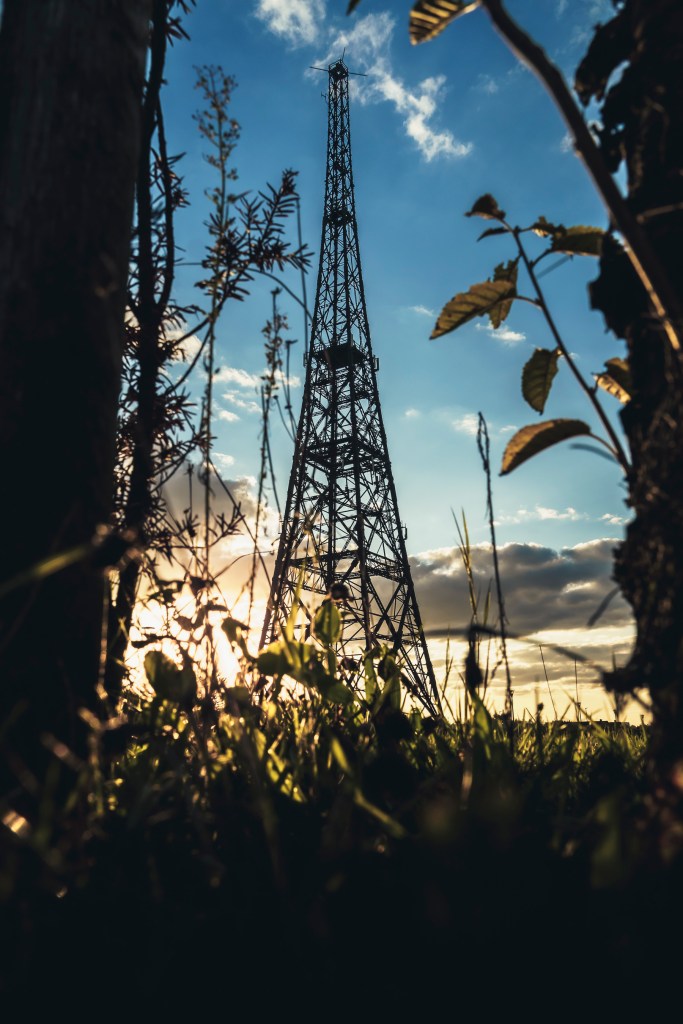
    Radiostacja Gliwicka tower at dusk, seen through hedges.


    → First Tastes

    → Elevated Discovery — Katowice

    → Walk & Tram — Katowice: a poem

    → Ôbzdrzōnek przez śniyg — Katowice: a poem

    → Czekając przy torach w śniegu — Katowice: a poem

    → Symbols, Snow and the Train to Wrocław

    → The Grammar of Hospitality


    Image Credits

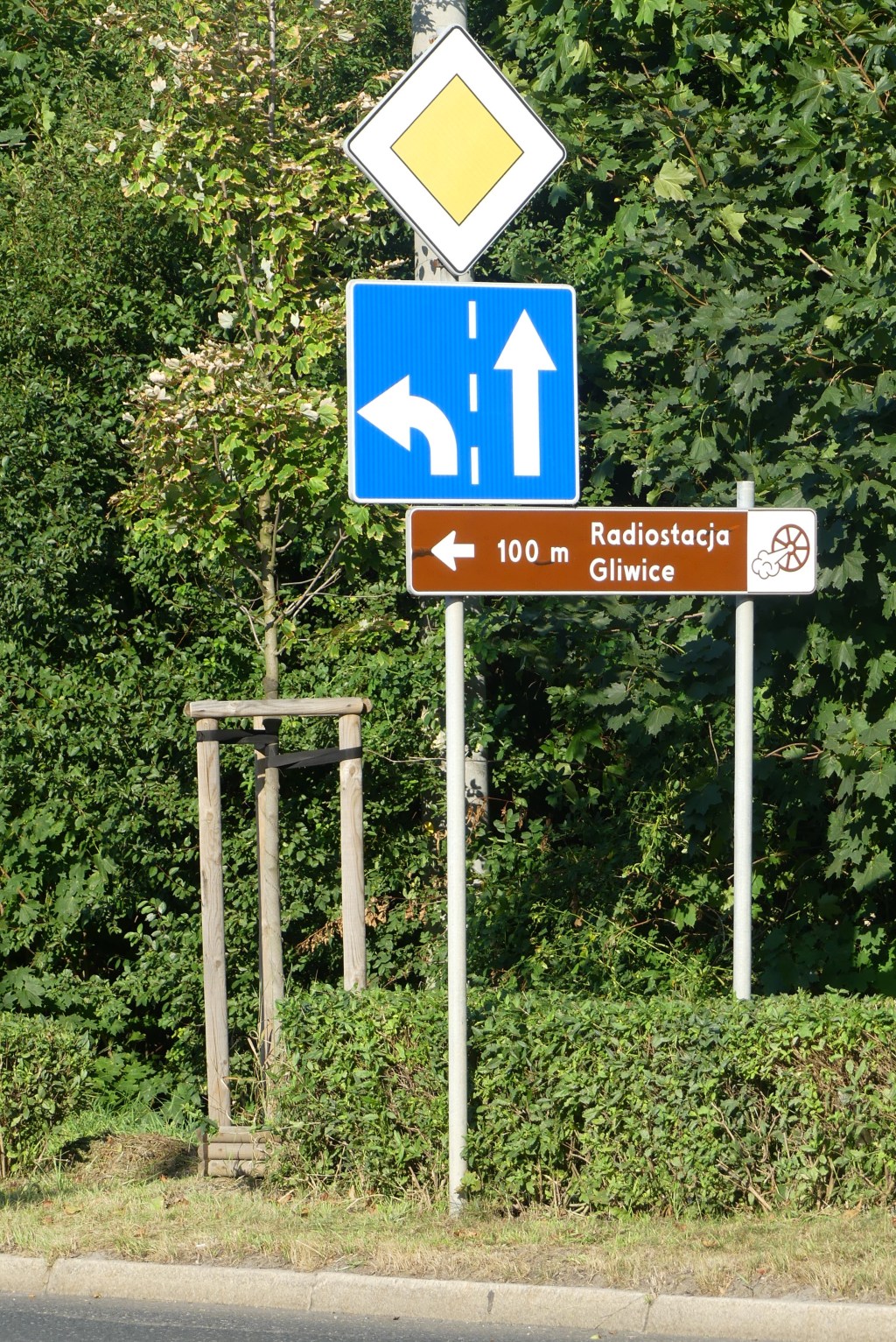
    ⚬ Signpost to the Gliwice Radio Station Museum – Bärbel Miemietz / Wikimedia Commons / CC BY-SA 4.0
    ⚬ Radiostacja Gliwicka – Dariusz Kobla / Wikimedia Commons / CC BY-SA 3.0 PL
    ⚬ Radio Station Gliwice: Transmission Room – Kamil Czaiński / Wikimedia Commons / CC BY-SA 4.0
    ⚬ Radiostacja Gliwicka at Sunset – Dariusz Kobla / Wikimedia Commons / CC BY-SA 3.0 PL

  • The Grammar of Hospitality
    4–7 minutes

    When I began writing these pieces, I thought obiad would anchor everything — the midday meal, the table, the rituals I learned in Polish homes. But as the memories returned, I realised that food in Silesia spilled out into gardens, orchards, roadside trees, cellars stacked with jars, and the quiet generosity of people who believed that feeding someone was a form of welcome.

    So although this chapter begins outdoors — on a cherry‑lined road, under a netted tree, with a bowl of fruit that startled me — it still belongs to what I like to refer to as “Obiad and Other Meals”. These were the “other meals”: the unexpected ones, the ones that taught me as much as any plate set on a table. A glass of kompot, a handful of cherries, a jar opened with a soft pop — they were all part of the same grammar of hospitality, a lesson I learned on my second visit to Poland.


    Cherries

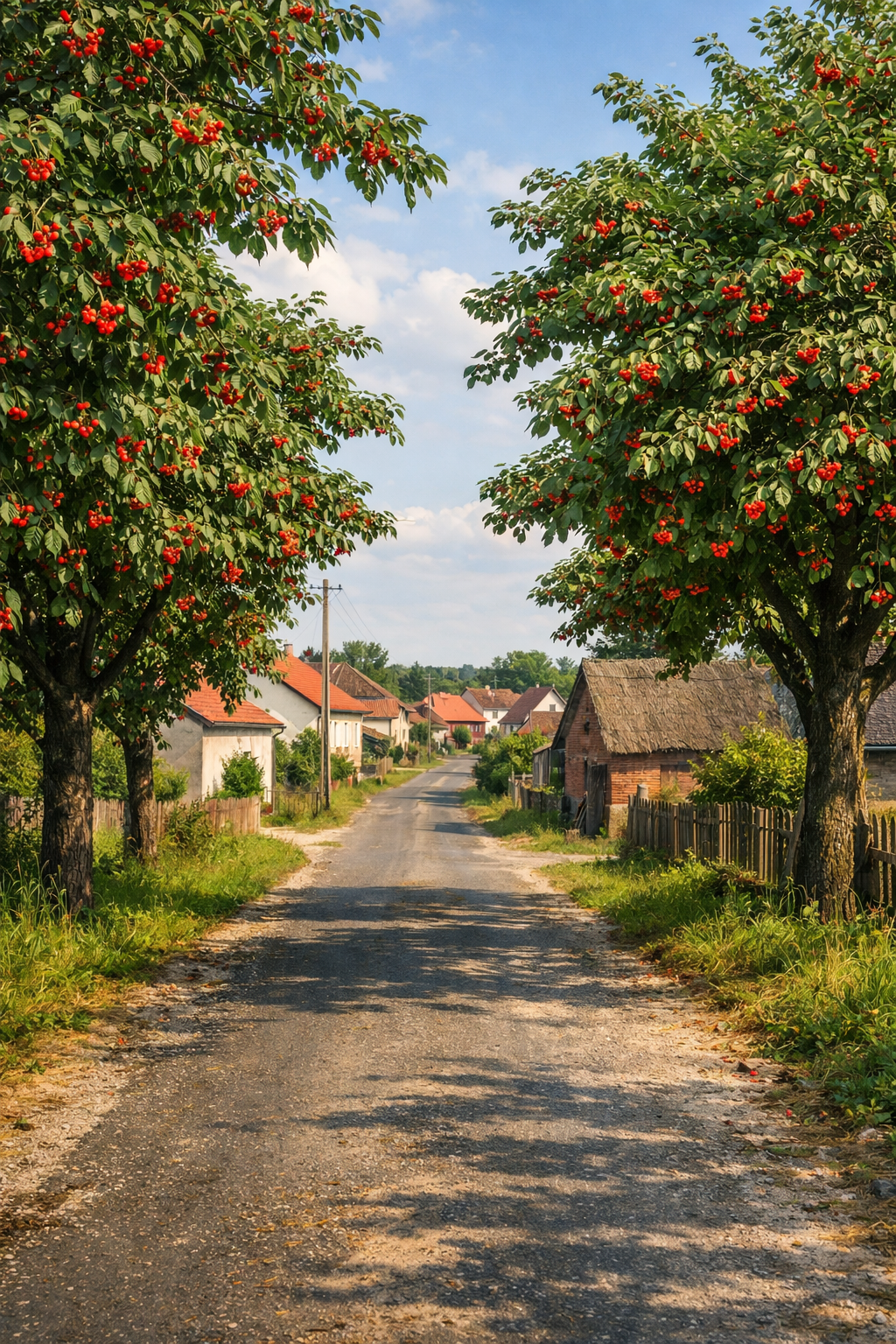
    I arrived in my friend’s village by a road lined with open fields, scattered trees, and the kinds of buildings I didn’t yet know how to read: some old, some renovated, some strangely modern-looking, despite clearly having stood there for decades. A beautiful cherry tree stood on the roadside directly outside their home — close enough to feel like part of the garden, though it technically belonged to the street. Its branches were heavy with fruit, the kind of abundance I had only ever seen in photographs. I asked my friend if the tree belonged to her family. She explained — though she wasn’t entirely certain — that she believed it and others had been planted many years ago “for the community,” part of an old tradition of creating fruit tree avenues. Years later, I discovered this to be true. It felt like the right kind of welcome — generous, unhurried, rooted in the land.

    The abundance didn’t stop at the roadside.

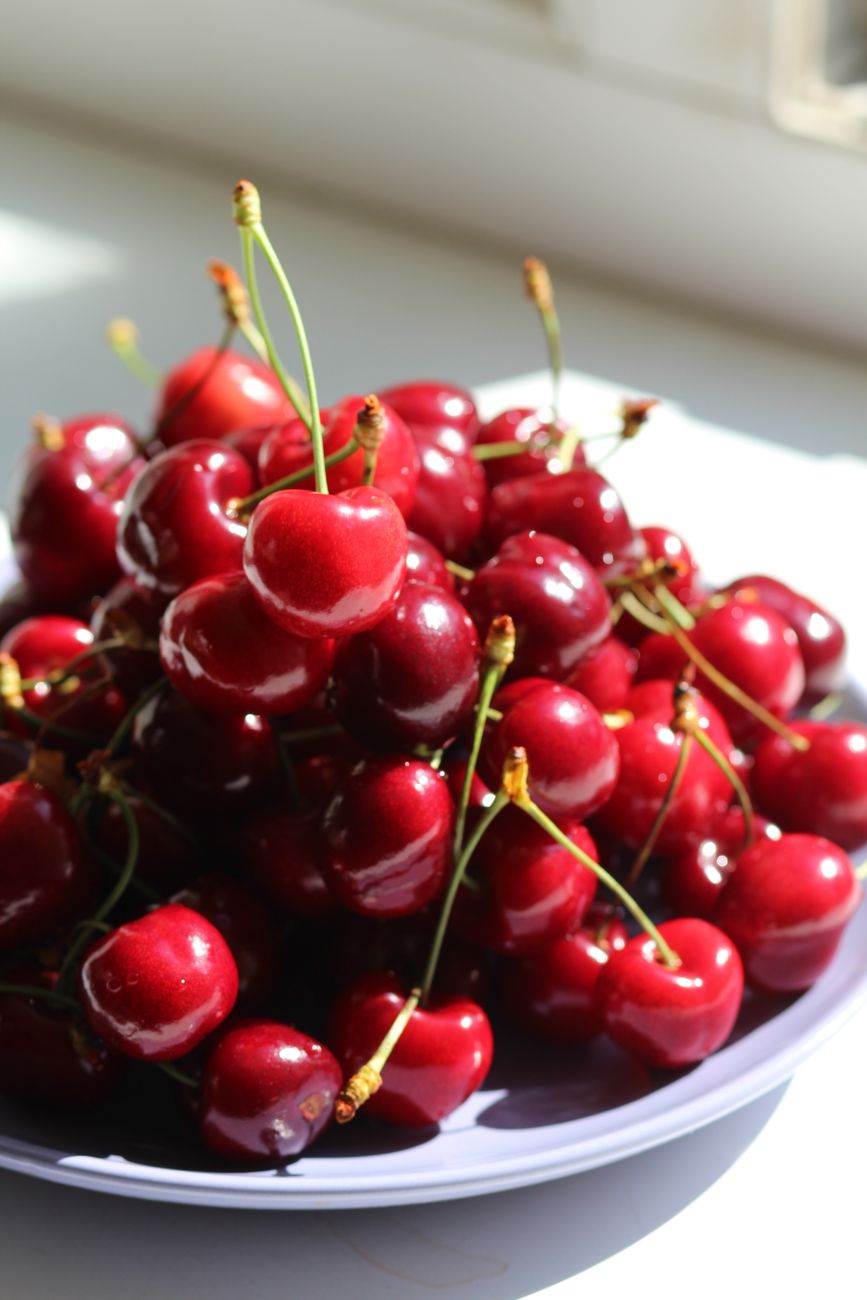
    Their house sat in a large garden, which included another very large cherry tree. It was so big it needed to be netted, a great canopy stretched over it to keep the birds from stripping it bare. I had never seen a cherry tree before, not in real life, not growing. My childhood cherries came from tins of fruit salad, floating in syrup, one red jewel per bowl. My grandmother baked with glacé cherries — too sweet to eat alone, but perfect in a scone, or atop a coconut haystack treat. As an adult, acquiring cherries meant a small supermarket punnet during a brief British season. Here, they were abundance itself. Even the family pet, a huge but gentle Bernese Mountain Dog, spent its afternoons beneath the tree eating windfalls as they fell. I casually mentioned to my friend that I adored cherries, a rare treat, and I’d never seen them growing on a tree either in a garden or by the roadside before.

    Inside the house, I moved carefully, shy in borrowed slippers, trying to learn the quiet rules of being a guest. And then her mother placed a bowl on the table: not a polite dish, not a handful, but a harvest. The biggest bowl of cherries I had ever seen. My British instincts panicked at the sight of so much fruit. In my grandmother’s kitchen, a bowl placed in front of you usually came with a task attached: peas to pod, beans to trim, apples to peel. So when my friend’s mother placed this enormous bowl of cherries in front of me and disappeared back into the kitchen, I briefly wondered what work I was supposed to do first.


    But the explanation was beautifully simple:

    “He loves cherries.”

    And in that kitchen, that was enough.

    And the welcome didn’t end there.

    Later, I was shown a large glass jar lifted from the cool dark of the cellar.

    “Kompot,” my friend said. “It’s a drink. Very refreshing.”

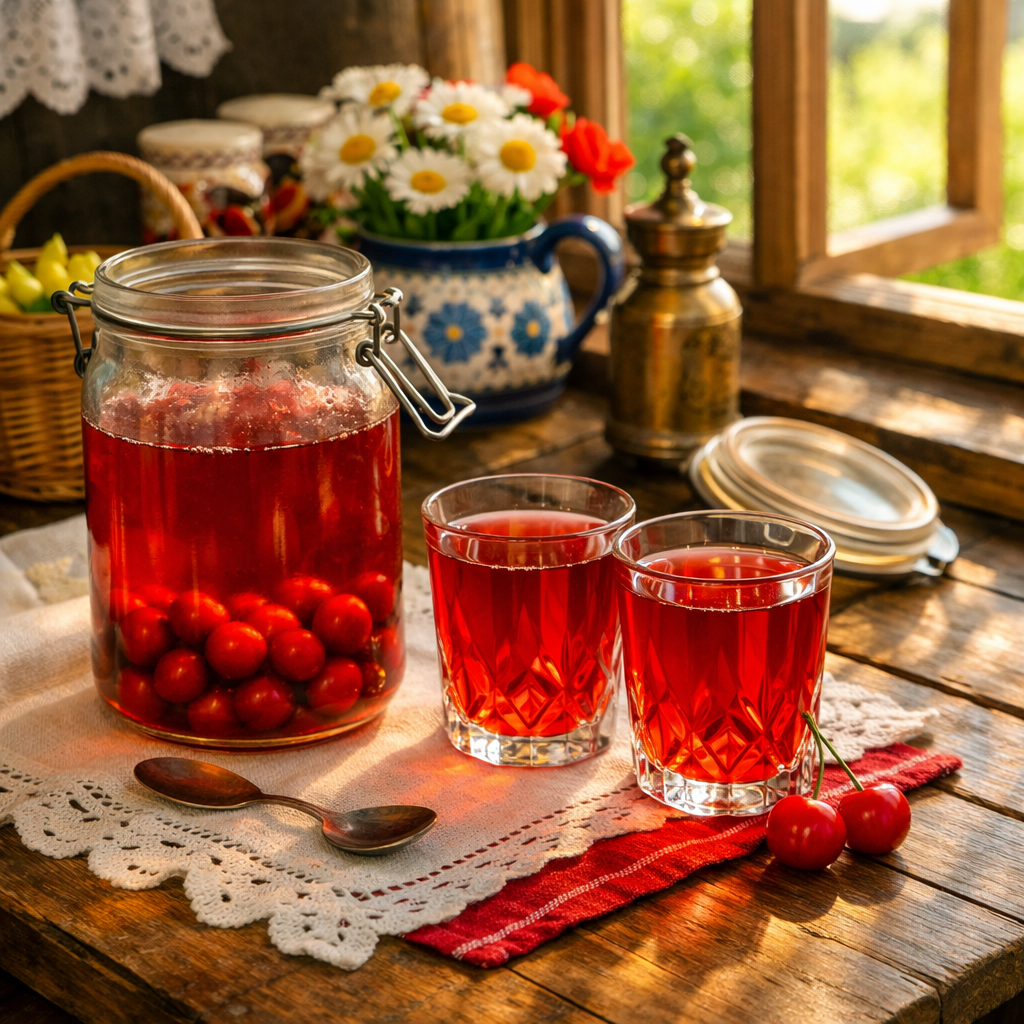
    The liquid was a deep, ruby red — nothing like the artificial syrup I knew from tins. I tilted the jar and poured it into a glass. The scent rose immediately: summer, sugar, sun‑warmed fruit. I took a sip and was startled by how honest it tasted.

    Then I noticed the cherries resting at the bottom.

    “What about the fruit?” I asked.
    My friend looked at me with gentle amusement.

    “Oh… eat it.”

    As if there was any other choice.


    Pouring homemade cherry kompot into a glass

    That was the joy of kompot — a two‑part ritual so simple and so delightful it felt like a small revelation. First came the drink, bright and refreshing. Then the spoon, diving down to feast on the soft, plump fruit from the bottom of the glass. In later years I bought commercial jars of kompot; it was good but never as good as that first taste of a homemade version.

    Later that evening, I was asked if I would like to see how the cherries were preserved; I was delighted and agreed that I would. I followed my friend and her father, down into the cellar — cool, almost cold, lit by bright, modern lamps that made the space feel more like a quiet extension of the house than anything underground. It didn’t smell damp or musty; if anything, there was a faint wooden warmth to it, the kind of neutral scent that comes from shelves that have held jars for years. Rows upon rows of glass jars lined those shelves: vegetables, pears, pale‑pink gooseberries, and deep crimson cherries that looked less like food and more like small works of patience. They looked like summer held still — colour and sweetness waiting behind glass. Enough for winter. Enough for guests.

    My friend’s father chose a jar of cherries, a couple of bottles of beer, and we went back upstairs. The jar’s seal broke with a soft pop — a small, familiar sound releasing a breath of cool air into the warm kitchen. Nothing dramatic. Just a quiet gesture of care, the sort that stays with you precisely because of how ordinary it is.

    But Poland wasn’t only orchards, kitchens and cellars — when I stepped away from the quiet rhythm of the village and into the urban rush of Upper Silesia, the landscape fractured into something entirely different.


  • Polish Hospitality, Home Cooking and the Honour of the Mundur Górniczy
    4–5 minutes

    The Mundur Górniczy

    Having acclimatized to the relentless generosity of Polish mealtimes, my 2007 trip continued to unfold. A few days later, I visited another friend’s home. By then, I’d already learned that Polish families take genuine delight in hosting, and her family was no exception. But this meal felt different from the ceremonial bigos of my first night. This wasn’t a dish prepared for a grand occasion. This was simply what they ate — and that made it feel even more intimate.

    Her mum served kotlet schabowy: pork cutlets, breaded and fried until crisp and golden. It came with boiled potatoes, the cooking juices and oil spooned generously over the top. I cannot overstate how quickly this became one of my favourite meals. It was simple, honest, and deeply comforting.

    Beside it sat mizeria — cool, creamy cucumber sliced so thin it was almost translucent. I didn’t know then that every family had their own version, or that this quiet little side dish would become something I’d crave years later. At the time, it was just refreshing, unexpected, and perfect alongside the kotlet.

    And then there was the salad.

    My friend brought out a glass bowl so large it could have doubled as a fish tank. Inside was a layered salad — colourful, meticulous, almost architectural. Each layer was distinct, a literal rainbow of vibrant vegetables; it looked like a celebration disguised as a weekday dish.

    What I didn’t realise then was that this was the very heart of Polish home cooking: not grand gestures or special-occasion meals, but the everyday generosity of a family table. The kind of food that appears without fuss, made simply because that’s how they feed the people they care about.

    And yes — vodka appeared again, as inevitable as the bread on the table. I tried to pace myself, but refusing a shot felt impossible. You raised the glass, thanked your hosts, drank — and somehow it was full again before you’d even set it down.

    After the meal — after the kotlet, the potatoes, the mizeria, the layered salad, and the vodka that refilled itself whenever I looked away — my friend’s father did something I will never forget.

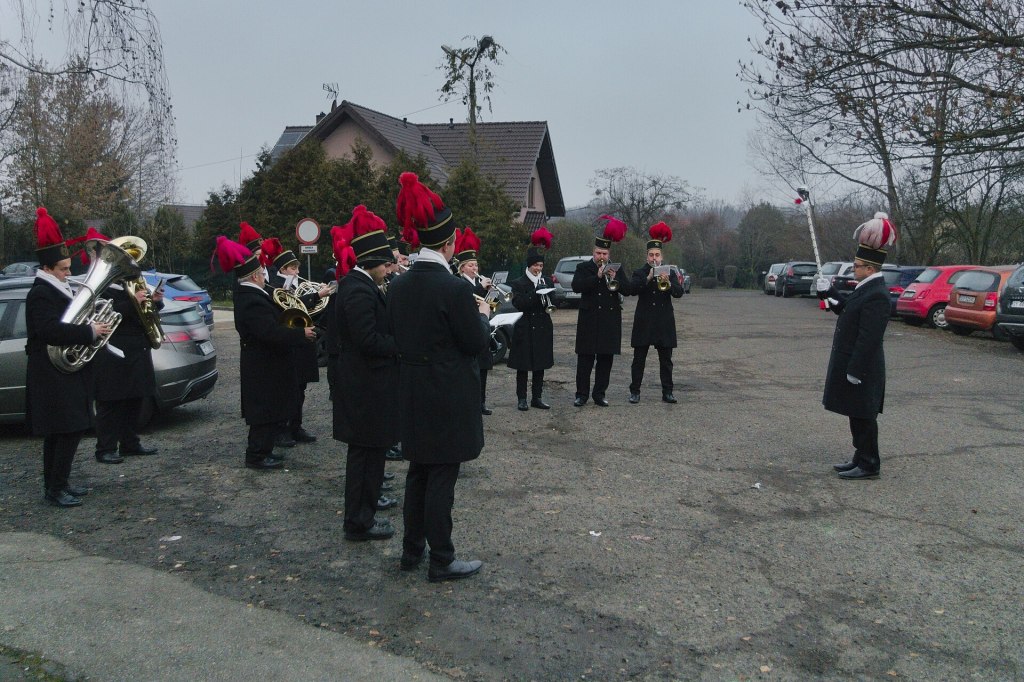
    He disappeared for a moment and returned carrying his ceremonial miner’s uniform — known as the Mundur Górniczy — together with the szpada górnicza, a miner’s ceremonial sword. In Silesia, mining isn’t just an industry; it’s a heritage, a responsibility, and a source of pride woven through generations. The uniform reflects that. The jacket, the distinctive hat with its plume, the sword — each piece carries profound meaning.

    He was a serious man: quiet, direct, the kind of person whose presence filled a room without effort. A manager, with the weight of countless responsibilities on his shoulders. And yet, that evening, he smiled — a warm, unmistakable smile — and insisted that I try on his uniform.

    I had worn a uniform myself since I was seventeen years old, first in the Navy and later in the police. I knew what a tunic represents — the pride, the responsibility, and the quiet reverence it is owed. Confused as I was, and more than a little drunk, I was incapable of treating it as a costume. I couldn’t treat his life’s honour as a joke.

    My friend, her mum, and her brother laughed loudly as I stood there, solemn and slightly overwhelmed. But her father didn’t laugh. He watched with quiet pride.

    There are photographs of that moment somewhere — me standing stiffly, wearing a jacket that didn’t quite fit, a hat with a plume denoting a rank I didn’t yet understand, and holding a real ceremonial sword. My face in those pictures is deadpan, without a trace of amusement; in truth, I looked completely terrified. The memory remains vivid. Not because it was surreal, though it certainly was, but because it was a gesture of trust. A welcome far deeper than I realised at the time.

    He passed away in 2021, and my friend is still devastated by the loss. When I think back to that evening now, I feel it differently — not as something strange or humorous, but as a quiet honour. A small, extraordinarily generous moment from a man who, without saying a word, chose to share a piece of who he was with me.

    That first visit stayed with me in ways I didn’t fully grasp at the time. There are countless books about Polish food and culture written by people far more knowledgeable than I am. This isn’t one of those. It’s simply the story of what I was given — the meals, the kindness, and the small rituals that opened a door for me. I grew to love Polish food, but more than that, I grew to love the people who placed it in front of me.

    In 2010, when I returned not as a visitor but to live and work, I realised just how much that first welcome had already prepared me.

    Featured Image Photo credit: “Bytom-Miechowice Barborka 2022 2” by Adrian Tync is licensed under CC BY-SA 4.0.