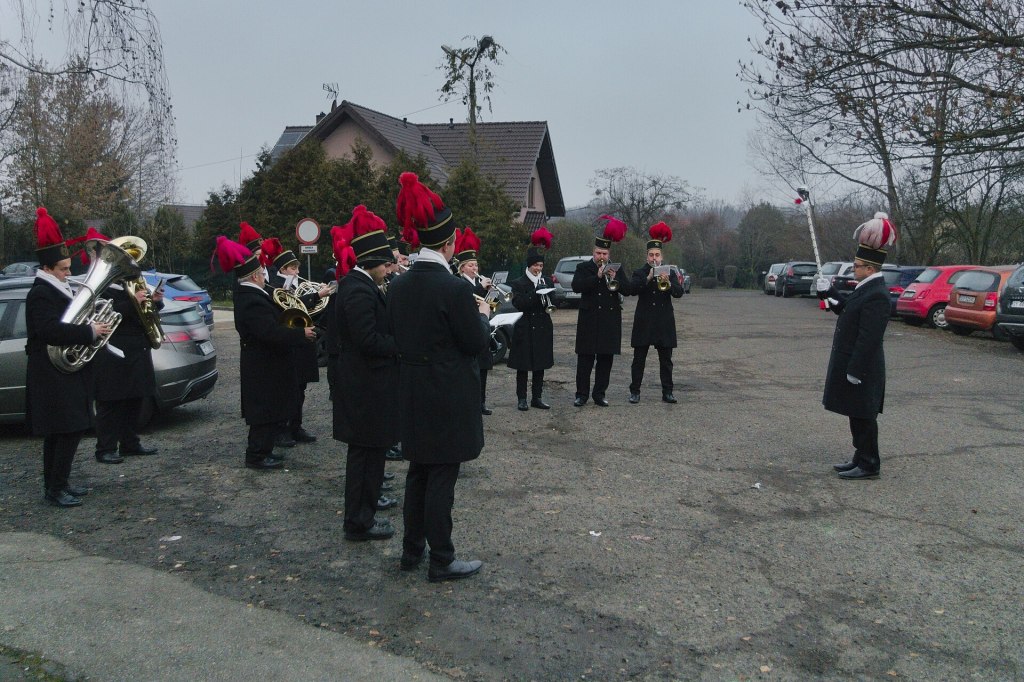
The Mundur Górniczy
Having acclimatized to the relentless generosity of Polish mealtimes, my 2007 trip continued to unfold. A few days later, I visited another friend’s home. By then, I’d already learned that Polish families take genuine delight in hosting, and her family was no exception. But this meal felt different from the ceremonial bigos of my first night. This wasn’t a dish prepared for a grand occasion. This was simply what they ate — and that made it feel even more intimate.
Her mum served kotlet schabowy: pork cutlets, breaded and fried until crisp and golden. It came with boiled potatoes, the cooking juices and oil spooned generously over the top. I cannot overstate how quickly this became one of my favourite meals. It was simple, honest, and deeply comforting.
Beside it sat mizeria — cool, creamy cucumber sliced so thin it was almost translucent. I didn’t know then that every family had their own version, or that this quiet little side dish would become something I’d crave years later. At the time, it was just refreshing, unexpected, and perfect alongside the kotlet.
And then there was the salad.
My friend brought out a glass bowl so large it could have doubled as a fish tank. Inside was a layered salad — colourful, meticulous, almost architectural. Each layer was distinct, a literal rainbow of vibrant vegetables; it looked like a celebration disguised as a weekday dish.
What I didn’t realise then was that this was the very heart of Polish home cooking: not grand gestures or special-occasion meals, but the everyday generosity of a family table. The kind of food that appears without fuss, made simply because that’s how they feed the people they care about.
And yes — vodka appeared again, as inevitable as the bread on the table. I tried to pace myself, but refusing a shot felt impossible. You raised the glass, thanked your hosts, drank — and somehow it was full again before you’d even set it down.
After the meal — after the kotlet, the potatoes, the mizeria, the layered salad, and the vodka that refilled itself whenever I looked away — my friend’s father did something I will never forget.
He disappeared for a moment and returned carrying his ceremonial miner’s uniform — known as the Mundur Górniczy — together with the szpada górnicza, a miner’s ceremonial sword. In Silesia, mining isn’t just an industry; it’s a heritage, a responsibility, and a source of pride woven through generations. The uniform reflects that. The jacket, the distinctive hat with its plume, the sword — each piece carries profound meaning.
He was a serious man: quiet, direct, the kind of person whose presence filled a room without effort. A manager, with the weight of countless responsibilities on his shoulders. And yet, that evening, he smiled — a warm, unmistakable smile — and insisted that I try on his uniform.
I had worn a uniform myself since I was seventeen years old, first in the Navy and later in the police. I knew what a tunic represents — the pride, the responsibility, and the quiet reverence it is owed. Confused as I was, and more than a little drunk, I was incapable of treating it as a costume. I couldn’t treat his life’s honour as a joke.
My friend, her mum, and her brother laughed loudly as I stood there, solemn and slightly overwhelmed. But her father didn’t laugh. He watched with quiet pride.
There are photographs of that moment somewhere — me standing stiffly, wearing a jacket that didn’t quite fit, a hat with a plume denoting a rank I didn’t yet understand, and holding a real ceremonial sword. My face in those pictures is deadpan, without a trace of amusement; in truth, I looked completely terrified. The memory remains vivid. Not because it was surreal, though it certainly was, but because it was a gesture of trust. A welcome far deeper than I realised at the time.
He passed away in 2021, and my friend is still devastated by the loss. When I think back to that evening now, I feel it differently — not as something strange or humorous, but as a quiet honour. A small, extraordinarily generous moment from a man who, without saying a word, chose to share a piece of who he was with me.
That first visit stayed with me in ways I didn’t fully grasp at the time. There are countless books about Polish food and culture written by people far more knowledgeable than I am. This isn’t one of those. It’s simply the story of what I was given — the meals, the kindness, and the small rituals that opened a door for me. I grew to love Polish food, but more than that, I grew to love the people who placed it in front of me.
In 2010, when I returned not as a visitor but to live and work, I realised just how much that first welcome had already prepared me.
Featured Image Photo credit: “Bytom-Miechowice Barborka 2022 2” by Adrian Tync is licensed under CC BY-SA 4.0.


Leave a Reply