

- File Box: 477 | Archive Entry
- FILE REF: 477-01
- LOCATION: North Wales & Katowice, Silesia (2010)
- TOPIC: From Police to TEFL Teacher. The Corporate Gloss & The Film-Noir Corridor. Outed By A Wristwatch.
- READ TIME: 5–7 Minutes
From Police to TEFL Teacher
How did I retire from a highly skilled and vocational job I’d been doing for 23 years, leave on a Wednesday, and arrive in Poland two days later to work for a small language school in Gliwice? And how did I then, through another school — EMPIK, based in Katowice — end up teaching English to a group of remarkable people before I even stepped into a proper civilian classroom?
The short version is this: four Polish friends I’d met in the UK were delighted that I wanted to experience life in their country. I’d grown close to two of them in particular through my police work in North Wales. They had volunteered to work with me on community cohesion projects, giving up their spare time and going far beyond what was expected. By 2010, they were back home, but when I mentioned my plan to retire and move, they promised to help in any way they could.
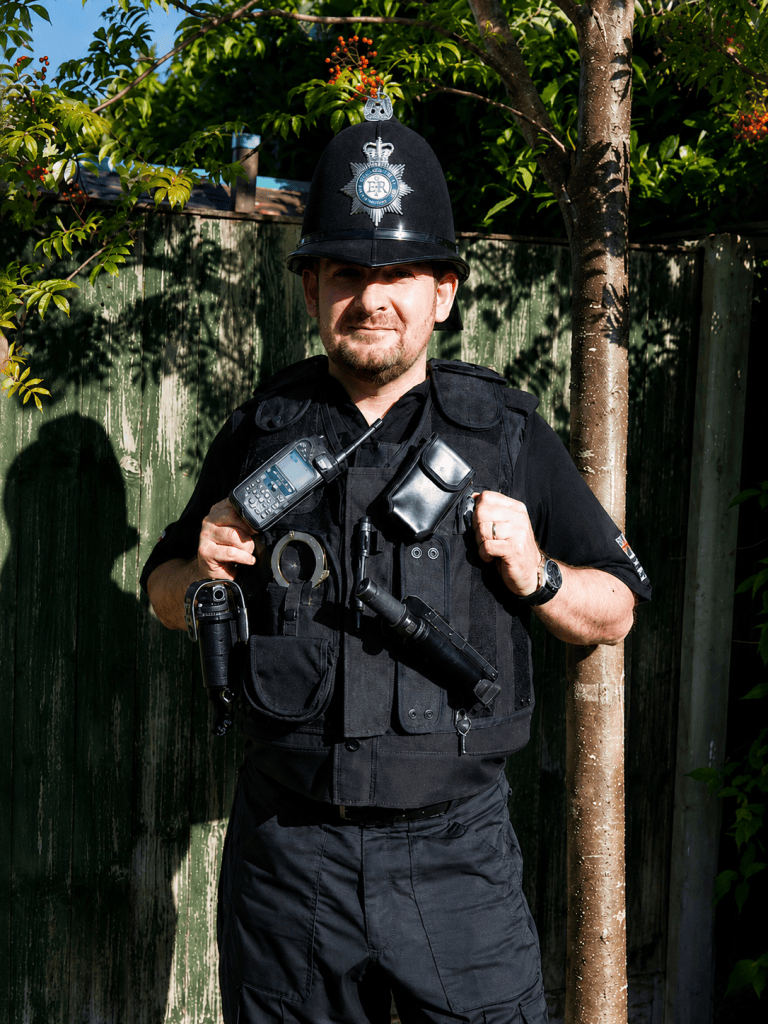
Last day in uniform complete with non-issue wristwatch
I didn’t rely solely on being a native speaker. I completed a TEFL qualification, extra modules on classroom management, and observed teaching practice at a local college. I wasn’t naive enough to think I could instantly transform into a seasoned educator, but I hoped my life experience and native accent might see me through. Still, after two decades in policing, nothing prepared me for the realisation that I didn’t actually know *why* half the things I said in English were grammatically correct. So I studied hard.
True to their word, my friends arranged interviews, and I secured work with two schools: EMPIK in Katowice and Britam in Gliwice. The two couldn’t have been more different.
The Corporate Gloss & The Film-Noir Corridor
EMPIK was a large national chain — polished, corporate, and modern. It had glossy posters, glass doors, and a confident buzz that made you feel as if you’d walked into a lifestyle brand. Even the security guard wore a full uniform; she turned out to be one of the warmest people in the building, always greeting me with genuine kindness.
My very first contract wasn’t inside a school at all — it was inside the Police Headquarters at Katowice. I was assigned to guide a group of officers through a grammar book ahead of the Euro 2012 tournament. The brief was strict: minimum two pages per lesson, review everything, answer all grammar points.
“How many students?” I asked.
“Eight police officers. Some have a very high command rank. Don’t let EMPIK down — this is an important contract.”
I later learned I was replacing a native speaker who had simply stopped showing up to avoid answering complex linguistic questions. No pressure at all.
I wouldn’t have survived those first visits without Stefan — a no-nonsense English philologist and a true force of nature. He had a class at HQ at the same time. He would meet me in Katowice center, walk me to HQ, and afterwards stand waiting on the freezing train platform just to ensure I caught the right train home. Sometimes his partner Jolanta joined us. Their loyalty was extraordinary.
Inside headquarters, everything felt surreal. The sign-in book at the front desk was a masterpiece of bureaucratic precision. One evening I accidentally wrote on the wrong line; the desk officer huffed as if I’d defiled a national monument, prompting Stefan to turn crimson while explaining in rapid Polish that I was new.
After signing in, Stefan would head up to his floor while I walked down endlessly silent corridors. I passed heavy doors sealed with wire and what looked like red sealing wax. The quiet was cinematic — pure Polish film noir.
Outed by a Wristwatch
I arrived at the briefing room with no intention of revealing my past. I wanted a clean slate. It felt absurd to walk in and announce, “Good evening — I used to do your job.”
For weeks, they were polite, formal, and slightly amused by my attempts to explain conditionals. Then one evening, as we wrapped up, I felt a sudden shift in the room. One of the senior officers leaned forward, squinted at my arm, pointed directly at my wrist, and asked:
“Pan Gary…We are curious… why does your watch say POLICE?
I froze. My wristwatch — an inexpensive, sturdy model I’d bought off-duty in the UK simply because I liked the design — had the word POLICE printed across the face in bright, bold lettering.
“Oh, it’s just a brand,” I stammered, trying to laugh it off. “Italian, I think.”
She raised an eyebrow. “Tak, tak… but why buy a watch that says POLICE?”
The entire class leaned in.
I took a deep breath.
“Well… actually, it might be a good time to tell you. I used to be a Police Officer. I was given all manner of uniform and equipment, but never a wristwatch. Not only that, but I only retired a month ago.”
Grammar homework evaporated instantly. The formality dissolved into a barrage of genuine questions:
“Where in the UK?”
“Is British paperwork worse than ours?”
“Did you have our kind of drunks?”
Then came the big question: “Did you really patrol unarmed?”
I explained that throughout my 23 years — mostly spent patrolling rural North Wales — like the majority of British police officers, I chose to work unarmed and often solo. My best tools for getting home safely weren’t firearms; they were communication, common sense, and building respect in the community.
The room went quiet. Heads shook in disbelief. One senior detective admitted softly that while he had drawn his sidearm many times, he had never needed to fire it, but was always prepared to do so. In that short ten-minute exchange, something fundamental shifted. The invisible wall vanished, replaced by mutual professional respect.
When our course finished at the end of spring, the final class was unexpectedly moving. As we parted ways, a divisional commander handed me his official business card, saying quietly, “Any problems. Anything you need. Please call me.”
When I think back to those cold nights in Katowice now, the grammar rules blur. What remains is the sound of footsteps in echoing corridors, eight officers who trusted a stranger, and the glint of an old watch face catching the light.

The original POLICE watch, sadly no longer in working order

 Ghosts to Carry, Stories to Keep