The Move and Arrival in Łabędy
I didn’t realise, not fully, how much of my future I had already set in motion. Those Polish lessons I’d taken — the ones I treated as a curiosity, a polite nod to a country I often visited — suddenly revealed themselves as preparation. Not deliberate or strategic or sensible, but the quiet kind that builds in the background while you’re busy doing something else. I had learned just enough Polish to feel brave, and nowhere near enough to be safe.
Looking back now, the clues were everywhere. I just didn’t fully recognise them at the time. The decision to leave the Police came like a trapdoor opening beneath me. In 2009, I was planning seven more years of service; the next, I was staring at a pension calculation that said I could walk away in 2010. I remember the shock more than the freedom. What now? And then the suggestion — half‑serious, half‑hopeful — from Polish friends: “Come to Poland. Teach English. We’ll help you.”
It sounded mad. It sounded perfect.
I had spent three years visiting Poland, eating obiad in warm kitchens, being fed, guided, and looked after. I knew Katowice, Gliwice, Bytom. I knew zapiekanka and schabowy and the strange comfort of Polish fast food. I knew the rhythm of Polish hospitality, the way people fed you before they asked questions. But visiting is not living. I didn’t fully understand that yet.
Two days after leaving the Police, I landed in Poland with two jobs lined up, a handful of phrases, and the belief that offers of assistance would smooth the way. In reality, I was painfully unprepared. I had underestimated everything — the language, the bureaucracy, the loneliness, the sheer weight of starting again.
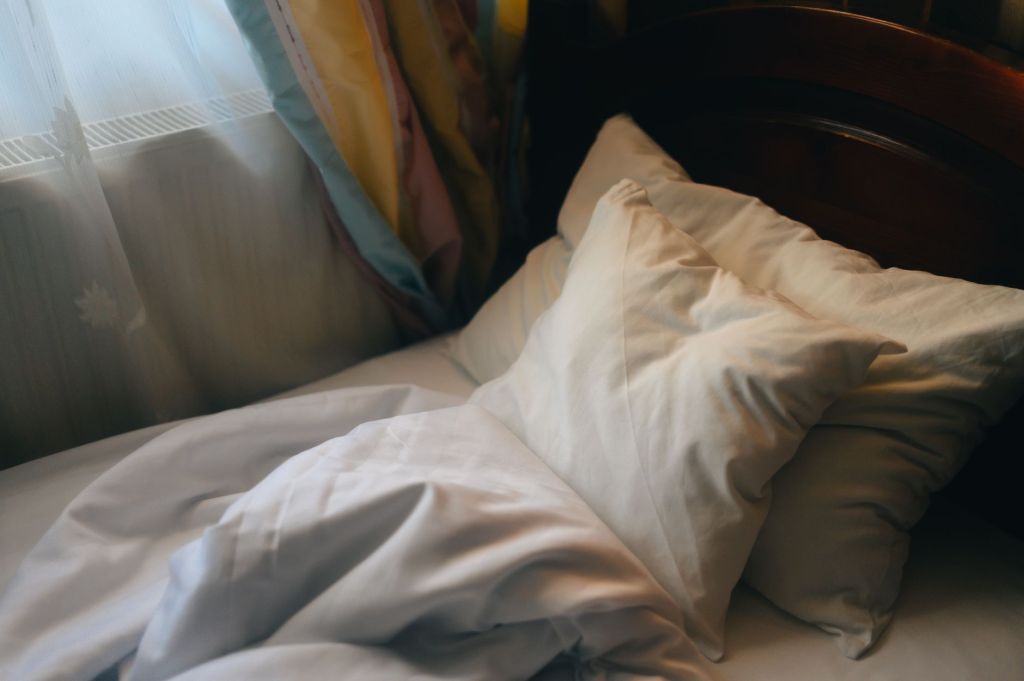
My first home was the small hotel — or rather hostel — in Łabędy. It wasn’t glamorous, but it was mine. A room, a bed, a door I could close. I bought a bułka and a banana from the nearby Biedronka store because I didn’t know what else to buy. I didn’t know how to order anything more complicated. But that wasn’t entirely true.
The strange thing was… I did know some Polish. I knew how to ask for things. I could manage simple phrases. Later, I even became good at coping — holding out coins for a cashier to choose the right amount, rehearsing twenty everyday sentences until they came out fluently. But in those early days, knowledge wasn’t the problem. Confidence was. And something else too: I didn’t want to ask for help. I didn’t want to seem helpless, or be a burden, or admit how lost I really was.
Asking if someone spoke English was too easy, and once a lady threw the question straight back at me: “Why should I speak English? I’m Polish. In Poland. You should speak Polish too.”
She had a point.
I didn’t want to ask for help.
And then — as so often happens in Poland — someone stepped in.
The details are simple: a meal offered, a gesture of concern, a kindness that arrived without ceremony. In those early days, food was not just food. It was rescue. It was reassurance. It was the reminder that I wasn’t entirely alone. The hospitality I had known as a visitor returned, but now it carried a different weight. It wasn’t just generosity; it was survival.
Those first meals kept me afloat when everything else felt uncertain. They were the bridge between the life I had left and the life I was trying to build. Slowly, I began to understand something important: I hadn’t simply chosen Poland. In its own quiet way, Poland had made room for me too.
Standing in that small hotel room, I realised something that had been building for years:
This wasn’t a visit any more.
This was my life now.
And it would begin, as so many Polish stories do, with acts of friendship, extraordinary kindness — and food.
The Hostel, the Restaurant, and the Awkward First Meals
The hostel in Łabędy had a small restaurant attached. I remember it being divided into two areas, though I couldn’t tell you now what the difference was. I used it rarely, and I still don’t fully understand why. It would have made life easier. But something in me hesitated.
Maybe it was shyness.
Maybe it was the feeling of being an outsider.
Maybe it was the atmosphere.
In the evenings the place was busy, filled with men who seemed to be staying there to be close to the huge industrial zone down the road. Many were from other countries — Germans especially — and the whole place reminded me faintly of a motorway service‑station canteen. Not unfriendly, not unpleasant, just… functional. A place for people who knew exactly why they were there.
Some days I didn’t know why I was there.
Not yet.
Breakfast was usually scrambled eggs and sausages, served without fuss by two young ladies, identical twins. Half-awake most mornings, I found myself wondering whether they ever swapped places just to confuse the guests. In my head they became “The Breakfast Twins”.
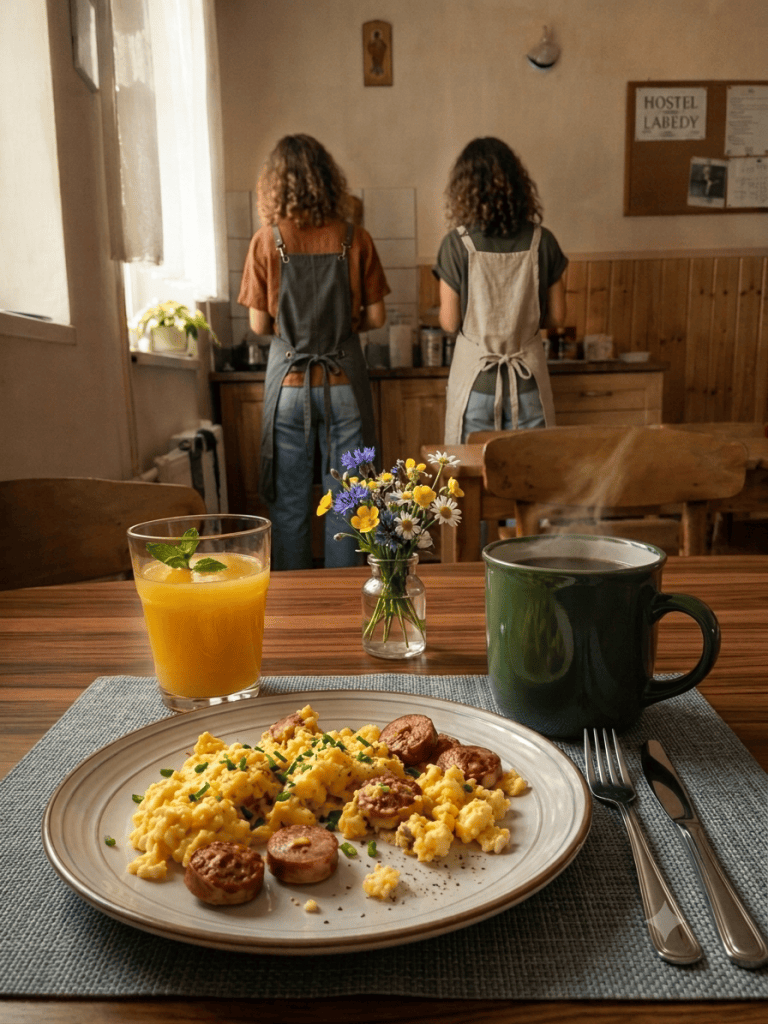
Śniadania with the twins
In the evenings, until ten., they served Polish dishes — proper meals — but I was teaching most afternoons and often didn’t return until after nine, and by the time I returned I felt too awkward to walk into a room full of strangers who all seemed to belong there more than I did. I used to look longingly through the window as I passed. There was draught beer, a television on the wall, people relaxing after work. It seemed impossibly easy for them. I often thought to myself that I might pop down later, but once I closed the door to my room, I never did.
So I made do.
Most evenings I bought a packet-soup, a banana and a bułka — if there were any left — from Biedronka and called it dinner. It wasn’t a choice. It was a retreat — a way of avoiding embarrassment, avoiding conversation, avoiding the possibility of getting something wrong.
And of course, I did get things wrong.
 Ghosts to Carry, Stories to Keep
Leave a comment