Two-wheel traveller, occasional worker, and quiet recorder of old moments. Writing vignettes, short pieces, and poetry about past lives, daily routines, and the space between memory and place.
This is Part 2 of Railway Memories. You can read the beginning here: Part 1: Gliwice Station
That first year teaching in Katowice, the outbound journey was always the easy part. Even in winter, Gliwice could surprise me with blue skies and a kind of brittle brightness — the sort of weather that tricks you into thinking life is going rather well, right until you step outside and your face freezes. The train was usually already there, humming quietly, doors open, no rush. I’d take a seat by the window, settle in, headphones on, a bit of music, my lesson notes spread across my lap in a way that suggested competence.
As winter turned to spring, it became rather enjoyable. If I wasn’t using headphones, my memory of waiting is of surprisingly little noise around me. The occasional station announcement — delivered in a tone that suggested I should already know what was being said — drifted across the platform. I’d listen for any clue, trying to pick out any mention of zmiana peronu or toru, and a platform number, or the dreaded opóźnienie — a delay. On one occasion, I didn’t hear the announcement at all; I simply noticed other passengers shrugging in that resigned, Silesian way and drifting towards another platform. You had to be ready to move — ideally before the train did.
Once we pulled away, the notes went back into my bag, and I’d let the journey take over. There was something soothing about that stretch of track — the familiar landmarks that became my own private map of Silesia, reassuring me that at least something in my daily routine knew where it was going.
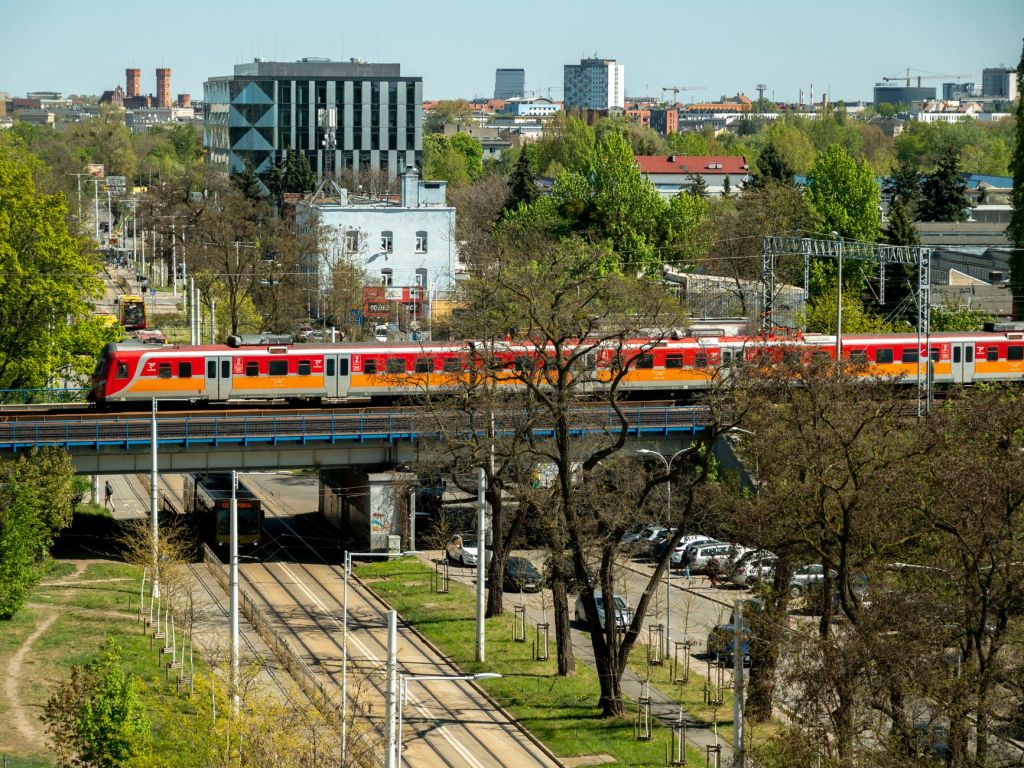
I simply loved looking outside as we left the suburbs and outer edges of the city. I was always surprised as to how much space there appeared to be, not just fields and patches of forestry but large open areas. I used to catch the sight of a pithead and wheel, and head back to a childhood shaped by mining country.
Just before we arrived in Zabrze, the sight of działki — allotments — came into view, a patchwork of crooked sheds and stubborn little gardens. I’d always found them oddly moving, these little oases of Polish culture. Some were set up as though their owners planned to spend entire summers there, with makeshift kitchens, sun-bleached deckchairs and a sense of stubborn independence that felt very Polish in the best way. Some were downright magnificent. No sign of growing anything — unless you counted a token tomato plant hidden behind the shed to satisfy the rules — just a grill, a hot tub and enough shades to suggest a long summer holiday conducted entirely within forty square metres. You could tell some plots had been held by the same families for decades; they had the confidence of inherited territory. I noticed one even had beehives, lined up like painted soldiers guarding their tiny kingdom.
Zabrze was where the train would fill up and where I’d probably have someone sitting next to me, or at least opposite, occupying all available seating. Noisy, vibrant and always entertaining for me to discreetly observe.
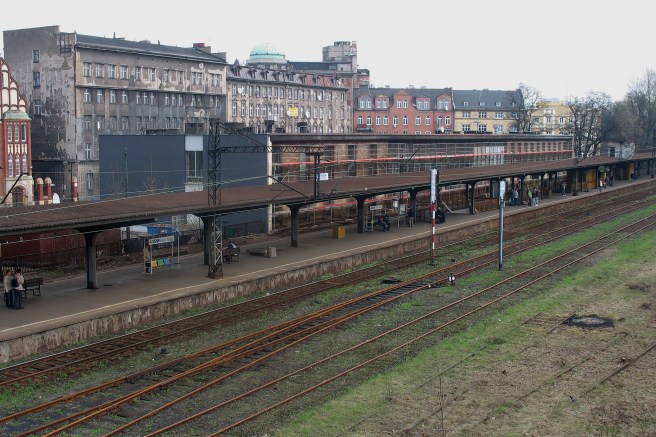
Zabrze railway station 2012
Then we’d be off again. More interesting architecture, huge skeletons of buildings — a leftover of Silesia’s vast industrial past — and all manner of unused railway lines, or what was left of them. Twenty years ago, the area must have been a hive of industry. I was, as always, curious to see a wide variety of dwellings, especially kamienice and familoki in the Ruda Śląska and Chorzów areas.
A small area that caught my attention, with more than a little sadness, was what appeared to be a dog rescue centre: a row of kennels outside with dogs of all descriptions, chained, but still with room to move about. I hoped they’d be taken somewhere better. Perhaps it was the official city dog pound, I never found out. I always made a point of looking at it as we trundled past.
Then into the outskirts of Katowice — more houses, more industry, a city.
These were just a few markers of the route that told me I was on time.
There was a rhythm to it all: music, notes, window, Silesia sliding by. A quiet, steady beginning to the working day. I didn’t realise it then, but those outbound journeys were the moments when I felt most settled — suspended between two cities, belonging to neither, but content in the movement between them.
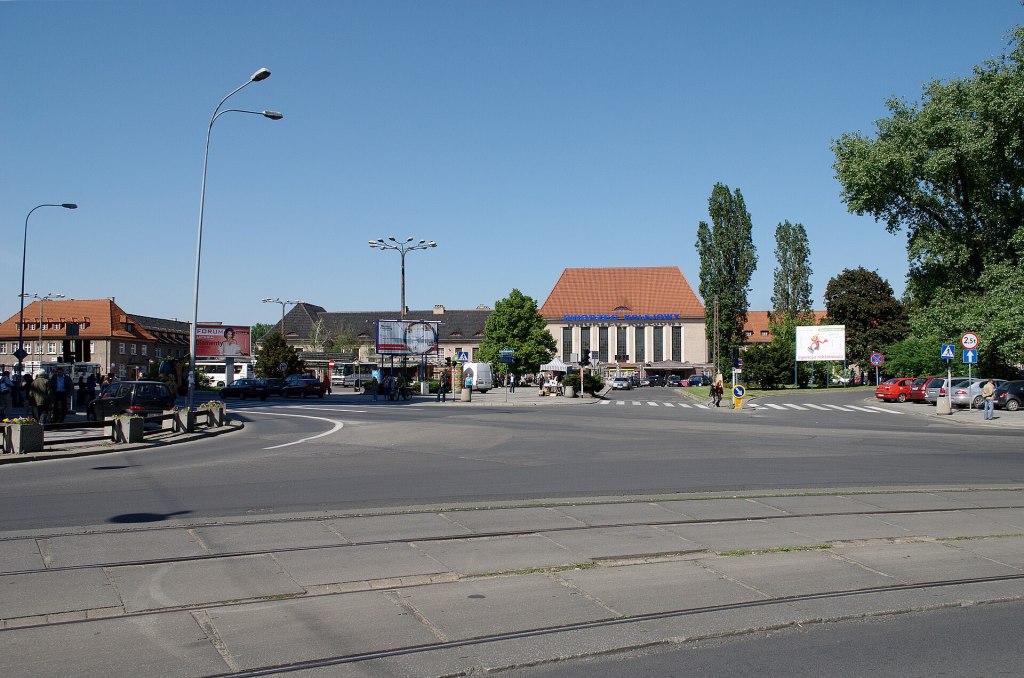
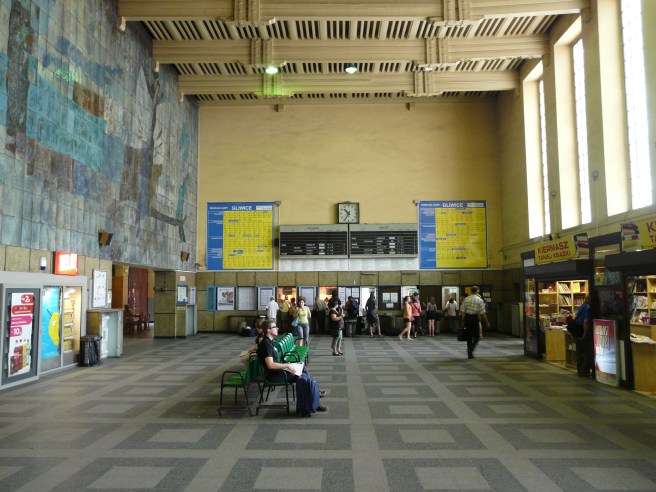
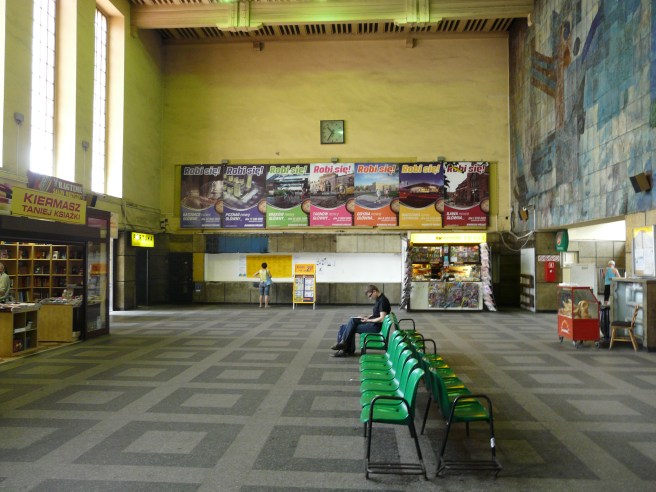
Looking at these Wikimedia photographs — the view of the railway station from across the road, the ticket hall, the tunnel — I realise how little I understood of the place in those early years. I thought I knew the station. I didn’t. Not even close. It became a gradual learning process, one I now have very fond memories of.
I often spent time on that opposite pavement, waiting at the light-controlled crossing, heart thumping because I had less than five minutes to catch the train. Every instinct told me I could run — no traffic anywhere near — but that was one of the first Polish rules I learned properly: you do not cross on red.
In the UK, a red pedestrian light is often treated as advice. If there’s traffic, you wait. If there isn’t, most people will ignore the red and cross. The Highway Code clearly states to wait until you get a green to cross; however, stand there too long on red with an empty road and people start to look at you as if you’ve misunderstood something obvious.
In Poland, it was the opposite. You wait. No traffic? You still wait. Everyone waits.
I once asked my police students about it. Their answer was disarmingly simple:
“Gary… if you were driving, would you stop at a red light?”
Yes, of course.
“Same thing for a pedestrian.”
That settled it.
Zebra crossings were another lesson entirely. In the UK, traffic slows the moment you approach the kerb. In Poland, I learned quickly not to assume anything. Cars didn’t always stop. You could already be on the crossing — halfway across, even — and they’d still pass in front of you or slip behind you, close enough that you felt the air move as they went by. I never quite got used to it. Every crossing felt like a small act of faith, or foolishness, depending on how honest I was being with myself.
Friends warned me to be careful; attitudes were changing, slowly, in theory. In the UK, if a car stops for you, you acknowledge it — a small wave, a nod, something that says thank you. It’s automatic, almost polite to a fault. I carried that habit with me to Poland, where it made absolutely no sense. On the rare occasions a driver did stop, I’d still give the little nod out of instinct, only to realise the traffic coming the other way hadn’t stopped at all and was already expressing its opinion via the horn. My British gratitude was entirely wasted on the wrong car.
Two opposite instincts — and I had to unlearn one while learning the other.
In that first photograph, the controlled crossing is there — left of centre, just behind the group of people waiting. I stood at that exact spot so many times, in snow, rain, sunshine, sometimes early, sometimes with minutes to spare, watching the seconds slip away while the road stayed completely empty.
Inside, the railway station had its own small world.
Now, the queuing system — or the idea of one — had its own way of working. Some of the ticket windows had a small, smooth concrete bollard planted in front of them — a quiet piece of architecture that created its own logic. You chose a kasabiletowa, stood behind whoever was ahead of you, and edged forward in a tidy single-file line. Once that person had finished with the kasjerka — a female ticket clerk, never once a male clerk, as far as I remember — they didn’t step back towards you; they simply moved to the left, slipping past the bollard and out into the hall. The queue dissolved and re-formed in one fluid movement. Simple. Effective. Entirely unspoken. I had never seen a queue regulated quite like it in the UK. It fascinated me.
Older passengers, or those desperate for information, sometimes bypassed the whole arrangement by calling out their questions from behind you, confident in the long-established rules of their own. No one complained. It was simply how things worked.
The big yellow-and-blue timetable boards were a mystery to me — dense blocks of information I could never decipher. I stopped trying. The only board that mattered was the one on the centre-right, the live departures board; ODJAZDY. That was the one I learned to read quickly. Time, destination, platform — that was all I needed. I wasn’t studying the network. I just wanted to get to Kato.
Most days I was travelling to lessons in Katowice. I’d arrive at Gliwice railway station in good time — early — if I could help it. I hated rushing. I’d go straight to the kasa and give the kasjerka my destination, the time, and whatever other details she needed. She’d nod, tap a few keys, then reach for one of those large, stiff cardboard blanks they used back then — tickets that felt more like something you’d keep in a drawer than hand over at a barrier.
She’d feed the blank into the printer with a practised little push, and the machine would come alive with that familiar clattering, the dot-matrix needles hammering the details into the card. Incidentally, one of my favourite words in Polish is terkotanie — clattering sound. A moment later she’d hand it back to me: a freshly printed, perfectly crisp ticket, still warm from the machine, as if it had only just been invented.
The ticket offices and all-important Odjazdy live display on the right.
There was the bookstall tucked neatly against the wall, the kind of place where time moved more slowly. I’d pretend to browse, as if I were the sort of man who bought discounted or used books in foreign languages before boarding trains. The man behind the counter always looked as though he’d seen everything twice already.
Then there were the plastic seats — back-to-back rows that discouraged comfort and punished optimism. I tried one once, briefly, before realising they were designed for people who had already given in.
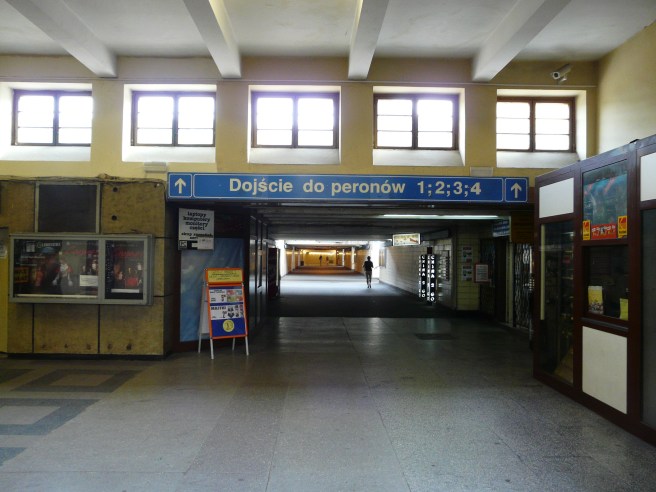
Access to the tunnel and platforms on the far right.
If I was late, though, everything changed. I’d run straight for the train, checking the platform number on the move. In the early days, I struggled to make sense of the signs. More than once I sprinted up the stairs only to realise the train was on the next platform — or the previous one. You couldn’t always see clearly where anything actually was.
If you didn’t have a ticket, you boarded anyway and went looking for the konduktor. It cost a little more, and you were expected to find him rather than sit and wait. Another rule, learned the hard way.
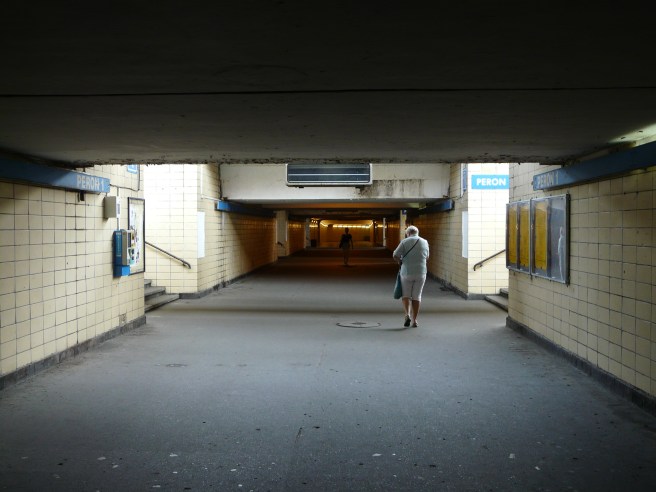
For months, I didn’t even know the tunnel existed — the long, echoing passage beneath the tracks. I discovered it only because a friend, with saintly patience, explained that I didn’t need to walk the long way round to reach the Forum shopping centre. I could simply walk through the station tunnel, following the tiled corridor, and emerge somewhere else entirely.
The tunnel and platform stairs either side.
The stairs were steep, cold, and always slightly damp. That was where I first learned the rhythm of Polish commuters — the purposeful descent, the instinctive sidestep, the quiet choreography of people who had been doing this all their lives. Exiting the train was always a buzz; no one hung about. It became a kind of march — purposeful, almost urgent — our footsteps echoing through the tunnel, walking through the hall and outside, dispersing left, right and centre.
Even now, without looking at the photographs, I can still see the station as it was. The ticket hall, the tunnel, the stairs — all of it fixed in memory more vividly than I’d expect. What surprises me most is that these images were taken in 2013, right in the middle of the years I lived in Gliwice. I can picture myself clearly: buying a ticket, running for a train, returning late — in darkness, in rain, with snow blowing across the platforms. The station felt different at night. That’s when I was slowly beginning to understand it.
Some of the images on this page were taken by others, long before I ever found them — yet I walked through those same doors, stood under those same timetables, breathed that same dust and the faint metallic warmth of the electric trains.
I passed through that station not long after, unaware that someone had already frozen it in time.
The five views of Gliwice station, all taken on a warm July day in 2013 by Dariusz Sieczkowski, show the building as it was just before everything changed.
I was there in those years — walking across that forecourt, watching the departures board flicker, carrying my own small story through the same hallways his camera captured.
These photographs are theirs. The memories threaded between them are mine.
Jeśli zdarzyło Ci się przechodzić przez dworzec w Gliwicach, podziel się tym, co pamiętasz.
If you travelled through Gliwice station yourself, feel free to share what you remember.
It is funny how a single, fleeting moment can hook itself into your memory and refuse to let go. For fifteen years, a specific freezing afternoon in January 2011 has lingered in my mind. I was walking down Ulica Zwycięstwa (Victory Street) in Gliwice, Poland—a grand promenade bustling with life, yet carrying the heavy, layered weight of its own history.
I never expected to write about Gliwice with this kind of tenderness. A decade ago, I was simply living my life: riding a bicycle along the tram tracks—constantly trying to avoid steering into them—and walking down Ulica Zwycięstwa in the bitter Silesian winter. I noticed the architecture, of course, but I didn’t yet understand why it mattered to me.
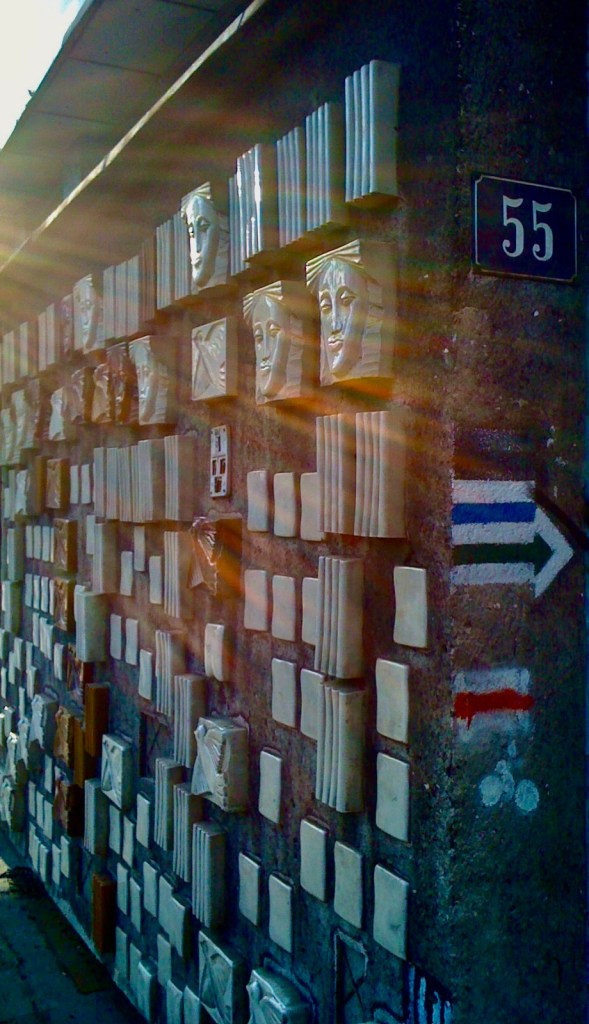
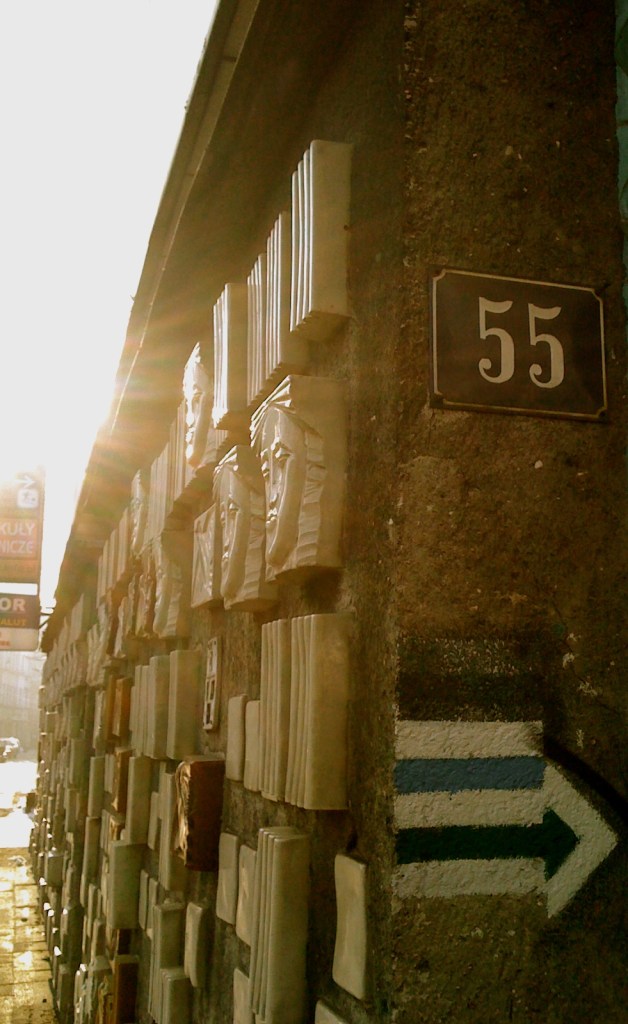
On that biting winter day, as the low afternoon sun streaked across the facades, I stopped dead in my tracks in front of number 55. There was a wall there that seemed to speak in an entirely different language than the grey, functional architecture surrounding it. I pulled out my trusty iPhone3G and took a few photos, capturing a moment in time just before the landscape changed forever.
Faces in Clay, Stories in Silence
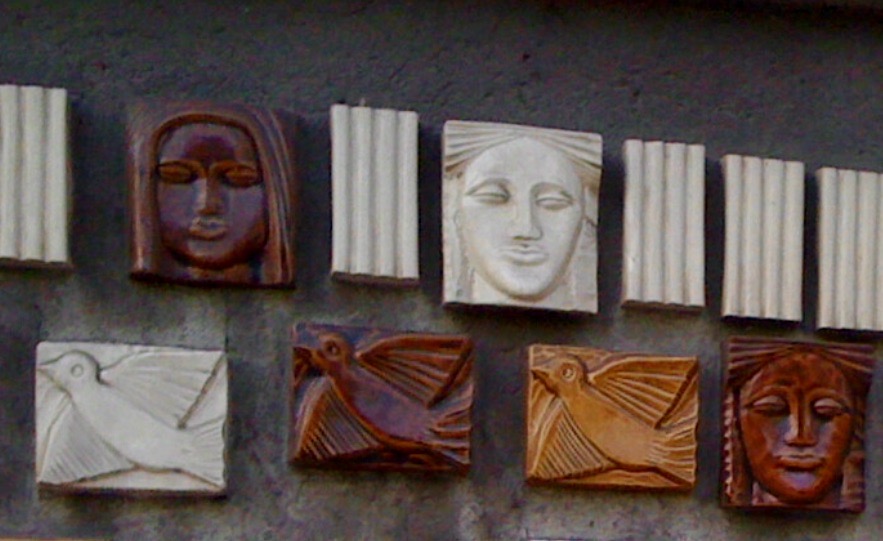
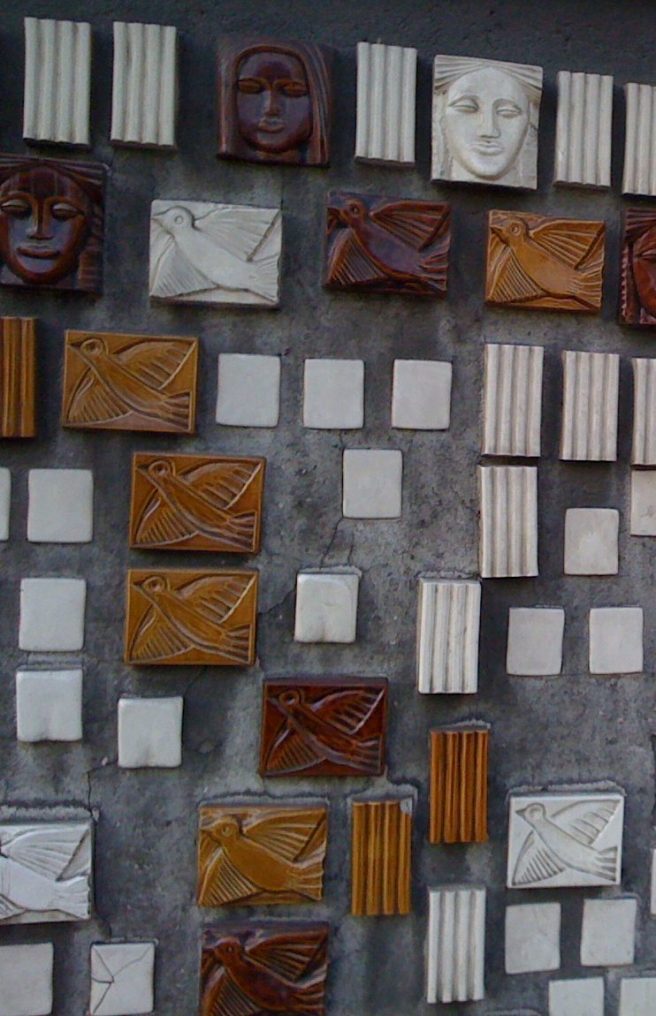
Looking back at the photographs now—and matching them against the archives of Gliwice’s urban transformation—the pieces of a long-standing puzzle have finally fallen into place. This building was the former “Sezam” department store. In post-war Poland, cooperative stores like Sezam (named after the magical phrase “Open Sesame”) were symbolic gateways to modern shopping and community life, anchored right on the city’s main promenade.
The folk-modern relief tiles on the facade of the former Sezam building.
Knowing its true identity completely recontextualises the incredible textures on that wall. Those stylised panels, clay faces, and birds in flight were a brilliant example of mid-century Polish architectural ceramics (ceramika architektoniczna). During the post-war era, artists took the raw, ancient motifs of traditional Polish folk art and sharpened them into sleek, modern geometry. They were commissioned to press a human soul directly into the exterior clay tiles, bringing texture, warmth, and myth to a functional urban landscape.
Even when I stood there in 2011, the elements and the vibrations of the busy street were taking their toll. A few distinct tiles were already missing from the wall, leaving empty concrete voids like missing teeth in a familiar smile.
Signposting a Path at the Crossroads
As I moved closer to the corner of the building, just beneath the dark enamel number 55 plaque, my camera caught another curious detail: a painted arrow pointing to the right, a striking geometric burst of blue, white, and green, set deliberately above a weathered red line.
The hand-painted PTTK trail markers on the corner of number 55.
For years, I wondered if this was some sort of civil defence sign, a remnant of ammunition navigation, or a shelter marker. The truth, as it turns out, is far more poetic. It was a classic Polish tourist trail marker (szlak turystyczny).
In Poland, these hand-painted colour codes form a silent, nationwide navigation network managed by the PTTK (Polish Tourism and Sightseeing Society). The solid red rectangle denotes a Szlak główny—a region’s primary, historically significant trail—while the blue and green markings signify overlapping regional and local paths.
Number 55 wasn’t just a building with an artistic face; because of its prominent position on the main artery of the city, it had been chosen as an urban navigation anchor. It stood at a literal crossroads, silently directing hikers and travellers out of the concrete centre and toward the wider Silesian landscape.
Low winter sun catching the geometric tiles as they line the bustling street.
Standing there in the cold as an Englishman trying to find my own bearings in a new country, I was staring at a wall explicitly designed to show people how to navigate a journey.
A Twilight Documented
My camera had accidentally captured the twilight of Sezam. Just a couple of years after I took these photographs, the building was prepared for demolition to make way for the massive DTŚ highway tunnel project that completely redrew the map of central Gliwice. Number 55 vanished from the physical world.
But the most profound comfort is knowing that these “ceramic ghosts” did not end up as rubble. Before the wrecking ball swung, local preservationists carefully pried the distinctive decorative tiles from the facade for preservation and relocation within the city.
They were a collective voice from the past, speaking to a bustling street in absolute silence. And though the corner of Zwycięstwa looks entirely different today, I am incredibly grateful to have this small, digital time capsule of the day the wall showed me the way.
Over to You
If you remember walking past the old Sezam building, did you ever stop to look at those clay faces too? How do you feel about this part of the city now that it has changed so drastically?
Do you have memories of the local shops like Mandarynka, or that strange, almost claustrophobic, surreal market tucked away under the bridge nearby?
Comments are open—please share your memories below!
Reszta należy do Was.
Jeśli pamiętasz, jak kiedyś przechodziłeś obok starego budynku Sezam, zatrzymywałeś się, żeby przyjrzeć się tym glinianym twarzom? Jak dziś patrzysz na tę część miasta, skoro zmieniła się tak radykalnie i tamten budynek zniknął z mapy Gliwic? Masz jakieś wspomnienia związane z lokalnymi sklepami, jak Mandarynka, albo z tym dziwnym, trochę klaustrofobicznym, surrealistycznym targiem ukrytym pod pobliskim mostem?
Komentarze są otwarte — podziel się swoimi wspomnieniami poniżej!
Every name a memory. Every arrow a decision. Arrivals, departures, reunions, goodbyes. Most of them unnoticed. All of them real.
This sign is wonderful — pure PKP 2011, a simple reversible route card. One printed strip doing both directions: to Katowice and back again. Two lines, two arrows, completing the circle without fuss. It has that slightly handmade, photocopied, “laminated in the depot office” feel. The typography isn’t polished, but the spacing is honest and tells you everything you need to know from the platform in Katowice. This train will return the way it came. Probably produced on a budget of 2 zł and a pot of tea — and that’s part of its charm.
Każda nazwa to wspomnienie. Każda strzałka to decyzja. Przyjazdy, odjazdy, powitania, pożegnania. Większość niezauważona. Wszystkie prawdziwe.
Ten znak jest wspaniały — czyste PKP z 2011 roku, prosta odwracalna tablica relacyjna. Jeden pasek papieru obsługujący oba kierunki: z Białegostoku do Katowic i z powrotem. Dwie linie, dwie strzałki, cały obieg załatwiony bez zbędnego zamieszania. Ma w sobie ten lekko „biurowy” urok — trochę ręczna robota, trochę ksero, trochę laminator z zaplecza. Typografia może nie jest wyszukana, ale odstępy są uczciwe i mówią wszystko, co trzeba, stojąc na peronie w Katowicach. Ten pociąg wróci tą samą drogą. Pewnie powstało to za jakieś 2 zł i kubek herbaty — i właśnie w tym tkwi cały urok.
A sign, a platform, and the beginning of a very unexpected moment.
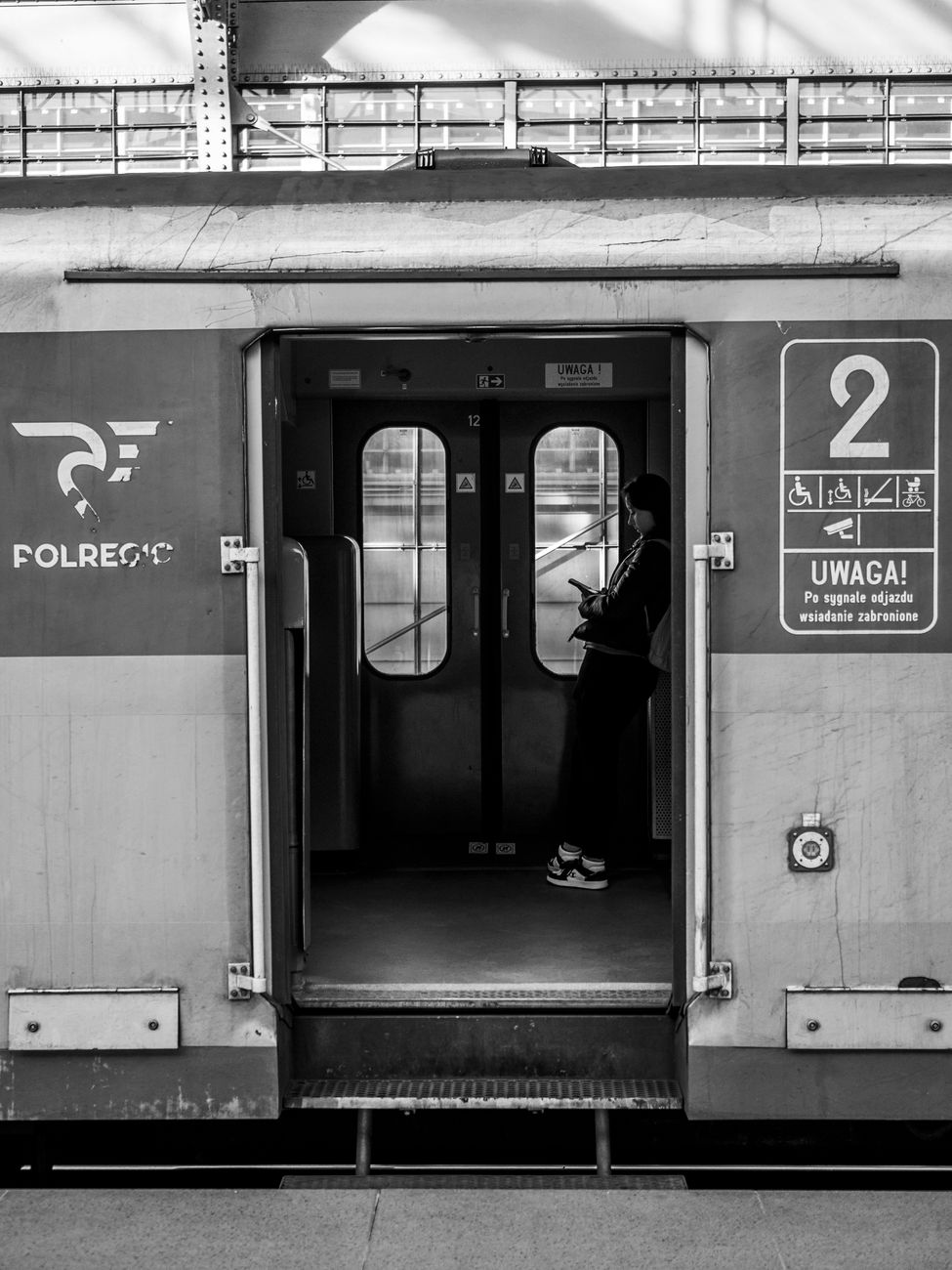
She leaned out of the carriage with such quiet authority that I froze for a moment, thinking I should ask before taking her picture. But the moment was too good, and my iPhone acted before my brain did.
Wychyliła się z wagonu z taką spokojną pewnością, że na chwilę zamarłem, myśląc, że powinienem najpierw zapytać, zanim zrobię zdjęcie. Ale chwila była zbyt dobra, a mój iPhone zadziałał szybciej niż mój rozsądek.
The Lady Conductor
  She asked what I was looking at.

  I said: “You’re the Queen of the PKP railways.”

  She tried not to laugh. Then she did.

  And the train remembered it had somewhere to be.
Zapytała, na co patrzę.
Odpowiedziałem: „Pani jest królową kolei PKP.”
Próbowała się nie śmiać. Potem się roześmiała.
A pociąg przypomniał sobie, że ma dokąd jechać.
Caught red‑handed on a Polish platform.
There I was, holding an iPhone 3 like it was a Leica worth more than the train itself, when our Queen conductor suddenly turned and fixed me with a look that could stop a locomotive. Then, in a voice that sliced through the chaos of the station, she demanded: “Co tam takiego ciekawego do fotografowania?” (What’s so interesting to photograph?)
I froze. Completely. A rabbit in headlights, except the headlights were wearing a PKP uniform.
The passengers reacted instantly — laughter, eyebrows shooting up, that collective oho, someone’s in trouble energy. The man in the foreground, who clearly hadn’t noticed me at all, snapped his head up. In the photo he’s looking straight at her, probably thinking, What did I miss? Who’s she shouting at?
And then there’s the woman with the hat. Oh, she’s magnificent. Elegant winter coat, tall boots, a hat that says Warsaw, 1958 — and then a bright blue sports bag that says Decathlon clearance aisle. Her expression is priceless: somewhere between this is hilarious and I cannot believe this foreigner is doing this.
I straightened up, summoned my best Polish, and squeaked out:
“Proszę Pani… Pani jest Królową Kolei PKP!”
She gave me a look. A smile. A tiny shake of the head. Then she went back to her job, probably thinking, Tourists. I rolled away, mortified, desperate to see what my heroic little iPhone had captured.
It didn’t let me down. I still treasure that photo — the Queen, the man, the hat, the blue bag, the whole absurd tableau.
A moment I’ll treasure forever.
Przyłapany na gorącym uczynku.
Stałem tam z moim iPhonem 3, trzymając go tak, jakby był Leiką wartą więcej niż cały pociąg, kiedy nasza Królowa Konduktorek nagle się odwróciła i spojrzała na mnie wzrokiem, który mógłby zatrzymać lokomotywę. A potem, głosem przecinającym chaos dworca jak brzytwa, zawołała: „Co tam takiego ciekawego do fotografowania?”
Zamarłem. Kompletnie. Jak królik w świetle reflektorów, tylko że reflektory miały mundur PKP.
Pasażerowie zareagowali natychmiast — śmiech, uniesione brwi, ta charakterystyczna energia oho, ktoś ma kłopoty. Mężczyzna na pierwszym planie, który najwyraźniej w ogóle mnie nie zauważył, gwałtownie podniósł głowę. Na zdjęciu patrzy prosto na nią, pewnie myśląc: Co ja przegapiłem? Do kogo ona mówi?
A potem jest ona — kobieta w kapeluszu. Ach, jest wspaniała. Elegancki zimowy płaszcz, wysokie buty, kapelusz jak z warszawskiego peronu w 1958 roku — i nagle jaskrawoniebieska torba sportowa, która wygląda jak z działu wyprzedaży w Decathlonie. Jej mina jest bezcenna: coś pomiędzy to jest przezabawne a nie wierzę, że ten obcokrajowiec to zrobił.
Wyprostowałem się, zebrałem resztki odwagi i wydukałem moją najlepszą polszczyzną:
„Proszę Pani… Pani jest Królową Kolei PKP!”
Spojrzała na mnie. Uśmiech. Delikatne pokręcenie głową. A potem wróciła do swoich obowiązków, pewnie myśląc: Turyści. Odjechałem na swoją stronę peronu, czerwony jak burak, rozpaczliwie chcąc zobaczyć, co uchwycił mój bohaterski mały iPhone.
Nie zawiódł mnie. Do dziś kocham to zdjęcie — Królowa, mężczyzna, kapelusz, niebieska torba, cała ta absurdalna scena.
Chwila, którą będę cenić na zawsze.
And then… everyone went on with their lives. The station stayed behind, watching.
A potem… każdy poszedł dalej. Dworzec został, patrząc.
What began as a small homage to Kieślowski’s Railway Station became something simpler — just my own moment on a platform, watching life unfold. I hoped to write in his style, but it turned into something more personal: a tiny slice of life on a Polish platform, noticing people the way I always do.
I hope I’ve captured a little of Katowice station as it was in 2011, during a time of huge change. Poland has made remarkable leaps in new trains, new stations, and so much more. My own journeys on PKP will stay with me forever.
And as for our Queen of Polish Railways — the title was playful, but the respect is real. What she does isn’t just a job; it’s a demanding way of life. Wherever she is now, I hope she’s safe and well.
To, co miało być małym hołdem dla Dworców Kieślowskiego, stało się czymś prostszym — moją własną chwilą na peronie, obserwowaniem, jak życie po prostu się dzieje. Chciałem napisać coś w jego stylu, a wyszła z tego bardziej osobista opowieść: mały wycinek życia na polskim peronie, zauważanie ludzi tak, jak zawsze to robię.
Mam nadzieję, że udało mi się uchwycić trochę atmosfery katowickiego dworca z 2011 roku, w czasie ogromnych zmian. Polska zrobiła od tamtej pory wielki krok naprzód — nowe pociągi, nowe stacje, tyle ulepszeń. Moje podróże PKP zostaną ze mną na zawsze.
A nasza Królowa Polskich Kolei — tytuł był żartobliwy, ale szacunek jest prawdziwy. To nie tylko praca, lecz wymagający sposób życia. Gdziekolwiek teraz jest, życzę jej spokoju i zdrowia.
Ariel — the shimmer Caliban has felt all his life.
Shakespeare gives these beautiful and haunting lines to Caliban to describe “his” island home:
“Be not afeard. The isle is full of noises,
Sounds, and sweet airs, that give delight, and hurt not.
Sometimes a thousand twangling instruments
Will hum about mine ears, and sometime voices,
That if I then had waked after long sleep
Will make me sleep again; and then in dreaming
The clouds methought would open and show riches
Ready to drop upon me, that when I waked
I cried to dream again.”
Hearing the Island
Some lines stay with you for years, echoing in the quiet places of the mind. Caliban’s dream‑speech has always been one of those for me — a moment where the island seems to breathe, where wonder rises through a life shaped by loneliness. These pieces of music are simply the way I hear that moment: the hush before the words, the shimmer of Ariel arriving as presence, and the charged silence that holds the first line.
The Playlist
Each track carries a part of the island’s atmosphere — childhood light, river‑depth, folk‑memory, a lullaby older than language, and finally the dissolving breath of Ariel himself.
Boy 1904 — Jónsi & Alex Somers The island before anything happens. A child’s world, glowing and untouched.
The River and The Sea Monster — Yann Tiersen The island waking — water, stone, something ancient moving beneath the surface.
Povrovsk — Natalia Tsupryk A human heartbeat inside the landscape. A folk‑memory rising through the trees.
Polegnala e Todora (Love Chant) — Bulgarian State Radio & Women’s Choir The veil opening. A lullaby older than language. The moment before the dream.
Breathe This Air (Asleep Version) — Jon Hopkins Ariel arriving as presence — not storm, not fire, but the shimmer of air itself listening.
You Are a Memory (Slowed + Reverb) — Message To Bears “Memories.”
Yesterday Today (feat. Dobrawa Czocher) — Jack Wyllie & Hania Rani “I cried to dream again.”
Listen Along
If you use Apple Music, you can listen to the playlist directly below. If not, I hope you find each track wherever you listen — and perhaps hear the island breathing in your own way.
For centuries, Caliban has been cast in shadow, misnamed, and misunderstood, yet at this moment, he reveals a heart capable of wonder so pure it feels as though the island itself is speaking through him.
This playlist is simply how I listen to that truth.
Perhaps you’ll find your own way of listening too.
When I lived in Silesia I came to learn Gliwice slowly, mostly from the ground: walking its streets, looking up at the roofs, noticing the textures that revealed its history. The poem below was written from those memories — from the view out of my classroom window, from the coal‑smoke winters, from the feeling of moving through a city that never hid its layers.
Only recently did I return to a set of photographs taken in 2008 by a friend and sent to me two years later. I had looked at them then, out of interest, and rediscovered them only a few days ago. I include them here with her permission and deep gratitude.
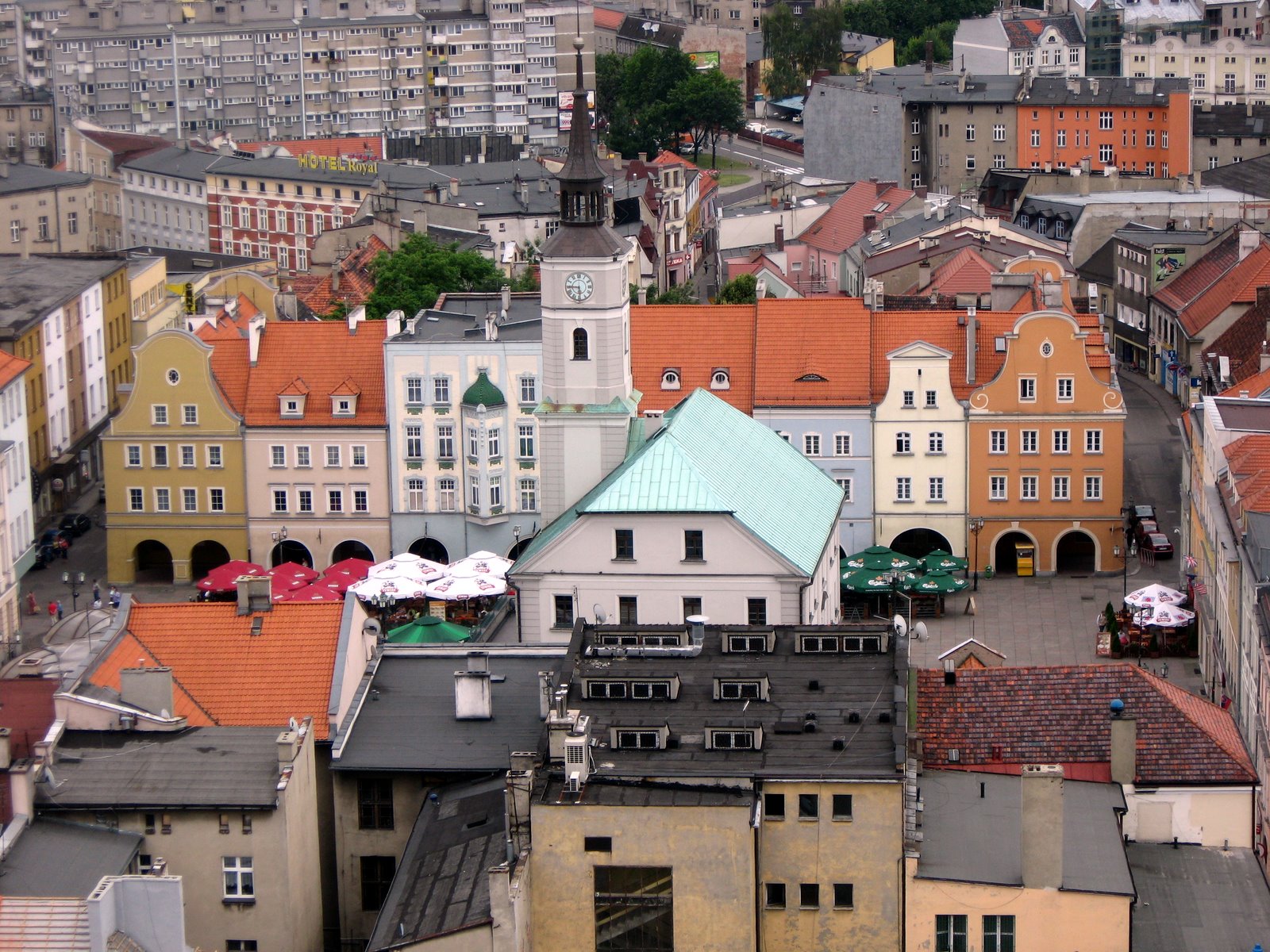
They show Gliwice from a height I never saw myself: the patchwork of brick colours shaped by decades of industry, the coal‑smoke staining, the newer bricks sitting beside older ones. These images reveal layers of the city that shaped my understanding long before I had the language for them.
They belong with this poem; they are part of the palimpsest too.
I particularly value the photograph of the tram. The city replaced the old tram service with modern buses shortly before I moved there in late 2010. While I appreciated the efficiency of the new network — especially once I learned how easy the transport apps were — I would have preferred the tram to remain. It looked unique, unlike anything I knew in the UK. My thanks go to my friend, who also explained the transit system to me so long ago. I’ve never forgotten her kindness.
Views From a Classroom Window
When I first arrived in Gliwice, before finding a permanent home, I became ill in a small hotel room in Łabędy. I was cold, alone, and far from anything familiar. My friend and her mother travelled from Bytom with freshly cooked food — rosół, and the classic Ślonski łobiod: rolada, śląskie kluski , and modro kapusta (red cabbage). They reheated the meal in the hotel kitchen and stayed with me until I finished. I have never forgotten their generosity and compassion; it remains one of the quiet layers beneath this poem.
These images capture the views I lived with — looking out from the classroom window I often taught in, the angle from which I first learned to read the city. The church pictured is All Saints Church, an impressive structure that filled me with a sense of awe whenever I passed beneath it, especially at night. I love the detail on the tower and the brickwork stained by coal smoke and heavy industry. The contrasting shades of brick — some newer and arranged in unusual patterns — are likely repairs and visual evidence of past conflicts.
Palimpsest
Gliwice was a palimpsest.
I walked through it wide‑eyed,
never tiring of the layers:
German roofs curving like old sentences,
Fledermausgauben lifting from the tiles,
wooden frames watching as I passed —
quiet witnesses to things I’d only seen
on grainy reels of another time,
suddenly present.
Bloki rising in post‑war rhythm,
tram tracks humming their stubborn lines,
the radio mast standing there
like a paragraph no one dared erase.
A gap left after Kristallnacht —
fenced off like a building site
where nothing was being built,
only kept open,
an absence held for what once stood.
I felt it each time I passed,
on foot or on my bike,
as if the city itself refused forgetting.
I learned the city by its textures:
kamienica brickwork,
the word komisariat slipping into my ear,
shops with their own cadence,
evening piwo,
kluski śląskie with rolada and modro kapusta —
food that tasted of its own history.
And the air, especially in winter:
coal smoke drifting through the streets,
pulling me back to my childhood home,
to mornings dusted with soot,
as if the city reached across time
to remind me that memory clings.
Looking back at these images and memories, I’m reminded that a city is never just a place.
It’s a set of layers we move through, and sometimes, if we’re lucky, they become part of us.
There was a time in my life when I didn’t have a television in Poland.
Not because I lacked technology — I had my MacBook, my Mac mini, fast broadband, all the gadgets I needed — but simply because a TV never felt necessary.
What it did mean, though, was that every invitation to a friend’s home came with a secret bonus: I got to watch Świat według Kiepskich. My friends never quite understood why I adored it so much.
“You don’t even understand half the language,” they’d say, laughing as I laughed — always, somehow, in the right places. But once they explained the setting — the cramped flats, the shared toilet on the landing, the folding sofa bed in the living room, the whole glorious chaos of a Wrocław kamienica — something clicked. I recognised the humour instantly. The absurdity. The humanity. The way the show exaggerated real life just enough to make it funny, but never enough to make it cruel.
It became one of the warmest memories of my time in Poland: sitting with friends, watching this wonderfully unhinged family navigate life with plastic bags, cheap beer, and a kind of stubborn optimism that felt strangely familiar.
This little sketch is my tribute to that world — to the characters, the humour, and the years of laughter they gave me. It’s written with affection, not parody; with nostalgia, not critique.
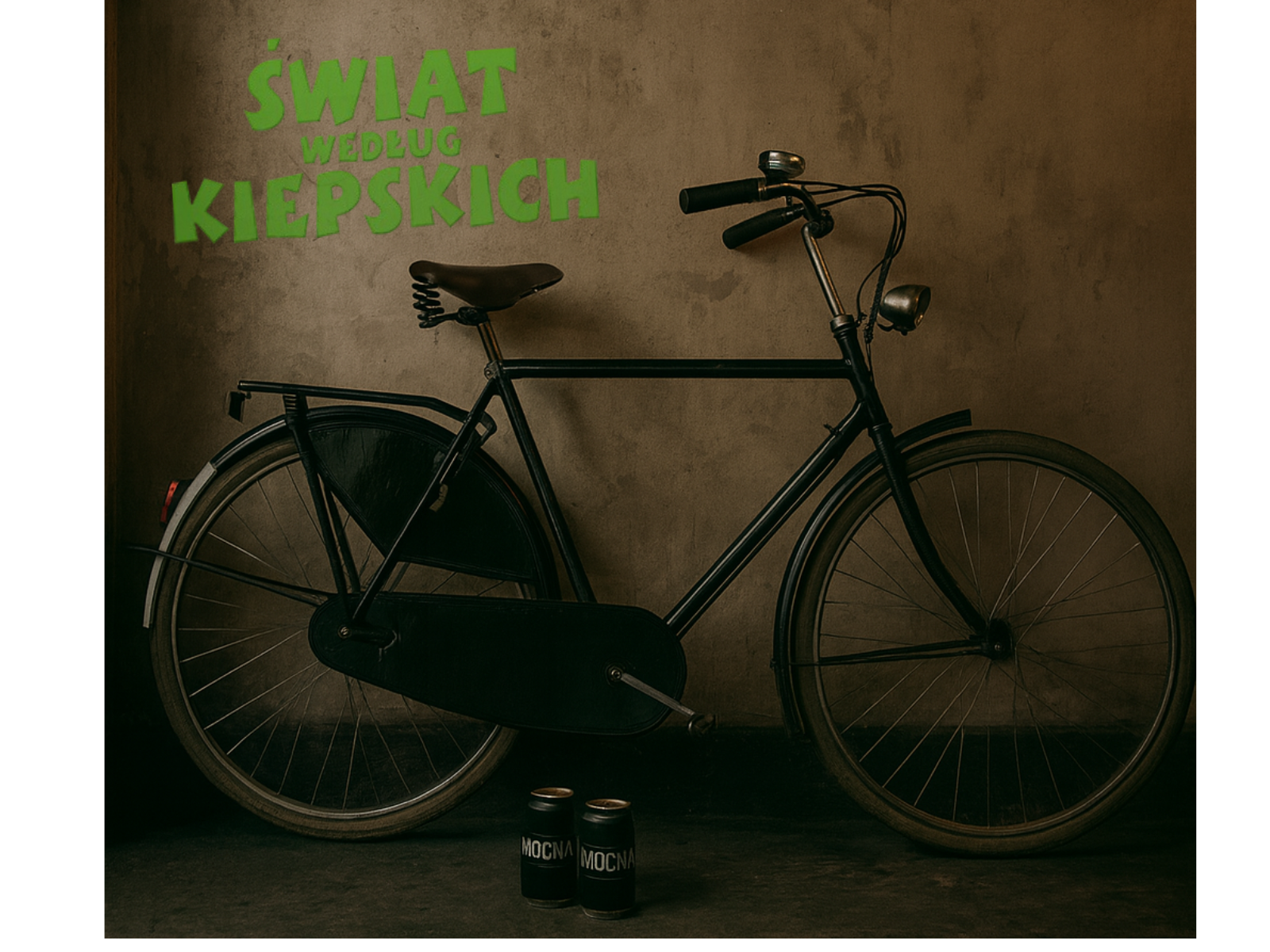
And yes, it features a possessed bicycle.
Because if there’s any universe where that makes perfect sense, it’s the Kiepski universe.
Polski
Był czas w moim życiu, kiedy nie miałem w Polsce telewizora. Nie dlatego, że brakowało mi technologii — miałem MacBooka, Mac mini, szybki internet, wszystko, czego potrzebowałem — ale po prostu telewizor nigdy nie był mi konieczny.
Oznaczało to jednak, że każde zaproszenie do domu znajomych miało swój tajny bonus: mogłem obejrzeć Świat według Kiepskich. Moi przyjaciele nigdy do końca nie rozumieli, dlaczego tak bardzo to uwielbiam.
„Nie rozumiesz nawet połowy języka”, mówili, śmiejąc się, gdy śmiałem się ja — zawsze, jakoś, we właściwych momentach. Ale kiedy wyjaśnili mi realia — ciasne mieszkania, wspólną toaletę na półpiętrze, rozkładane łóżko w salonie, cały ten wspaniały chaos wrocławskiej kamienicy — coś we mnie kliknęło. Natychmiast rozpoznałem ten humor. Absurd. Ludzkość. Sposób, w jaki serial wyolbrzymiał codzienność na tyle, by była śmieszna, ale nigdy na tyle, by była okrutna.
To stało się jednym z najcieplejszych wspomnień z mojego pobytu w Polsce: siedzenie z przyjaciółmi, oglądanie tej cudownie obłąkanej rodziny, która poruszała się przez życie z plastikowymi torbami, tanim piwem i rodzajem upartego optymizmu, który wydał mi się dziwnie znajomy.
Ten mały szkic jest moim hołdem dla tamtego świata — dla postaci, humoru i lat śmiechu, które mi podarowali. Jest napisany z uczuciem, a nie z parodią; z nostalgią, a nie z krytyką.
I tak, pojawia się w nim opętany rower.
Bo jeśli istnieje jakiś wszechświat, w którym to ma sens, to jest to właśnie wszechświat Kiepskich.
ŚWIAT WEDŁUG KIEPSKICH – ODCINEK SPECJALNY
“ROWER, KTÓRY CHCIAŁ WOLNOŚCI”
(The Bicycle That Wanted Freedom)
COLD OPEN – HOTEL RECEPTION – NIGHT
The light in the lobby flickers. GARY stands with his seemingly now possessed bicycle. The RECEPTIONISTS look especially traumatised.
Suddenly the elevator opens and the entire Kiepski family spills out with plastic bags and cheap luggage. They freeze.
FERDEK No ja cię nie mogę… Halinka, patrz. Rower robi większe zamieszanie niż Boczek przy grillu.
BOCZEK Panie Ferdku, z przeproszeniem pana, ja jem kulturalnie!
PAŹDZIOCH Ta, kulturalnie… Jak ten knur pasibrzuch przy korycie!
The bike dings cheerfully.
CUT TO OPENING CREDITS
ACT I – THE HOTEL CHAOS
SCENE 1 – RECEPTION
Gary tries to explain in broken Polish.
GARY Rower… uciekł… i… robi problem.
FERDEK Panie, tu wszystko ucieka. Emerytury, zdrowie, nadzieja… teraz rowery.
HALINKA Ferdek, nie strasz człowieka.
The bike rolls forward. Everyone jumps.
MARIOLKA O Jezu, Waldek, to żyje!
WALDEK Normalnie jak Paździoch po trzech piwach.
PAŹDZIOCH Proszę mnie tu nie obrażać!
The bike tries to escape again. Gary chases it.
FERDEK (cheering) Dawaj, panie! Pokaż mu, kto tu rządzi!
SCENE 2 – HOTEL CORRIDOR
Gary drags the bike toward the lift. The Kiepscy follow like a chaotic parade. The lift alarm goes off.
PAŹDZIOCH No i pięknie. Zaczyna się jak w naszym bloku.
SCENE 3 – FERDEK’S PLAN
Ferdek pulls Gary aside.
FERDEK Panie… ja panu pomogę. Ale w zamian… pożyczę rower. Na chwilę. Do Biedronki.
GARY (unsure) Bie… Biedronka?
FERDEK Tak. Świątynia narodu.
Gary reluctantly agrees. The bike dings suspiciously.
ACT II – FERDEK VS. THE BICYCLE
SCENE 4 – OUTSIDE THE HOTEL
Ferdek mounts the bike.
FERDEK Słuchaj, rower… jedziemy po mocne piwo. Bez wygłupów.
The bike immediately rockets forward.
FERDEK Aaaaa! Halinkaaaa! To mnie porywaaa!
SCENE 5 – STREET NEAR BIEDRONKA
Ferdek crashes into a bush. Enter Father Kazimierz with a shopping basket.
FATHER KAZIMIERZ Co pan tu robi?
FERDEK Pielgrzymka, proszę księdza. Do Biedronki.
FATHER KAZIMIERZ Po piwo?
FERDEK Skąd ksiądz wie?!
The bike rolls up and dings.
FATHER KAZIMIERZ A słowo stało się ciałem… co to za diabelstwo?!
FERDEK To rower. Tylko… ambitny.
SCENE 6 – INSIDE BIEDRONKA
Ferdek grabs a six‑pack of mocne piwo. (Pauses, thinks again, sighs, unclips two cans only)
FERDEK Człowiek chce dobrze… a wychodzi jak zwykle.
The Bike follows him like a dog, knocking over an artfully placed pyramid of chips.
FERDEK No i pięknie. Zaraz mnie wyrzucą.
At checkout:
FATHER KAZIMIERZ Pan Kiepski… ja radzę egzorcyzm.
FERDEK Egzorcyzm?! Ja ledwo mam na piwo!
The bike dings angrily.
SCENE 7 – RETURN TRIP
Ferdek mounts the bike again.
FERDEK Jedziemy spokojnie. Bo jak nie… oddam cię Paździochowi.
The bike freezes in terror.
FERDEK No. To jedziemy.
The bike accelerates again.
FERDEK Aaaaa! Halinkaaaa! Ono znowu szalejeee!
ACT III – THE FINAL SHOWDOWN
SCENE 8 – HOTEL LOBBY
The Kiepscy, receptionists, and Gary wait nervously. Suddenly the doors burst open. Ferdek flies in on the bike, screaming, and crashes into a potted plant.
HALINKA Ferdek! Coś ty narobił?!
FERDEK To nie ja! To rower! On ma w sobie… zło!
PAŹDZIOCH Jak pan.
FERDEK Paździoch, nie wkurzaj pan mnie… oddaj pan ten rower, bo cię zaraz przejedzie!
The bike dings threateningly.
SCENE 9 – GARY TAKES CONTROL
Gary steps forward bravely.
GARY (Polish improving under stress) Rower! Stop! Koniec! Dość problemów!
The bike freezes. Everyone gasps.
FERDEK Panie… pan jest rowerowy szeptacz.
HALINKA Może pan powinien zostać w Polsce.
GARY (terrified) Nie… nie… ja wracam do Anglii.
SCENE 10 – RESOLUTION
The bike gently rolls to Gary and nudges him.
GARY (sighs) Dobrze… wracamy do pokoju.
FERDEK A piwo?
GARY (offers one can) Proszę.
FERDEK Panie… pan jest dobry człowiek.
TAG SCENE – HOTEL ROOM – LATE NIGHT
Gary sleeps. The bike stands quietly in the corner. Suddenly it dings softly. Gary wakes up.
GARY No… nie teraz…
The bike rolls toward the door.
GARY (sighs) Okay… But this time… We take a taxi.
The bike dings approvingly.
FADE OUT.
If this sketch brings even a fraction of the joy that those evenings at ulica Ćwiartki 3/4, Wrocław gave me, then it has done its job.
Poland shaped me in ways I’m still discovering, and Świat według Kiepskich — in all its glorious absurdity — is woven into that story more deeply than I ever expected.
There may be more sketches, certainly more memories, and more affectionate chaos to come.
If you watched the show, I hope this makes you smile.
If you didn’t, perhaps it will give you a glimpse into a world that was strange, funny, and unexpectedly dear to me.
Dziękuję za towarzystwo — and stay tuned. The possessed bicycle was only the beginning.
In 2008, before KAFO, before craft coffee, before I knew anything about coffee, or the emerging café culture, I stumbled into a tiny kawiarnia in Gliwice that felt as if it had slipped through a crack in time.
Four or five tables: White linen tablecloths you were terrified of dripping tea on. Piped classical music — familiar enough that I caught Mozart and Bach, even if my taste in classical runs a bit selective. Furniture that looked as though it belonged in somebody’s best room.
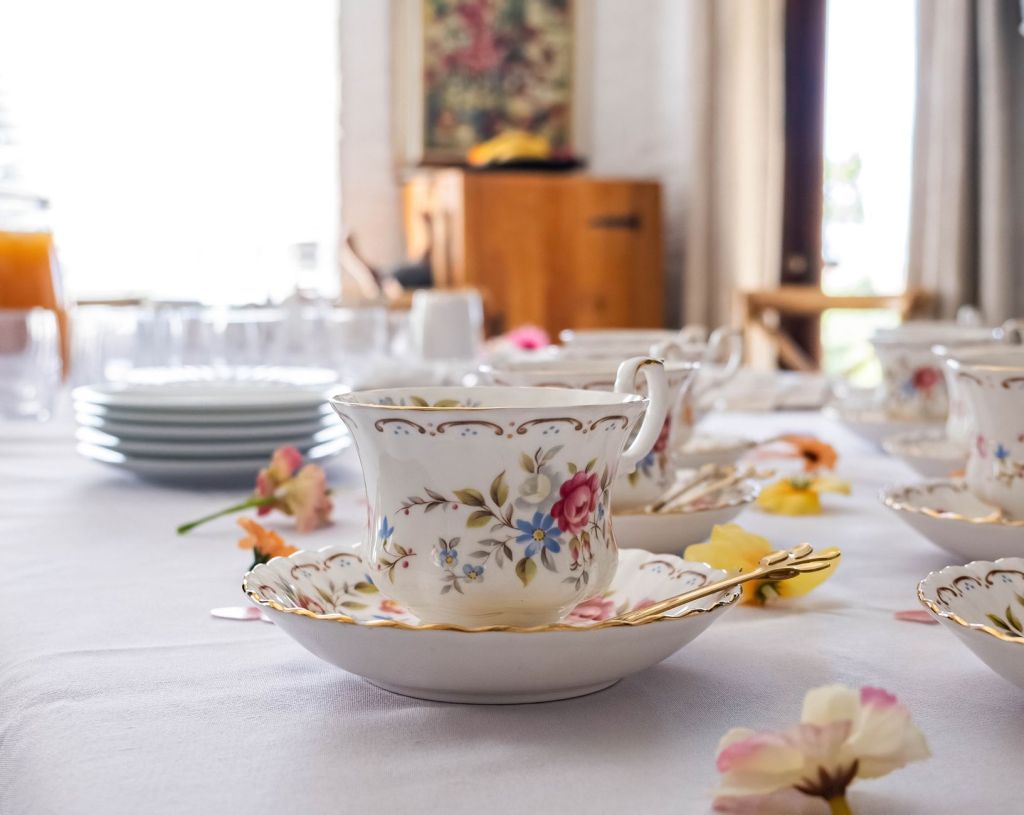
And bone china — actual bone china — for a simple cup of tea.
It felt less like a café and more like a living museum exhibit: “Tea‑drinking customs of the respectable ladies of Upper Silesia, circa 1963.”
The only other customers I ever saw were elderly women dressed as if for Sunday afternoon visits — neat coats, careful hair, handbags placed just so. They sat with the quiet poise of people who had been taking tea properly for decades. I, meanwhile, looked like a man who’d wandered in by mistake and was trying not to touch anything.
It was the strangest atmosphere imaginable in 2008. I felt like an intruder in a time warp.
But the cakes… the cakes were unbelievable.
I fell head‑over‑heels for their Black Forest gâteau — in Polish, tort czarny las. Decadent and rich, punctuated by dark, liquor-soaked sour cherries — tart enough to slice through the layer of cream, sweet enough to linger—all smothered under a pure-tasting chocolate ganache. It was absurdly perfect — the kind of cake that makes you rethink your life choices.
When I moved to Gliwice in 2010, I was delighted to discover the café was still there and I made an effort to visit at least once a week for an afternoon treat. It was perfectly located as it was situated very close to my language school — the rear door of the school was almost exactly opposite the café.
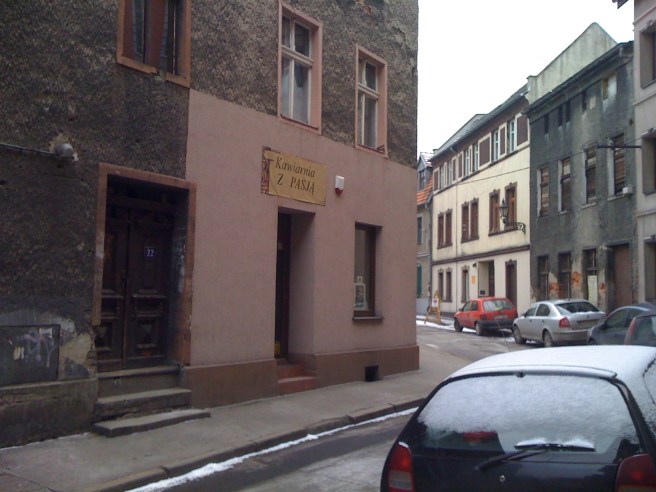
A bitterly cold day on ul. Grodowa in February 2011, with this unassuming back‑street kawiarnia serving the most unforgettable chocolate cake.
What I didn’t know then — what I only discovered years later — was that this wasn’t just a quaint little café. Between 2008 and 2011, Kawiarnia z Pasją was quietly becoming one of Gliwice’s first artisanal bakeries.
Hand‑decorated English‑style wedding cakes. Private tasting sessions for couples. Premium Valrhona chocolate instead of cheap substitutes.
No wonder the cakes tasted like they’d been smuggled out of a royal banquet.
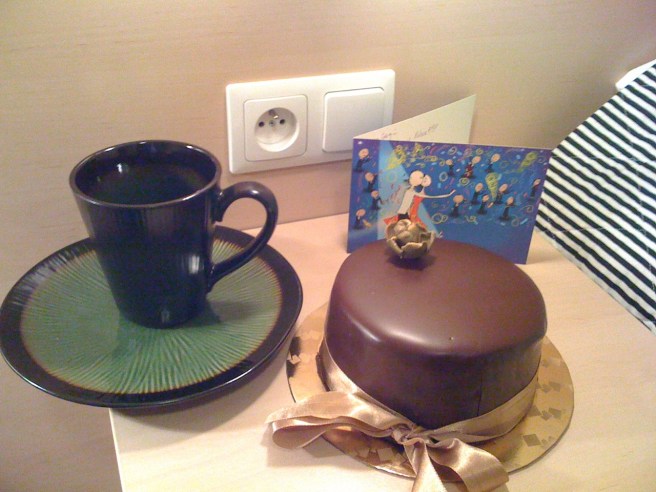
When I moved to Poland in 2010, a friend — at great expense — bought me an entire gâteau and had it delivered to my hostel in Łabędy. I have photographs to prove it. One of them shows the cake exactly as it arrived: whole, immaculate, almost ceremonial. The welcome card is beside it, closed — the words inside are for me alone. They were beautiful, and I still have the card and images.
A beautiful welcome-to-Poland gift: an entire Kawiarnia z Pasją tort czarny las
Like a lot of people, I slowly started popping into a new kawiarnia, Kafo, more and more often. Before I knew it, it had become my regular stop. I stopped going to Kawiarnia z Pasją, and honestly, I felt a bit guilty for abandoning that little time‑warp café on Grodowa Street.
I went back once or twice. Same man. Same linen. Same bone china. Same gentle welcome — as if I’d never left. He was genuinely happy to see me. Not out of need, but out of pride.
In his head, they were going from strength to strength. Plans made, executed, exceeded. Looking back now, I think he must have felt quietly confident. While I was happily travelling to Katowice for a 3 zł lody świderki I adored, he was perfecting something far more ambitious — ice cream made by hand, in flavours bold enough to surprise anyone who walked through the door.
And he was right.
My lody świderki window counter in Katowice has long disappeared.
A recent check on Google Maps Street View framed in 2023, shows Kawiarnia z Pasją was still there on ul. Grodowa — looking the same outside, but with a refreshed facade, a new sign, and a tea garden attached.
And according to the reviews, it sells some of the best ice cream in Poland. Not just raspberry and chocolate, but kale and parsley — the kind of boldness only true artisans attempt.
They’ve flourished.
Quietly.
Steadily.
Exactly as they always deserved to.
PS: If you ever find yourself in Gliwice, wander down from the Rynek to ul. Grodowa and see Kawiarnia z Pasją for yourself. If they still offer tort czarny las, trust me — you won’t be disappointed.
I wrote this piece while thinking about the strange, quiet weight of living somewhere new — when everything feels unfamiliar, and life in the city is both difficult and full of excitement, possibility, and challenge. Even in the harder moments, there were small experiences that slowly shaped my sense of belonging.
This is one of them.
The Square Mile
This grainy, low‑quality image was taken on my mobile phone during my first Polish winter. I remember how abruptly the snow arrived and how stubbornly it stayed. It was so cold, well below freezing, that any uncleared snow on the pavement changed colour and appearance, taking on a form resembling black grains of sugar — never softening into slush but lingering in a frozen, granular state despite the steady rhythm of passing feet.
Throughout my years in Poland, even as I moved between three different apartments, I never drifted far from this neighbourhood. I spent all that time within the same square mile, and this small patch of the city became the quiet backdrop to my routines, my work, and the extraordinary moments that filled the spaces in between.
I probably passed the statue of Adam Mickiewicz almost every day — by bus, by bicycle, or on foot. It stood there like a familiar companion, marking the centre of a life that was constantly shifting in small ways but rooted in the same place. During spring and summer, I often settled onto the benches nearby and whiled away many an hour people‑watching. There was something grounding about observing the rhythm of local life: parents shepherding children, elderly couples strolling arm‑in‑arm, students weaving through the park with backpacks slung over their shoulders.
The school where I taught sat directly opposite the park, so I regularly saw my students gathering there before lessons or drifting home afterwards. Their polite, formal greetings always struck me — a small but consistent reminder of the warmth and courtesy woven into everyday Polish life. It became a ritual of sorts, these brief exchanges that punctuated my days.
Near the park, I later discovered a place that became a second home to me: a little café called Kafo. The air inside always carried the scent of rich coffee and fresh cakes, and the warmth of the welcome wrapped around me the moment I stepped through the door. People greeted me by name as if I’d lived there all my life, and I can’t help but laugh now at how easily I slipped into the role of a (very) minor celebrity.
A music academy stood slightly opposite the direction Pan Mickiewicz was facing, and its open windows often spilled out fragments of song or the sound of instruments being practised. Some days it was a hesitant violin; other days, a confident soprano warming up. Those moments — unexpected, unpolished, and sincere — became some of my favourite details of the neighbourhood. They made the place feel alive in a way that was both intimate and communal.
To the amusement of friends — and without any real understanding of Mickiewicz’s revered place in Polish culture — I began affectionately calling the park “Mickey Park.” The nickname stuck for me, a private shorthand for a place that quietly shaped my years there. It wasn’t just a park or a statue. It was a constant: a landmark around which my life gently revolved, a space where I waited for friends, watched the seasons turn, and learned to observe the everyday life of a community that was slowly, patiently becoming my own.
Part II: Snowfall at the Poet’s Feet
The photograph I took on that incredibly cold night means a great deal to me. I was entering my third month of living in Poland, discovering just how difficult life had become — learning a new language, adjusting to a new culture, and feeling the weight of homesickness settle in.
Just looking at the image transports me back to that moment: pushing a heavy bicycle through the snow, feeling alone, sad, and exhausted by the demands of encouraging students to become confident English speakers. My snapshot captures only a fragment of that period, but it’s a fragment that stayed with me. I stopped in front of the statue and let the moment settle. Something in its stillness echoed the quiet I’d been searching for.
The Poet and Me
The snow came suddenly,
soft enough to feel gentle,
heavy enough to make the night feel larger
than I had the strength for.

I pushed my bicycle through it,
each step, a small negotiation
between tiredness and the promise of warmth ahead.
A light supper waiting,
something warmed between both hands,
candles lit, so the room wouldn’t feel
quite so empty.

But then I saw him again.
Pan Mickiewicz.
The poet who had stood through every season
I’d lived in that city.

Something in me paused.
Maybe it was the way the snow
rested on his shoulders
as if he, too, had been caught off guard.
Maybe it was the hour,
or the loneliness I hadn’t named yet.
Maybe it was simply the relief
of standing still.

I stayed there longer than I meant to,
hands cold on the handlebars,
breath rising in small clouds,
the weight of the day settling beside me
like an old companion.

And for a moment,
I didn’t feel like a stranger.
Just a man in the snow,
seen—
if only by a statue
who understood wandering
better than most.

Then the moment loosened,
and I walked on,
carrying something quieter
than heaviness.
When the stillness finally released me, I walked on. For a moment, Gliwice didn’t feel foreign. I was simply a figure in the snowfall, paused beside another figure who had weathered far more winters than I ever would.
The Moment, Not the Monument
I found myself looking again at the two photographs I’d taken of Mickiewicz — and it hit me that I hadn’t captured a monument so much as a moment. I kept thinking back to that evening in the snow‑filled park: me standing there in the cold, alone, pushing a heavy bike through the snow with a bag digging into my shoulders, stuffed with all the things I insisted on carrying, and all the emotions I didn’t know how to put down. My body, mind, and soul felt as overloaded as that bag, yet even then I was reaching for something steady, something familiar, something that reminded me I wasn’t the first person to feel unmoored or to wander through a city trying to understand where I fit.
Maybe that’s why I took those pictures.
Maybe that’s why it still matters to me.
Thank you for reading. If you’ve ever had a place — a park, a street, a café — quietly become part of your life, I’d love to hear about it. Feel free to share your own memories or reflections in the comments. Sometimes the smallest corners of a city end up holding the biggest pieces of our story.
Only a short time before, my life in Gliwice had been contained within the sterile, temporary walls of a hotel room. Living out of a suitcase makes you feel like a ghost in a city; you eat out of convenience, you sleep in a bed that isn’t yours, and you exist on the surface of a culture without ever sinking roots into it. Moving into my first apartment on Aleja Majowa was supposed to change that, but on this night, I felt entirely hollow — worn down, lonely, carrying a longing for warmth and belonging.
Leaving the city centre behind, the walk back toward the estate was a straight, freezing trial against the elements. The city seemed to be sleeping, too, muffled under the weight of the snow. There was little traffic, and I have no recollection of passing anyone on the pavements as I made my way home. The only exceptions were the small, predictable pockets of urban friction. Navigating the dreaded “spider” junction pedestrian crossing, a few stray headlights sliced through the dark. And then, as often as not, a few figures lingered outside the glowing sign of the nearby Biedronka — the people who stood in the cold and politely asked for grosze. Their voices were low, small breaths of desperate reality in an otherwise abandoned landscape.
As I pushed the bicycle up ulica Wincentego Styczyńskiego, the path to the estate forced a choice. To access Aleja Majowa, I had to take the cut-through — a small, narrow access road slipping behind the rear of Styczyńskiego and directly onto the blocks of the estate. I always hated walking through that small area in the dark. Tucked away from the main road’s street lights, it was an uneasy, shadowed corridor where the snow muffled the sound of my own footsteps, making the dark feel entirely too close.
Tonight, as I neared my apartment block, the snow began to fall again, soft and large, floating down in feather-like clusters over the asphalt. Fumbling with my key, I was always so happy to finally push open that heavy front door. Stepping across the threshold, the warmth of the ground floor landing was absolute bliss. The radiators on the landing breathed out a soft, dependable heat. It felt like being met by something quietly loyal.
I had been warned that, even when locked, my bike would be stolen if I left it outside or in the basement, and leaving it in the stairwell would be frowned upon — or even result in a warning from the other residents. So began the daily ritual of hauling my bike in and out of the building. Heavy as it was, I swung it onto my shoulder — snow still crusted along the frame — and pushed myself up the stairs.
The Trial of Four Floors
The crossbar of my bike already digging into my shoulder, I began the trial of carrying its cold weight. Every scrape of the tyre or shift of my bag still felt like a broadcast: the newcomer with the big bike is home again. In the pauses between each awkward thud, my mind filled the silence with imagined watchers — neighbours glued to their peepholes behind heavy, vinyl-padded doors as if it were premium television, whispering about who I really might be. Anything but the far less interesting reality — a person trying to carry too much, trying not to disturb anyone, trying to find a place where he didn’t feel like he was taking up the wrong kind of space.
The effort of it was ridiculous — truly Olympic‑level stuff — desperately trying to control my breathing, so I wouldn’t sound like I was dragging half the city up the stairs with me. The bike was heavy enough on its own, but on the days I also had groceries in the pannier, I still don’t know how I managed. Sheer stubbornness, probably. I loved that bike though. It stood out, even drew envious looks, and I was convinced it would be stolen the moment I blinked if I left it anywhere but inside my apartment. So it came with me every time I wanted to use it — day or night, up and down — like some sort of two‑wheeled emotional support animal, no matter how exhausted I was.
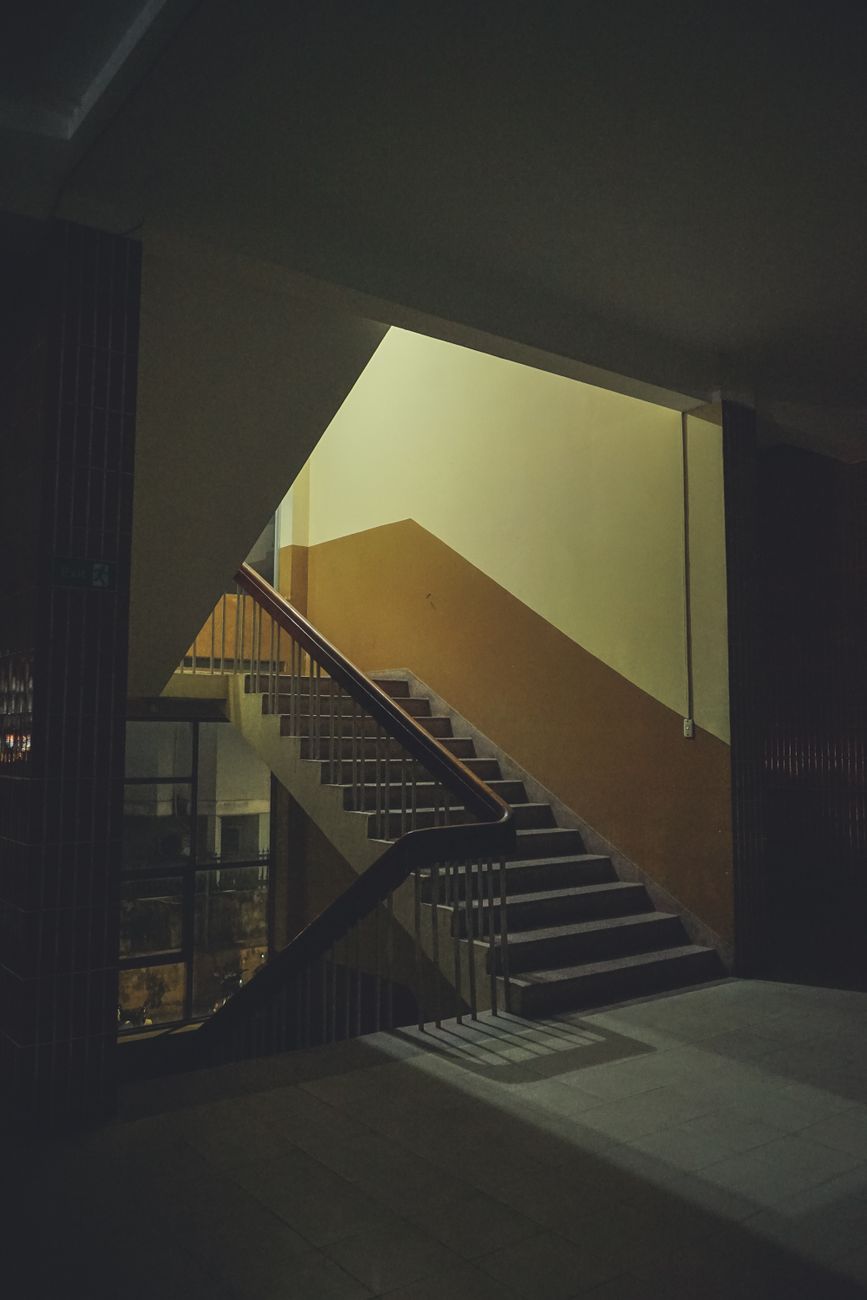
Each movement echoed sharply against the painted wainscoting. The layout offered no straight lines, only a relentless, repetitive rhythm. Lift. Step. Turn. Eight half-flights of speckled terrazzo stairs, broken up by tiny, square landings where I had to awkwardly pivot the long frame of the bike. The whole climb felt like a small, personal trial. Stepping onto the second main landing, an aching had already reached my fingers. By the third, my breath had grown laboured, trapped in the dead, radiator-warmed air of the stairwell. On the fourth, pivoting around the final turn, my legs trembled, both shoulders throbbed, and my fingers felt numb. Reaching the top floor, the quiet of the final landing felt almost ceremonial — a brief moment of stillness under the flat roof. I stood there, caught in that strange mixture of exhaustion and relief that comes from returning to a place that isn’t quite home — but is at least yours. Then I unlocked the door to whatever version of myself I could manage to be.
The Small Rituals of Home
When I stepped inside, the emotion rose up before I could name it. Safe. Warm. Back. Getting into the apartment was another small battle — balancing the bike on its stand on the cramped landing, opening the two locks, nudging the door open, wrestling it through into the tiny hallway — but the effort only sharpened the relief that followed. I was exhausted and so grateful to be home; this safe haven was something I never took for granted.
Still, even with the door shut and locked behind me, my body stayed tense. Boots off. Bag down. Coat and hat hung up. I switched on a small lamp, its glow reflecting off the light-oak herringbone parquet just beyond the doorway. Grabbed a cloth for a quick wipe of the melted slush on the hallway tiles before it could ruin the wood.
I changed into something more casual, something I could move in without thinking, and drifted into the kitchen for a light supper and a cold beer from the refrigerator. Then the laptop came out, music kept low so it barely filled the room. It was already late, far later than I liked, but the day wasn’t over yet — there was still lesson prep waiting for me.
Right beside the main room, the door to the kitchen stood. Opening it revealed a space that was incredibly narrow — a compact galley where everything sat within arm’s reach — but it was blessed with its own window, framing the dark, snow-dusted outlines of the estate outside. And then, the true sound of winter settled over the entire flat — the dry, familiar hiss of the radiator. It leaked out from the thick, vertical metal pipe that sliced straight through my ceiling, a stark line of the building’s industrial spine. The top-floor radiator always trapped the air of the floors below, breathing out a noisy, reliable heat that promised I was finally safe from the biting Polish cold.
Anglik z Dużym Rowerem
I always tried to move as quietly as I could, hyper‑aware of the neighbours hearing the unfamiliar sounds of a new resident dragging winter up the stairs — the newcomer with the very large Dutch bike and an equally oversized bag. They’d seen me around, of course. Polish people are wonderfully polite, but they don’t go in for small talk, and except for my immediate neighbour — who didn’t speak English and with whom I could only exchange the most basic Polish pleasantries — most interactions were limited to nods in the stairwell.
The man I’d rented the apartment from had apparently told half the building who I was and why I was in Poland, which somehow made me feel even more conspicuous. He’d even had a quiet word with the “local guys” as he referred to them. He mentioned he played football on the estate with most of the guys I might see around the blocks. “Don’t worry about them,” he said. “You live in their community now.”
A few nights later, I learned exactly what he meant by those “local lads” whom I clearly identified in my mind as blokersi. I knew what blokersi were. I couldn’t recall how the word had entered my vocabulary — friends, something I’d read, or just overheard gossip about estate subculture. Call it a culture, a subculture, or just a raw way of surviving the concrete landscape; I was under no illusions. Aleja Majowa had its own blokersi.
It was around minus eight degrees, the kind of cold that makes the streets feel abandoned. Before leaving my apartment to walk to the store, I had actually run a quick risk assessment. Should I even make this journey at this time of night? It was around 8 or 9 PM. To play it safe, I chose the longer route to avoid cutting through the dark centre of the estate, even though it added five minutes to the trip. I walked out into the bitterly dry cold air, making my way quickly across the narrow cut-through, and under the bright street lights of ulica Wincentego Styczyńskiego, before turning right onto ulica Generała Władysława Andersa and into the Żabka.
Clutching a flimsy green reklamówka containing a couple of beers and some snacks, I stepped back out into the freezing air. It wasn’t the damp, bone-chilling cold of a British winter; it was a dry, heavy, continental freeze that seemed to lock the whole world in place. The snow on the grassed areas wasn’t slush; it was frozen solid, absorbing what little light there was. The successful walk over had made me bold. I’m going to take the short route back, I thought. I reasoned that in this bitter, biting cold, the interior paths of the estate would be completely empty. There surely couldn’t be any risk, nor anyone out in this weather.
Assured by the freezing silence, I headed into the shortcut. I was wearing a very heavy winter coat, hoodie up, baseball cap pulled low, earphones in — music on — breaking every rule of situational awareness without knowing any of them. I felt stupid. I had retired from the police only months beforehand. I was an ex-cop, a man trained to spot risk, who had moved across Europe to teach English in Silesia. Yet here I was, entirely oblivious. Under the dark, overcast night, the heavy snow that had fallen days earlier still lined the edges of the walkway.
I truly didn’t expect a soul to be outside. But the cold proved to be no deterrent to the neighbourhood. Gathered around a bench near my block, a group of young lads was standing and sitting in the dark. I didn’t even register them until I was almost right on top of them. That was when I saw movement — the heavy chain of a pit bull snapping tight as someone yanked it back, the dog lunging into the space between us.
It was like being in some kind of urban movie. I hadn’t heard the dog, but now, beneath the music in my ears, I did hear voices. I couldn’t tell if they were talking amongst themselves or if the words were directed at me.
My old street coping strategies instantly took over, but adapted for survival: walk with purpose. Don’t pick up the pace, don’t look back, and do not look afraid or overly confident. If they challenged or followed me, my plan was simply to let them see me walk into my block, or try to explain that I lived there — though at that moment, I couldn’t be sure if these were even the guys my landlord had mentioned.
Through my peripheral vision, I saw one of the lads take a swig from a bottle. I readied myself, half-expecting that same bottle to be thrown in my direction. It sounds crazy and paranoid now, but the anticipation of violence was entirely real.
Then came the anti-climax. Instead of a confrontation, one of the lads gave a small nod, almost bored, almost dismissive, and the moment dissolved into the cold air.
Only later did I realise that the nod wasn’t random. My landlord had already spoken to them. I was on their radar, in their neighbourhood, under their informal protection. It was my first quiet lesson on Aleja Majowa: even in the cold, even in the dark, even when I didn’t know the rules, someone had already made sure I would be safe.
A Lesson in Belonging
A few days later, I mentioned the night to my landlord — the cold, the surprise, the pit bull’s chain snapping tight, the way the lads had simply let me pass. He looked troubled, genuinely relieved that nothing had happened. “I’ll check in with them again,” he said. And he meant it.
He was a great guy — young and very funny, yet grounded in a way that made you forget it. He could have been a professional downhill slalom skier if not for an injury. There was nothing pretentious about him. He cared about the apartment, yes, but he also cared about the person living in it.
When the time eventually came for me to move out, he made absolutely sure I had somewhere to go. Not just advice, not just suggestions — an actual apartment, five minutes’ walk away, owned by a friend of his who was about to leave on a round‑the‑world yacht job. That was the thing about the young people I was meeting in Poland. Many were like him — kind, capable, connected, and quietly protective.
Looking back, I realise how much of my experience was anchored in this unassuming corner of the city. It wasn’t the grand monuments or the famous squares that defined my time there, but the everyday spaces — the pathways, the wainscoted stairwells, the light and darkness, the sounds of building pipes, and the unspoken understandings of a neighbourhood.
Aleja Majowa wasn’t just a place to live. It was a place where people made sure I belonged, even before I understood the neighbourhood, even before I learned the rules, even before I knew how to look after myself.
If you’ve ever had a place — a street, a building, an estate — quietly become part of your life, I’d love to hear about it. Feel free to share your own memories or reflections in the comments. Sometimes the smallest corners of a city end up holding the biggest pieces of our story.