This is Part 2 of Railway Memories. You can read the beginning here: Part 1: Gliwice Station
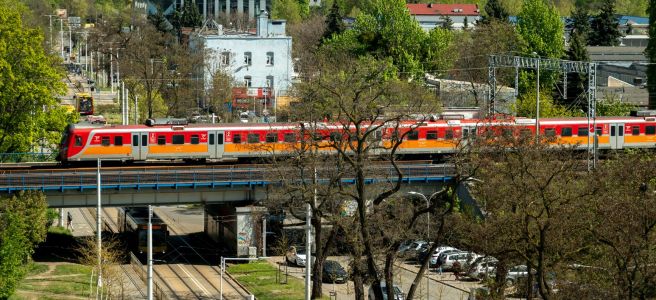
That first year teaching in Katowice, the outbound journey was always the easy part. Even in winter, Gliwice could surprise me with blue skies and a kind of brittle brightness — the sort of weather that tricks you into thinking life is going rather well, right up until you step outside and your face freezes. The train was usually already there, humming quietly, doors open, no rush. I’d take a seat by the window, settle in, headphones on, a bit of music, my lesson notes spread across my lap in a way that suggested competence.
As winter turned to spring, it became rather enjoyable. If I wasn’t using headphones, my memory of waiting is of surprisingly little noise around me. The occasional tannoy announcement — delivered in a tone that suggested I should already know what was being said — drifted across the platform. I’d listen for any clue, trying to pick out any mention of zmiana peronu or toru, and a platform number, or the dreaded opóźnienie — a delay. On one occasion, I didn’t hear the announcement at all; I simply noticed other passengers shrugging in that resigned, Silesian way and drifting towards another platform. You had to be ready to move — ideally before the train did.
Once we pulled away, the notes went back into my bag and I’d let the journey take over. There was something soothing about that stretch of track — the familiar landmarks that became my own private map of Silesia, reassuring me that at least something in my daily routine knew where it was going.
I simply loved looking outside as we left the suburbs and outer edges of the city. I was always surprised as to how much space there appeared to be, not just fields and patches of forestry but large open areas. I used to catch the sight of a pithead and wheel, and head back to a childhood shaped by mining country.
Just before we arrived in Zabrze, the sight of działki — allotments — came into view, a patchwork of crooked sheds and stubborn little gardens. I’d always found them oddly moving, these little oases of Polish culture. Some were set up as though their owners planned to spend entire summers there, with makeshift kitchens, sun-bleached deckchairs and a sense of stubborn independence that felt very Polish in the best way. Some were downright magnificent. No sign of growing anything — unless you counted a token tomato plant hidden behind the shed to satisfy the rules — just a grill, a hot tub and enough shades to suggest a long summer holiday conducted entirely within forty square metres. You could tell some plots had been held by the same families for decades; they had the confidence of inherited territory. I noticed one even had beehives, lined up like painted soldiers guarding their tiny kingdom.
Zabrze was where the train would fill up and where I’d probably have someone sitting next to me, or at least opposite, occupying all available seating. Noisy, vibrant and always entertaining for me to discreetly observe.
Then we’d be off again. More interesting architecture, huge skeletons of buildings — a leftover of Silesia’s vast industrial past — and all manner of unused railway lines, or what was left of them. Twenty years ago the area must have been a hive of industry. I was, as always, curious to see a wide variety of dwellings, especially kamienice and familoki in the Ruda Śląska and Chorzów areas.
A small area that caught my attention, with more than a little sadness, was what appeared to be a dog rescue centre: a row of kennels outside with dogs of all descriptions, chained, but still with room to move about. I hoped they’d be taken somewhere better. Perhaps it was the official city dog pound, I never found out. I always made a point of looking at it as we trundled past.
Then into the outskirts of Katowice — more houses, more industry, a city.
These were just a few markers of the route that told me I was on time.
There was a rhythm to it all: music, notes, window, Silesia sliding by. A quiet, steady beginning to the working day. I didn’t realise it then, but those outbound journeys were the moments when I felt most settled — suspended between two cities, belonging to neither, but content in the movement between them.
Continue reading — Part 3: Learning the Hard Way
Jeśli zdarzyło Ci się przechodzić przez dworzec w Gliwicach, podziel się tym, co pamiętasz.
If you travelled through Gliwice Station yourself, feel free to share what you remember.
Attribution and Link:
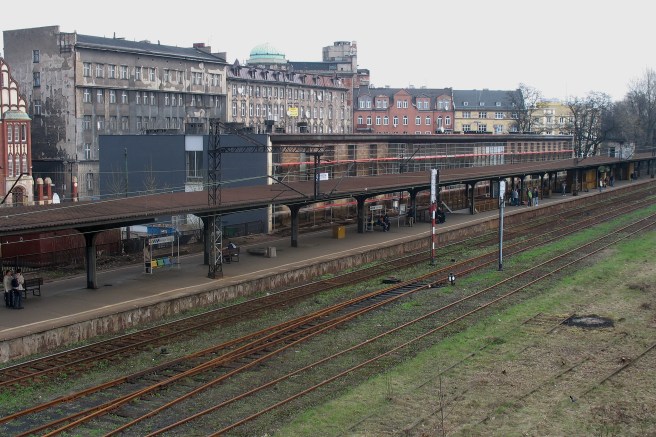
Photo 7 (Zabrze Station Mid-Renovation 2012) by Tomasz Górny (Nemo5576), Wikimedia Commons (CC BY-SA 3.0).

 Ghosts to Carry, Stories to Keep