When I lived in Silesia I came to learn Gliwice slowly, mostly from the ground: walking its streets, looking up at the roofs, noticing the textures that revealed its history. The poem below was written from those memories — from the view out of my classroom window, from the coal‑smoke winters, from the feeling of moving through a city that never hid its layers.
Only recently did I return to a set of photographs taken in 2008 by a friend and sent to me two years later. I had looked at them then, out of interest, and rediscovered them only a few days ago. I include them here with her permission and deep gratitude.
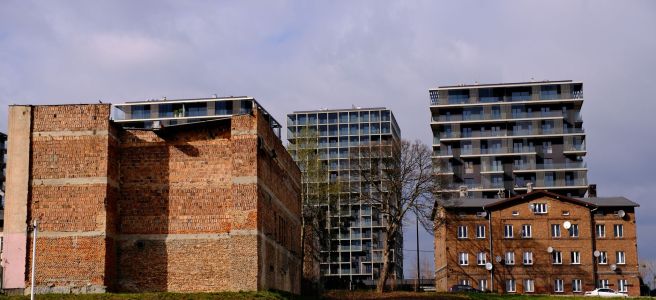
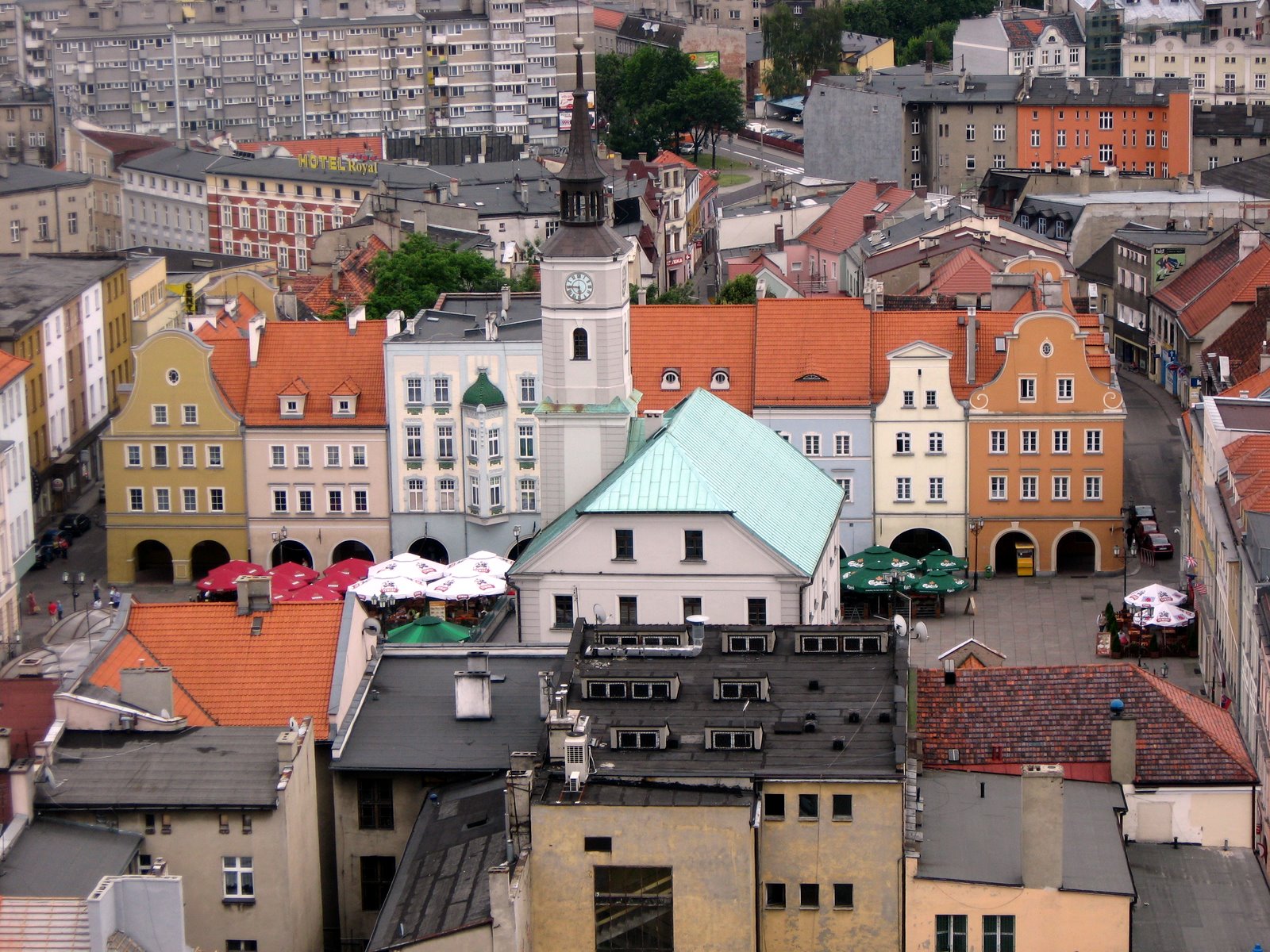
They show Gliwice from a height I never saw myself: the patchwork of brick colours shaped by decades of industry, the coal‑smoke staining, the newer bricks sitting beside older ones. These images reveal layers of the city that shaped my understanding long before I had the language for them.
They belong with this poem; they are part of the palimpsest too.


I particularly value the photograph of the tram. The city replaced the old tram service with modern buses shortly before I moved there in late 2010. While I appreciated the efficiency of the new network — especially once I learned how easy the transport apps were — I would have preferred the tram to remain. It looked unique, unlike anything I knew in the UK. My thanks go to my friend, who also explained the transit system to me so long ago. I’ve never forgotten her kindness.


Views From a Classroom Window
When I first arrived in Gliwice, before finding a permanent home, I became ill in a small hotel room in Łabędy. I was cold, alone, and far from anything familiar. My friend and her mother travelled from Bytom with freshly cooked food — rosół, and the classic Ślonski łobiod: rolada, śląskie kluski , and modro kapusta (red cabbage). They reheated the meal in the hotel kitchen and stayed with me until I finished. I have never forgotten their generosity and compassion; it remains one of the quiet layers beneath this poem.
These images capture the views I lived with — looking out from a the classroom window I often taught in, the angle from which I first learned to read the city. The church pictured is All Saints Church, an impressive structure that filled me with a sense of awe whenever I passed beneath it, especially at night. I love the detail on the tower and the brickwork stained by coal smoke and heavy industry. The contrasting shades of brick—some newer and arranged in unusual patterns—are likely repairs and visual evidence of past conflicts.
Palimpsest

Gliwice was a palimpsest.
I walked through it wide‑eyed,
never tiring of the layers:
German roofs curving like old sentences,
Fledermausgauben lifting from the tiles,
wooden frames watching as I passed —
quiet witnesses to things I’d only seen
on grainy reels of another time,
suddenly present.

Bloki rising in post‑war rhythm,
tram tracks humming their stubborn lines,
the radio mast standing there
like a paragraph no one dared erase.
A gap left after Kristallnacht —
fenced off like a building site
where nothing was being built,
only kept open,
an absence held for what once stood.

I felt it each time I passed,
on foot or on my bike,
as if the city itself refused forgetting.
I learned the city by its textures:
kamienica brickwork,
the word komisariat slipping into my ear,
shops with their own cadence,
evening piwo,
kluski śląskie with rolada and modro kapusta —
food that tasted of its own history.

And the air, especially in winter:
coal smoke drifting through the streets,
pulling me back to my childhood home,
to mornings dusted with soot,
as if the city reached across time
to remind me that memory clings.
Looking back at these images and memories, I’m reminded that a city is never just a place.
It’s a set of layers we move through, and sometimes, if we’re lucky, they become part of us.

 Ghosts to Carry, Stories to Keep