I wrote this piece while thinking about the strange, quiet weight of living somewhere new — when everything feels unfamiliar, and life in the city is both difficult and full of excitement, possibility, and challenge. Even in the harder moments, there were small experiences that slowly shaped my sense of belonging.
This is one of them.

The Square Mile
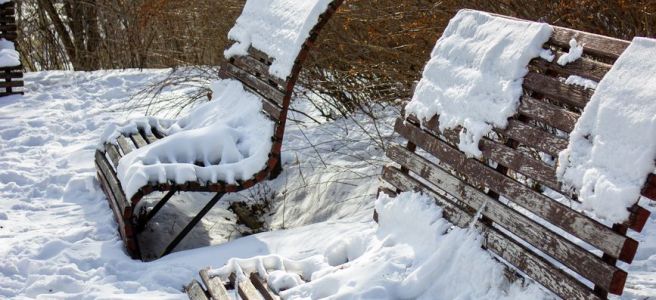
This grainy, low‑quality image was taken on my mobile phone during my first Polish winter. I remember how abruptly the snow arrived and how stubbornly it stayed. It was so cold, well below freezing, that any uncleared snow on the pavement changed colour and appearance, taking on a form resembling black grains of sugar — never softening into slush but lingering in a frozen, granular state despite the steady rhythm of passing feet.
Throughout my years in Poland, even as I moved between three different apartments, I never drifted far from this neighbourhood. I spent all that time within the same square mile, and this small patch of the city became the quiet backdrop to my routines, my work, and the extraordinary moments that filled the spaces in between.
I probably passed the statue of Adam Mickiewicz almost every day — by bus, by bicycle, or on foot. It stood there like a familiar companion, marking the centre of a life that was constantly shifting in small ways but rooted in the same place. During spring and summer, I often settled onto the benches nearby and whiled away many an hour people‑watching. There was something grounding about observing the rhythm of local life: parents shepherding children, elderly couples strolling arm‑in‑arm, students weaving through the park with backpacks slung over their shoulders.
The school where I taught sat directly opposite the park, so I regularly saw my students gathering there before lessons or drifting home afterwards. Their polite, formal greetings always struck me — a small but consistent reminder of the warmth and courtesy woven into everyday Polish life. It became a ritual of sorts, these brief exchanges that punctuated my days.
Near the park, I later discovered a place that became a second home to me: a little café called Kafo. The air inside always carried the scent of rich coffee and fresh cakes, and the warmth of the welcome wrapped around me the moment I stepped through the door. People greeted me by name as if I’d lived there all my life, and I can’t help but laugh now at how easily I slipped into the role of a (very) minor celebrity.
A music academy stood slightly opposite the direction Pan Mickiewicz was facing, and its open windows often spilled out fragments of song or the sound of instruments being practised. Some days it was a hesitant violin; other days, a confident soprano warming up. Those moments — unexpected, unpolished, and sincere — became some of my favourite details of the neighbourhood. They made the place feel alive in a way that was both intimate and communal.
To the amusement of friends — and without any real understanding of Mickiewicz’s revered place in Polish culture — I began affectionately calling the park “Mickey Park.” The nickname stuck for me, a private shorthand for a place that quietly shaped my years there. It wasn’t just a park or a statue. It was a constant: a landmark around which my life gently revolved, a space where I waited for friends, watched the seasons turn, and learned to observe the everyday life of a community that was slowly, patiently becoming my own.
Part II: Snowfall at the Poet’s Feet
The photograph I took on that incredibly cold night means a great deal to me. I was entering my third month of living in Poland, discovering just how difficult life had become — learning a new language, adjusting to a new culture, and feeling the weight of homesickness settle in.
Just looking at the image transports me back to that moment: pushing a heavy bicycle through the snow, feeling alone, sad, and exhausted by the demands of encouraging students to become confident English speakers. My snapshot captures only a fragment of that period, but it’s a fragment that stayed with me. I stopped in front of the statue and let the moment settle. Something in its stillness echoed the quiet I’d been searching for.
The Poet and Me
The snow came suddenly,
soft enough to feel gentle,
heavy enough to make the night feel larger
than I had the strength for.

I pushed my bicycle through it,
each step, a small negotiation
between tiredness and the promise of warmth ahead.
A light supper waiting,
something warmed between both hands,
candles lit, so the room wouldn’t feel
quite so empty.

But then I saw him again.
Pan Mickiewicz.
The poet who had stood through every season
I’d lived in that city.

Something in me paused.
Maybe it was the way the snow
rested on his shoulders
as if he, too, had been caught off guard.
Maybe it was the hour,
or the loneliness I hadn’t named yet.
Maybe it was simply the relief
of standing still.

I stayed there longer than I meant to,
hands cold on the handlebars,
breath rising in small clouds,
the weight of the day settling beside me
like an old companion.

And for a moment,
I didn’t feel like a stranger.
Just a man in the snow,
seen—
if only by a statue
who understood wandering
better than most.

Then the moment loosened,
and I walked on,
carrying something quieter
than heaviness.
When the stillness finally released me, I walked on. For a moment, Gliwice didn’t feel foreign. I was simply a figure in the snowfall, paused beside another figure who had weathered far more winters than I ever would.
The Moment, Not the Monument
I found myself looking again at the two photographs I’d taken of Mickiewicz — and it hit me that I hadn’t captured a monument so much as a moment. I kept thinking back to that evening in the snow‑filled park: me standing there in the cold, alone, pushing a heavy bike through the snow with a bag digging into my shoulders, stuffed with all the things I insisted on carrying, and all the emotions I didn’t know how to put down. My body, mind, and soul felt as overloaded as that bag, yet even then I was reaching for something steady, something familiar, something that reminded me I wasn’t the first person to feel unmoored or to wander through a city trying to understand where I fit.
Maybe that’s why I took those pictures.
Maybe that’s why it still matters to me.
Thank you for reading. If you’ve ever had a place — a park, a street, a café — quietly become part of your life, I’d love to hear about it. Feel free to share your own memories or reflections in the comments. Sometimes the smallest corners of a city end up holding the biggest pieces of our story.

 Ghosts to Carry, Stories to Keep