Ghosts to Carry, Stories to Keep

Where memory meets the page, one moment at a time.

  • The Smaller World
    9–13 minutes

    One-to-One

    Names and identifying details have been changed.

    I already knew the quiet rhythm of one-to-one teaching. These weren’t clients so much as friends, KAFO regulars, or people who drifted into my life in that Silesian way: quietly, naturally, without ceremony. If someone asked about private lessons, I usually said yes. It was never my intention to build a business around one-to-one teaching — I was busy enough already — but I enjoyed it. The people who came to me were curious and motivated, and each lesson took its shape from whatever they needed that day. Their questions, their conversation practice, a quick quiz, or a moment of clarity. It felt less like business and more like life unfolding around cups of coffee, conversation, and things they genuinely wanted to learn.

    Maybe that’s why when Britam asked if I could take on a few one-to-one lessons, I didn’t hesitate. The rhythm felt familiar — the same quiet, human scale — just in a different corner of my week. They soon found their own rhythm, their own kind of landscape… their own kind of organised chaos.

    Some mornings began in my kitchen at 7 a.m., the kettle boiling while I tried to look awake enough to teach someone who had grown up with horses. The quiet, the half-light, the shared coffee, the way conversation settled into the morning as naturally as the bakery opening downstairs and the first traffic on the street.

    These one-to-ones were nothing like the structured world of the main language school. They were intimate, unpredictable, and often hilarious. People let their guard down in these spaces. They told stories, asked questions they would never ask in a formal classroom, laughed at their mistakes, and trusted me in a way that still surprises me.

    This was another important part of my working life — the part that kept me moving, grounded, and laughing. The part that made Gliwice feel less like somewhere I lived and more like somewhere I belonged.


    Zosia

    My first one-to-one at Britam was with a twelve-year-old girl named Zosia. Twelve — though she carried herself with the calm assurance of someone older, and spoke English with a fluency that made me wonder what I could possibly teach her.

    I remember that first lesson: pride, responsibility, and a quiet panic. A child. Alone. With me. No full classroom to soften it. Just the two of us, a table, a notebook, and later all manner of props, card games, lesson plans, and the realisation that this was a very different kind of teaching.

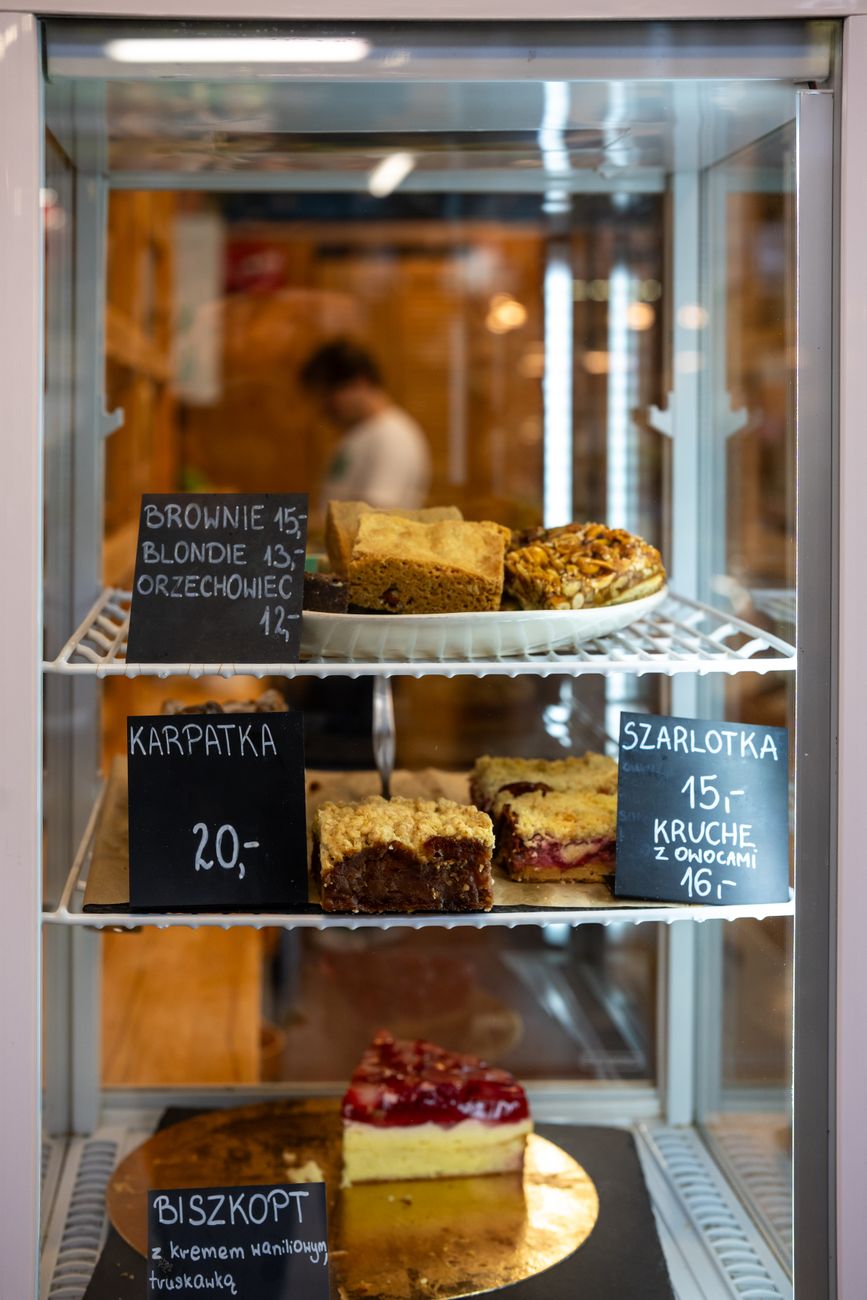
    But Zosia made it easy. She was bright without announcing it. Funny without trying. Grounded, curious, and unpretentious. She came from a family who owned a cukiernia — a cake shop — and carried something of that world with her: warmth, steadiness, and a sense of belonging.

    Talking with her often felt less like teaching and more like being invited into the quick, bright world of someone already becoming herself. She asked questions that surprised me, made observations that stayed, and laughed in a way that lifted the room.

    And the trust — that was the part that stayed with me. Her parents trusted me. Britam trusted me. And she kept coming back. Each week another booking appeared, as if the decision had already been made: this works.

    She made the work feel light. Some students do that. They remind you why you’re there.


    Joanna

    If Zosia was a gentle introduction, then Joanna was my first lesson in how unpredictable one-to-ones could be.

    She worked for a Japanese ceramics company out in the industrial zone — a massive factory complex with forklifts humming past the windows and the air faintly metallic. She arrived composed, as if she had already handled several absurdities before breakfast. In the first few lessons, I wasn’t sure we had anything in common.

    There was a stillness to her — a kind of composure that made her difficult to read. I remember thinking more than once that she probably didn’t like me very much. But it was work, so I showed up, punctual, fully prepared, and carried on. She didn’t cancel. Which, in hindsight, was the first clue I might be wrong.

    Her humour began to surface gradually — dry, precise, and perfectly timed. Not offered freely, but placed carefully, as if testing whether I’d notice. I learned to meet her there, not by pushing, but by matching her — a respectful duelling of wit. She was quick. Quicker than me, most of the time.

    And her English? Easily CAE level — nowhere for a native speaker to hide.

    At some point in those early weeks, I discovered I was learning from her, too. She told me about the strange, disciplined world of a Japanese company transplanted into Silesia — the daily Chōrei meetings where staff stood in neat lines, recited goals, and clapped in unison. I was never entirely sure whether I was being teased about that; the line between sincerity and mischief was razor-thin.

    Yet when she spoke about 5S, she was absolutely serious. She explained how the Polish workforce had embraced 5S — the order, the clarity, the shared responsibility for keeping things running smoothly. She spoke with a quiet respect for the place she worked. It wasn’t just efficient; it was genuinely a good company that treated people well.

    She described all of it with that same deadpan delivery, letting the details hang in the air before raising an eyebrow, as if to say: See? The world is stranger and more interesting than you think.

    Once, she told me that several Japanese managers wanted the Polish workforce to learn Japanese instead of English.

    “Imagine,” she said, “a factory full of Poles speaking Japanese.”

    After convincing me the entire workforce actually did meet each morning for Chōrei, she paused and said, “Imagine Polish workers shouting motivational slogans in Japanese at eight in the morning.”

    Another silence. Another eyebrow.

    I nodded, trying to look thoughtful. “Well,” I said, “it sounds reasonable… but I’d be out of a job.”

    Another look from her — then the laughter, sudden and loud, the kind that made the whole room feel lighter.

    “Maybe,” she said, “we should look into getting a Japanese language teacher after all.”

    Some students learn from you. Some teach you. Joanna did both — and she didn’t even break a smile doing it.


    Tomasz

    If Zosia showed me brightness and Joanna showed me precision, Tomasz introduced me to the quiet intimacy of early-morning lessons.

    Tomasz was the opposite of what people imagine when they hear “business client.” Quiet, funny in a dry, sideways way, and sharper than he ever let on. I can no longer place his home precisely on a map. What remains is the landscape he described: rolling fields, horses that seemed to have been part of his family for generations, and long summer days that lingered in the memory. What I remember more clearly than the place itself was the way he spoke about it — calmly, fondly, as though those summers never entirely left him: early mornings, bedroom windows open, the smell of hay drifting in. He’d describe it so simply I could almost hear the horses breathing.

    By the time I met him, he was a partner in a local start-up run by a young entrepreneur with more ideas than hours in the day. Despite his rural background, he was fast-thinking, modern, and quietly amused by the world.

    Our lessons were at the ungodly hour of 7 a.m. — in my kitchen.

    I overslept once — only once — and woke to the sound of him knocking on my door. The communal entrance had been left unlocked, so he simply let himself in.

    “No problem, Gary,” he said, already halfway to the kettle. “I’ll make coffee. You can get ready… or stay as you are.”

    I chose option two.

    I ended up teaching the whole lesson in my pyjamas, parked at my kitchen table and doing my best impression of someone who was both awake and in charge. He, of course, carried on as if having a teacher in sleepwear was the most standard thing imaginable. And honestly, there’s something hilariously disarming about explaining English grammar while wearing slippers—fluffy white ones I’d just snagged from the local Biedronka, still so new they practically squeaked with innocence.

    Tomasz didn’t seem to mind. And somehow, neither did I.

    Teaching someone in your own kitchen changes things. The boundaries soften. You see the person, not the student. And in those early hours, with the light lifting over Gliwice, I found myself looking forward to the simplicity of it — the clarity, the trust, the quiet companionship.


    Biedronka Slippers

    Jacek

    If Tomasz brought the quiet of mornings, Jacek brought the city itself — its architecture, its rhythm, its intelligence.

    He lived in one of those impossibly hip loft spaces above a wine bar — the kind of place that made me feel like I’d wandered into a magazine spread by accident. That whole building seemed to attract interesting people. One of the most creative and genuinely innovative corporate clients I gave lessons to had their office in the same building, tucked away in a space that felt more like an artist’s studio than an office.

    Jacek was a doctor working his way through paediatric specialisation. He came from a family of doctors, was brilliant, cultured, and wonderfully stubborn about the things he cared about.

    Worksheets were tolerated, not welcomed. He’d accept them with a sigh that was almost theatrical, glance at them, and then steer the conversation toward something entirely different — architecture, films, restaurants, or marques of cars. I know nothing about cars; he knew everything. He’d talk about engines and design lines while I nodded, pretending to follow, waiting for a moment to slip in a correction.

    He had the kind of mind that moved quickly but never made you feel left behind. Our lessons were officially conversation classes, but they always drifted into architecture, cars, design, the city, the strange beauty of Silesian buildings, and the quiet humour of everyday life.

    With him, the lesson was never the worksheet. It was the conversation, the wandering, the thinking aloud. The hour became something I genuinely looked forward to. Jacek — like the others — existed in that smaller, more personal world of teaching. One person, one conversation, one hour at a time.


    Zosia, Joanna, Tomasz, and Jacek — I can still picture each of them as clearly as if it were yesterday. One-to-one — the part that felt human. The part that grounded me. The part that made Gliwice feel less like somewhere I lived, and more like somewhere I belonged.

    Beyond these one-to-ones, there was another world I moved through each week — a world of companies rather than individuals, of conference rooms and design studios, of engineers, creatives, and entire teams who somehow became part of that belonging, too.

    It was strange, exhilarating — a different kind of chaos.

    One moment I was cycling across Gliwice to a tech company; the next, Pan Bronek was driving me to a firm out towards Zabrze, into a gentle in-between where the cities blur at the edges. There, I’d teach grammar from a workbook and attempt to revive the dreaded CD player under the steady, thoughtful gaze of industrial engineers who were far too polite to comment, while clearly wondering why the foreign teacher was losing a battle against basic audio equipment.

    They weren’t critical, just precise.

    I remember how the silence in that room was extraordinary — the kind that made every hopeful button press sound like a public announcement. I’d keep my voice bright and optimistic, narrating my attempts as if confidence alone might coax the machine into life, all while mentally preparing Plan B: to abandon the audio entirely and act out the dialogue on international business etiquette myself.

    Among all those corporate clients, one company in Gliwice stands out in my memory. They nudged me toward technology, urging me to experiment, to weave new tools into my lessons in ways I’d never imagined. I’d always believed I taught them one ninety‑minute lesson a week, but an old timetable told a different story: some weeks I was there twice, swept up in the energy of it all. We were clearly having such a good time that the extra lessons simply folded themselves into the blur of those last months without me noticing.

    Those evenings were full of warmth, absurdity, and creativity. And, though I didn’t realise it at the time, they helped carry me through a moment in my life when things were beginning to unravel — one of the reasons I kept going long after I should have stopped.
  • A Learning Curve and a Satsuma
    8–12 minutes

    The school in Zabrze was nothing like the one in Gliwice. Not only the school itself, but the surrounding buildings were unlike anything I had seen. The atmosphere was heavier, the energy different. The school sat in a Familok, one of those old Silesian brick buildings with deep courtyards and stairwells that glowed amber at night. I’d never experienced anything like it. In winter, the surrounding buildings looked almost theatrical, their windows lit against the darkness, the air carrying that unmistakable Silesian mix of cold and coal.

    Britam language school building in Zabrze during winter

    Britam school in Zabrze. A winter snapshot — outside, bitterly cold — the smell of coal smoke in the air.

    It was my third or fourth visit to the school in Zabrze. I had three classes, the first beginning at 4:15 p.m. The first two lessons went well, with no obvious problems; as far as I could tell, it had been an enjoyable experience for both the students and me. Maybe I was beginning to feel a little too confident. I made my way to the last group of the day — two or three minutes late and slightly flustered. I knocked on the door and was invited in by the teacher. I could see she was packed up and ready to leave. I was very apologetic, but she laughed kindly, said it was fine, and told me not to worry. She then spoke to the class in Polish. She was direct and rather stern; I didn’t fully understand, but it felt like she was instructing them to be on their best behaviour for me. Not only that, but she seemed concerned — it was not uncommon to hear a teacher light-heartedly warn their students to be good for the new native speaker, but this felt different.

    Then she left.

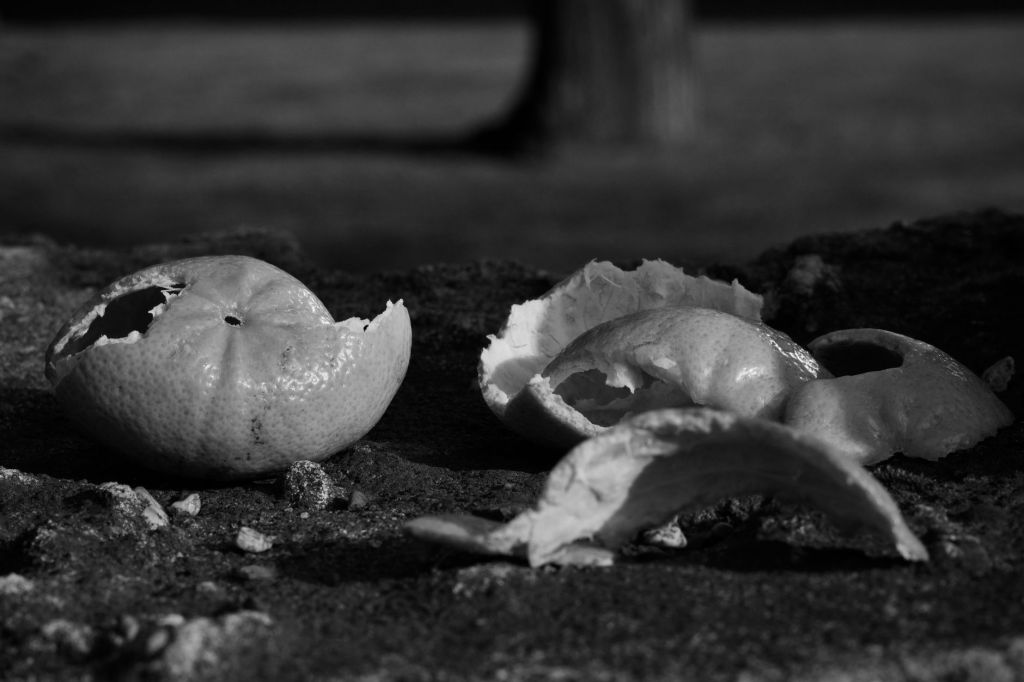
    Had the atmosphere shifted? Or was it just me? I looked at the class — a group of teenagers who looked as though they’d already lived three lifetimes that day. I understood it. They were tired, hungry, and the last place they wanted to be was in a classroom with a new British teacher who appeared to be trying just a little too hard. I began with introductions — coaxing as much information as I could from each student without giving them a chance to use a simple ‘yes’ or ‘no’. Most of them were lovely — funny, bright, and doing their best. However, I couldn’t help but notice one girl sitting directly in front of me who began peeling satsumas, eating them slowly, and staring out of the window as if I were a passing cloud. I asked her politely not to eat during the lesson. She ignored me. I asked again. And again. Her friends began to laugh and flick bits of peel at each other. Most of the class looked mortified.

    I didn’t feel angry. I felt humiliated — not by her, but by my own helplessness. Furthermore, I could sense they’d spotted a weakness in me, and I didn’t yet have the tools to manage it. Something in me, perhaps the part that had once worn a uniform and knew when a situation was slipping, simply thought: Right. Enough. I gathered my books and props, apologised to the students who were actually trying, and told the others, as calmly as I could, “Good luck explaining this one to your parents. I’m out of here.”

    Then I walked straight to the secretariat, where the lovely lady who spoke no English listened with saintly patience as I attempted to explain, in catastrophic Polish, that I was refusing to teach the class, and she needed to call the Director of Studies.

    Oh boy.

    When I finally spoke to Pani Grażyna, she was devastated. Embarrassed, saddened, and deeply apologetic, she kept repeating how sorry she was that I’d been put in that position. Then, in a tone that made my stomach drop, she explained that letters would be sent to every parent of every student in that class. At that point, I was thinking, Oh dear… what on earth have I done? I’d only been in Poland a few months and now, apparently, I was triggering a full-scale administrative response. She asked me which student had been eating fruit, ignoring my requests to stop, and throwing peel at her friend. I could feel myself shrinking into my chair.

    All I could think was, Enterprise… one to beam up, please.

    When Pan Bronek rang to say he was waiting at the usual spot to take me back to Gliwice, I could hear something unsettled in his voice. He didn’t ask directly, but he didn’t need to. I travelled back through the dark Silesian streets thinking, What have I just unleashed? I wasn’t feeling good about it at all. Pan Bronek tried gently to discover why he’d been called to collect me earlier than planned, but I didn’t know how to explain it in a way that didn’t make me sound foolish or dramatic. I think he already knew. The journey back to my apartment felt longer than usual that night — the kind of journey where the silence says more than either of you can.

    Night view walking in Zabrze town center

    Walking to meet Pan Bronek, who would wait for me a short-distance away. I turned to take this shot on my phone. The immediate area was always slightly surreal; you can just make out Christmas decorations in the distance.

    The next day, when the dust had settled and my nerves had stopped jangling, Britam didn’t scold me or question my professionalism. Instead, they did something far more disarming: they supported me. Pani Lisowska explained, gently but firmly, what the expectations were — not as a reprimand, but as guidance. Teenagers, she said, especially exhausted ones in winter, will test boundaries. It wasn’t personal. It wasn’t a failure. Likewise, it was part of the job. She told me that removing myself from the situation had been the safest option, and that the school would handle the rest. My friend at Górnych Wałów echoed the same message later that day, pressing a drink into my hand and telling me, with the kind of warmth only she could manage, that every teacher has a story like this. “You learn,” she said. “You get stronger. And next time, you’ll know exactly what to do.”

    And she was right. Something shifted in me after that — not confidence, not yet, but a sense that I wasn’t alone, and that the culture at Britam wasn’t about blame. It was about helping you grow into the teacher they already believed you could become.

    In the days that followed, something in me began to shift. I realised that the problem I had faced at Zabrze hadn’t just exposed a gap in my teaching skills — it had exposed a gap in my instincts. For years, my default mode had been shaped by policing — but classrooms aren’t crime scenes, and teenagers aren’t suspects. They’re tired, complicated, hopeful, chaotic human beings trying to survive winter evenings and exam pressure.

    The strange thing was that in twenty-three years of policing — most of it spent in a small rural town surrounded by hills and fields — I’d worked with countless young people. All ages, all temperaments, all kinds of trouble. I was never their friend, of course, but they treated me with respect because I treated them with respect, even when I was angry, frustrated, or quietly heartbroken by something they’d done.

    My default mode had never been challenged. I knew their parents, their grandparents, their teachers, their local doctor, the shopkeepers, the people who ran the youth club — my patch was a web of relationships, and I understood how to move within it. But Zabrze was nothing like anything I’d been prepared for. I was no longer someone in uniform, no longer someone with authority woven into the fabric of the community. I was a foreigner with limited Polish, no shared history, and no instinctive sense of the cultural rules.

    That simple thing — a student eating a satsuma — should have been nothing. I’d dealt with far worse, far more serious behaviour, countless times. But the flicking of peel, the laughter, the sense that I had no footing at all… that tipped me over. It wasn’t the fruit. It was the sudden realisation that every instinct I’d relied on for two decades was useless here.

    I should say here that the ladies who ran the secretariat at Britam were not to be trifled with. To me, they were always warm, helpful, and ready to assist — but to students and parents, they carried a polite, professional, and quietly formidable authority. Think British GP receptionists, multiplied by three.

    The Zabrze secretary in particular had a presence that could silence a corridor. She seemed genuinely concerned for me that evening, and after speaking to Pani Lisowska, she ascended the wide staircase with a sense of purpose that made me instinctively step back.

    There had been a brief, stunned silence from inside the classroom after I’d left, followed by a rising murmur of voices and laughter.

    Then she went in.

    I heard her speak in Polish — calm, firm, entirely in control. The laughter stopped. When she returned a moment later, the silence behind her held.

    It was the first time I realised that at Britam, authority didn’t always sit in the Director’s office. Sometimes it sat behind the front desk.

    The secretariat’s intervention — that calm, formidable presence restoring order with a few firm words — taught me more about classroom authority than any training manual ever could. It wasn’t about power. It wasn’t about control. It was about presence, consistency, and the quiet confidence that comes from knowing you’re not alone. Britam had my back. My colleagues had my back. And slowly, I began to understand that teaching required a different kind of strength — one that didn’t come from a uniform or a badge, but from patience, empathy, and the willingness to grow.

    In the weeks that followed that night in Zabrze, I found myself relearning instincts I’d taken for granted. Not replacing them — just adjusting them to a world where the rules were different and the cues were subtler. I began to understand that authority in a classroom didn’t come from history or uniform or community ties. It came from presence, consistency, and the slow, steady work of showing up. I watched other teachers, listened to the secretariat, paid attention to how students greeted each other, how they joked, how they tested boundaries. I learned when to step in and when to let something pass. I learned that silence could be more powerful than a raised voice.

    What surprised me most, looking back, was how Zabrze slowly became one of my favourite places to teach. I loved all my classes, but something about that school — the students, the grit, the honesty of the place — began to mean something special to me. And inside that old Familok building over the next three years, I had some of the most rewarding lessons of my entire time in Poland. The same teenagers who once tested my limits became sharp, funny, hardworking young adults preparing for their matura with a seriousness that humbled me. Zabrze taught me more than I ever taught them — about patience, resilience, and the quiet beauty of showing up again after a difficult night.

    View of Silesian rooftops and familoki from classroom window in Zabrze

    Zabrze, a view from a classroom. A Silesian skyline: familoki, tiled roofs, chimneys — the quiet rise of modern apartments in the distance.

    And slowly, almost without noticing, I stopped feeling like a foreigner trying to keep up. I didn’t arrive at Britam thinking of myself as a teacher — not really — but over time, something shifted. I began to feel as though I could teach again, not as the person I’d been before, but as someone shaped by this place, this culture, and the trust people placed in me.

    Previous Post:

  • Navigating the Classroom Dynamics
    6–8 minutes

    My actual working day with school classes didn’t begin until the afternoon. That was when I’d begin my circuit of running conversation classes across all five Britam schools, which were mapped out weeks in advance. Conversation classes sound simple. They aren’t. The real challenge wasn’t just listening; it was coaxing, persuading, and sometimes flat-out begging tired students to speak to me — or, heaven forbid, to each other — in English. The classes themselves were interactive sessions focused on speaking and listening fluency. Communication always took priority over grammar rules, so I was constantly planning activities — quizzes, role-plays, group discussions, topic-based chatting — anything that might build confidence and practical language skills.

    I used all manner of props too, whatever helped spark a conversation. Some days it felt as if I were pulling rabbits out of a hat — a slightly bewildered, TEFL-qualified magician hoping the trick would get them talking. In the very early days, it sometimes seemed like dentistry without anaesthetic — slow, awkward, and not something anyone wanted to repeat. I was learning fast — I had to — if my new career was going to work.

    When I tried explaining conversation classes to friends in the UK, some would blink and say, “So… you’re paid to just talk?” They meant no harm, but it showed how invisible the real work was — the planning, the balancing, the coaxing, the quiet emotional labour of helping people find their voice in another language.

    Each school was colour-coded on a timetable that told me exactly where I needed to be from 3:30 p.m. until 8:20 p.m. It also included any business classes that might occur during school hours, along with the times Pan Bronek would collect me and ferry me between branches like a one-man transport network. Some companies were local — based within the city, so I’d use my bicycle to get from school to the company, or vice versa. A conversation class took up forty-five minutes of the usual ninety-minute lesson, which was shared with their usual teacher. I either had the first forty-five minutes or the last.

    I discovered that my timing had to be absolutely precise — not just for my own sake, but out of respect for the usual teacher. If I had the first forty-five minutes, I needed to be fully packed up and ready to slip out the moment they appeared at the door. And if I had the last forty-five, I had to be outside that classroom exactly on time, ready to knock and take over smoothly. It sounds simple, but in reality, I was often tearing up and down staircases between lessons like a madman, trying to keep everything running politely and on schedule.

    I occasionally had a ninety-minute conversation class with very advanced learners, which sounds like a long time for a conversation class — even a difficult amount of time — but I actually found the extra time easier to plan and then to guide than the usual forty-five-minute lesson. I loved working with CAE (now called C1 Advanced) and other advanced students. They challenged me as much as I challenged them, and it mattered to me to recognise their level with real respect. I thoroughly enjoyed creating conditions where I wasn’t ‘teaching down’ to them.

    If I had no business clients in the morning, I’d spend the first half of the day preparing lessons, meeting friends for lunch, or settling into a corner of KAFO with coffee, sandwiches, and whatever cakes I could justify. The Wi-Fi there was strong and reliable, and it became my unofficial office long before my first class began.

    Then, at some point in the afternoon, Pan Bronek would appear, as dependable as dusk, and take me wherever I needed to be. If the lessons were at the main school, I’d make my way to Górnych Wałów, nod to the cardboard Bobby as if he were clocking in for the same shift, and slip into the teachers’ room for a drink, a joke, a brief look at the timetable, hoping to avoid jamming the photocopier before the evening rush began. It was a routine that looked chaotic on paper but felt strangely steady in practice — a life stitched together from colour-coded schedules, familiar faces, and the quiet comfort of knowing exactly where I needed to be.

    When I returned to Britam after the summer holiday of 2011, something had shifted. I’d decided to dedicate all my time to conversation classes, business groups, and the small portfolio of private students I’d gathered along the way. For the first time, I felt I was beginning to understand the dynamics of each group — who would talk, who would hide, who needed encouragement, who needed space. My schedule was still built around those 45-minute lessons, the strange Britam rhythm that shaped my days.

    I felt comfortable with most of my colleagues and respected them deeply. Many had studied English, education, linguistics, or other languages at university. They were trained teachers in a way I wasn’t, and I never forgot that. But there was a surreal edge to it too. A few were slightly uncomfortable around me, though they never said so directly. A friend explained that some colleagues might be worried that a native speaker might notice a mistake or catch something they’d missed. The idea felt absurd to me — I was the one learning from them, not the other way around — but I understood the pressure they felt.

    There was also the matter of the 45-minute lessons. When a native-speaker class was scheduled, the Polish teacher who normally taught that group simply lost that lesson — and the pay that went with it. An entire 45-minute block gone. It wasn’t personal. It was just the structure of the system. Still, it added a faint tension to the staffroom, a sense that my presence — my native-speaker status, my timetable, my role — shifted the balance in ways I hadn’t intended.

    But despite all that, I felt something new that autumn. A sense of belonging, perhaps. Or simply the feeling that I finally understood the place I was working in — its rhythms, its quirks, its unspoken rules. I wasn’t the lost newcomer any more. I was part of the fabric, even if only loosely stitched in.

    I rolled through 2012, again, pulling rabbits out of hats. Not only that, but I spent far too much money on games — family card games, conversation games, anything that could get a room talking. Some were ridiculous, but they worked. They really did. I’d walk into a classroom with a bag full of cards and props, and by the end of the lesson the whiteboard looked like a cross between a Picasso sketch and a crime-scene diagram. It was never-ending work, but it was joyful too.

    More and more of my spare time was swallowed by preparation. I studied grammar late into the night, created conversation plans for every level, every age group. I’d hoped to travel around Poland, but instead I found myself hunched over notebooks and textbooks, trying to make sure each lesson was suitable, balanced, and fair. Then there were the business clients — some wanted pure conversation, others insisted on working through grammar books page by page. I adapted. I kept going. I did what, I thought was the best I could do.

    Looking back now, I can see that those early years weren’t just about learning how to teach — they were about learning how to be someone new. Every lesson plan, every late-night grammar session, every awkward silence and unexpected breakthrough was part of a slow rebuilding. I hadn’t arrived in Poland as a teacher, not really, but somewhere between the familok stairwells of Zabrze, the warm chaos of Górnych Wałów, and that tall, time-worn kamienica on Dworcowa in Bytom — with its echoing corridors and windows looking out onto a street that never quite slept — I began to grow into one.

    Not perfectly, not effortlessly, but honestly — one conversation at a time.

    I didn’t realise then how much that honesty would cost me.

  • Navigating Language Lessons
    5–8 minutes


    From Poglish to C2, and everything in between.

    Britam wasn’t just a language school; it was a small ecosystem with its own distinct weather. The main branch on Górnych Wałów sat right in the centre of Gliwice, close enough to my apartment that I could walk there in ten to fifteen minutes or cycle in five—provided the dreaded spider junction traffic wasn’t stacked against me.

    One of the most surreal moments of those early days occurred the very first time I walked through the main doors at Górnych Wałów and found myself face‑to‑face with a life‑size British bobby. There he stood, smiling politely beside a classic red telephone box, holding Britam leaflets inside his cardboard pocket like a multilingual constable on recruitment duty. He was almost my physical height, which only multiplied the absurdity. I’d safely been in Poland for perhaps five minutes, and a cardboard caricature of my past career had already beaten me to the job. Every day I entered the school, I’d pass him on my way to the stairs, look him in his glossy eye, and think: Well, Gary… you really couldn’t make this one up.

    Inside, especially between classes, the building hummed with an intense, organized chaos: teachers drifted in and out of classrooms, students clutched grammar books, and an infamous photocopier chugged and rattled away like an old steam engine in the corner of the staff room. Between lessons, the stairwells became rushing rivers of noise as students thundered up and down the steps — some heading home with visible relief, others bracing themselves for another ninety minutes of extra schooling. On the busiest afternoons, the staircases were so packed that the crowds on the staircase would part just enough for an accidental Moses moment, allowing me to squeeze through with two heavy bags slung over my shoulders — entirely breathless but pretending otherwise.

    I always tried to remind myself that no matter their age or linguistic level, most of these students had already survived a gruelling full day at school, university, or work. By the time they reached our classrooms, they were tired, hungry, and trying hard to stay afloat. Meanwhile, I was doing my best impression of a functioning civilian adult, weaving through the crowds and on some days, climbing what felt like an unreasonable number of stairs to reach whichever classroom I’d been assigned for my forty‑five‑minute slot.

    I’d stand in the corridor for a brief moment, trying desperately to get my breathing under control. The trick was to enter the room as if I hadn’t just completed a brutal mountain stage of the Tour de France — calm, unfazed, and hoping no one noticed the faint wheeze that followed me across the threshold like an uninvited guest.

    It was a school with real structure and high expectations — timetables that ran like rigid railway lines, levels stretching from ‘Poglish’ to C2, and an academic culture that beautifully balanced seriousness with a surprising amount of internal warmth. And somewhere in the middle of it all, I was learning how to belong.

    Four years earlier, two Polish nationals had volunteered for my community cohesion project in North Wales, both became close friends. Now, the tables had turned. Reunited in Silesia, I was the clueless outsider clutching a grammar book, and they were the established professionals — graduates in English philology and trained, confident educators. I had stepped entirely into their world. One was based at Górnych Wałów, the other in Britam’s Bytom branch, and the sheer improbability of the setup never quite settled. It felt as though vivid episodes of my past life had quietly travelled across Europe ahead of me, taking their places in the classrooms before I had even arrived.

    If Britam had a heart, mine was anchored firmly in the teachers’ room at Górnych Wałów, thanks to a colleague who quickly became my rock. She was always ready to decipher a cultural nuance, always genuinely happy to see me, and always pressed a warm drink into my hand before I’d even managed to unbutton my winter coat. She taught me the vital, unwritten rituals of the academy: arrive the exact microsecond the doors open if you want any mathematical chance of conquering the dreaded photocopier; never trust the blinking toner light; and always, always keep a backup worksheet tucked safely inside your pocket. Between her presence, the school itself, and my other friend teaching down the line in Bytom, it felt as though an invisible safety net had been gently arranged beneath my feet.

    The Bytom branch only added to the dreamlike sense of unreality. It occupied the upper stories of a traditional, grand kamienica on Dworcowa—a street lined with architecture so ornate and expressive it felt like walking through an open-air art gallery. Inside the school, the ceilings were extraordinarily high, the doors felt enormous, and the fixtures carried an old‑world dignity. Yet, the academy branch itself was tiny—just four classrooms tucked into the building like a quiet secret. I would never have found the entrance without a local guide, who navigated Bytom’s maze with the absolute certainty of a man who had surveyed every corner of Silesia twice. Stepping into that cupboard-sized teachers’ room and seeing my friend sitting there didn’t even feel surprising any more; it just felt quietly unreal, as if this version of my destiny had simply been waiting for my legs to catch up.

    I wouldn’t be able to write honestly about Britam without including Pani Grażyna, the Director of Education and one of the school’s founders. Pani is the traditional Polish honorific for “Mrs.,” but it carries a soft depth of respect that English translations fail to capture. She possessed that rare, beautiful blend of natural authority and gentleness that steadied your nerves the moment she spoke. Nothing was ever too much trouble for her. She arranged my complex timetable with an almost maternal care, doing everything within her administrative power to keep my Fridays and weekends free, and she patiently guided me through the labyrinth of local tax forms and the quiet bureaucratic hurdles of an international move. She was calm when I was panicking, patient when I stumbled over terminology, and unfailingly kind. I couldn’t have asked for a better employer or a more welcoming introduction to working life in Poland.

    Yet, one of the most surreal moments of those early days occurred the very first time I walked through the main doors at Górnych Wałów and found myself face‑to‑face with a life‑size British bobby. There he stood, smiling politely beside a classic red telephone box, holding Britam leaflets inside his cardboard pocket like a multilingual constable on recruitment duty. He was almost my physical height, which only multiplied the absurdity. I’d safely been in Poland for perhaps five minutes, and a cardboard caricature of my past career had already beaten me to the job. Every day I entered the school, I’d pass him on my way to the stairs, look him in his glossy eye, and think: Well, Gary… you really couldn’t make this one up.

    Life size British bobby figure in Britam language school

    Hello… hello… what’s going on here than? My cardboard doppelgänger greeting students at the front door.

    Next:

    Follow the Story:

  • Yellow Wall With Bicycle

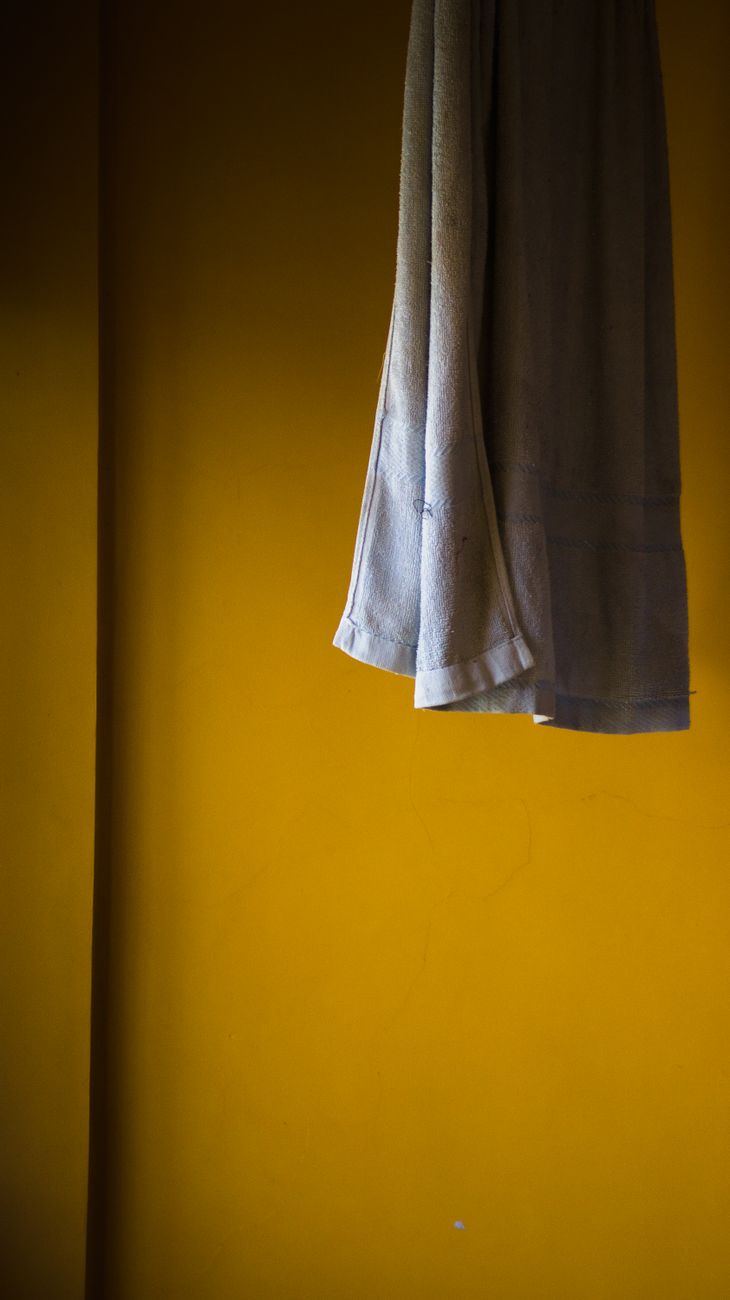
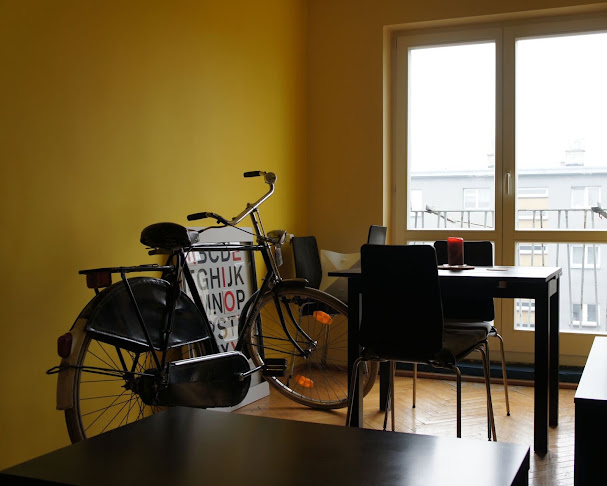
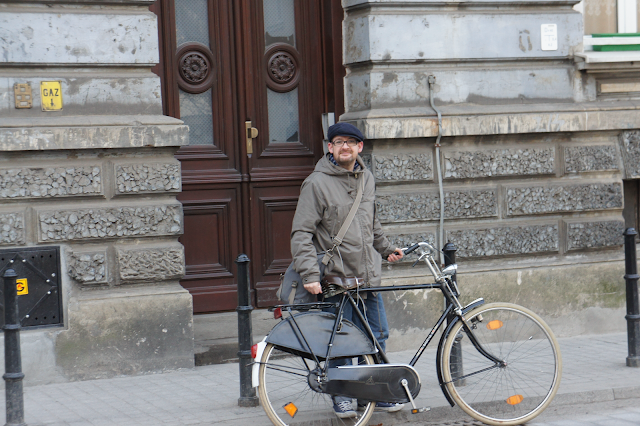
    This image tells a story. To understand it, we return to 2010, to the living room of a small czwarte piętro top‑floor apartment in the Polish city of Gliwice. It was my home then, though I didn’t yet grasp how deeply it would shape me. The bicycle — a vintage Dutch Gazelle given by a dear friend — stood as both a gift and a lesson. I assembled part of it myself, fumbling with the complicated mechanics at first, then finding a rhythm. In learning its structure, I began to sense my own.

    I never expected to grow fond of that fourth‑floor mieszkanie kawalerskie, but I did. It wasn’t grand, and it certainly wasn’t modern, yet it became the first place in Poland that felt truly mine. The previous tenant had attacked it with colours so bright they almost vibrated — a ceiling painted the purest, brightest white, living‑room walls in a canary yellow verging on gold, and door frames in a deep, almost forest green. Even the strange wooden cupboards near the hall had been painted the same dark green, though their shape and construction betrayed an older era. They fascinated me — heavy, plain, slightly awkward things, remnants of a different Poland quietly surviving inside a newer one.

    Oddly, I grew to like it all. The flat was bright and cheerful even on days when the world outside was anything but, or when my own mood dipped. It had a stubborn optimism, a kind of homemade sunshine that refused to let the place feel gloomy. It was a modest bachelor’s flat tucked under the roof of a PRL block — one bedroom, a narrow kitchen painted in a soft, airy green, and a tiny bathroom with that ridiculous half‑length tub. The sort of tub that made bathing feel like a logistical exercise, and showering like a negotiation with the shower curtain, which had a habit of wrapping itself around me like Rover from The Prisoner.

    But I grew love it. Even the mishaps became part of its charm. I remember one evening with guests — a warm, easy night, drinks poured, laughter drifting through the rooms. I excused myself to use the bathroom, stepped inside, and promptly fell straight into that absurd little tub. The enamel gave a hollow clang that echoed through the flat, and my guests burst into helpless laughter. I couldn’t blame them. There was no dignified way to climb out of a bathtub designed for a child‑sized contortionist. Yet moments like that stitched me into the place. The climb to the top floor, the quiet at night, the view from the window, the sense of privacy — all of it made the flat feel like a small perch above the city.

    The sunlit room with its yellow wall became a kind of inner landscape. My days moved slowly there, unfolding like thoughts I hadn’t yet spoken aloud. Mornings began with the softened hum of the city drifting through the window, a reminder that life continued beyond my small space, even when I felt suspended within it. My bicycle — always ready — was more than a way to move through the world; it was a quiet reassurance that I could leave, return, wander, or begin again. Late‑night rides under sodium skies felt like conversations with myself.

    The alphabet print was never hung on the wall, but sat upon the floor like a gentle prompt. I often found my eyes drifting toward it while drinking coffee, tracing the letters as if they were fragments of memory. Sometimes I rearranged them in my mind, forming names of people I missed or messages I wasn’t brave enough to say aloud. It was a small ritual, but it steadied me.

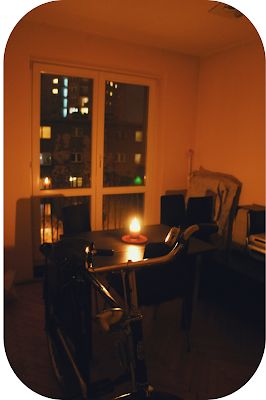
    The black dining table became the anchor of my life indoors. I ate there, read there, and often worked there long after the city had quietened. Friends gathered around it too — the red candle burning through our laughter, its wax pooling like time made visible. On solitary nights, I sat with my thoughts, sketching ideas, preparing lesson plans, or writing fragments of verse. The candle’s flicker felt like a heartbeat in the quiet. Sometimes I watched the building across the way, imagining the lives behind those windows. Their small gestures — watering plants, hanging laundry, softening arguments — became part of my own rhythm, a reminder that everyone carries their own quiet stories.

    The wooden floor creaked in familiar ways. I danced barefoot across it, and sometimes lay down on it, staring up at the ceiling, letting thoughts of home, family, friends, and this new life drift through me. The room held all of it without asking for anything in return.

    That space carried my solitude, my hopes, my dreams, and the first sparks of who I was becoming. It was where I learned the weight and beauty of silence, the comfort of small rituals, and the slow, patient work of growing into myself. Life in that Gliwice apartment had its own rhythm, shaped as much by the city outside as by the quiet within.

  • A Bicycle, a Beginning, and a Quiet Kindness
    6–10 minutes

    Author’s Note

    This piece is a small tribute to the unexpected kindnesses that shape our lives. These quiet, unceremonious gestures linger long after the moment has passed. It’s drawn from my earliest days in Poland, a time of novelty, uncertainty and strange exhilaration. The bicycle in the cupboard was more than a surprise; it was a reminder that even in unfamiliar places, generosity finds you. Also, that sometimes, life hands you a moment so absurd it feels like a scene from a sketch show. Mine took place in a hotel reception on the outskirts of Gliwice, armed with nothing but a MacBook, a hopeful expression, and absolutely no understanding of Polish pronunciation.

    Arriving in a New Country: Uncertainty and Possibility

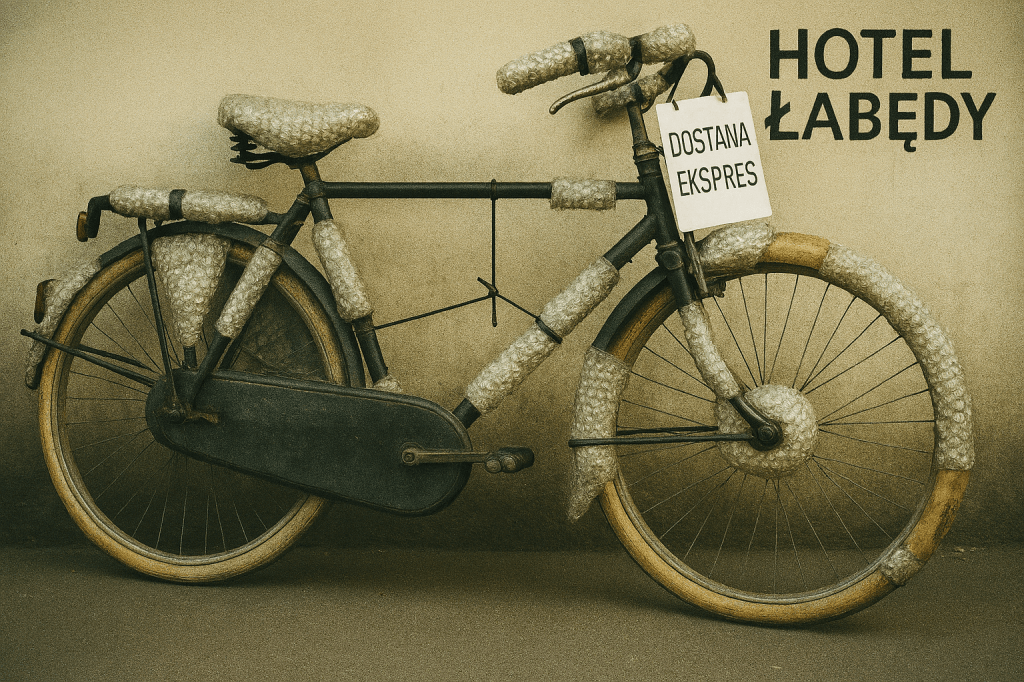
    Life offers moments of unexpected generosity that settle into our memories like warm light. One such moment arrived partly wrapped in bubble wrap and cardboard — possibly with an entire roll of heavy‑duty parcel tape — tucked away in a hotel cupboard in Poland. It waited like a secret.
    I had just arrived in the country, still navigating temporary accommodation and the hope of something more permanent. My days were already packed with teaching, deciphering public transport, wandering unfamiliar streets and struggling with beginner‑level Polish, aided by kind, caring, and remarkable friends — whose encouragement never once wavered.

    A Receptionist, a Mysterious Package and My Confusion

    One evening, far too late for responsible adult behaviour, I returned to the hotel after my evening classes. Exhausted and slightly proud of myself for not getting lost, I walked in to find the receptionist staring at me with a mix of amusement and mild alarm. She cleared her throat and announced, “A very large package has arrived for you.” Then she paused dramatically, as if waiting for me to confess to something.

    Her expression suggested even I didn’t know why I’d received anything significant — which was fair enough. Panic set in immediately. Had I ordered something in a sleep‑deprived frenzy? Was this the result of clicking “Yes, I’m over 18” too freely? Whatever it was, I now had to explain a delivery I couldn’t even remember arranging. Still unfamiliar with being addressed so directly, I must have looked like I’d seen a ghost — or at least a particularly assertive one. I was certain I hadn’t ordered anything. Besides, other than the local Biedronka store, I barely knew where to buy groceries, let alone something requiring a “very large package.” Perhaps it was a mistake? Still, I didn’t want to appear completely clueless, so I followed her.

    She led me to a walk‑in cupboard. As we approached, my mind raced. She unlocked the door and swung it open, revealing a vintage Dutch bicycle wrapped like a mechanical bubble‑wrapped surprise party gift. The pedals were removed and the handlebars tucked in, looking both noble and slightly ridiculous in its temporary hiding place.

    I stood there, mouth agape, blinking at it. “For me? Are you sure?” I kept asking, as if she might suddenly reveal it was all a misunderstanding. A label was affixed to the bike and, even at a glance, it was unmistakably addressed to me. The other details on the label were all I needed. They confirmed, quietly and unmistakably, that this was for me — no misunderstanding, no mix‑up, just a gift placed in my hands with more care than I knew how to process.”

    A Gift From a Dear Friend and Wi-Fi at Hotel Łabędy

    It turned out a kind and considerate Polish friend — someone who knew my love of old bicycles — had arranged the whole thing. No announcement, no hint. Just a quiet, deeply thoughtful gesture meant to welcome me to Poland and help me settle in. The kind of kindness that catches you off guard and stays with you for life.

    When I first moved into the hostel — a clean, functional, perfectly respectable place — I chose the most basic room on the first floor, convinced I was being sensible and frugal. It was tidy and serviceable, but very bare: a fairly comfortable bed, a wardrobe, a small bathroom, and not much else. After a few days of “basic,” I realised it was perhaps a bit too basic, so I paid a little extra and moved up a floor to a room with a few luxuries. There was a rug beside the bed, a small bedside cabinet with a kettle, and a radio alarm that crackled bravely into life each morning. I had Wi‑Fi — not particularly good — and some days I found myself sitting cross‑legged on the floor, leaning against the door to find a stronger signal.

    A couple of weeks later, curiosity got the better of me and I tried the top floor — the so‑called luxury level — with its rather nice self‑contained suites. I assumed the floor below was even more luxurious than the ones beneath it, probably with a TV and reliable Wi‑Fi. My suite, however, was perfect for storing my bicycle. It became a kind of silent companion: elegant, patient, and only slightly in the way. I doubt the hotel approved of a bicycle living in a suite, but I was far too overwhelmed, grateful and quietly delighted to worry about it. Besides, I had a small sofa, a table and chairs, a tiny kitchen, and both a radio and a TV. The Wi‑Fi was strong and reliable. Luxury, by any measure.


    The Wi-Fi Incident

    There’s one moment on the first floor that still makes me laugh. I needed Wi‑Fi so badly that I marched down the wide tiled staircase to reception, carrying my MacBook like it was a medical emergency. The whole place had that classic communist‑era hush — clean, sparse, echoing — the kind of silence where even your footsteps feel too loud. Naturally, the one receptionist who spoke perfect English had just gone off shift, leaving her colleague alone behind the desk.

    She was kind — warm, even — but the look on her face when I opened the laptop and pointed desperately at it, pure bewildered politeness.

    “Proszę pani… nie ma Wi‑Fi…”

    “Wi‑Fi…?” she repeated, smiling brightly.

    I stared back, equally confused.

    “Tak… proszę bardzo, er… nie ma… nie… Wi‑Fi.”

    More pointing from me.

    More hopeful gestures toward the air above my head.

    More “Wi‑Fi?… Wi‑Fi?…”

    Still nothing. Just a very concerned receptionist and me, gripping my MacBook like a flotation device. To anyone watching, it must have looked absurd — two people repeating “Wi‑Fi” at each other like confused parrots. It could have easily been a sketch on TV.

    Then I caught sight of a small sign on the wall behind her: the familiar curved‑wave symbol for Wi‑Fi, and underneath it, the word Wi‑Fi. I pointed at it with the enthusiasm of someone spotting land after weeks at sea.

    “Wi-Fi… Wi-Fi…”

    She turned, looked, then turned back with a huge smile.

    “Ach! Vee-fee“

    In Polish, Wi is pronounced vee and Fi is pronounced fee.

    “Vee‑fee?” I tried, nervously, almost pleading.

    Instant recognition. A laugh. A huge sigh of relief from both of us.

    Of course, Wi-Fi — pronounced vee‑fee.

    How she then explained that my floor didn’t actually have Wi‑Fi is another story altogether. Funny, and absolutely true. You couldn’t make it up


    A Fifth‑Floor Flat and the Staircase Workout I Never Asked For

    Eventually, that same friend helped me find an apartment. It was an interesting place, full of character, perched on the fifth floor of a building without a lift. I’d always treated the idea that smaller Polish blocks never had lifts as a local myth — something people say with a shrug — until I discovered it was entirely true. Meanwhile, twelve‑storey giants had been built all over the area — towering monoliths that became whole communities in themselves. I remember looking up at them and thinking: if my building didn’t have a lift, then anyone living above the fifth or sixth floor must have prayed for one, and prayed even harder that it actually worked.

    And so began the next chapter: carrying that beautiful, heavy Dutch bicycle up and down numerous flights of stairs every time I wanted to go anywhere. The almost superhuman (well, not quite) endurance and the questionable skill required to haul that bike and other bikes up many flights of stairs over the next three years. It became a daily ritual — part workout, part comedy routine, part stubborn refusal to admit defeat.


    More Than a Bicycle — A Symbol of Belonging

    Reflecting on those early days, I recall the generosity of a friend, the unfamiliarity of a new country and the feeling that life was unfolding in unexpected ways.
    That bicycle wasn’t just a gift; it was a symbol of arrival and welcome, marking the beginning of a new life with a story already unfolding.


    Closing Reflection

    Some gifts simply sit upon a shelf in our homes, while others carry us further than we expect and linger in our hearts and memories. Even now, when I think of that bicycle quietly waiting in a hotel cupboard, I’m reminded that belonging often starts with a single act of kindness — a gentle push that says, “You’re meant to be here,” the first turn of the wheel.

    Proud owner of a bicycle that waited in a cupboard — a gift, a beginning, numerous flights of stairs

  • “Now” — a railway memory 2010
    9–13 minutes

    For a dear and special friend —
    who steadied the moment,
    translated the chaos,
    and answered the phone as if she’d been waiting for it.

    I’d been living in Silesia for only a few weeks, and it was the first time I felt truly out of place — I was tired that night. A bit cold, a bit lonely, and carrying that faint unease that comes from being somewhere you don’t fully understand. Friends had warned me to be careful in stations, to stay alert, to avoid hanging around platforms longer than necessary. But there I was in Gliwice, ticket in hand, doing my best to get back to my little hotel in Łabędy.

    I checked the departure board, platform, and track. I did everything right.

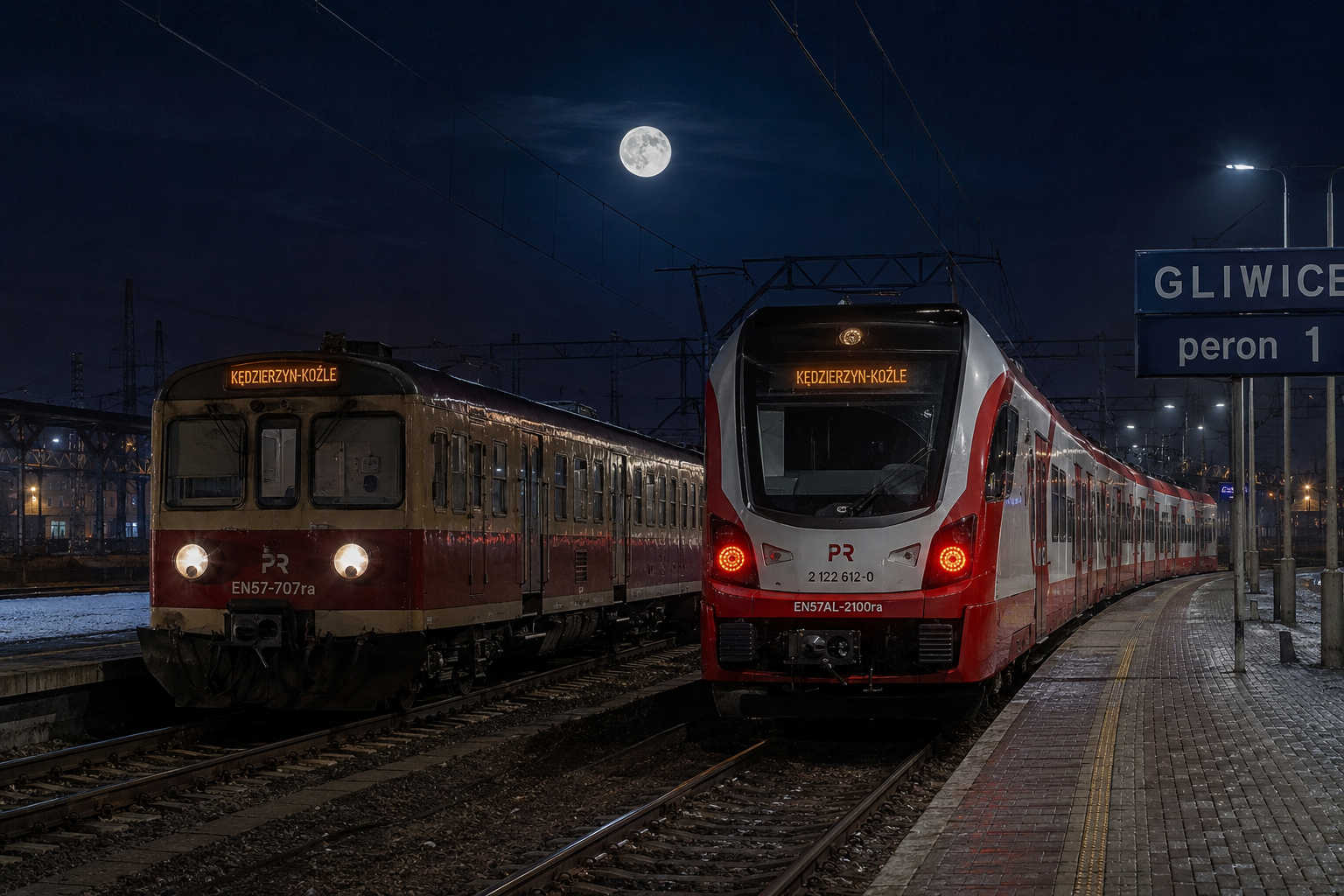
    On the platform I found two trains; a check on the front of them showed the same destination — Kędzierzyn‑Koźle. One, the more traditional, older workhorse of the PKP world, was leaving in forty minutes and was still locked. The other — a bright, modern, warm‑looking unit — was leaving in about ten minutes and open for boarding. Same destination, I told myself, and it was heading towards Łabędy, the next station.

    Of course, I chose the newer one.

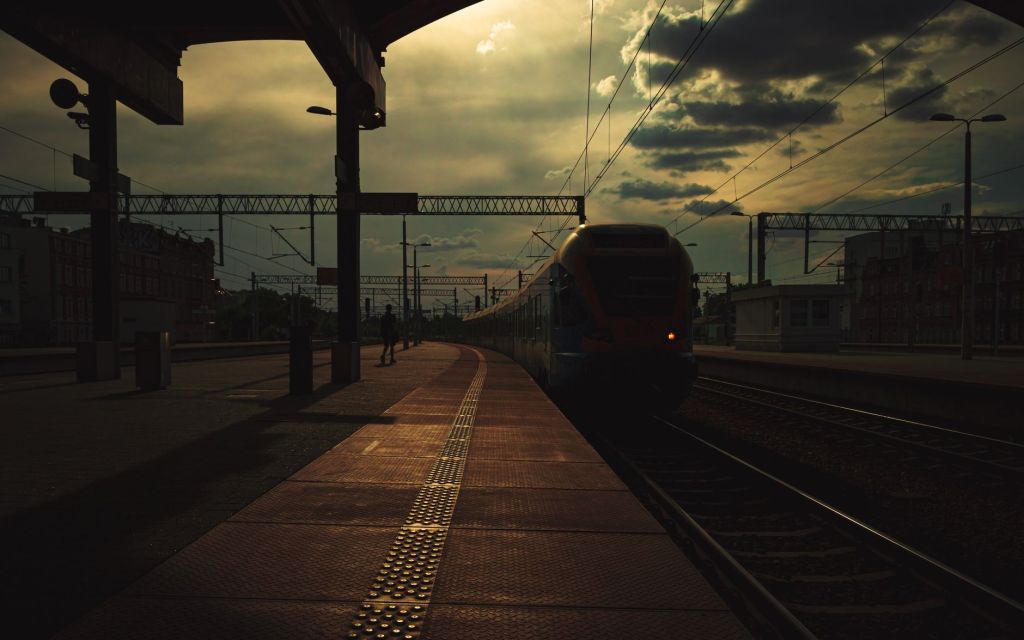
    Silesian Train Platform

    Inside, a few passengers were already seated. I walked right to the front and sat in the seat closest to the driver’s compartment — literally as close as a passenger could get. I didn’t know it then, but that choice would save me. Had I sat further back, the guard would have reached me too late. I would have been carried past Łabędy toward a town I couldn’t pronounce, with a dying phone and no way back.

    The train pulled out. Immediately, something felt very different. This wasn’t the familiar, rattling local service I knew. This was really moving faster than normal. I recall thinking we’d arrive in Łabędy far sooner than I ever imagined.

    The guard began checking tickets. I was the first passenger he reached.

    He took one look at mine and his face changed — frustration, urgency, annoyance. He spoke quickly in Polish. I understood almost nothing. My head didn’t panic; it went blank. I’m not someone who panics easily, as long as I understand the situation. But here, I didn’t understand anything: not what he was saying, not where the train was going, not how bad this was.

    I wasn’t helpless in Polish. Far from it. I could buy a ticket. I could ask ile kosztuje? I could understand pierwsza klasa czy druga klasa?

    I carried three phrasebooks everywhere — Berlitz, BBC Active, and my beloved Rough Guide — my armour against confusion.

    None of that prepared me for this.

    I didn’t know who to call. I didn’t even know if I should call anyone. Yes, this was my mistake — my choice to be in Poland. My problem to solve. Still, I had maybe four numbers in my phone — four people in the entire country I could reach. I stared at my call list; I needed help here, and there was no point in pretending otherwise. So I started at the top, alphabetical order, and dialled the first number — a dear friend.

    I didn’t know if she’d answer.

    She picked up in three or four rings. Not the usual Polish “Tak, słucham?” — but: “Gary! Are you OK?”

    I tried to explain in a rush. She listened, then said: “Give him your phone.”

    I indicated to the guard, who was shaking his head and saying something I didn’t understand, then gestured for him to take my phone. He appeared extremely reluctant and more than slightly flustered. I even used the Polish word for “interpreter,” pointing to the phone, saying “Pana proszę” — respectfully, and probably far more than necessary. Finally and still reluctantly, he took my phone.

    He listened, and then he did something I wasn’t expecting at all: he turned around, walked into the driver’s cab with my phone, and closed the door behind him.

    I stood there alone, staring at the closed door, my stomach dropping. For those 30–40 seconds — which felt like an eternity — I was convinced he was calling ahead. Police. Revenue enforcement. Someone official. I genuinely thought: “I’m in trouble. I’ve caused a problem. They’re probably going to meet me at the next scheduled stop.”

    The truth was, I didn’t even know what the scheduled stops were. I only knew the final destination: Kędzierzyn‑Koźle.

    Even if there were intermediate stops, I’d still have been stranded — tired, cold, carrying a phone without any power, and with no Polish beyond the basics needed to buy a ticket; or most likely, finding myself in a place with a name I couldn’t even pronounce. Surely I could buy a new ticket — I’d ask my friend to confirm that. I just needed to stay calm — I mean… what more could possibly go wrong?

    The cab door opened. The guard stepped out, closed it behind him, and handed me the phone.

    I can’t express how relieved I was to hear the voice of my friend, then my relief turned to a sense of utter disbelief as she explained what was about to take place, in a remarkably calm, controlled voice:

    They cannot stop the train.

    They will slow it as much as they safely can.

    They will open the doors.

    You will have to jump at Łabędy.

    Do not tell the other passengers.

    I remember saying: “No… It’s OK, my fault completely — I’m not doing any jumping off trains.”

    I recall turning around to look behind me at a collection of passengers watching with a look of amazement. She was still talking, trying to calm me when the line went dead. My phone battery drained mid‑sentence.

    And suddenly, I was alone again.

    Almost at the same time I sat looking at my now completely dead phone, the guard took my arm and pulled me toward the nearest door. The train was slowing — I could hear the motors winding down — but we were still moving at a speed that made my body tense with instinctive fear.

    He reached up and pulled the lever above the door. Nothing. The door stayed shut. “Game over,” I thought, “it’s not going to open.”

    He didn’t give up. He dragged me to the next door. Passengers stared, wide‑eyed, silent. I felt a flash of embarrassment — the absurdity of being the centre of attention even in a crisis.

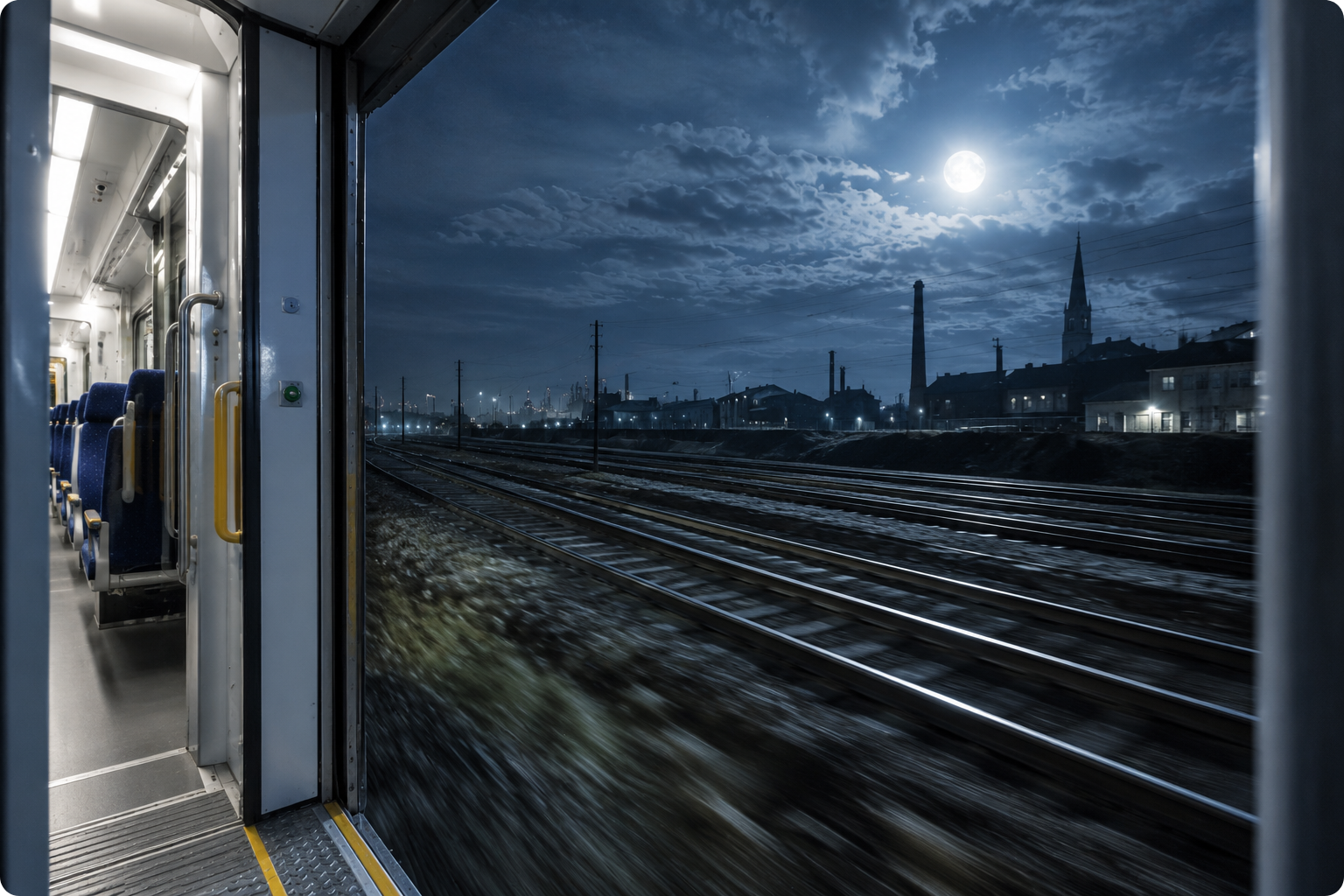
    He pulled the handle. This time, the door slid open with a violent whoosh. Cold night air slammed into my face. The full moon lit the industrial tracks opposite — old rails, factory sidings, the metallic skeleton of Silesia glowing silver.

    Night Train Tracks Sketch

    And at that moment, I felt something unexpected: calm.

    I could see the outline of Łabędy — then the long, neglected platform. We were arriving. We were going too fast — or rather, I thought so. It was difficult to tell; it certainly felt too fast for me. Odd to think of it now, but I was actually thinking how best to save the contents of my shoulder bag: a brand-new MacBook Pro laptop and an iPad. I simply needed to remain upright, at all costs.

    Then I heard him: “Teraz.” (Now)

    I hesitated. At the exact moment, I wasn’t entirely sure what Teraz meant.

    Again, louder, commanding: “TERAZ!”

    My legs obeyed the law of physics instead of fear. I jumped. Or stepped. The exact mechanics don’t matter.

    My feet hit the ground. I ran. Momentum propelled me forward like a rag doll with purpose, so much so it carried me past the door the guard had been unable to open. I was desperate not to stumble; I knew if I allowed myself to stop too early, then I’d probably lose my footing and fall.

    And then something surreal happened: I found myself running level with the driver’s cab. Not ahead. Not behind. Just… level.

    For one or two seconds — no more — I looked up and saw the driver. One wave. One huge smile.

    And then I heard it — that deep, mechanical shift as the train’s motors changed from slowing to powering away, a rising, metallic hum that has stayed with me ever since. Being that close to a moving train, I felt the sound as much as I heard it — a vibration in the air, in my ribs, in the ground beneath my feet. The train seemed to inhale, gather itself, and surge forward.

    And then he was gone, the train accelerating away.

    I slowed, panting, buzzing with disbelief. I turned back. The door I’d exited from was already closed. The guard stood behind the glass. No wave. No gesture. Just a small, private smile.

    Then he, too, was gone.

    At the level crossing, lights flashed. A small crowd stared at me — this stranger who had apparently just emerged from the night and the side of a moving train. I ducked under the barrier, squeezed past them, and walked back to my hotel, heart pounding, legs shaking, alive.

    Up in my room, I plugged in the dead iPhone and waited. When it finally woke, I immediately called my friend. She answered instantly. I could hear her mother in the background — half‑scolding, half‑relieved. They’d been terrified.

    Then my friend told me something that stayed with me more than the jump itself: those two railway men had taken a real risk.

    They weren’t supposed to slow the train. They weren’t supposed to open the doors. Not only that, they weren’t supposed to let a passenger off between stations. But they did.

    Later, in the small hotel bar — full of Opel workers and tradesmen — I ordered an ice‑cold beer and quietly raised it in a toast: to the driver who smiled, and the guard who shouted Teraz! Two strangers who didn’t have to help me, but did. To my friend, who answered her phone faster than I could ever have hoped.

    And I will always remember their kindness.

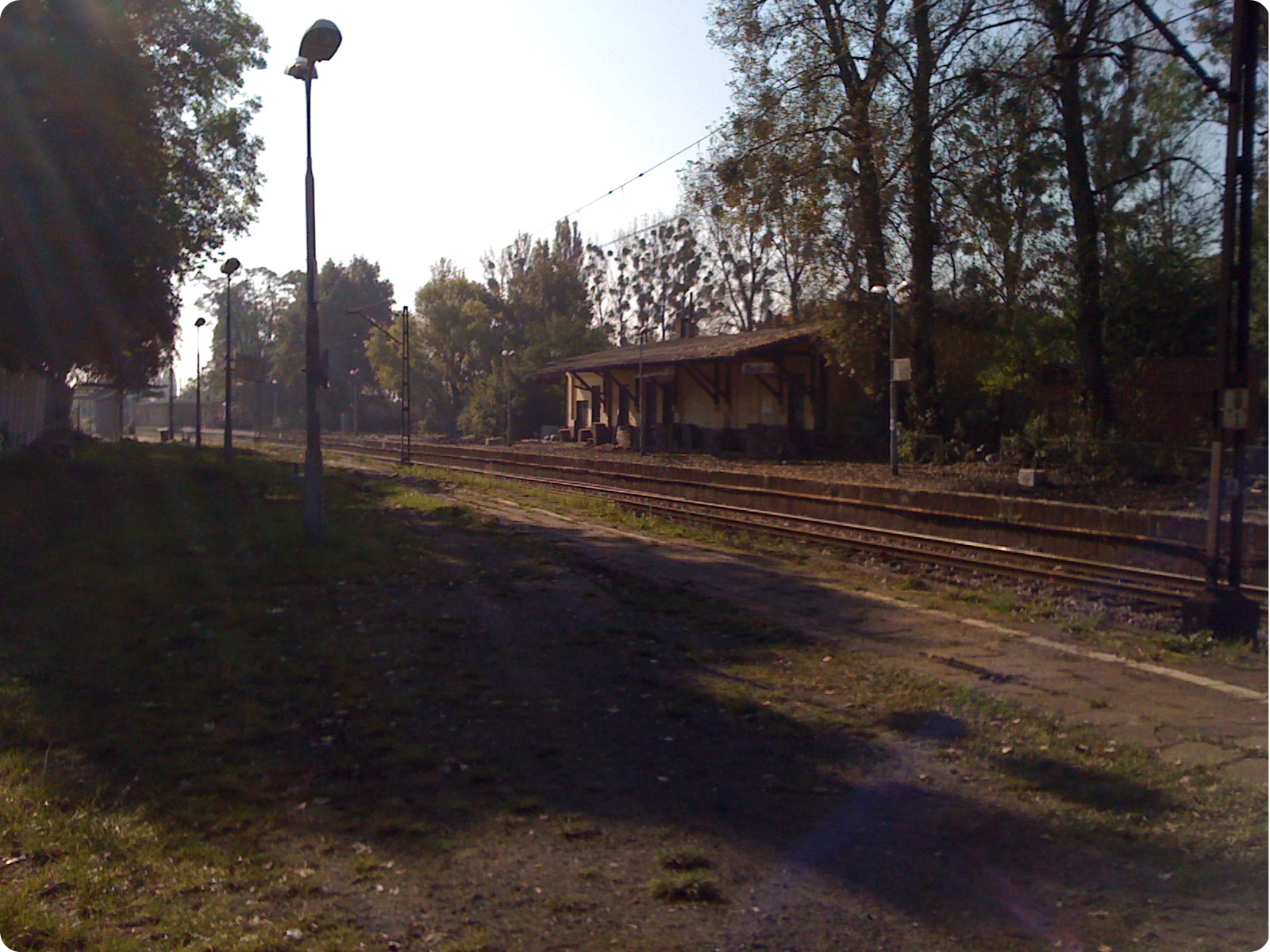
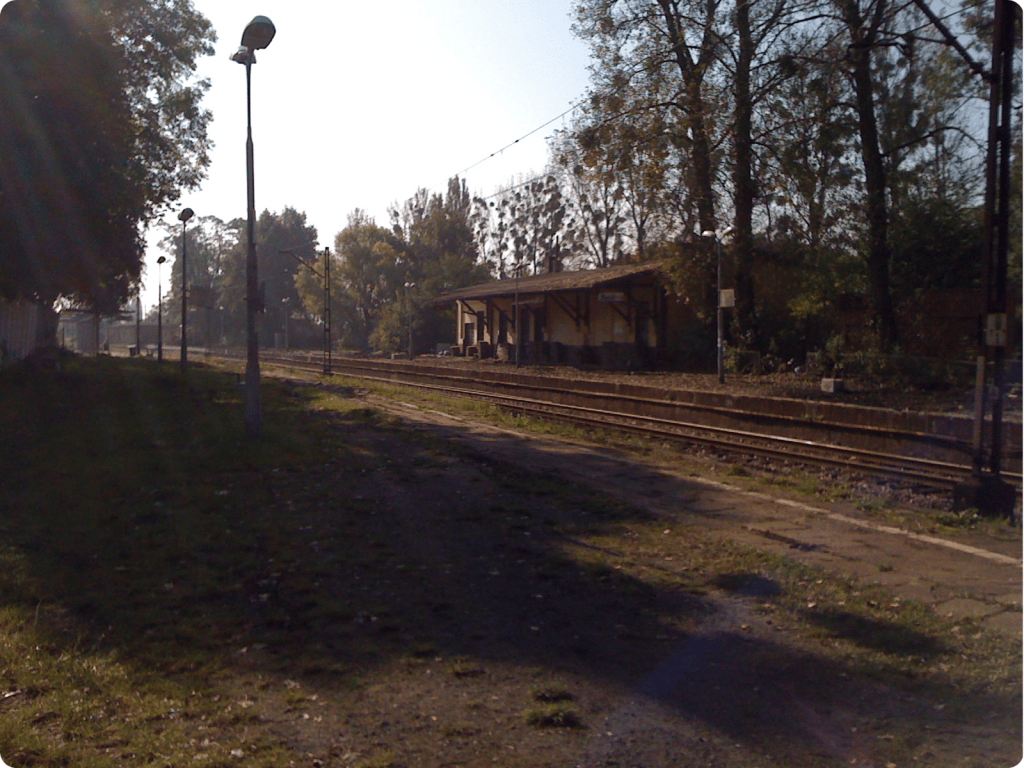
    Łabędy Station Platform
    A small section of Łabędy railway station Oct 2010, my platform on the left, taken a few weeks before the jump!

    Only years later did I understand what had really happened that night. The train I boarded wasn’t the familiar, ageing EN57 that rattled its way through Silesia. It was one of the EN57 AL units — the modernised Silesian rebuilds that looked nothing like the old stock. Sleeker, brighter, faster. And crucially, it wasn’t the Przewozy Regionalne stopping service my little regional ticket was meant for.

    In 2010 those rebuilt units were still a novelty. They looked modern, warm, inviting — especially beside the older train that sat locked and dark on the other track, waiting for its driver. I wasn’t the only one who made that mistake; plenty of people did in those years. The signage was confusing, the operators were changing, and the trains themselves looked nothing alike. I didn’t board with any intention of cheating the system. I was prepared to pay the difference. I was resigned to sitting there, phone dying in my hand, and working out how to get back to Łabędy or at least to Gliwice.

    When I handed my phone to the guard, it wasn’t to demand anything. I wasn’t asking them to stop the train. I simply wanted to apologise, explain, and ask how much I owed — and whether there was any way to get back. That was all. But they took the situation into their own hands. They made a decision that went far beyond procedure, far beyond what the rulebook allowed.

    I was very, very lucky. I’ve often wondered whether they would have done the same for a Polish passenger. Maybe not. Perhaps they saw a foreigner who was tired, confused, and out of his depth. Possibly, they recognised the fear I was trying so hard to hide.

    Or perhaps — and this is what I choose to believe — they were simply good men who decided that the right thing to do mattered more than the official one.

    I originally included some mathematics to explain what happened when I stepped off the slowing train, but the idea is actually simple. At the moment I jumped, I kept the train’s speed, while the train itself continued to slow down behind me. If I had tried to stop immediately, I would have fallen forward, so I had to run to stay upright and control my momentum. Because I no longer shared the train’s deceleration, I briefly moved faster than it and even ended up level with the driver, about eight metres ahead. The maths was just my way of showing this, but the explanation doesn’t really need equations; it was simply Newton’s law of inertia in real life. Proving it mathematically was fun, though the only real scientific conclusion was that I was entirely too old to be jumping off moving trains.

  • Swans

    Łabędy.

    I spent four weeks in Łabędy, a district on the northern edge of Gliwice. Its name — meaning “swans”—  is older than the station, older than the nearby canal, older than most of the stories this place now carries. Other than the small hotel, I arrived knowing almost nothing about Łabędy — only that the station felt too large for the quiet streets around it, and that the houses opposite my window reminded me of the Garden City layouts I’d known elsewhere. I later learned that Łabędy had been home to heavy industry and a strong Silesian community, and that the scale of the station belonged to that earlier era.

    Part of my time there fell on All Saints’ Eve, a quiet and reflective night in Poland when families visit cemeteries, clean graves, and light lanterns to honour those who have passed. It shaped the atmosphere of the village in ways I didn’t expect.

    What follows isn’t a history of Łabędy. It’s simply a record of spending time there, as the place revealed itself to me through small, ordinary gestures. I offer it with respect for the people who live there, and for the stories that are not mine to tell.

    I arrived back in Łabędy on All Saints’ Eve. The trains were running less often, and the platform felt too long, too dim, too cold. Only two of us stepped off onto peron or platform 1 — myself and a woman I hadn’t seen in my compartment. I caught only the back of her coat, the purposeful way she walked, dressed properly for the weather while I wasn’t. She moved with the quiet confidence of someone who belonged there. Seeing her was a huge comfort to me.

    Łabędy — peron 1 in daylight, a platform that felt different after dark

    The train pulled away behind us, its sound thinning into the night, leaving a silence that felt larger than the station itself. I had never been on that side of the tracks in daylight, let alone at night. The distance from the platform to the road seemed strangely considerable, as if the geometry of the place had been stretched in the cold. I kept her in sight — not wanting to alarm her, but needing her presence to anchor me in a place I didn’t yet understand. She may have been going to meet family, or to walk to the cemetery with candles and flowers. I will never know. All that mattered was that I wasn’t alone.

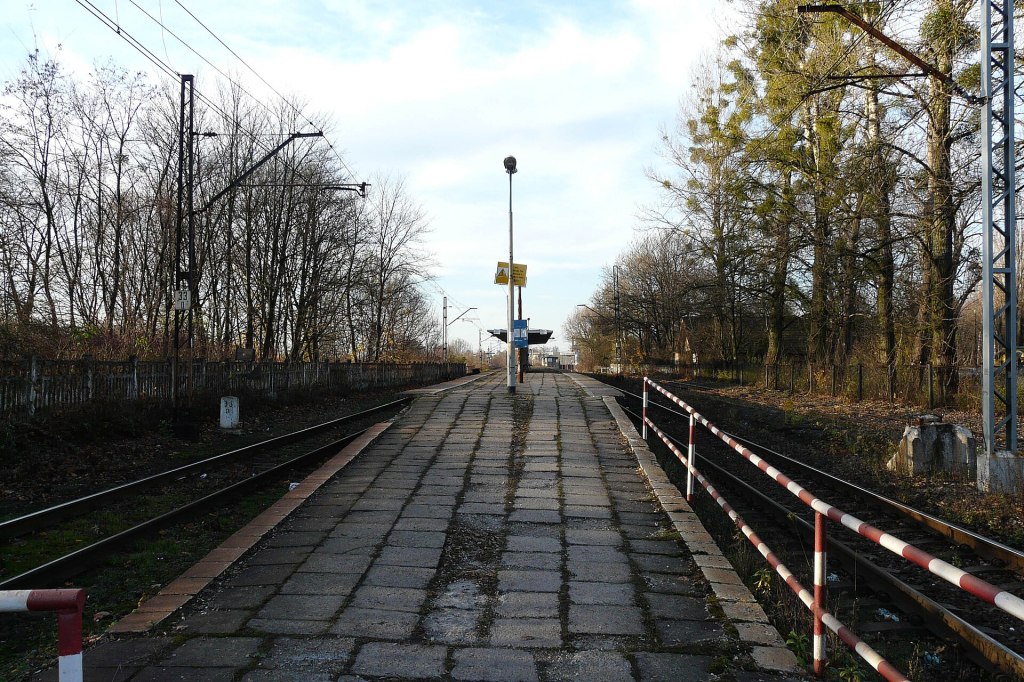
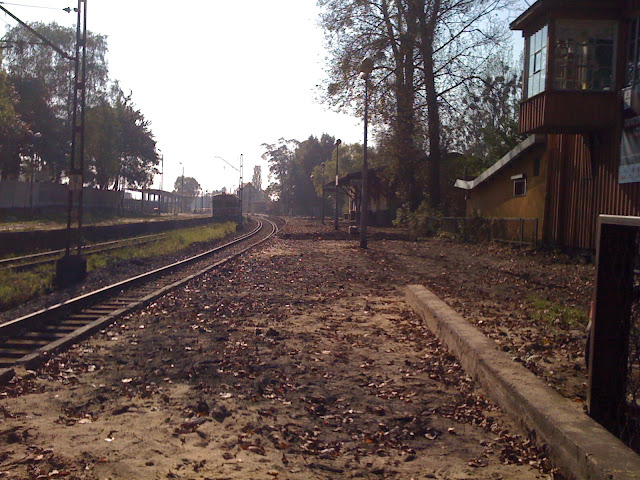
    Labędy peron 3 — peron 2 in background

    Łabędy — October 2010: peron 2 — looking south east.

    As I walked toward the hotel, small groups were moving in the opposite direction, carrying lanterns and chrysanthemums toward the cemetery. I felt out of step with the night — a man on foot, underdressed, walking against the quiet procession of All Saints.

    October had been extraordinarily mild, blue skies and warm days, and I had grown careless. On that last evening of October, winter had been switched on without warning. The cold was sharp, continental, nothing like the gradual dampness of home.

    Opposite the hotel, a woman stood at the window of one of the houses. She watched me as I passed — no expression, just taking me in. She had probably seen me before, without me ever noticing her. Later, I learned those houses had a history of their own, the kind that sits quietly beneath the surface of Silesian streets. I don’t know what she had seen over the years, or who she had waited for. I only know she was there that night.

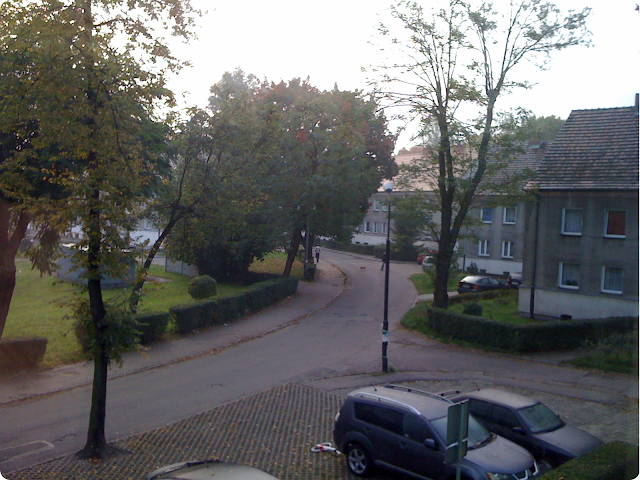
    looking outside

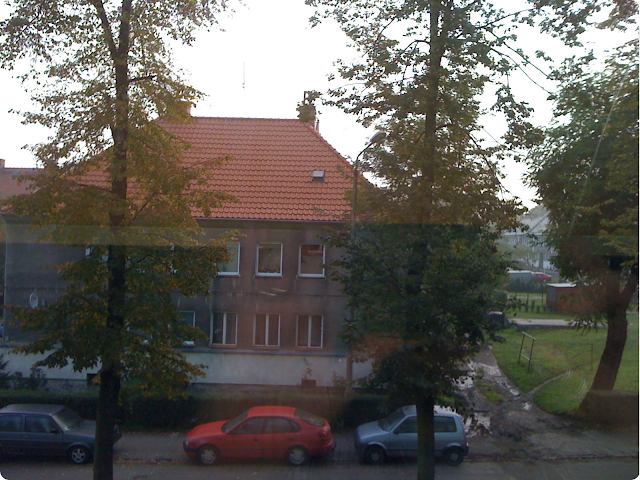
    The hotel room was basic, but warm. I was unwell — feverish, aching — and the days blurred. The window became my vantage point. It overlooked a tree, a patch of ground, a small car park. I watched the village from above, half‑awake, half‑asleep, trying to understand a place that felt familiar in shape but strange in atmosphere.

    outside view II

    Every morning, an older man appeared at the front of the hotel with a broom, a small shovel and a plastic bag. He swept leaves into small, careful piles, moving slowly along the edge of the car park. The leaves kept falling even as he worked, drifting down around him like a soft undoing. He never looked up. I was glad of that. I would have felt intrusive if he had seen me watching. But his presence steadied me. He was the first thing in Łabędy that made sense — a quiet rhythm in a place where I had none.

    I remember telling a friend about him — how slow and methodical his work was. I said they should give him a leaf blower; he could finish in half the time. She smiled and said quietly that he would probably lose his job. And I understood a little more about the place.

    Eventually I moved to a small suite on the top floor. My frugal attempt at living in the basic room — intermittent WiFi, no kettle, the sense of being suspended between worlds — gave way to a wider view, looking back toward some apartments, main the road and the station. I saw the leaf‑sweeper sometimes when I was coming or going, but I never again watched him the way I had in those first mornings. That belonged to the fever, the stillness, the window.

    When I was finally well enough to explore, I walked short distances. Garden village houses, modest streets, a layout that reminded me of places I knew, but with an atmosphere that sat slightly out of sync with everything I expected. I didn’t know the history then. I only knew the feeling — the strangeness, the quiet, the slow settling of a place that revealed itself in small, ordinary gestures.

    I learned later that on the ninth of November 2010, while I sat in my hotel room in Łabędy preparing lessons, someone stood on Peron 1 and photographed the station I was living beside. I was no more than eight hundred metres away, unaware that the platform was being fixed in time at the very moment I was watching the village from my window. The image shows the same hidden geometry I remember — the platform being isolated, the sense of being tucked out of sight of the other platforms and main road. It feels now as if the place was quietly recording itself, waiting for me to return to it in words.

    And now the station is changing. I try to keep up to date on what’s happening in Gliwice via e-news sites. I saw the plans and building taking place there — fresh concrete, new platforms, the beginnings of a different geometry. When I last checked they are still working on it, but the difference will be extraordinary. The place I stepped into on All Saints’ night is already becoming something else. What I saw — the dimness, the long platforms, the quiet neglect — will soon belong only to memory.

    I’m delighted that Łabędy is finally getting a station it can be proud of.  Places and communities deserve that sense of care and being seen. I only hope the new platforms receive the same respect. It was heartbreaking to see freshly renovated buildings in Gliwice, my last home, almost immediately covered in tags. I appreciate graffiti when it’s art and belongs — but not when it damages someone’s work, or disheartens the people who live there. 

    I don’t know whether I’ll send my 2010 photographs to anyone, perhaps there is a place on Wikimedia Commons. Perhaps they aren’t meant for archives or societies. Perhaps they are simply for this — a record of a moment before the transformation, a way of honouring a place that revealed itself slowly, in its own time, through the smallest of human movements.

  • No Longer Just a Visitor: III
    8–12 minutes

    Winter, Illness, and Rescue Comes from Bytom

    Winter came late that year in Łabędy. I even joked about it, how Poland seemed to be holding its breath, waiting for All Souls’ Eve before flipping a switch. But when it arrived, it arrived with intent. One moment I was stepping off trains into mild evenings, the next I was walking out into night air that hit me like a wall. I wasn’t eating properly. I wasn’t asking for help. I was sweating on overheated trains, then wandering into freezing darkness, and my body simply couldn’t keep up.

    One night, all of that fell away.

    I woke coughing.

    At first, I tried to suppress it, terrified of disturbing the other residents. The cough grew harsher, deeper, until it shook my whole chest. I lay awake, sweating, dizzy, increasingly unwell. Luckily, I had no lessons planned for the next day, or the day after, and the weekend was coming.

    I didn’t want to call anyone. I didn’t want to admit I was struggling.

    My basic room didn’t even have a kettle. The first-floor room I booked a week in advance was functional: clean toilet, shower, sink. At the end of the landing was a shared kitchen with a kettle and, I think, a toaster.

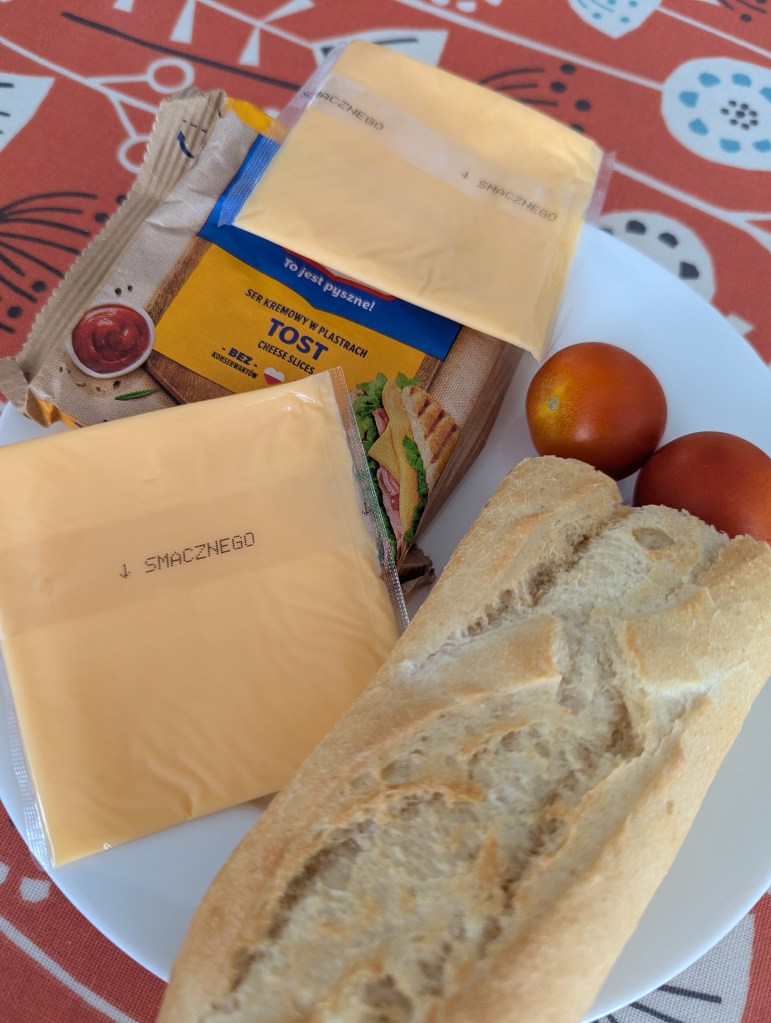
    In the UK we joke about man flu, the exaggerated suffering of a mild cold. This wasn’t that. I knew I needed to hydrate, to eat, to do something. I forced myself down to Biedronka, shivering and sweating at the same time, and bought ibuprofen, bananas, oranges, water, yogurt, and a particular food I never touched in the UK: a packet of processed tost ser, or toast cheese.

    The fluorescent lights of Biedronka were a dizzying blur of foreign labels and sharp, crowded aisles. Back in the quiet safety of the hostel room, the fever raged. A small bedside table lamp offered a sense of comfort, I sat on the edge of the bed, surrounded by a mountain of oranges and a plastic bag of crusty bułki.

    I pulled out a slice of Ser Tost. As I peeled back the loud, crinkling plastic, my eyes caught the word printed across the wrapper: SMACZNEGO. Enjoy your meal.

    In the heavy silence of a country where I didn’t know exactly who to ask for help, nor even whether I should, I lay back against the pillow, clutched the square of cheese, and whispered back into the dim light:

    “Smacznego.”

    My Polish friends later became slightly disparaging about my devotion to tost ser, disputing whether it was really cheese at all and treating my affection for those individually wrapped slices as a minor culinary failing. In fairness, one packet I continue to buy years later in the UK proudly declares itself to be “48% cheese,” which probably strengthened their case considerably. Yet this one brand in particular has remained my loyal favourite: the slices with SMACZNEGO printed cheerfully across the plastic, as if offering a heartfelt blessing over something that had only a passing acquaintance with dairy. Even now, my family occasionally catch me standing in the kitchen holding a packet of questionably cheesy cheese, reading that familiar SMACZNEGO and quietly whispering, “Smacznego,” to myself before opening the wrapper. They think I’m slightly odd. They are almost certainly correct.

    I’m still eating tost ser in 2026 — smacznego!

    But in 2010, and by the weekend, it was clear this wasn’t man flu. I was very, very unwell. Grypa, real flu, had taken hold. I locked myself in my little room, drank as much water as I could manage, took ibuprofen, ate oranges like they were the only food in the world.

    I often thought of Jeanette Winterson’s novel Oranges Are Not the Only Fruit — except for me, they were.

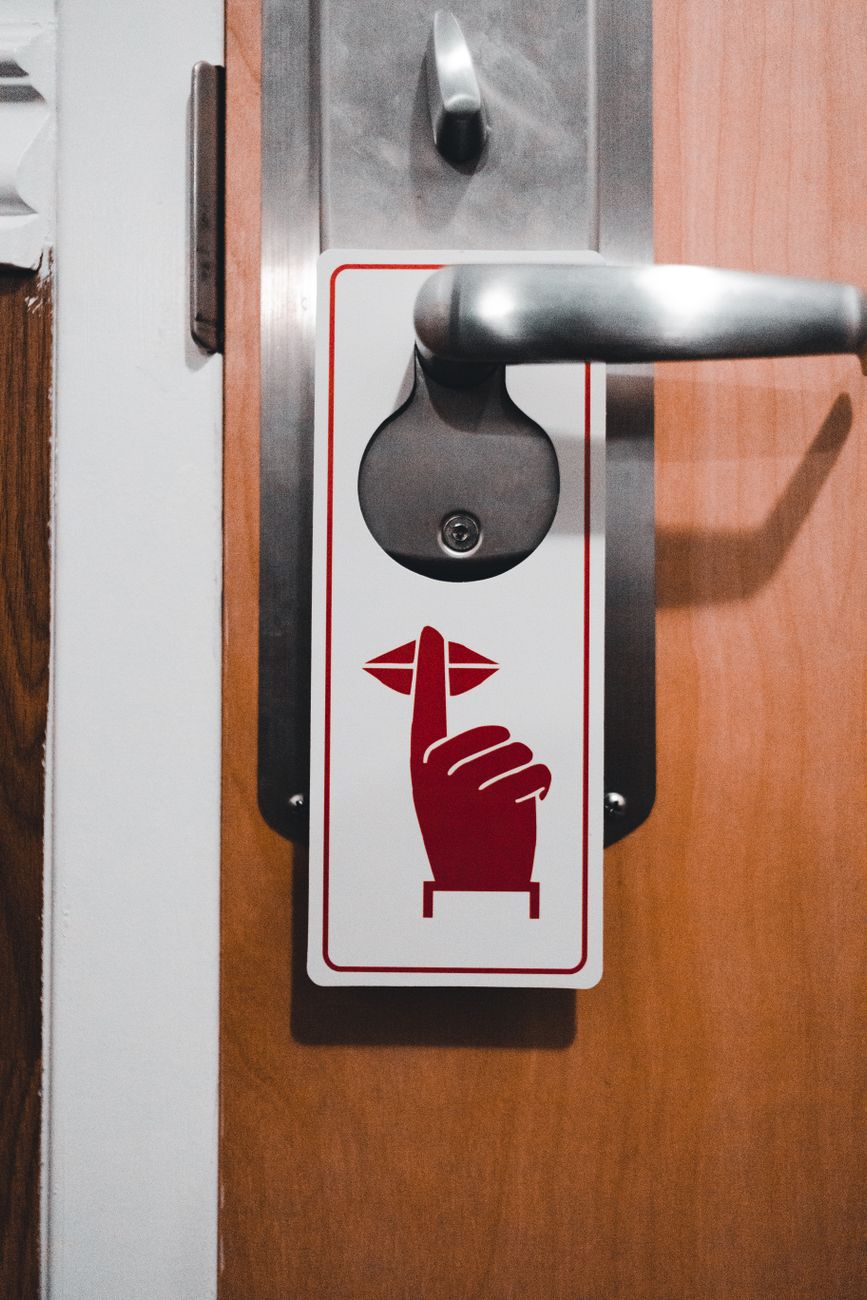
    The housekeeping ladies became nosy, then concerned. They asked if I needed towels, fresh bedding, anything at all. Beyond that, they left me alone. Eventually, I hung a do not disturb sign on the door, not out of rudeness, but fear. Fear of being seen. Fear of being alone in a foreign country with no strength left.

    By Sunday, I felt a little better, but I have to be honest: I was afraid. Truly afraid.

    Then my phone rang.

    It was my friend from Bytom. Her family had invited me for Sunday obiad. Could I make it? Was I able to take the train? Did I need collecting from somewhere?

    I apologised and explained I was unwell. Immediately I heard concern in her voice, and her mother speaking in a concerned way in the background.

    I told her I didn’t feel well enough to travel and that I was grateful, genuinely grateful, that they had thought to invite me.

    “OK, Gary, but make sure you drink plenty of fluids, try to eat, take care. I’ll call you tomorrow and check how you are. If you need anything, just let me know.”

    We ended the call.

    A minute later, the phone rang again.

    Then came the words that broke through my fear, my isolation, my stubborn independence:

    “Gary, we are coming to you.”

    At that moment, everything changed.

    I looked around my basic room and tried to tidy it, though there wasn’t much to tidy. I washed my face, got dressed, carried the small amount of rubbish from my waste bin to the shared kitchen bin, opened the windows for fresh air, and waited. I wasn’t actually hungry. I wasn’t feeling strong. I wanted sleep more than anything. But I wanted to be ready.

    About an hour later I heard familiar voices on the landing — steady, purposeful footsteps, the kind that belong to people who have come with intent. Then a gentle knock on my door.

    I opened it to find my friend and her mother.

    I was so happy to see them. Slightly embarrassed, yes, but there was no time to dwell on that. My friend’s mother was a nurse with years of experience, but what she brought that day was more than nursing. It was care of a kind that exceeded any expectation — kindness beyond measure. They had driven from Bytom, almost an hour’s journey in those days, simply because I was unwell and alone.

    My friend translated her mother’s words. They had brought food — not just any food, but the food of Polish comfort, Polish healing, Polish Sunday tradition. Rosół, a rich golden chicken broth, still hot inside a thermos flask. And the holy trinity of Silesian obiad: rolada śląska, kluski śląskie, and modra kapusta.

    I had no idea how I was going to eat it. I had only a mug and a small side plate. My friend poured the rosół into the mug and passed it to me. I began gently sipping, savouring each mouthful. It was delicious beyond words — the first decent, hot food I had eaten in days. Within minutes, I felt a little more like my normal self, a small mercy after days of fear — a moment I didn’t feel completely afraid.

    Then my friend laughed — a loud, joyful laugh that cut through the heaviness of the room. She explained that her mother wanted to go to the hotel restaurant kitchen. There would be a microwave, or some other way to heat the obiad properly.

    I felt overwhelmed. The soup had already done its work. But my friend said, “Gary… mum won’t take no for an answer. Come on. Just come with us.”

    I followed them.

    We walked into the restaurant together. My friend’s mother — calm, experienced, and absolutely determined — spoke to the staff with a firmness that made everyone stand a little straighter. I couldn’t understand the words, but I could hear the tone: protective, authoritative, uncompromising.

    My friend translated, perhaps softening what her mother actually meant. Apparently, she felt the staff should have realised how ill I was.

    The staff’s faces were a picture — startled, sheepish, caught off-guard by a woman who had travelled over an hour to help someone she cared about and was not prepared to tolerate anything less than proper treatment.

    She carried it into the kitchen, and when she returned, heat rose from the plate in a soft shimmer. The dumplings released thin spirals of steam. The roulade had relaxed back into tenderness, its sauce warm and glossy again. The red cabbage had regained its scent — sweet, sharp, comforting — the smell of a proper Silesian obiad. It looked like a meal meant for someone who mattered.

    I looked at the staff and said the only thing I knew to say at that moment: dziękuję bardzo, and helped myself to a knife and fork from a table.

    There was no meal service at that time, so we returned to my room with the plate, still steaming from the restaurant kitchen. I sat down, and my friend’s mother placed the plate in front of me with the quiet authority of someone who had already decided I was going to eat.

    I tasted the food — slowly at first, then more steadily. After days of surviving on oranges, bułki and ser tost, mugs of dried soup and kettle water, the first mouthful was almost overwhelming. The roulade rich and savoury, the dumplings soft and yielding, the cabbage bright and gently spiced. It wasn’t just nourishment; it was the first real food my body had recognised in days.

    I didn’t feel a sudden surge of strength or any neat, cinematic recovery. It wasn’t like that. But as I ate, the warmth of the food, the presence of two people who refused to leave me alone, the sound of my friend’s voice drifting across the room — it all nudged me back toward myself. Not healthier, not fixed, just more human again. A little steadier. A little less adrift.

    My friend’s mother watched me with a troubled kind of patience, as if trying to understand what I had been attempting to endure. She didn’t find anything amusing; she wasn’t there for levity. But there was no judgement in her face, only concern — and that quiet, unwavering concern made the room feel warmer than the food ever could.

    So I ate.

    And they stayed.

    Not hovering, not fussing, not making a spectacle of it — just present.

    My friend laughed once or twice, quietly, relieved to see colour returning to my face. Her mother nodded approvingly, as if ticking off invisible boxes: appetite returning, strength improving, fear easing.

    They stayed until the plate was empty, until they were satisfied that I was no longer in danger of slipping back into the weakness that had frightened me.

    Only then did they begin to gather their things. Only then did they let the moment end.

    When they left, the room felt different. Not larger, not warmer, but somehow safer. The fear that had been sitting in my chest for days loosened its grip. Every mouthful of food I’d eaten carried the unmistakable message: you matter to someone here. I sat on the edge of the bed and listened to the quiet of the hostel — the distant hum of a train passing, the occasional footsteps on the landing, the radiator ticking as it cooled. Ordinary sounds, but they no longer felt hostile. They no longer felt like the soundtrack of isolation.

    I have never forgotten that act of kindness. It’s impossible to let it fade into the back rooms of memory; it often returns, unbidden, steady, and unchanged.

    That night I lay down, exhausted but no longer afraid, and slept easier for the first time in days.

  • No Longer Just a Visitor: II

    Cake isn’t Bread

    3–4 minutes

    One of my earliest misunderstandings came when I wandered into a cukiernia near my hostel in Łabędy, I was determined to buy something — anything — other than a banana and a self-serve bułki from Biedronka, just to prove I could manage elementary Polish.

    I can still see the trays of cakes in that cukiernia: huge tray‑bakes cut into perfect squares, stacked on a wheeled metal rack with layer upon layer of sweetness. They looked magnificent. There were traditional cakes too, the kind I’d seen in Polish homes — sernik, makowiec, karpatka. Everything looked delicious, comforting, safe.

    And honestly, the place looked as if it might sell bread. Counters, trays, the smell of baking — all the familiar signals of somewhere you could ask for chleb i bułki without sounding absurd. I didn’t know yet that a cukiernia wasn’t a bakery. I didn’t know the invisible distinctions locals never have to think about.

    So I walked in determined.

    I would buy something.

    I would manage.

    I would prove to myself that I could live here.

    But determination evaporates quickly when you don’t know what you’re doing — and even faster when you realise, too late, that you’ve misunderstood the kind of place you’ve stepped into.

    I asked for chleb i bułki — bread and rolls. The words came out confidently, and then hung in the air like a mistake I couldn’t pull back.

    One of the women said something I didn’t understand and shook her head.

    They turned back to their work, probably thinking nothing of it, but at that moment it felt as if I’d asked for something utterly absurd.

    I suddenly felt very visible, and very out of place.

    I stood there utterly bewildered, willing myself to pull it together, to order something, anything. Time seemed to freeze. I can still see the beautiful selection of cakes, the metal rack stacked with pastries, and the two women moving around it with brisk efficiency while I hovered uselessly in front of the counter. If I could have clicked my fingers and disappeared, I would have.

    My confidence collapsed almost instantly. It wasn’t the mistake itself that unsettled me, but the sudden realisation that I was completely unprepared for even the simplest interaction.

    I felt the heat rise in my face. My confidence collapsed almost instantly. It wasn’t the mistake that unsettled me, but the sudden realisation that I was completely unprepared for even the simplest interaction.

    They were probably just surprised, and I doubt they meant anything unkind. But feeling overwhelmed and out of my depth, it felt sharper than it probably was.

    After what felt like an eternity, I tried again — but all I could manage was to point at something that looked vaguely like a Danish pastry and ask for two. Later, I learned it was a drożdżówka. One of the women bagged them without a word.

    I placed a 20 zł note into the cash tray, hoping that at least I was following the right etiquette.

    But they didn’t have change for such a large note.

    The questions came quickly, and I understood almost none of them.

    I could feel myself becoming a small complication at the counter, even though they were only trying to sort out the payment.

    I apologised in broken Polish and said I was English. I emptied my pockets into the tray, dropping a 5 zł coin and some other coins, including tiny grosze that I wasn’t sure would cover any kind of purchase. They sorted out the payment, counting the change carefully into the tray — and somehow, by the end of it, I had acquired more tiny grosze than when I emptied my pockets.

    I gathered it up without checking and escaped with my paper bag of drożdżówki radiating warmth through the paper into my hand.

    A reflective walk back carrying drożdżówka — every cloud has a silver lining