
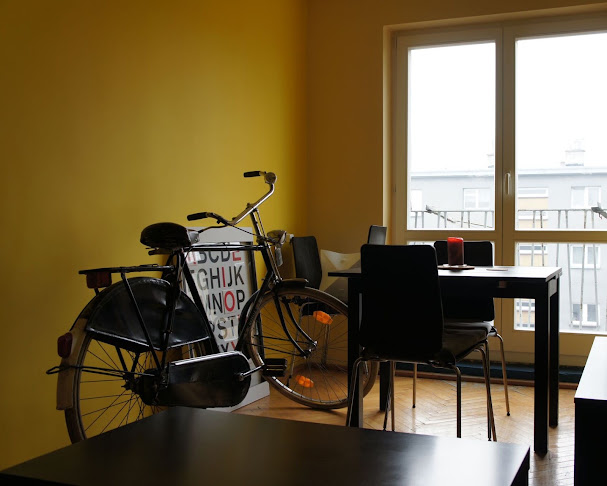
This image tells a story. To understand it, we return to 2010, to the living room of a small czwarte piętro top‑floor apartment in the Polish city of Gliwice. It was my home then, though I didn’t yet grasp how deeply it would shape me. The bicycle — a vintage Dutch Gazelle given by a dear friend — stood as both a gift and a lesson. I assembled part of it myself, fumbling with the complicated mechanics at first, then finding a rhythm. In learning its structure, I began to sense my own.
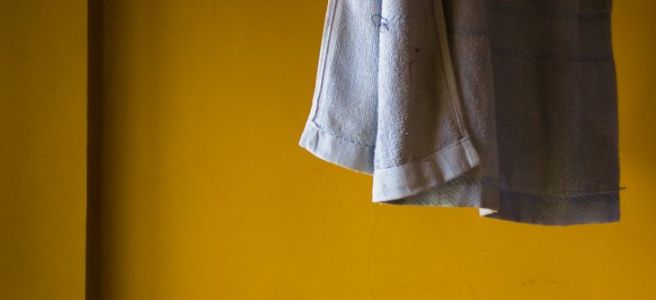
I never expected to grow fond of that fourth‑floor mieszkanie kawalerskie, but I did. It wasn’t grand, and it certainly wasn’t modern, yet it became the first place in Poland that felt truly mine. The previous tenant had attacked it with colours so bright they almost vibrated — a ceiling painted the purest, brightest white, living‑room walls in a canary yellow verging on gold, and door frames in a deep, almost forest green. Even the strange wooden cupboards near the hall had been painted the same dark green, though their shape and construction betrayed an older era. They fascinated me — heavy, plain, slightly awkward things, remnants of a different Poland quietly surviving inside a newer one.
Oddly, I grew to like it all. The flat was bright and cheerful even on days when the world outside was anything but, or when my own mood dipped. It had a stubborn optimism, a kind of homemade sunshine that refused to let the place feel gloomy. It was a modest bachelor’s flat tucked under the roof of a PRL block — one bedroom, a narrow kitchen painted in a soft, airy green, and a tiny bathroom with that ridiculous half‑length tub. The sort of tub that made bathing feel like a logistical exercise, and showering like a negotiation with the shower curtain, which had a habit of wrapping itself around me like Rover from The Prisoner.
But I grew love it. Even the mishaps became part of its charm. I remember one evening with guests — a warm, easy night, drinks poured, laughter drifting through the rooms. I excused myself to use the bathroom, stepped inside, and promptly fell straight into that absurd little tub. The enamel gave a hollow clang that echoed through the flat, and my guests burst into helpless laughter. I couldn’t blame them. There was no dignified way to climb out of a bathtub designed for a child‑sized contortionist. Yet moments like that stitched me into the place. The climb to the top floor, the quiet at night, the view from the window, the sense of privacy — all of it made the flat feel like a small perch above the city.
The sunlit room with its yellow wall became a kind of inner landscape. My days moved slowly there, unfolding like thoughts I hadn’t yet spoken aloud. Mornings began with the softened hum of the city drifting through the window, a reminder that life continued beyond my small space, even when I felt suspended within it. My bicycle — always ready — was more than a way to move through the world; it was a quiet reassurance that I could leave, return, wander, or begin again. Late‑night rides under sodium skies felt like conversations with myself.
The alphabet print was never hung on the wall, but sat upon the floor like a gentle prompt. I often found my eyes drifting toward it while drinking coffee, tracing the letters as if they were fragments of memory. Sometimes I rearranged them in my mind, forming names of people I missed or messages I wasn’t brave enough to say aloud. It was a small ritual, but it steadied me.
The black dining table became the anchor of my life indoors. I ate there, read there, and often worked there long after the city had quietened. Friends gathered around it too — the red candle burning through our laughter, its wax pooling like time made visible. On solitary nights, I sat with my thoughts, sketching ideas, preparing lesson plans, or writing fragments of verse. The candle’s flicker felt like a heartbeat in the quiet. Sometimes I watched the building across the way, imagining the lives behind those windows. Their small gestures — watering plants, hanging laundry, softening arguments — became part of my own rhythm, a reminder that everyone carries their own quiet stories.
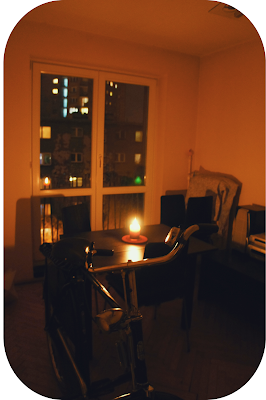
The wooden floor creaked in familiar ways. I danced barefoot across it, and sometimes lay down on it, staring up at the ceiling, letting thoughts of home, family, friends, and this new life drift through me. The room held all of it without asking for anything in return.
That space carried my solitude, my hopes, my dreams, and the first sparks of who I was becoming. It was where I learned the weight and beauty of silence, the comfort of small rituals, and the slow, patient work of growing into myself. Life in that Gliwice apartment had its own rhythm, shaped as much by the city outside as by the quiet within.

 Ghosts to Carry, Stories to Keep