

Łabędy.
I spent four weeks in Łabędy, a district on the northern edge of Gliwice. Its name — meaning “swans”— is older than the station, older than the nearby canal, older than most of the stories this place now carries. Other than the small hotel, I arrived knowing almost nothing about Łabędy — only that the station felt too large for the quiet streets around it, and that the houses opposite my window reminded me of the Garden City layouts I’d known elsewhere. I later learned that Łabędy had been home to heavy industry and a strong Silesian community, and that the scale of the station belonged to that earlier era.
Part of my time there fell on All Saints’ Eve, a quiet and reflective night in Poland when families visit cemeteries, clean graves, and light lanterns to honour those who have passed. It shaped the atmosphere of the village in ways I didn’t expect.
What follows isn’t a history of Łabędy. It’s simply a record of spending time there, as the place revealed itself to me through small, ordinary gestures. I offer it with respect for the people who live there, and for the stories that are not mine to tell.
I arrived back in Łabędy on All Saints’ Eve. The trains were running less often, and the platform felt too long, too dim, too cold. Only two of us stepped off onto peron or platform 1 — myself and a woman I hadn’t seen in my compartment. I caught only the back of her coat, the purposeful way she walked, dressed properly for the weather while I wasn’t. She moved with the quiet confidence of someone who belonged there. Seeing her was a huge comfort to me.
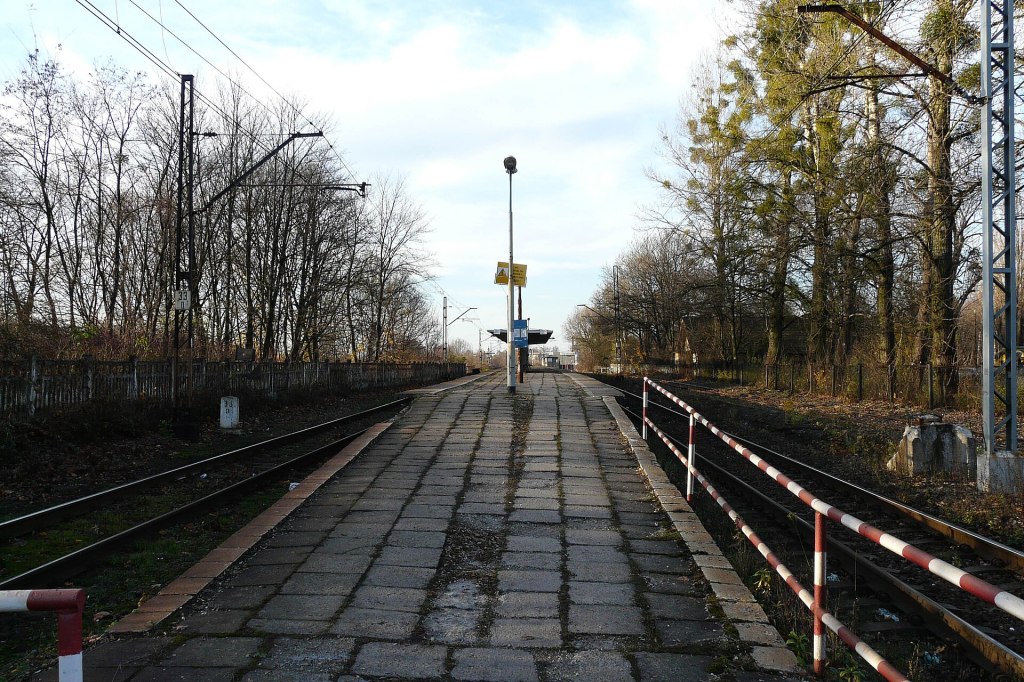
The train pulled away behind us, its sound thinning into the night, leaving a silence that felt larger than the station itself. I had never been on that side of the tracks in daylight, let alone at night. The distance from the platform to the road seemed strangely considerable, as if the geometry of the place had been stretched in the cold. I kept her in sight — not wanting to alarm her, but needing her presence to anchor me in a place I didn’t yet understand. She may have been going to meet family, or to walk to the cemetery with candles and flowers. I will never know. All that mattered was that I wasn’t alone.
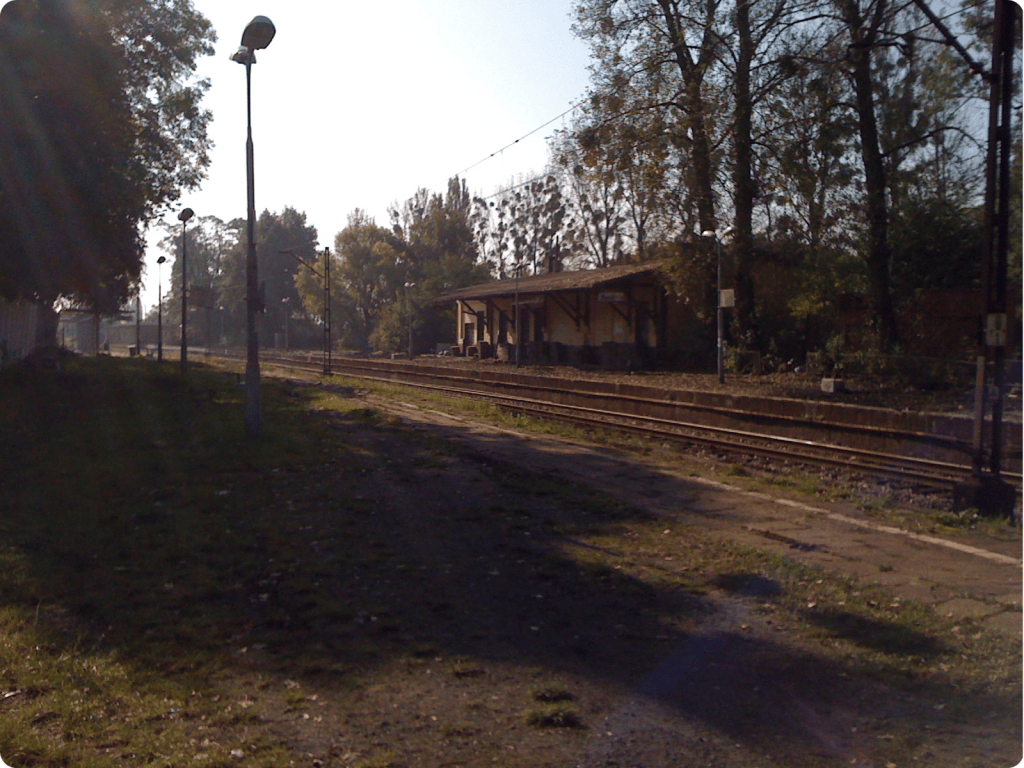
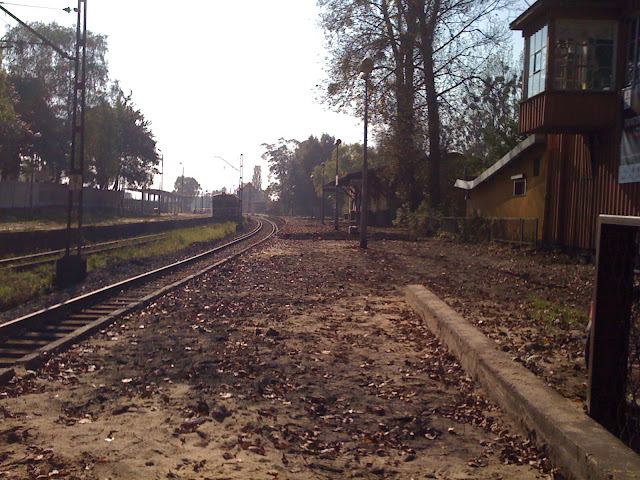
As I walked toward the hotel, small groups were moving in the opposite direction, carrying lanterns and chrysanthemums toward the cemetery. I felt out of step with the night — a man on foot, underdressed, walking against the quiet procession of All Saints.
October had been extraordinarily mild, blue skies and warm days, and I had grown careless. On that last evening of October, winter had been switched on without warning. The cold was sharp, continental, nothing like the gradual dampness of home.
Opposite the hotel, a woman stood at the window of one of the houses. She watched me as I passed — no expression, just taking me in. She had probably seen me before, without me ever noticing her. Later, I learned those houses had a history of their own, the kind that sits quietly beneath the surface of Silesian streets. I don’t know what she had seen over the years, or who she had waited for. I only know she was there that night.
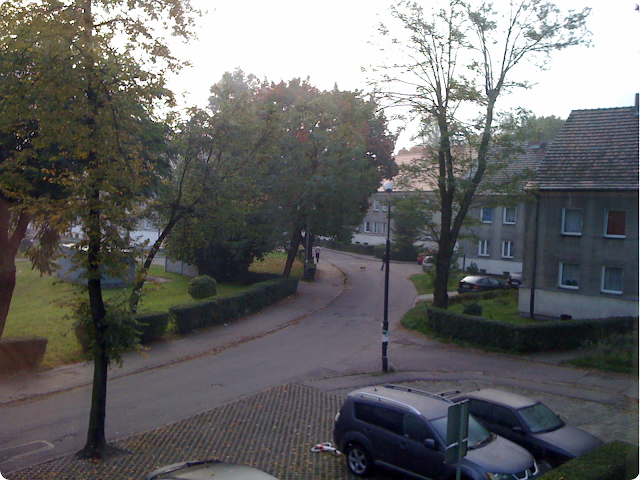
The hotel room was basic, but warm. I was unwell — feverish, aching — and the days blurred. The window became my vantage point. It overlooked a tree, a patch of ground, a small car park. I watched the village from above, half‑awake, half‑asleep, trying to understand a place that felt familiar in shape but strange in atmosphere.
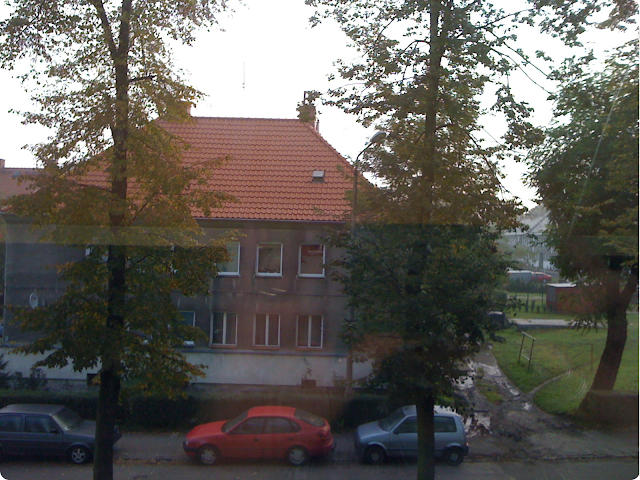
Every morning, an older man appeared at the front of the hotel with a broom, a small shovel and a plastic bag. He swept leaves into small, careful piles, moving slowly along the edge of the car park. The leaves kept falling even as he worked, drifting down around him like a soft undoing. He never looked up. I was glad of that. I would have felt intrusive if he had seen me watching. But his presence steadied me. He was the first thing in Łabędy that made sense — a quiet rhythm in a place where I had none.
I remember telling a friend about him — how slow and methodical his work was. I said they should give him a leaf blower; he could finish in half the time. She smiled and said quietly that he would probably lose his job. And I understood a little more about the place.
Eventually I moved to a small suite on the top floor. My frugal attempt at living in the basic room — intermittent WiFi, no kettle, the sense of being suspended between worlds — gave way to a wider view, looking back toward some apartments, main the road and the station. I saw the leaf‑sweeper sometimes when I was coming or going, but I never again watched him the way I had in those first mornings. That belonged to the fever, the stillness, the window.
When I was finally well enough to explore, I walked short distances. Garden village houses, modest streets, a layout that reminded me of places I knew, but with an atmosphere that sat slightly out of sync with everything I expected. I didn’t know the history then. I only knew the feeling — the strangeness, the quiet, the slow settling of a place that revealed itself in small, ordinary gestures.
I learned later that on the ninth of November 2010, while I sat in my hotel room in Łabędy preparing lessons, someone stood on Peron 1 and photographed the station I was living beside. I was no more than eight hundred metres away, unaware that the platform was being fixed in time at the very moment I was watching the village from my window. The image shows the same hidden geometry I remember — the platform being isolated, the sense of being tucked out of sight of the other platforms and main road. It feels now as if the place was quietly recording itself, waiting for me to return to it in words.
And now the station is changing. I try to keep up to date on what’s happening in Gliwice via e-news sites. I saw the plans and building taking place there — fresh concrete, new platforms, the beginnings of a different geometry. When I last checked they are still working on it, but the difference will be extraordinary. The place I stepped into on All Saints’ night is already becoming something else. What I saw — the dimness, the long platforms, the quiet neglect — will soon belong only to memory.
I’m delighted that Łabędy is finally getting a station it can be proud of. Places and communities deserve that sense of care and being seen. I only hope the new platforms receive the same respect. It was heartbreaking to see freshly renovated buildings in Gliwice, my last home, almost immediately covered in tags. I appreciate graffiti when it’s art and belongs — but not when it damages someone’s work, or disheartens the people who live there.
I don’t know whether I’ll send my 2010 photographs to anyone, perhaps there is a place on Wikimedia Commons. Perhaps they aren’t meant for archives or societies. Perhaps they are simply for this — a record of a moment before the transformation, a way of honouring a place that revealed itself slowly, in its own time, through the smallest of human movements.

 Ghosts to Carry, Stories to Keep