The school in Zabrze was nothing like the one in Gliwice. Not only the school itself, but the surrounding buildings were unlike anything I had seen. The atmosphere was heavier, the energy different. The school sat in a Familok, one of those old Silesian brick buildings with deep courtyards and stairwells that glowed amber at night. I’d never experienced anything like it. In winter, the surrounding buildings looked almost theatrical, their windows lit against the darkness, the air carrying that unmistakable Silesian mix of cold and coal.

Britam school in Zabrze. A winter snapshot — outside, bitterly cold — the smell of coal smoke in the air.
It was my third or fourth visit to the school in Zabrze. I had three classes, the first beginning at 4:15 p.m. The first two lessons went well, with no obvious problems; as far as I could tell, it had been an enjoyable experience for both the students and me. Maybe I was beginning to feel a little too confident. I made my way to the last group of the day — two or three minutes late and slightly flustered. I knocked on the door and was invited in by the teacher. I could see she was packed up and ready to leave. I was very apologetic, but she laughed kindly, said it was fine, and told me not to worry. She then spoke to the class in Polish. She was direct and rather stern; I didn’t fully understand, but it felt like she was instructing them to be on their best behaviour for me. Not only that, but she seemed concerned — it was not uncommon to hear a teacher light-heartedly warn their students to be good for the new native speaker, but this felt different.
Then she left.
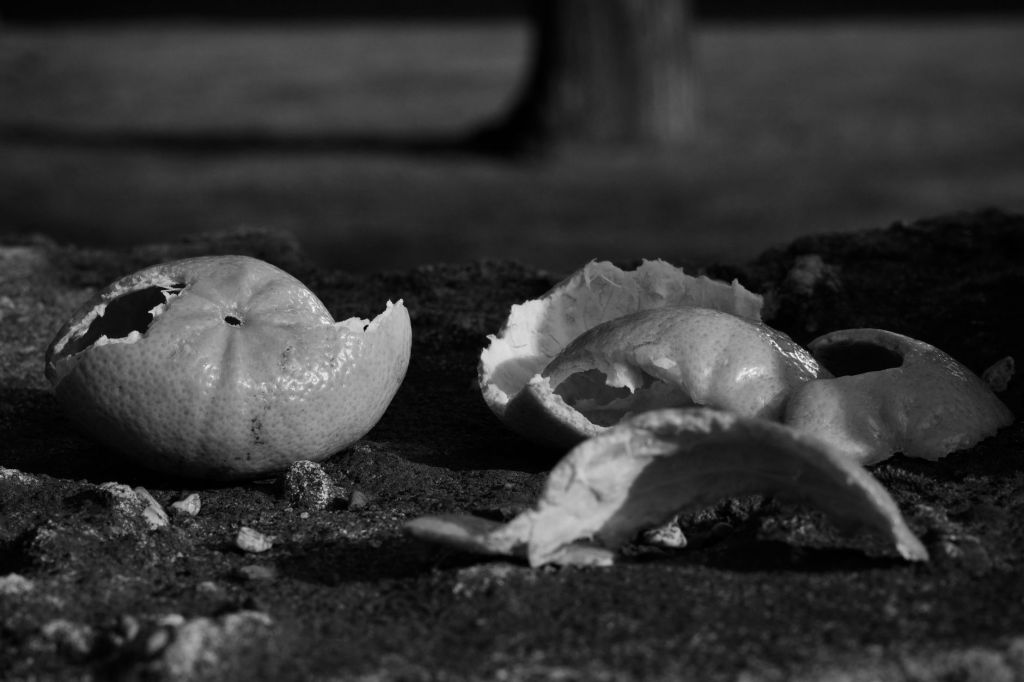
Had the atmosphere shifted? Or was it just me? I looked at the class — a group of teenagers who looked as though they’d already lived three lifetimes that day. I understood it. They were tired, hungry, and the last place they wanted to be was in a classroom with a new British teacher who appeared to be trying just a little too hard. I began with introductions — coaxing as much information as I could from each student without giving them a chance to use a simple ‘yes’ or ‘no’. Most of them were lovely — funny, bright, and doing their best. However, I couldn’t help but notice one girl sitting directly in front of me who began peeling satsumas, eating them slowly, and staring out of the window as if I were a passing cloud. I asked her politely not to eat during the lesson. She ignored me. I asked again. And again. Her friends began to laugh and flick bits of peel at each other. Most of the class looked mortified.
I didn’t feel angry. I felt humiliated — not by her, but by my own helplessness. Furthermore, I could sense they’d spotted a weakness in me, and I didn’t yet have the tools to manage it. Something in me, perhaps the part that had once worn a uniform and knew when a situation was slipping, simply thought: Right. Enough. I gathered my books and props, apologised to the students who were actually trying, and told the others, as calmly as I could, “Good luck explaining this one to your parents. I’m out of here.”
Then I walked straight to the secretariat, where the lovely lady who spoke no English listened with saintly patience as I attempted to explain, in catastrophic Polish, that I was refusing to teach the class, and she needed to call the Director of Studies.
Oh boy.
When I finally spoke to Pani Grażyna, she was devastated. Embarrassed, saddened, and deeply apologetic, she kept repeating how sorry she was that I’d been put in that position. Then, in a tone that made my stomach drop, she explained that letters would be sent to every parent of every student in that class. At that point, I was thinking, Oh dear… what on earth have I done? I’d only been in Poland a few months and now, apparently, I was triggering a full-scale administrative response. She asked me which student had been eating fruit, ignoring my requests to stop, and throwing peel at her friend. I could feel myself shrinking into my chair.
All I could think was, Enterprise… one to beam up, please.
When Pan Bronek rang to say he was waiting at the usual spot to take me back to Gliwice, I could hear something unsettled in his voice. He didn’t ask directly, but he didn’t need to. I travelled back through the dark Silesian streets thinking, What have I just unleashed? I wasn’t feeling good about it at all. Pan Bronek tried gently to discover why he’d been called to collect me earlier than planned, but I didn’t know how to explain it in a way that didn’t make me sound foolish or dramatic. I think he already knew. The journey back to my apartment felt longer than usual that night — the kind of journey where the silence says more than either of you can.

Walking to meet Pan Bronek, who would wait for me a short-distance away. I turned to take this shot on my phone. The immediate area was always slightly surreal; you can just make out Christmas decorations in the distance.
The next day, when the dust had settled and my nerves had stopped jangling, Britam didn’t scold me or question my professionalism. Instead, they did something far more disarming: they supported me. Pani Lisowska explained, gently but firmly, what the expectations were — not as a reprimand, but as guidance. Teenagers, she said, especially exhausted ones in winter, will test boundaries. It wasn’t personal. It wasn’t a failure. Likewise, it was part of the job. She told me that removing myself from the situation had been the safest option, and that the school would handle the rest. My friend at Górnych Wałów echoed the same message later that day, pressing a drink into my hand and telling me, with the kind of warmth only she could manage, that every teacher has a story like this. “You learn,” she said. “You get stronger. And next time, you’ll know exactly what to do.”
And she was right. Something shifted in me after that — not confidence, not yet, but a sense that I wasn’t alone, and that the culture at Britam wasn’t about blame. It was about helping you grow into the teacher they already believed you could become.
In the days that followed, something in me began to shift. I realised that the problem I had faced at Zabrze hadn’t just exposed a gap in my teaching skills — it had exposed a gap in my instincts. For years, my default mode had been shaped by policing — but classrooms aren’t crime scenes, and teenagers aren’t suspects. They’re tired, complicated, hopeful, chaotic human beings trying to survive winter evenings and exam pressure.
The strange thing was that in twenty-three years of policing — most of it spent in a small rural town surrounded by hills and fields — I’d worked with countless young people. All ages, all temperaments, all kinds of trouble. I was never their friend, of course, but they treated me with respect because I treated them with respect, even when I was angry, frustrated, or quietly heartbroken by something they’d done.
My default mode had never been challenged. I knew their parents, their grandparents, their teachers, their local doctor, the shopkeepers, the people who ran the youth club — my patch was a web of relationships, and I understood how to move within it. But Zabrze was nothing like anything I’d been prepared for. I was no longer someone in uniform, no longer someone with authority woven into the fabric of the community. I was a foreigner with limited Polish, no shared history, and no instinctive sense of the cultural rules.
That simple thing — a student eating a satsuma — should have been nothing. I’d dealt with far worse, far more serious behaviour, countless times. But the flicking of peel, the laughter, the sense that I had no footing at all… that tipped me over. It wasn’t the fruit. It was the sudden realisation that every instinct I’d relied on for two decades was useless here.
I should say here that the ladies who ran the secretariat at Britam were not to be trifled with. To me, they were always warm, helpful, and ready to assist — but to students and parents, they carried a polite, professional, and quietly formidable authority. Think British GP receptionists, multiplied by three.
The Zabrze secretary in particular had a presence that could silence a corridor. She seemed genuinely concerned for me that evening, and after speaking to Pani Lisowska, she ascended the wide staircase with a sense of purpose that made me instinctively step back.
There had been a brief, stunned silence from inside the classroom after I’d left, followed by a rising murmur of voices and laughter.
Then she went in.
I heard her speak in Polish — calm, firm, entirely in control. The laughter stopped. When she returned a moment later, the silence behind her held.
It was the first time I realised that at Britam, authority didn’t always sit in the Director’s office. Sometimes it sat behind the front desk.
The secretariat’s intervention — that calm, formidable presence restoring order with a few firm words — taught me more about classroom authority than any training manual ever could. It wasn’t about power. It wasn’t about control. It was about presence, consistency, and the quiet confidence that comes from knowing you’re not alone. Britam had my back. My colleagues had my back. And slowly, I began to understand that teaching required a different kind of strength — one that didn’t come from a uniform or a badge, but from patience, empathy, and the willingness to grow.
In the weeks that followed that night in Zabrze, I found myself relearning instincts I’d taken for granted. Not replacing them — just adjusting them to a world where the rules were different and the cues were subtler. I began to understand that authority in a classroom didn’t come from history or uniform or community ties. It came from presence, consistency, and the slow, steady work of showing up. I watched other teachers, listened to the secretariat, paid attention to how students greeted each other, how they joked, how they tested boundaries. I learned when to step in and when to let something pass. I learned that silence could be more powerful than a raised voice.
What surprised me most, looking back, was how Zabrze slowly became one of my favourite places to teach. I loved all my classes, but something about that school — the students, the grit, the honesty of the place — began to mean something special to me. And inside that old Familok building over the next three years, I had some of the most rewarding lessons of my entire time in Poland. The same teenagers who once tested my limits became sharp, funny, hardworking young adults preparing for their matura with a seriousness that humbled me. Zabrze taught me more than I ever taught them — about patience, resilience, and the quiet beauty of showing up again after a difficult night.

Zabrze, a view from a classroom. A Silesian skyline: familoki, tiled roofs, chimneys — the quiet rise of modern apartments in the distance.
And slowly, almost without noticing, I stopped feeling like a foreigner trying to keep up. I didn’t arrive at Britam thinking of myself as a teacher — not really — but over time, something shifted. I began to feel as though I could teach again, not as the person I’d been before, but as someone shaped by this place, this culture, and the trust people placed in me.
Previous Post:
 Ghosts to Carry, Stories to Keep
Leave a comment