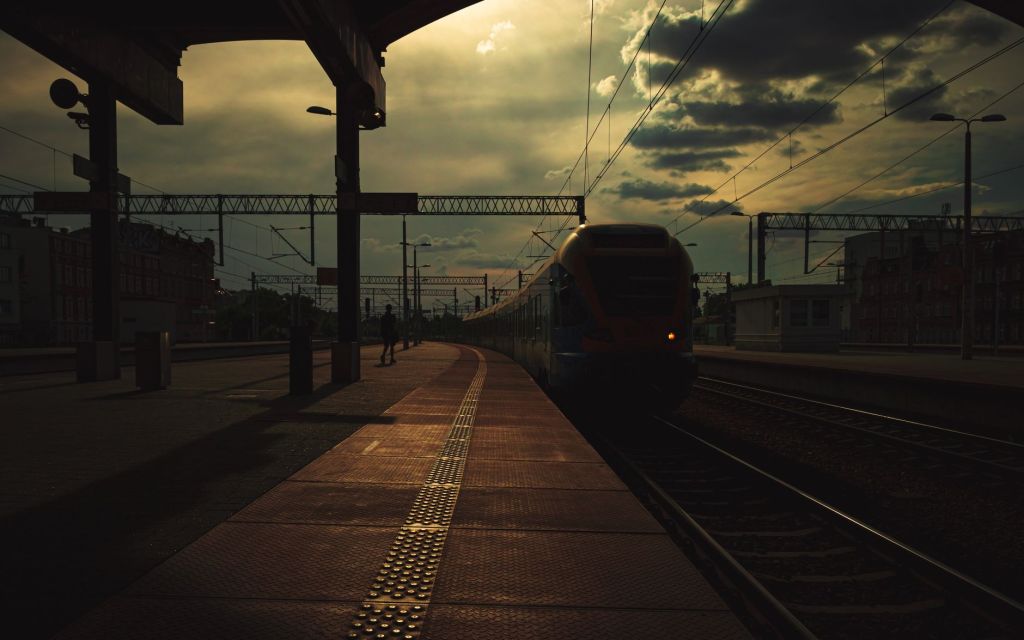
For a dear and special friend —
who steadied the moment,
translated the chaos,
and answered the phone as if she’d been waiting for it.
I’d been living in Silesia for only a few weeks, and it was the first time I felt truly out of place — I was tired that night. A bit cold, a bit lonely, and carrying that faint unease that comes from being somewhere you don’t fully understand. Friends had warned me to be careful in stations, to stay alert, to avoid hanging around platforms longer than necessary. But there I was in Gliwice, ticket in hand, doing my best to get back to my little hotel in Łabędy.
I checked the departure board, platform, and track. I did everything right.
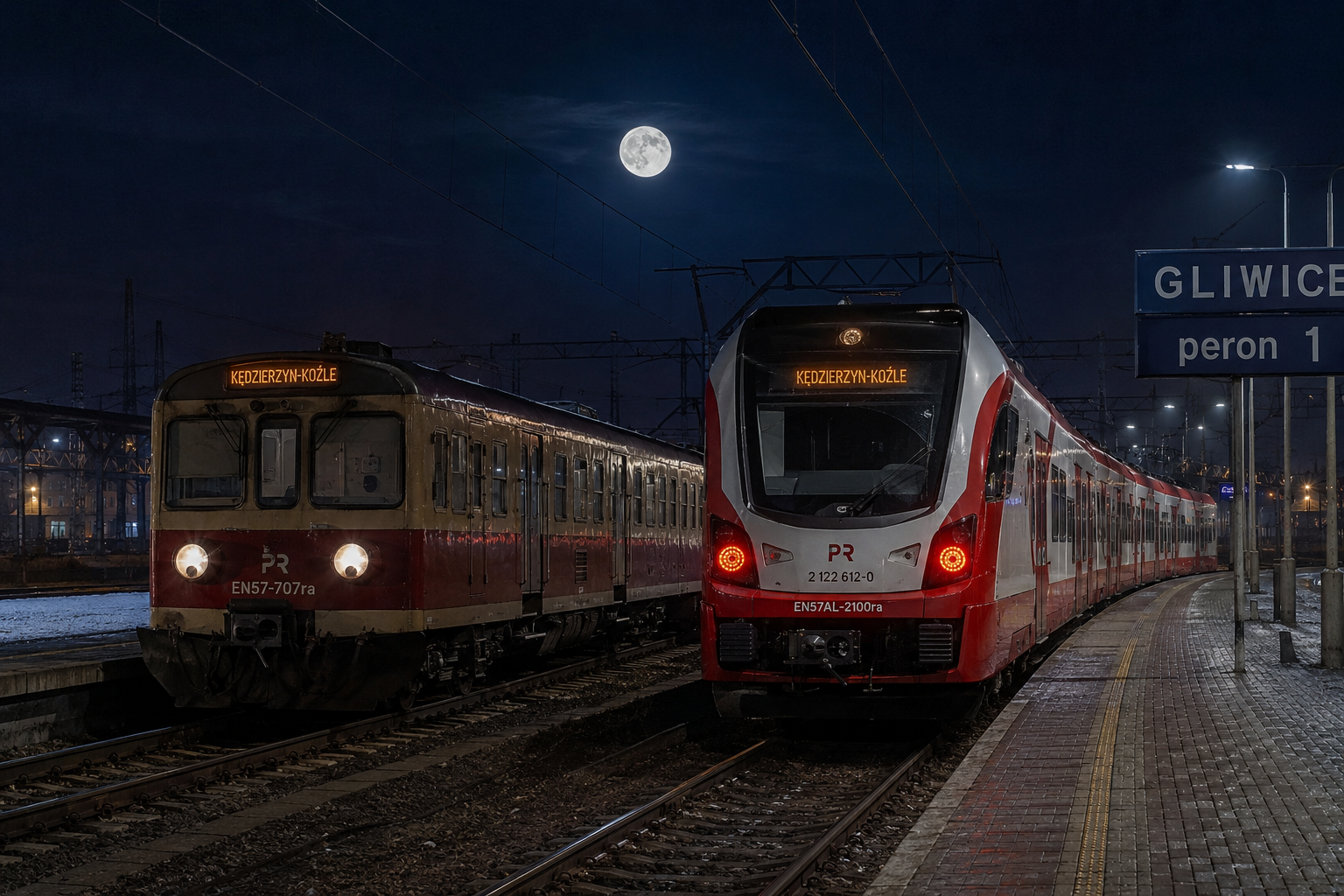
On the platform I found two trains; a check on the front of them showed the same destination — Kędzierzyn‑Koźle. One, the more traditional, older workhorse of the PKP world, was leaving in forty minutes and was still locked. The other — a bright, modern, warm‑looking unit — was leaving in about ten minutes and open for boarding. Same destination, I told myself, and it was heading towards Łabędy, the next station.
Of course, I chose the newer one.
Inside, a few passengers were already seated. I walked right to the front and sat in the seat closest to the driver’s compartment — literally as close as a passenger could get. I didn’t know it then, but that choice would save me. Had I sat further back, the guard would have reached me too late. I would have been carried past Łabędy toward a town I couldn’t pronounce, with a dying phone and no way back.
The train pulled out. Immediately, something felt very different. This wasn’t the familiar, rattling local service I knew. This was really moving faster than normal. I recall thinking we’d arrive in Łabędy far sooner than I ever imagined.
The guard began checking tickets. I was the first passenger he reached.
He took one look at mine and his face changed — frustration, urgency, annoyance. He spoke quickly in Polish. I understood almost nothing. My head didn’t panic; it went blank. I’m not someone who panics easily, as long as I understand the situation. But here, I didn’t understand anything: not what he was saying, not where the train was going, not how bad this was.
I wasn’t helpless in Polish. Far from it. I could buy a ticket. I could ask ile kosztuje? I could understand pierwsza klasa czy druga klasa?
I carried three phrasebooks everywhere — Berlitz, BBC Active, and my beloved Rough Guide — my armour against confusion.
None of that prepared me for this.
I didn’t know who to call. I didn’t even know if I should call anyone. Yes, this was my mistake — my choice to be in Poland. My problem to solve. Still, I had maybe four numbers in my phone — four people in the entire country I could reach. I stared at my call list; I needed help here, and there was no point in pretending otherwise. So I started at the top, alphabetical order, and dialled the first number — a dear friend.
I didn’t know if she’d answer.
She picked up in three or four rings. Not the usual Polish “Tak, słucham?” — but: “Gary! Are you OK?”
I tried to explain in a rush. She listened, then said: “Give him your phone.”
I indicated to the guard, who was shaking his head and saying something I didn’t understand, then gestured for him to take my phone. He appeared extremely reluctant and more than slightly flustered. I even used the Polish word for “interpreter,” pointing to the phone, saying “Pana proszę” — respectfully, and probably far more than necessary. Finally and still reluctantly, he took my phone.
He listened, and then he did something I wasn’t expecting at all: he turned around, walked into the driver’s cab with my phone, and closed the door behind him.
I stood there alone, staring at the closed door, my stomach dropping. For those 30–40 seconds — which felt like an eternity — I was convinced he was calling ahead. Police. Revenue enforcement. Someone official. I genuinely thought: “I’m in trouble. I’ve caused a problem. They’re probably going to meet me at the next scheduled stop.”
The truth was, I didn’t even know what the scheduled stops were. I only knew the final destination: Kędzierzyn‑Koźle.
Even if there were intermediate stops, I’d still have been stranded — tired, cold, carrying a phone without any power, and with no Polish beyond the basics needed to buy a ticket; or most likely, finding myself in a place with a name I couldn’t even pronounce. Surely I could buy a new ticket — I’d ask my friend to confirm that. I just needed to stay calm — I mean… what more could possibly go wrong?
The cab door opened. The guard stepped out, closed it behind him, and handed me the phone.
I can’t express how relieved I was to hear the voice of my friend, then my relief turned to a sense of utter disbelief as she explained what was about to take place, in a remarkably calm, controlled voice:
They cannot stop the train.
They will slow it as much as they safely can.
They will open the doors.
You will have to jump at Łabędy.
Do not tell the other passengers.
I remember saying: “No… It’s OK, my fault completely — I’m not doing any jumping off trains.”
I recall turning around to look behind me at a collection of passengers watching with a look of amazement. She was still talking, trying to calm me when the line went dead. My phone battery drained mid‑sentence.
And suddenly, I was alone again.
Almost at the same time I sat looking at my now completely dead phone, the guard took my arm and pulled me toward the nearest door. The train was slowing — I could hear the motors winding down — but we were still moving at a speed that made my body tense with instinctive fear.
He reached up and pulled the lever above the door. Nothing. The door stayed shut. “Game over,” I thought, “it’s not going to open.”
He didn’t give up. He dragged me to the next door. Passengers stared, wide‑eyed, silent. I felt a flash of embarrassment — the absurdity of being the centre of attention even in a crisis.
He pulled the handle. This time, the door slid open with a violent whoosh. Cold night air slammed into my face. The full moon lit the industrial tracks opposite — old rails, factory sidings, the metallic skeleton of Silesia glowing silver.
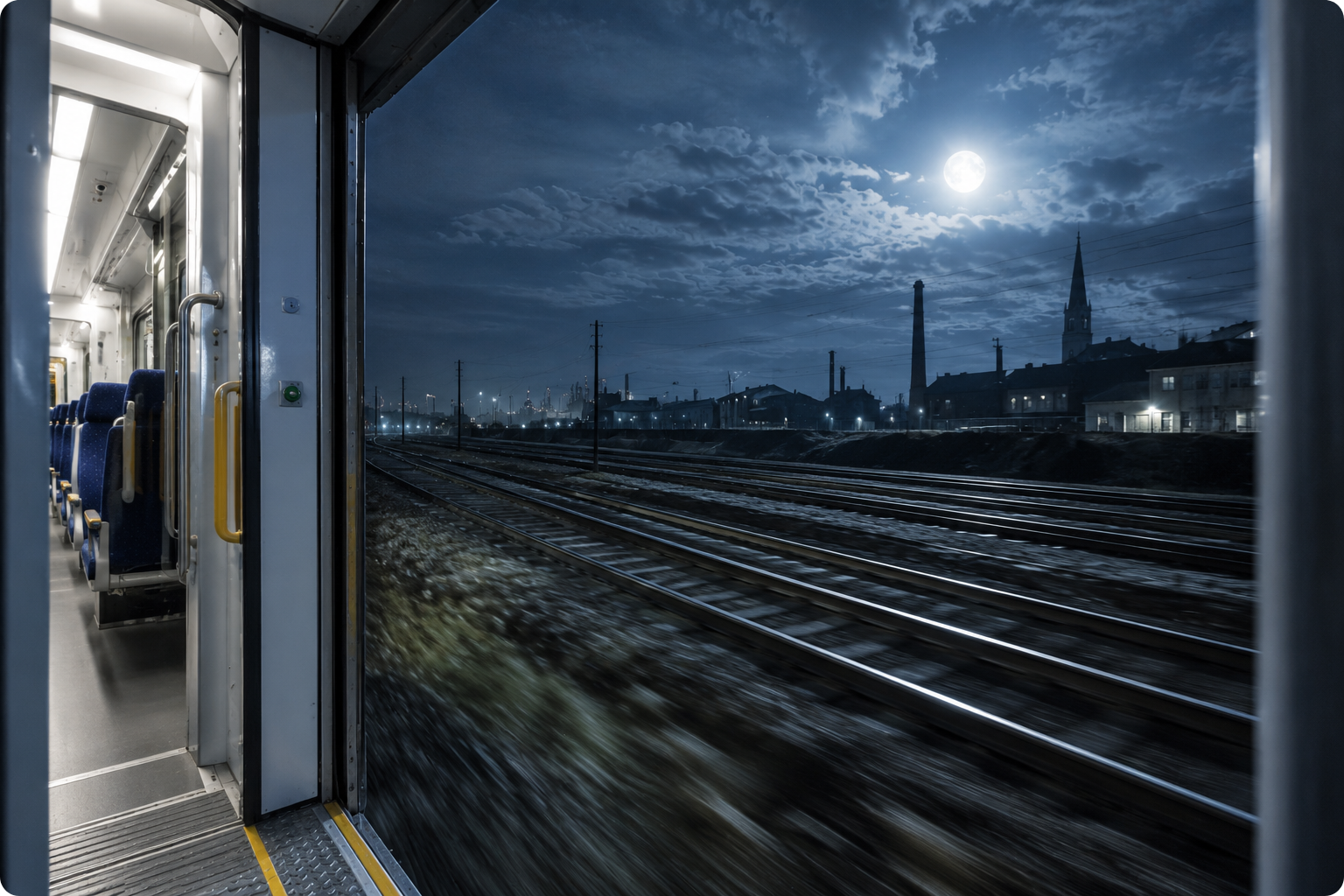
And at that moment, I felt something unexpected: calm.
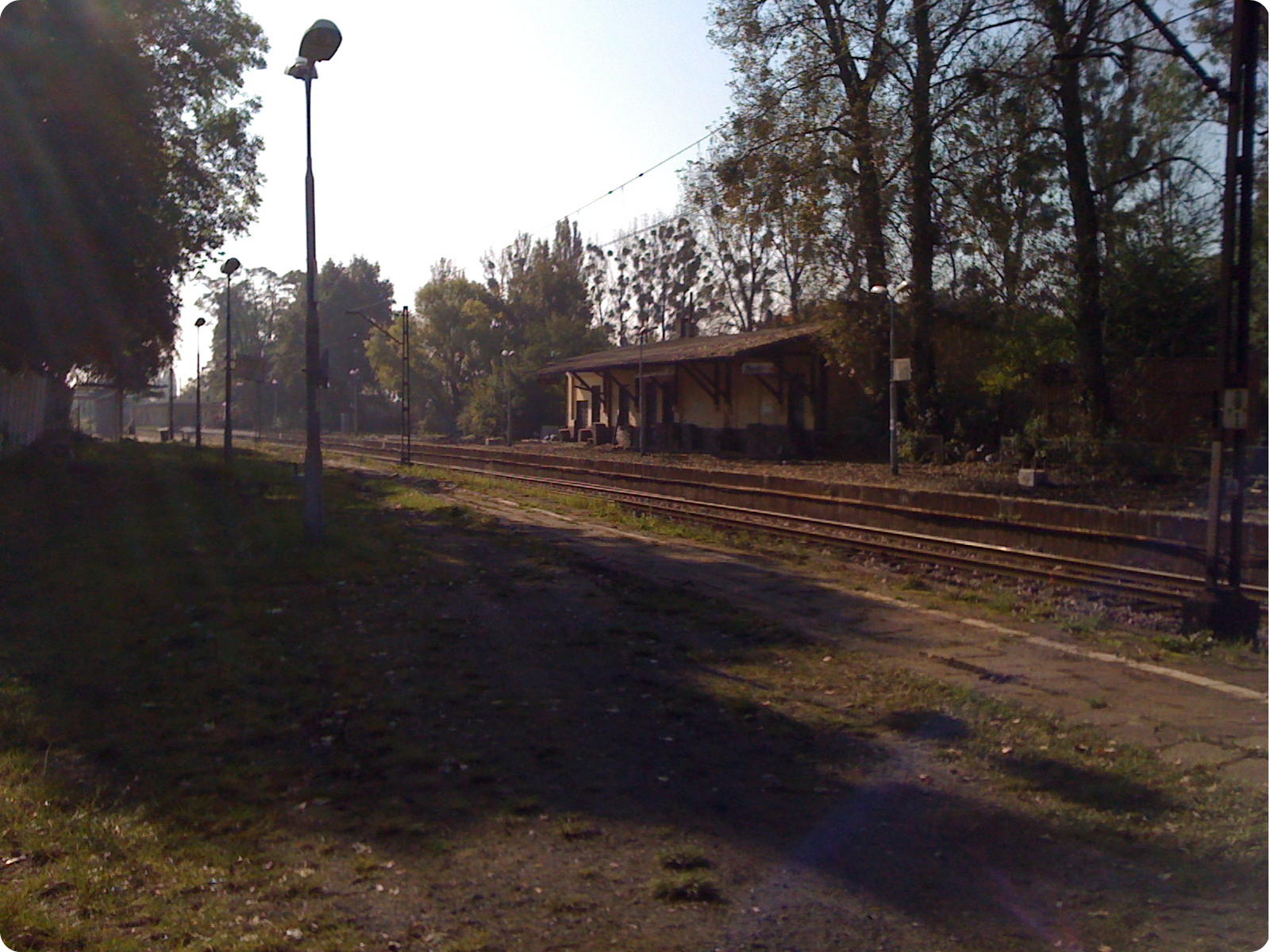
I could see the outline of Łabędy — then the long, neglected platform. We were arriving. We were going too fast — or rather, I thought so. It was difficult to tell; it certainly felt too fast for me. Odd to think of it now, but I was actually thinking how best to save the contents of my shoulder bag: a brand-new MacBook Pro laptop and an iPad. I simply needed to remain upright, at all costs.
Then I heard him: “Teraz.” (Now)
I hesitated. At the exact moment, I wasn’t entirely sure what Teraz meant.
Again, louder, commanding: “TERAZ!”
My legs obeyed the law of physics instead of fear. I jumped. Or stepped. The exact mechanics don’t matter.
My feet hit the ground. I ran. Momentum propelled me forward like a rag doll with purpose, so much so it carried me past the door the guard had been unable to open. I was desperate not to stumble; I knew if I allowed myself to stop too early, then I’d probably lose my footing and fall.
And then something surreal happened: I found myself running level with the driver’s cab. Not ahead. Not behind. Just… level.
For one or two seconds — no more — I looked up and saw the driver. One wave. One huge smile.
And then I heard it — that deep, mechanical shift as the train’s motors changed from slowing to powering away, a rising, metallic hum that has stayed with me ever since. Being that close to a moving train, I felt the sound as much as I heard it — a vibration in the air, in my ribs, in the ground beneath my feet. The train seemed to inhale, gather itself, and surge forward.
And then he was gone, the train accelerating away.
I slowed, panting, buzzing with disbelief. I turned back. The door I’d exited from was already closed. The guard stood behind the glass. No wave. No gesture. Just a small, private smile.
Then he, too, was gone.
At the level crossing, lights flashed. A small crowd stared at me — this stranger who had apparently just emerged from the night and the side of a moving train. I ducked under the barrier, squeezed past them, and walked back to my hotel, heart pounding, legs shaking, alive.
Up in my room, I plugged in the dead iPhone and waited. When it finally woke, I immediately called my friend. She answered instantly. I could hear her mother in the background — half‑scolding, half‑relieved. They’d been terrified.
Then my friend told me something that stayed with me more than the jump itself: those two railway men had taken a real risk.
They weren’t supposed to slow the train. They weren’t supposed to open the doors. Not only that, they weren’t supposed to let a passenger off between stations. But they did.
Later, in the small hotel bar — full of Opel workers and tradesmen — I ordered an ice‑cold beer and quietly raised it in a toast: to the driver who smiled, and the guard who shouted Teraz! Two strangers who didn’t have to help me, but did. To my friend, who answered her phone faster than I could ever have hoped.
And I will always remember their kindness.
Only years later did I understand what had really happened that night. The train I boarded wasn’t the familiar, ageing EN57 that rattled its way through Silesia. It was one of the EN57 AL units — the modernised Silesian rebuilds that looked nothing like the old stock. Sleeker, brighter, faster. And crucially, it wasn’t the Przewozy Regionalne stopping service my little regional ticket was meant for.
In 2010 those rebuilt units were still a novelty. They looked modern, warm, inviting — especially beside the older train that sat locked and dark on the other track, waiting for its driver. I wasn’t the only one who made that mistake; plenty of people did in those years. The signage was confusing, the operators were changing, and the trains themselves looked nothing alike. I didn’t board with any intention of cheating the system. I was prepared to pay the difference. I was resigned to sitting there, phone dying in my hand, and working out how to get back to Łabędy or at least to Gliwice.
When I handed my phone to the guard, it wasn’t to demand anything. I wasn’t asking them to stop the train. I simply wanted to apologise, explain, and ask how much I owed — and whether there was any way to get back. That was all. But they took the situation into their own hands. They made a decision that went far beyond procedure, far beyond what the rulebook allowed.
I was very, very lucky. I’ve often wondered whether they would have done the same for a Polish passenger. Maybe not. Perhaps they saw a foreigner who was tired, confused, and out of his depth. Possibly, they recognised the fear I was trying so hard to hide.
Or perhaps — and this is what I choose to believe — they were simply good men who decided that the right thing to do mattered more than the official one.
I originally included some mathematics to explain what happened when I stepped off the slowing train, but the idea is actually simple. At the moment I jumped, I kept the train’s speed, while the train itself continued to slow down behind me. If I had tried to stop immediately, I would have fallen forward, so I had to run to stay upright and control my momentum. Because I no longer shared the train’s deceleration, I briefly moved faster than it and even ended up level with the driver, about eight metres ahead. The maths was just my way of showing this, but the explanation doesn’t really need equations; it was simply Newton’s law of inertia in real life. Proving it mathematically was fun, though the only real scientific conclusion was that I was entirely too old to be jumping off moving trains.
 Ghosts to Carry, Stories to Keep
Leave a comment