Two-wheel traveller, occasional worker, and quiet recorder of old moments. Writing vignettes, short pieces, and poetry about past lives, daily routines, and the space between memory and place.
If surviving a Polish welcome dinner of bigos and vodka was my first test, navigating the morning after was an entirely different challenge. But to understand my confusion, we have to go back a few years.
Years before I ever set foot in Poland, I’d already encountered the custom of drugie śniadanie in a British office. Each Friday, over a three-month period, I worked alongside a Polish interpreter whose live cognitive speed was staggering. Document translation is one thing, but watching her interpret the spoken word in real time — navigating the razor-thin margins of courtrooms, translating for distressed victims, or holding her ground with hostile suspects — was a masterclass in focus and poise. Yet, every Friday morning at ten o’clock sharp, this same intellectual powerhouse would pause, place a foil‑wrapped parcel on the desk between us, and command:
“Przyniosłam nam drugie śniadanie, Gary. Nic nie kupuj.”
(I’ve brought us second breakfast, Gary. Don’t buy anything.)
She was the first Polish person I’d ever truly known, and for weeks I dutifully ate whatever she handed me, assuming she had simply taken personal responsibility for keeping me alive. When I finally mustered the courage to ask if a second breakfast was strictly necessary given my standard noon lunch, she gave me the specific, pitying look Poles reserve for Englishmen who have missed something entirely obvious. I wasn’t correcting her English; I was being given my very first lesson in her culture.
Fast-forward to 2007. I still can’t quite believe I had the nerve to accept an invitation to stay in a Polish household where neither parent spoke a single word of English. The morning after my arrival—feeling distinctly fragile from the long journey, the late-night meal, and the relentless flow of hospitality vodka—I dressed quickly and crept downstairs, feeling thoroughly sheepish as I tried to assemble my features into something vaguely human.
I walked into a bright kitchen where her parents had already been up for hours. The table groaned under a daytime feast: sliced ham, cheeses, sausage, radishes, homemade jams, and soft bułki — bread rolls that seemed explicitly designed to soak up the consequences of a proper Polish welcome.
Leaning over to my friend, I whispered, “Is this first or second breakfast?”
She roared with laughter, quickly translating my confusion for her parents.
“To twoje pierwsze śniadanie, ale może być naszym drugim.”
(Your first breakfast — but it can be our second.)
Standing there in a kitchen where I couldn’t communicate through words, watching her parents nod in smiling agreement as my friend laughed, I realised language didn’t matter half as much as the shared table. Somewhere between the ham, the cheese, and the sliced tomatoes, I found myself officially eating on Polish time.
Second Breakfast – UK 2007 – Polish Style.
With breakfast conquered, I assumed I finally had the measure of Polish hospitality. The most profound, and surprisingly solemn, welcome, however, was still a few days away.
Years later, I finally stepped through the doorway those Krakus jars had quietly opened.
When I finally travelled to Poland in 2007, it felt foreign — unmistakably so — but not in the way I’d expected. I’d drilled my basic phrases, rehearsed airport conversations, and carried my phrasebooks like survival gear, yet something about the place felt half‑known, as if I’d walked into a story I’d been circling for years. Still, nothing prepared me for the moment the plane doors opened, and the air hit my face — colder, sharper, carrying a scent I couldn’t name. I walked across the tarmac with the strange feeling that I was both a visitor and someone returning to a place he’d never been.
Inside the terminal, I spotted them immediately: my friends, two women waving Polish flags with the enthusiasm of a welcoming committee who had decided, unanimously, that subtlety was overrated. Their laughter, their excitement, the way they pulled me into a hug before I’d even cleared the doorway — it was my first real taste of Polish hospitality, and it arrived long before the food did.
Weeks earlier, they had asked what I wanted to eat on my first night in Poland. Wanting to honour the moment — and completely unaware of the culinary consequences — I’d chosen what I believed to be the most Polish dish imaginable: bigos. I had no idea I was requesting something that required days of preparation, resting, reheating, and more resting.
As we drove through the outskirts of Kraków, the winter light fading into a blue‑grey dusk, everything felt unfamiliar and strangely gentle at the same time. Road signs I couldn’t read. Buildings that looked both Soviet and European. A landscape that didn’t match anything I’d imagined, yet didn’t contradict it either.
When we reached my friends’ home, the smell met me before the door did — rich, smoky, sour‑sweet. My friend’s mum hadn’t just made bigos; she’d made the kind families save for holidays. On the table waited thick slices of bread, an ice‑cold beer, and, of course, vodka.
My friend frowned when she saw me agree to another shot. “Please… don’t drink vodka,” she said, with the weary affection of someone who had watched foreigners make brave but regrettable choices. But the vodka didn’t flatten me. It sharpened everything — the sourness, the smoke, the meatiness — and somehow made me hungrier.
The first mouthful of bigos was a shock. Not unpleasant, just intense. Deep, wintry, full of flavours — sauerkraut unmistakable, cutting through smoked sausage, other meats and mushrooms. There was a hint of gaminess too, something ancient and forest‑like. It was the kind of dish that didn’t just sit on the tongue but travelled upward into the nose and down into the chest, warming places I didn’t know needed warming.
Then came dessert — makówki. Cold, dark, heavy, soothing. Nothing like the bread‑and‑butter pudding I knew. The poppy seeds, dried fruit — now softened and plump — and just a note of rum, a sweetness that felt oddly festive, as if Christmas had been compressed into a bowl. I remember pausing after the first spoonful, not because I disliked it, but because I needed a moment to understand it. It was unfamiliar, yes, but also strangely comforting, like being handed a family tradition without the instructions.
By then the room had settled into that soft, post‑meal tiredness where everyone leans back a little. My friend slipped away to rest her voice after an evening of interpreting, and I stayed at the table with her brother, whose English was excellent and whose enthusiasm was undimmed.
He suggested seconds. Before I could protest, he was already at the fridge, spooning out portions that looked suspiciously like both seconds and thirds. When he set the bowl in front of me — poppy seeds glistening under the kitchen light — I realised this was the real test of belonging.
And somewhere between the second helping and the laughter around the table, something shifted. I stood up and insisted on helping with the washing up. My hosts reacted as if I’d offered to dismantle the boiler. A guest does not wash dishes in a Polish home — but I wasn’t trying to behave like a guest any more. I was trying, in my own small way, to say: I’m here. I’m part of this now.
But as I would discover the very next morning, my education in Polish culinary timekeeping was only just beginning.
I didn’t arrive in Poland with any grand plan to understand the country through its food. At first, I was just a foreigner with a rucksack and a handful of words that dissolved the moment I tried to use them. Those early years when my friends stood beside me — guiding, translating, interpreting. They helped with menus, offered suggestions, sometimes ordered for me. They nudged me to try things on my own, and when I managed even a simple “poproszę” or “dziękuję,” I’d be rewarded with that warm Polish encouragement that makes even the most basic phrase feel like a small triumph. Back then, I was still a guest — curious, hesitant, and supported by the kindness of people who wanted me to see their world.
Obiad Day 2
Then I moved to Poland, and the safety rails came off. Food was chosen not for adventure but for survival — whatever I could pronounce without causing a diplomatic incident. Sometimes that meant a safe bułka and a banana from the local Biedronka, my first-ever solo meal in Poland. And sometimes it meant relying on the quiet kindness of friends who fed me when I was too ill to feed myself.
Somewhere between the steam of a milk‑bar kitchen, the glow of a zapiekanka stand outside Katowice station, and the slow shift from being helped to helping myself, a map began to form. A map not of places, but of people — and the meals that carried me from stranger to something almost like belonging.
Krakus Jars to Gołąbki
When I was a child, the only Polish food I knew came in glass jars. My grandmother kept them on a shelf in her pantry — the name Krakus on the label mystified me, declaring it to be a ‘Produce of Poland’. Preserved fruits with a label that looked foreign and slightly magical. Blueberry, or maybe bilberry, I could never quite tell. They went into a pie with other fruits, both sweet and tart, lashings of custard or, a good pouring of condensed milk, which I especially enjoyed. The jars sat there quietly among the tinned peaches, pears, baked beans, a box of Bisto and other long-life foods. Krakus was a little window into a country I couldn’t imagine. Poland was just a name on the far side of my bedroom atlas.
For many years, those jars were the whole of my understanding of Polish food. Even later, in supermarkets, the Krakus jars stood out in isolation — pickled cucumbers that looked nothing like the cucumbers I knew, I recognised beetroot, but not so the foods with labels with names like sauerkraut. In Polish it’s known as kapusta kiszona, but I seem to recall in conversation people shortened it to simply kapusta — which might be unhelpful if you’re trying to buy a fresh cabbage and keep being handed something that’s been fermenting since the late Bronze Age.
Growing up in the North East in the 1960s and ’70s, anything with kraut in the name sounded firmly Germanic — which, depending on who you asked, ranged from “perfectly fine” to “absolutely not.” Sauerkraut felt like the deluxe edition: too much sour, too much German, and frankly I felt horror toward anything pickled. Piccalilli was the worst offender. My grandparents would place a jar of that yellow substance on the table with the casual confidence of people who had survived a war. It glowed with an intensity that suggested it was either radioactive or sentient. I’d stare at it, half‑expecting it to introduce itself.
Pickled onions were marginally less terrifying. My grandmother prepared enormous jars of them — great glass vessels filled with pale, floating spheres. I have eaten them, or attempted to, during that strange British lunch known as a Ploughman’s, a meal that implies a man has taken a lunch break from the fields with nothing but cheese, bread, an apple, a pickled onion or two.
But pickled eggs? Absolutely not. Full stop. The very sight of them — boiled eggs suspended in a cloudy amber fluid of unknown origin — was enough to make me reconsider the entire concept of food safety. They sat on pub counters like minor officials awaiting instructions, each one looking as though it had been pickled mid‑career for disciplinary reasons. Approaching the jar felt like entering negotiations with an entity that might, at any moment, request documentation.
I’m laughing even now at the memory of two of my Polish friends during a visit to Chester, standing in a local fish and chip shop as I encouraged them — with a straight face — to try a pickled egg. I can’t imagine anything worse than the sight of that half-filled jar of mysterious amber fluid sitting on a chippy counter, yet I offered only the vaguest explanation that they were ‘different.’ These were people raised on ogórki kiszone, śledź, and sauerkraut sharp enough to make your eyes water at twenty paces — yet one bite of a British chip-shop egg defeated them utterly. Each managed a single mouthful before politely asking if they were allowed to throw the rest away, as though seeking permission to abandon a diplomatic mission. I can still see their faces now. For months afterwards, they’d mention it at random, shaking their heads in disbelief and reminding me, with great solemnity, that it was the worst thing they had ever eaten in the United Kingdom.
I tried sauerkraut for the first time in Hamburg in 1979, and the acidity hit like an ambush. One bite and I was blinking as if a cabbage had pepper‑sprayed me. It felt like centuries of fermentation had been preparing for that moment — and I walked straight into it. I wasn’t able to eat another mouthful.
Sauerkraut, or to be precise in Polish — kapusta kiszona — the backbone of bigos, a dish cherished in Poland — was something I treated like a hostile foreign power for years. Living in Poland changed that; I not only made peace with it, I learned to enjoy it. My younger self would never have believed it.
What really intrigued me, though, shopping in any of the large supermarkets, was finding huge drum-sized containers holding kapusta kiszona. I understood glass jars and even small plastic tubs of it for sale. Poland didn’t do pickled cabbage by the handful; it produced it on a huge scale. I’d walk into a shop and find vast, self-serve open vats of the stuff. Back home, pickled cabbage came in a jar you could lose behind the HP Sauce. In Poland, it came in something you could bathe in.
And there I’d be, standing in the aisle, staring into these cabbage reservoirs with the awe of a man who once blinked at a single forkful.
After Poland joined the EU, the country began to drift closer. It was Polish people — thousands of them — bringing with them the foods they loved and needed. Polish shops appeared on high streets across the UK — bright signs, shelves filled with things that looked both ordinary and exotic. Even the big supermarkets caught on, dedicating half an aisle, or more to Polish products: pickles, sausages, juices, jars of things I didn’t recognise but would learn to.
Looking back, it’s strange to realise that my first connection to Poland wasn’t a place or a person, but a row of jars in my grandmother’s pantry. A quiet beginning, but a beginning all the same.
I moved closer too. Through my work with clients, and later through friendships, I found myself edging into the world behind those labels and shop signs. To help build community cohesion, I set up a project called Projekt Otwarte Drzwi — The Open Door Project. It was meant to be simple: a space where people could meet, talk, ask questions, and feel less like strangers in a new country.
It was there, in our Friday drop‑in centre that always smelled faintly of instant coffee and photocopier toner, that I was introduced to gołąbki. A woman arrived one winter afternoon carrying a foil‑covered tray, the kind people bring to family gatherings. She set it down with the quiet pride of someone offering a piece of home. When she told me the name — “little pigeons” — I must have looked troubled because she burst out laughing. “No pigeons inside.”
gołąbki — little pigeons — absolutely no pigeons inside.
My Polish friends and visitors to the drop-in stood watching at the kitchen counter, eyes wide open, smiling, they genuinely seemed full of joy to see food they recognised from Poland. As the foil was uncovered, I thought perhaps unfairly, but true to my own experiences — this smelled like a British school dinner from my own childhood — all mince and boiled cabbage. But that first impression was entirely wrong. That first bite — warm, comforting, unexpectedly tender — tasted like something made with care, something meant to be shared. And without realising it, I’d just met one of my favourite Polish foods.
Looking back, it makes perfect sense that my first real introduction to Polish cooking didn’t happen in Poland at all, but in a community hall in the UK. Before I ever boarded a plane, Poland had already begun feeding me.
The jars in my grandmother’s pantry had been the prologue. I just hadn’t known it yet.
The small photograph hangs framed on the wall in my downstairs loo. Visitors to my home who go to use the loo, when they reappear, almost always ask the same question, half‑amused, half‑astonished:
“Is that you in the photo?”
It is. Though the lad in that picture looks impossibly young. I’m standing on the left beside a shipmate on the flight deck of HMS Bulwark, squinting into a blaze of sunshine so bright it seems to flatten every shadow. We’re both in tropical No.1s—white tunics, white trousers, and those damned white canvas shoes that picked up dirt if you so much as looked at them. Keeping that rig clean was a daily battle, and the sun only made the contrast sharper. But that was the uniform, and that was the life.
By the time that shutter clicked, I’d already logged nearly two years in the Fleet Air Arm. Officially, my trade was Naval Airman (Aircraft Handler). On the flight deck, we were “Chockheads”. To the rest of the ship, we were WAFUs — wet and F’n useless. We didn’t mind. In true Navy fashion, anyone outside the Air Arm was a “Fishhead” or a “Codhead”, and we said it with the same grin they used when they called us useless. It was all part of the rhythm of shipboard life.
What the photograph doesn’t show is the road that led me there: basic training, aircraft movement school, firefighting courses, and a first posting to a naval air station. At eighteen, I was made a rescue man on the TACR crash and rescue truck — the first response to any downed aircraft, tasked with cutting aircrew out while the heavy tenders thundered in behind. It didn’t feel dramatic; it was simply the job they trusted me to do.
Then my draft papers for Bulwark arrived. A ship with a dual purpose — a commando carrier and carrying helicopters dedicated to an anti-submarine role. A completely different world. When the ship’s programme showed an upcoming deployment visiting Copenhagen and a full week in Hamburg, the horizon suddenly widened. I was holding a draft for a legendary ship, heading toward whatever waited across the North Sea.
That’s why the photograph stays exactly where it is. Not displayed like a trophy, not hidden away—just quietly waiting for someone to notice. It’s the perfect place to begin, because every story that follows leads back to that moment: bright sunshine, tropical rig, and a young Chockhead on the deck of Bulwark, 1979.
Reasons to be Cheerful: 43
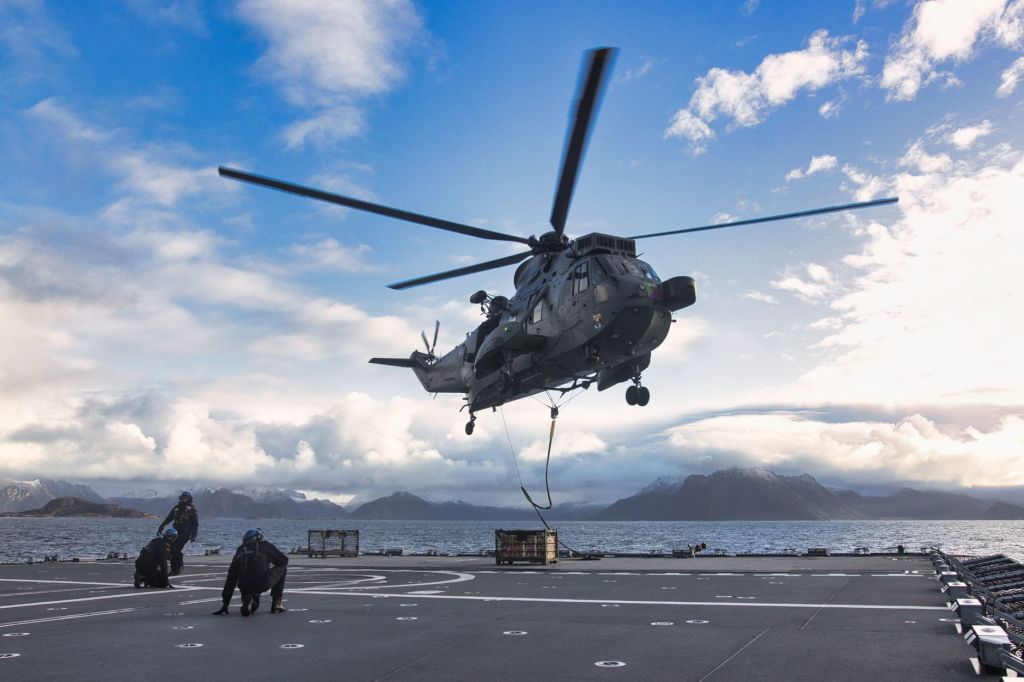
Before the foreign ports, there was the routine of sea time. Days blurred into watches, and watches into meals. I’d stand on the deck watching the “cabs” — Navy slang for helicopters — come up from the hangar on the massive circular lift. A loud bell rang as it moved. The chockhead operating it was dubbed the “lift driver,” though no driving was involved. He’d blow three distinct blasts on his whistle — the last one long and shrill. That was the signal: stand clear, something big and expensive is arriving.
The ground crew swarmed — grubbers, pinkies, greenies, bombheads — moving with the calm, rehearsed choreography born of pure repetition. But one cab in particular, a Sea King bearing the number 43, was always a menace. Her engines hated starting. Raw AVCAT fuel would pour out of the exhausts, baptising the flight deck.
Through the visor of my silver fire-helmet, I’d watch the ground crew for cues. If they stayed calm, I stayed calm. If they twitched, I braced.
Here was the tightrope: if I panicked and hit the extinguisher too soon, I’d wreck a perfectly good engine over a routine flash-over. But if I hesitated and it went up proper, I’d be facing the consequences of being too slow.
The pilot would reach up and hit the igniters: click-click-click, like a stubborn gas hob. Standing there with the heavy carbon dioxide extinguisher, praying she’d catch, I’d half-sing under my breath a line stolen from Ian Dury: “Reasons to be cheerful… 43.”
It stuck. Before long, the ground crew were chanting it too, shaking their heads as the engine coughed, backfired, and finally roared to life. Gallows humour — my own small way of hiding the fact I was terrified.
Even now, if I catch the scent of aviation turbine fuel at a civilian airport, I’m instantly yanked back to that steel deck. Visor down, gloves on, waiting for 43 to behave.
Copenhagen — Salty Old Girl
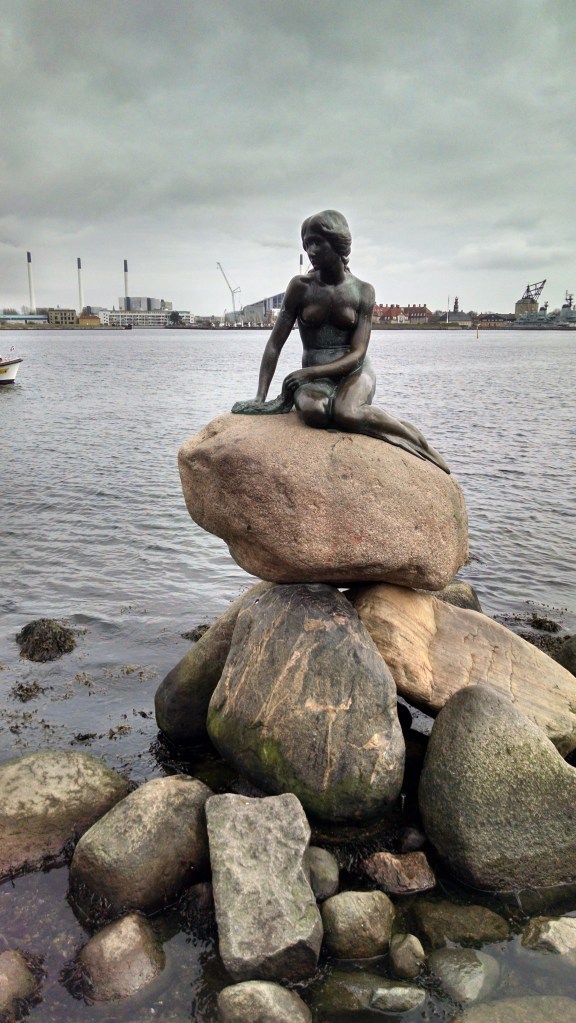
We hit Copenhagen first. Only a few days alongside, but long enough for Tivoli Gardens and a rød pølse — the famous Danish red hot dog. We moored so close to the Little Mermaid statue I could have thrown a heaving line at her. Walking past, I was surprised by how small she was, coated in that strange green patina bronze gets — not rust, but the colour of weather and salt.
The lads in 2E3 mess decided this was an aesthetic tragedy. A night mission was hatched, armed with rags, a can of WD-40, and a tin of Brasso — of which Bulwark carried enough to polish half of Scandinavia. The plan was to give Denmark’s national symbol a “proper Navy shine.”
Looking back, the international incident would have been magnificent. British ratings caught creeping through Copenhagen harbour at 02:00 to polish a national monument. Thankfully, sanity prevailed.
I’ve been back to Copenhagen twice since. More tourists now, more selfie sticks, more noise. But every time I look at her, I think of myself — just having turned nineteen — convinced metal polish could fix anything, and I feel that old pull of a conversation left unfinished.
First Night Ashore: Hamburg
I stepped off the gangway in standard civvies: Levis, a Blondie T-shirt, and a leather biker jacket carried casually over my arm to dodge the Master-at-Arms, who strictly banned anything he considered ‘punk rock’ or biker gang attire. He sneered at my shirt, which ironically distracted him from the forbidden leather jacket slung over my arm. I slipped past his gaze and straight into the city.
Hamburg hit me immediately: cold river air, heavy diesel, dockland mud — it felt like home in Sunderland, just vastly expanded. I bought a bratwurst on a paper plate with sharp mustard, washed it down with a cold Sprite, and felt, for the first time, like an independent man exploring the world on his own steam.
While most of the ship’s company seemed to head straight for the neon red-light strip of the Reeperbahn, I drifted into the older quarter of St. Pauli: leaning brickwork, dockside taverns, and old sailors wrapped in pipe smoke. That was where I bought the cap.
Not a cheap tourist trinket, but a genuine Elbsegler — the heavy wool cap worn by Elbe tug captains and harbour pilots. It cost an absurd portion of my pay. I put it on anyway.
Within an hour of returning to the ship, my identity was altered. In the Navy, every lad from the North East is automatically called “George.” But turning up in an authentic German peaked harbour pilot’s cap was too much for my Petty Officer. I was instantly christened “Captain George Chaos.”
Later that week, I bumped into Ray — a fellow “roof‑rat” (flight deck crew) carrying an 8mm cine camera. Ray was small, shy, and permanently nervous, the sort of lad who seemed to apologise simply by existing. But once he relaxed, he was funny in a quiet way, with a twinkle that made you feel like you were in on some private joke he hadn’t quite dared to tell yet.
We ducked into a quiet local dockside bar with no music, only the creak of wooden booths and the low murmur of locals. Behind the bar stood a formidable Frau, carved from the same timber as the bar, utterly unflappable.
“George… this isn’t where we need to be,” Ray whispered, edging closer to me as if I were the only safe object in the room. “And thank Christ you’re not wearing that bloody captain’s hat.”
The Frau barked something in sharp German. Ray jumped. I, armed with three years of schoolboy German vocabulary and my usual talent for overestimating myself, became the flight deck’s unofficial translator. “I think she’s telling us to order a beer or clear out.”
“Beer. Yes. Beer,” Ray said, nodding too quickly, like he was agreeing to a marriage proposal he hadn’t heard properly.
We ordered. And that was when I saw a beer poured in a way I’d never witnessed. Back home, a pint is poured at a neat forty‑five degrees — minimal head, no wastage — and if the foam dares creep over the rim, someone will inevitably ask if you want a chocolate flake in your beer, the old seaside ice‑cream gag every British pub regular knows.
But here, the pour was a ceremony. The Frau let the beer crash straight into the glass, building a towering head that rose like a living thing. She waited, watching it settle with the patience of a harbour pilot judging a tide, then took a wooden spatula — a tool clearly designed for no other purpose — and sliced the foam clean off.
Ray watched the ritual with wide‑eyed fascination, as if he were filming a nature documentary. One beer led to three, three led to schnapps, and within two hours Ray had mastered the local dialect: “Prost!” and “Zwei Bier, bitte!” delivered with the confidence of a born St. Pauli regular.
I only wish I had been wearing my beloved Elbsegler.
An Order to Attend the Ballet
Hamburg’s civic authorities, eager to edify the visiting Royal Navy, offered free tickets to local arts events. I put my name down for an art gallery and a brewery tour. Through some cosmic error, I was allocated tickets to the Hamburg Ballet.
I appealed to my Divisional Officer. It was denied.
“George, you’re going. We need bodies in seats.” “There might be free food after.” “Look at it this way… it’s an order.”
So, for Queen and Country, no way out. Surely it couldn’t be that bad.
At 18:00, a coach picked us up alongside. Stepping aboard, I realised I was the only junior rating present. Surrounding me was a sea of dark blue: Officers in full No.1 dress uniform. And me — now a nineteen-year-old Naval Airman, scrubbed raw and wedged among them like lost luggage.
At the theatre, I was sandwiched between a sub-lieutenant and a lieutenant, stiff as a board, holding my cap on my knees like a holy relic. The lights went down. A wave of modern synth music hummed through the dark. Fog rolled across the stage. Out glided a male dancer — not leaping, not spinning, but performing that stylised ballet walk, the long, gliding pas marché that looks like someone taught a marble statue how to move.
For one horrified second, I thought the man was stark naked. My lungs seized. Dear God, what have they sent me to? Then, blessed relief: I realised he was wearing a tight, flesh-toned bodysuit. My nervous system slowly rebooted.
Once I’d recovered from the shock that the dancers weren’t naked, the adrenaline evaporated with alarming speed. The music drifted. The stage lights blurred. My eyelids began their slow, traitorous descent.
I was acutely aware that if I fell asleep, I wouldn’t just embarrass myself — I’d let down the Aircraft Handlers’ Department. The shame would echo through the mess deck for weeks. So I sat there, rigid between two officers, silently chanting the same desperate mantra: Do not fall asleep. Do not fall asleep.
Once more, for Queen and Country, I simply had to stay awake.
When the house lights came up, two older German gentlemen a few rows ahead turned around, spotted a lone sailor sitting rigid amidst a block of senior officers, and gave me a delighted, theatrical wave. I gave a polite, more than slightly awkward, wave back.
By the time I was back on board, I felt slightly cheated I had missed nine-o’clockers — the simple harbour supper that closes the Navy day — but made it back to the mess deck in time for my daily allotment of three small cans of beer. I drank one in stunned silence before Pipe Down whistled over the ship’s tannoy, plunging the compartment into red night-lighting.
The Miracle Phone Box
Near the port stood four modern German phone boxes — sleek, silver, arranged in an immaculate 2×2 grid. Wandering past them one evening, missing home, I decided to try calling my girlfriend back in England.
Calling her carried an extra layer of meaning. Weeks before deployment, I’d met her father, bracing for the standard defensive fatherly interrogation. But when I mentioned I’d been drafted to Bulwark, his face transformed. He had served on her years prior as a Marine Engineer Mechanic — with a very unique role, one of the “badgers” keeping the steam catapults and arrester gear alive, securing aircraft to the catapult. A fascinating job, and given to non-Fleet Air Arm personnel. Instantly, we stopped being a protective father and a nervous suitor. We were simply two men who’d belonged to the same grey steel flight deck.
I closed the phone box door. The seal cut off the noise of Hamburg. I dropped in a 5-Mark coin, dialled, and she answered.
We talked for over two hours. The entire time, I braced for the coin slot to start clanking furiously or the line to dead-drop. It never did. The meter simply froze. Five Deutsche Marks for a two-hour international call.
Halfway through, a municipal service van pulled up. A German worker stepped out, lit a cigarette, and waited with terrifying efficiency. When his cigarette was done, he pulled out bucket and squeegees. He didn’t disturb me. He meticulously cleaned the other three booths first — wiping glass, polishing chrome. Only when those three were spotless did he give a gentle tap on my door.
I ended the call and stepped out. He gave a polite nod, wiped down my booth, and drifted off without a fuss. I headed back toward the dockyard, buoyed by a quiet euphoria that I’d been able to talk with my girlfriend for so long.
Back on board, I bragged to the mess about the broken phone meter. The following night, a shipmate went ashore determined to call his wife for cheap. The trouble was, he couldn’t remember which of the four booths was the faulty one. He guessed, dropped in his coins, dialled home, and watched the meter sit frozen for ninety minutes.
Two WAFUs. Two separate phone booths. One German telecom company accidentally funding the Royal Navy’s romantic lives.
Looking back, it’s strange to think how close we were to the sharp edge of the Cold War — Baltic patrols, NATO alerts, dipping sonar for Soviet subs — while I was running around in a Blondie T-shirt, buying overpriced captain’s caps, and dining on street sausage.
Years later, I started following FC St. Pauli — the football club from those exact Hamburg streets. I’m no grand sports fan, but their chaotic, fierce independence felt like the spirit of the port I met in 1979. My German friends find it hilarious that an old Navy veteran supports St. Pauli. Maybe it is. But it feels right.
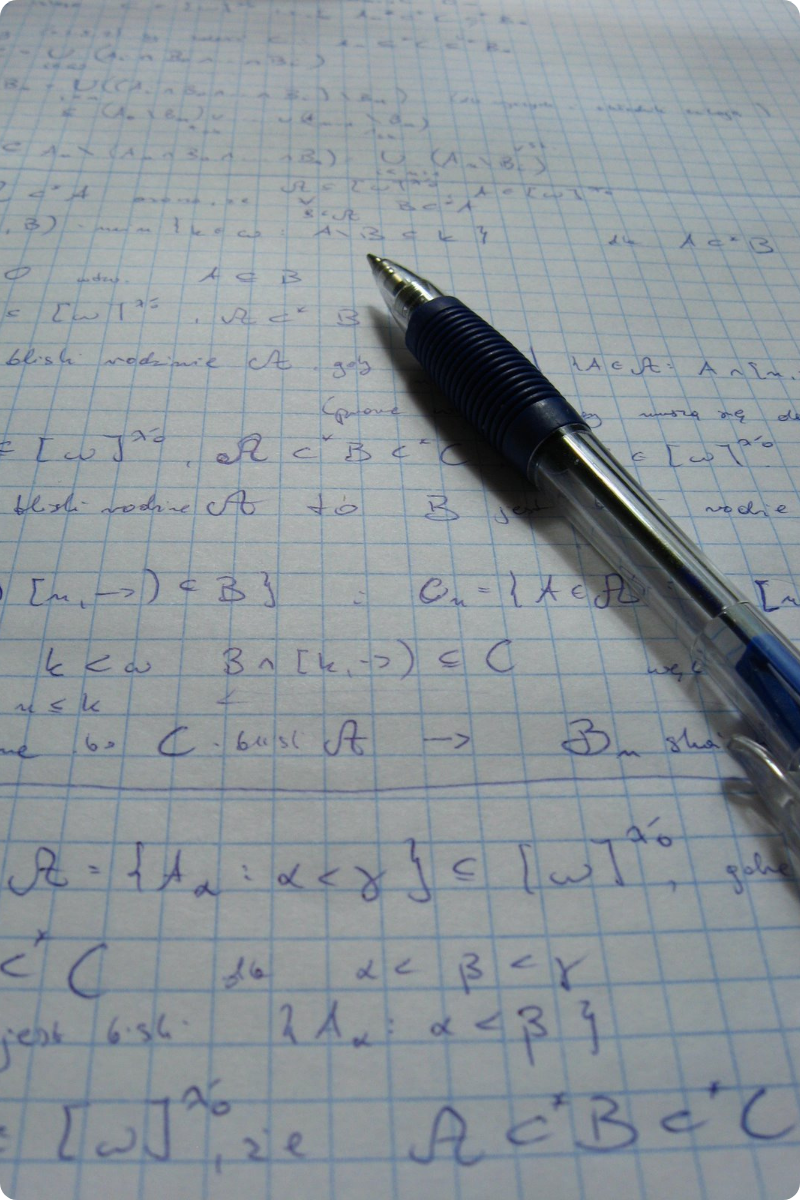
Today, in the late light of the room,
a photograph slipped from a folder
and rested against my hand.
I recognised the work —
letters, arrows, asterisks, a small constellation of logic
still holding its shape after years.
A ⊆ B — the quiet way one life folds into another.
A ∩ B — the narrow region where our days overlapped.
A \ B — what remains now: the trace without the presence.
And then the marginalia —
faint, drifting across the page,
the soft music of her mind in motion. jest bliski rodzinie,
written with a firmer hand,
as if the thought carried weight. a można się doszukać… the ink thinning,
the tail of the letter lifting
like a breath she hadn’t finished taking.
I used to think these notes
were simply work,
the scaffolding of her days.
But tonight I see the tenderness
in the margins — the small encouragements
she offered herself
while crossing from one idea to the next.
In the end, it wasn’t the lemma
or the symbols that stayed,
but the faint indentation of her hand
still pressed into the paper — a quiet,
unguarded trace
of a friend thinking her way forward.
Fotografia przedstawia stronę jej odręcznych notatek z teorii mnogości — fragment pracy odnaleziony po latach i dopiero teraz w pełni zrozumiany.
The photograph shows a page of her handwritten set‑theoretic notes — a fragment of work found after years and only now fully understood.
Reflection
I kept the original image among a small collection from a time and a place that felt both old and new. Everyday challenges I couldn’t yet process, scenes I can laugh about now.
I printed only a few of these photographs; this was one of them. I once planned to frame one or two and hang them in my study — a project that I never finished.
To recently rediscover this photograph of a creative and logical process — almost by accident — filled me with a sense of wonder and curiosity. I was fascinated by symbols and barely noticeable comments, annotations, and the style of writing and its flow across the paper.
Those symbols, and those little snippets of writing, I recently learned are known as marginalia.
The poem is my own interpretation, almost a human equivalent of a lemma: a small supporting structure that lets something larger stand. A stepping stone. My friend was building infinite structures out of sets. Her symbols — technical language combined with her native tongue — fascinate me; she was thinking in two different languages at the same time.
Step by step.
Patiently.
Logically.
Gently correcting herself in Polish.
I have tried to mirror those structures in verse. My own arrangement of words is formed from memory, notation, language, and a delayed understanding.
There is something profoundly fitting here: only now, over a decade later, do I finally understand.
Mathematics itself is about structure enduring through infinity. Understanding the image better now than I did then, I see that there are no limits to how far a quiet page can travel in time.
A Gentle Analogy
If a theorem is a cathedral,
a lemma is the hidden arch to prevent collapse.
No visitor sees it.
Yet, without it, nothing stands.
This track has lived with me for decades — first on vinyl in the mid‑80s, when I would lift the needle and place it back at the beginning again and again, as if trying to stay inside a world I didn’t yet understand. Only recently did I return to it with fresh ears, and the research that followed revealed something far more complex, and far more human, than I ever expected.
Its text is simple, almost stark: a man addressing a woman named Denka, calling her beautiful, calling her his “first love,” saying she has burned and scalded him, leaving him like a dry log. He is in love with Denka — someone he cannot love.
Beneath those metaphors lies a cultural world where kinship is sacred, and not only by blood.
In traditional Bulgarian village life, a godparent bond created a spiritual lineage as binding as family. To fall in love across that boundary was not merely frowned upon — it was unthinkable. A violation of honour, community, and one’s own moral integrity.
The godparent in this world is not a ceremonial figure. They become spiritual family, and that bond is treated with the same seriousness as blood. The moment a child is baptised, the godparent becomes a second parent; the two households become kin, spiritually joined in a lifelong, binding relationship. This is known as kumstvo (кумство).
The song never tells us exactly who Denka is, and that silence is part of its power. What we do know is that she belongs to the singer through this sacred form of spiritual kinship. Whether she is the daughter of his godparent, a god‑sibling, or someone else within that lineage, the boundary is absolute. His love is real, but it cannot be spoken, pursued, or resolved.
The song becomes the only place where his confession can exist — a vessel for a feeling that is true and impossible at the same time. There is something profoundly human in that tension: the knowledge that a feeling can be both undeniable and forbidden. The music holds that paradox gently, like a soft lantern in the dark.
After a song shaped by a love that could never be spoken aloud, I’ll leave the lantern here — not bright, just enough to mark the threshold.
If you use Apple Music, I hope you enjoyed listening as much as I did sharing. If you don’t subscribe to Apple, I hope you find the track wherever you listen — and perhaps hear the same remarkable sense of voices shaped by landscape, lineage, and longing.
The threshold lantern
If something in this music opens a quiet place in you, you’re welcome to step closer and share a track of your own — a piece that carries its own story, its own weight, its own truth.
Set it here beside the lantern. Tell me why it stays with you. I’m listening.
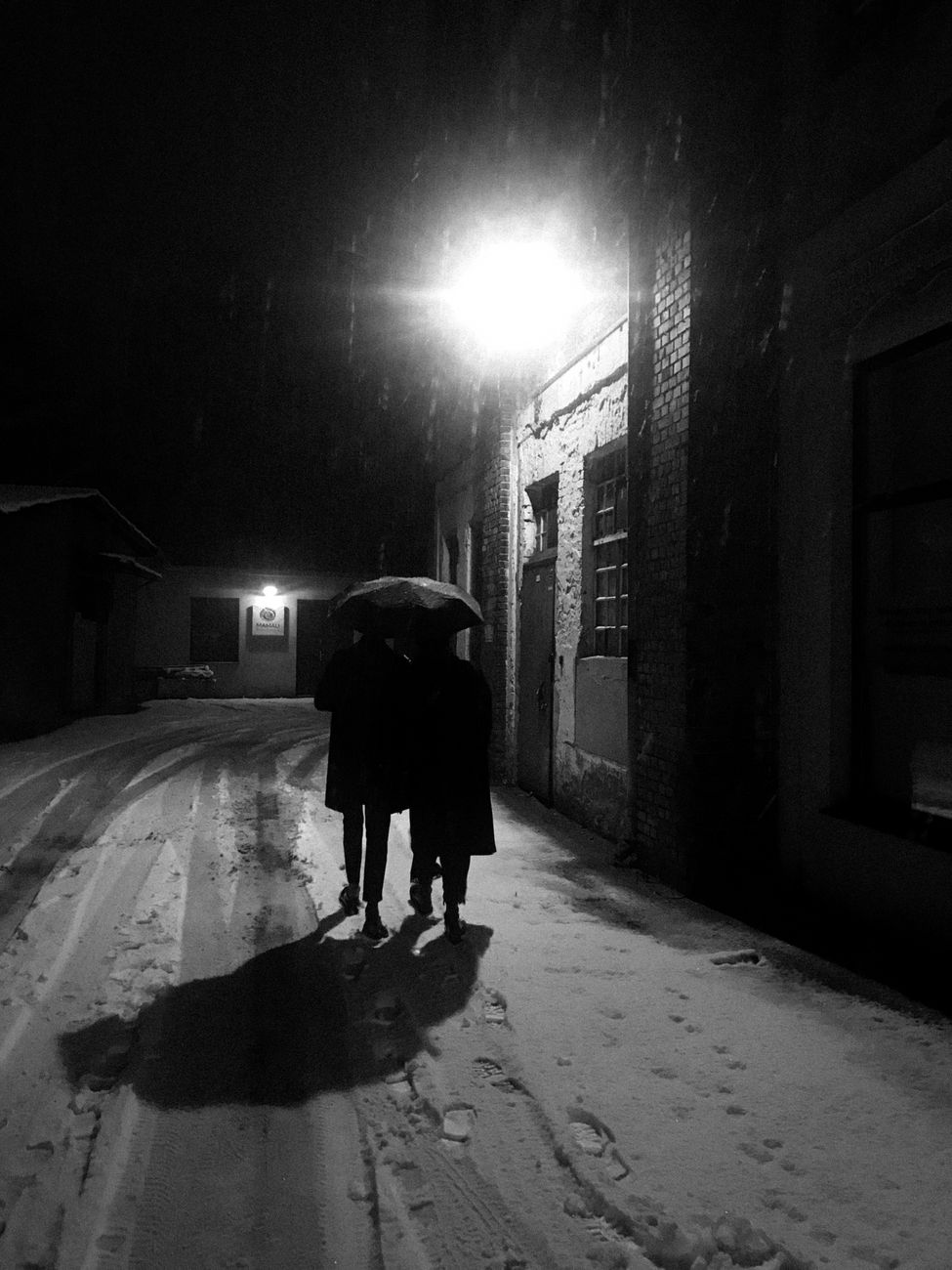
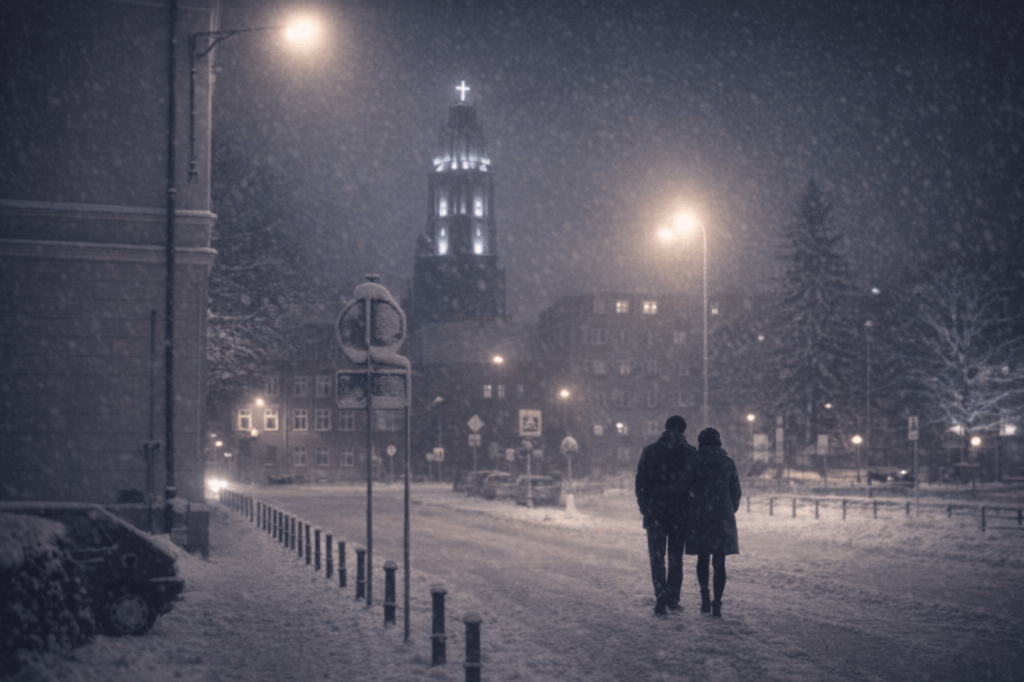
Memory returns sometimes —
like soft snowfall,
like walking along
a particular street.
You drew closer,
quietly.
Not the first time,
but each time your arm
linked mine,
the cold had nothing left to say.
And despite the cold air,
I could have walked for hours.
Always a surprise,
always a soft humbling,
and a quiet pride
that you were walking with me.
A gesture,
a closeness —
asked for nothing
but changed everything.
Some memories don’t fade.
They soften.
And in softening,
they become part of who we are.
In quiet thoughts — for you.
Na Ciche Chwile
Pamięć wraca czasem —
jak cichy opad śniegu,
jak spacer
tą jedną ulicą.
Zbliżyłeś się,
po cichu.
Nie pierwszy raz,
ale za każdym razem,
gdy twoje ramię złapało moje,
zimno nie miało już nic do powiedzenia.
A mimo mroźnego powietrza
mógłbym iść tak godzinami.
Zawsze mnie to zaskakiwało,
zawsze z pokorą,
i z tą cichą dumą,
że idziesz obok mnie.
Gest,
bliskość —
niczego nie chciały,
a zmieniły wszystko.
Niektóre wspomnienia nie znikają.
Łagodnieją.
A w tym łagodnieniu
stają się częścią nas.
W cichej zadumie — dla Ciebie.
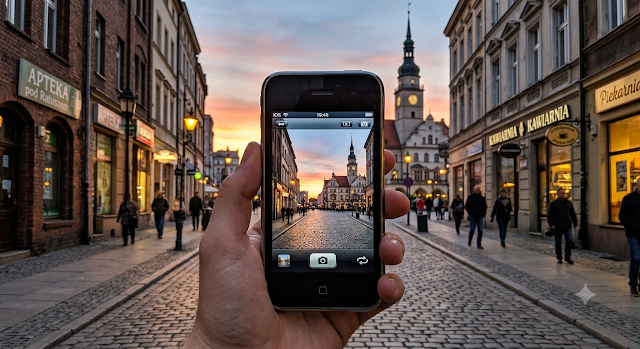
Carrying my little iPhone 3G,
a brick‑like thing with its tiny lens
and its endless enthusiasm,
as if it were some beloved old Leica,
the kind I used to dream of owning,
snapping cups of latte art,
street corners,
winter light,
the curve of a café table,
the blur of friends laughing
just out of focus.

Everything felt worth capturing,
because everything felt new.
The everyday objects I wish I’d photographed:
tram tickets softened at the edges,
chipped mugs with hairline cracks,
neon shop signs flickering into evening,
the way the light fell across the floor in my flat
and stayed there quietly, as if it belonged.

They didn’t feel like moments to preserve.
They felt like my life.

I think now of the small rituals I never thought to capture:
sun red and low, spilling along Jana Siemińskiego¹
in that late, lingering light,
when the traffic softened
and the day loosened its grip.

I would sit outside a beloved kawiarnia,
people‑watching,
with nowhere else to be.
The sky wide, unhurried,
holding the evening open just a little longer.
That narrow entrance I’d passed a dozen times,
its windows masked in paper,
nothing to see but the promise of something being made,
until one warm June morning
the door stood open at last.

I wandered in with my daughter,
sunlight already filling the room,
my voice carrying too brightly
in a quiet Polish café,
lifting a worn jazz sleeve,
talking about vinyl with the kind of excitement
that fills a room before you notice it,
while the owner, kind and amused,
watched an Englishman fall in love with his coffee shop.

The record player sat there,
needle poised —
a small stack of records leaning slightly,
waiting without hurry.
Anyone could cross the room,
lift the lid,
decide what the afternoon would sound like.
And I never took its picture.

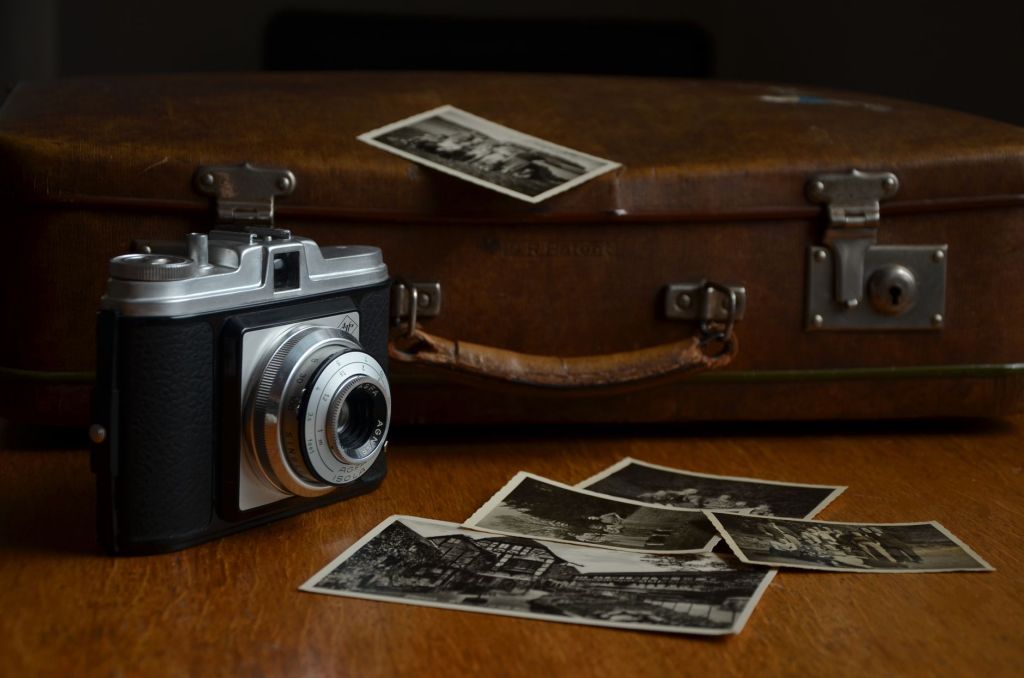
I’m realising now the photographs
haven’t really been lost.
They didn’t vanish.
Only the way they are kept has changed.

They live in the glow of café windows on winter evenings,
in the soft blur of people moving through warm light,
in the quiet hum of a city
that had begun to recognise me.

You don’t take photos of the air around you
once it starts to feel like home.

And there’s a soft ache
for the images that slipped through the cracks,
the ones I can’t find,
the ones I never took,
the ones that lived only for a moment
before dissolving into the steady current of time.

The images are still here.

Maybe that’s the truest kind of photograph,
the kind that develops inside you,
slowly,
in the dark,
long after the moment has passed.
Nota autora:
Ten tekst jest o wspomnieniach, które kiedyś były zwykłe i codzienne, a dziś mają dla mnie wielką wartość. Wiele zdjęć z tamtych lat zniknęło, ale emocje i obrazy zostały w mojej pamięci. To jest mój mały hołd dla Gliwic, dla KAFO i dla chwil, które wtedy wydawały się zwyczajne, a teraz są bardzo ważne.
¹ During my time living in Gliwice, ulica o. Jana Siemińskiego in Gliwice, was known to me as ulica Józefa Wieczorka. It was renamed in 2018. This change was enacted through a decommunization decree issued by the Silesian Voivode. Shortly after the renaming, the street was transformed and reopened as a woonerf (a pedestrian-friendly, shared traffic zone)
If Czarny Kot had been the quiet, melancholic anchor of my arrival, what came next was the real awakening.
By the spring of 2012, I had evolved from a timid visitor into a budding local. Which brings us back to ulica Plebańska, a narrow cobbled street just off the Rynek. It was late April, and the bar hadn’t officially opened. The windows were completely covered, hiding every hint of what was taking shape inside.
As my friend and I walked past, we noticed the door standing wide open. The two young owners were outside, stealing a moment of fresh air from the chaos of last-minute renovations. Sensing an opportunity, I didn’t hesitate. I poked my head straight through the doorway.
The sight of us caught them completely off guard. There I was, a loud, wildly enthusiastic Englishman, excitedly talking about a bar that wasn’t even open yet. My friend quickly came to the rescue, translating my chaotic enthusiasm and smoothing everything over with a laugh. In a culture known for its initial reserve, I must have arrived like a small hurricane. Yet from that wonderfully awkward first encounter grew a lasting kindness. They welcomed us inside, and only days later we watched their dream officially open on 1 May 2012.
To understand Koneser, you first had to understand its physics.
The pub was essentially one long room with a single entrance that also served as the exit. As you stepped inside, the main seating area greeted you immediately, dominated by a television mounted high on the wall facing the street. Whenever football was on, this front section became a roaring furnace of excitement. There was no carefully curated soundtrack, only the intoxicating blend of conversation, clinking glasses and the warm, comforting scent of fresh beer and crowded humanity.
Halfway down the right-hand wall stood the bar itself. Behind the counter, the workspace was so tiny it seemed miraculous that anyone could work there at all, let alone dance around each other while changing kegs, pouring beer and warming plates of nachosy z serem. Back in 2012, melted cheese over tortilla chips still felt wonderfully exotic compared with the traditional bowl of peanuts or bag of crisps found in many British pubs.
Running alongside the counter was another small novelty. Proper bar stools. My friend often told me how unusual they were in Poland at the time. Traditional Polish pubs tended to be arranged around separate tables, where groups kept largely to themselves. These stools changed the chemistry of the room. They encouraged conversation with the bartenders, with the stranger beside you, and with anyone else who happened to become part of your evening.
Opposite the bar, tables stretched in an unbroken line along the left-hand wall until they reached the very back of the pub. When Koneser was full, and it often became so packed you could barely move, the layout left only a narrow human corridor through the middle. Anyone heading for the single toilet at the far end had to squeeze, shuffle sideways and politely apologise their way through a sea of locals.
Naturally, I developed a strategy.
I always tried to claim the table closest to the toilet. It hardly sounds glamorous, but in a crowded pub with only one toilet it was a position of enormous tactical importance. From that table I knew the precise moment the lock clicked open, giving me an advantage that still makes me smile.
It was around that strategic little table that many of my happiest memories were made.
Koneser’s real genius wasn’t simply the two young owners. It was the beer. Long before Poland’s craft beer revolution gathered pace, they regularly drove across the nearby Czech border to collect unpasteurised kegs from small regional breweries that the major distributors ignored.
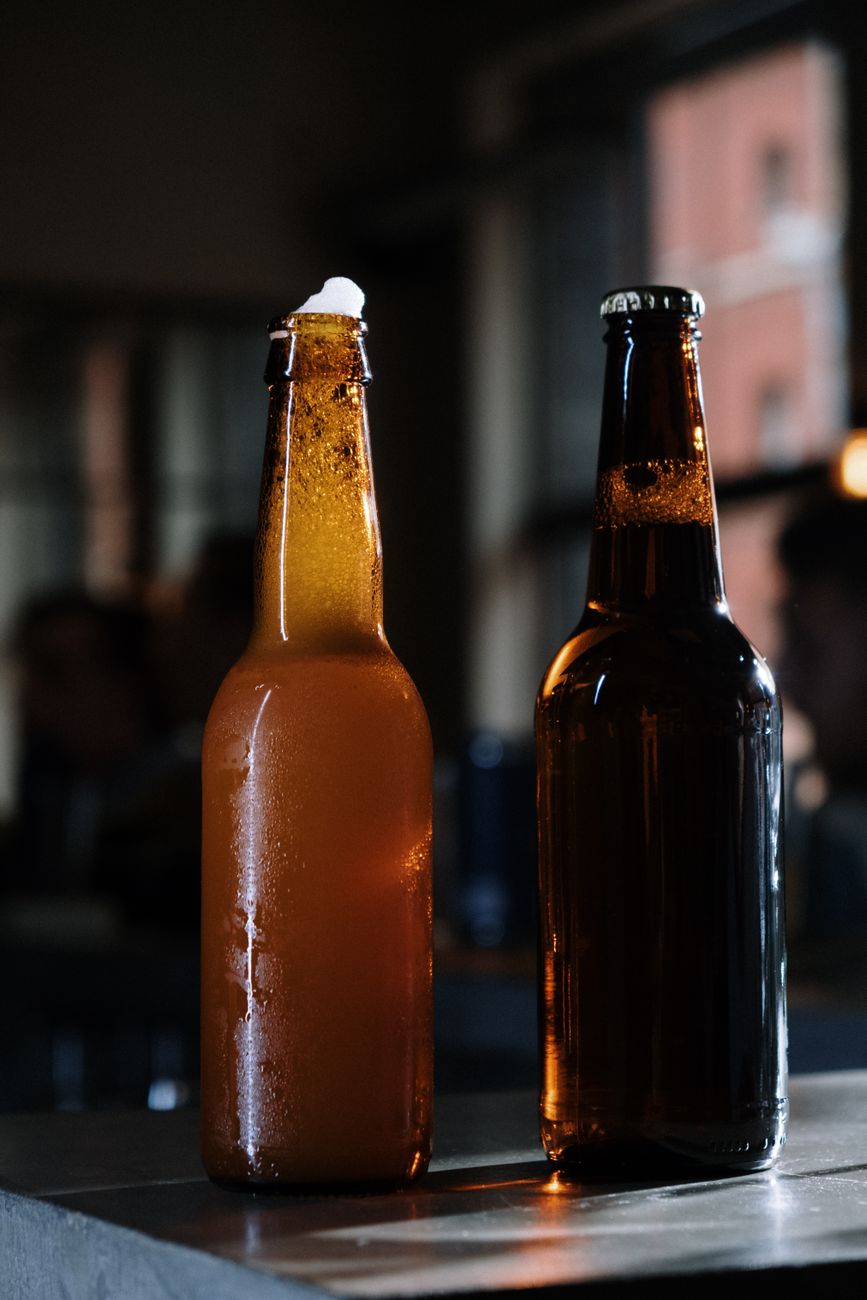
My favourite, unquestionably, was Holba Šerák, a jasny leżak brewed with mountain spring water. It poured a rich honey gold, carried a satisfying malt sweetness, and finished with the clean, crisp bite of Saaz hops. I loved it.
My friend, meanwhile, always chose the dark Czech beer. Usually, a černé pivo such as Litovel or Merlin, it poured almost black yet drank with the surprising lightness and crispness of a pale lager. Sitting beneath the low lights at the back of the pub, she would glance at my glowing golden pint, then at her own dark glass, before laughing openly at my choice of what she teasingly called “sweet” beer.
It was a lovely reversal of expectations. The rugged Englishman happily drinking the sweeter golden lager, while the Polish woman confidently worked her way through the dark beer.
Around us, the room carried on exactly as it always did. The football flickered on the distant television. Conversations rose and fell in waves. Somewhere behind the bar another plate of nachosy z serem emerged beneath melted cheese. And at our little table, tucked away at the very back of a long, crowded room in southern Poland, I realised something quietly important.
Well before discovering Czech and Slovak beer and finding my own true local, there was Czarny Kot — a small pub tucked away on a side street, just outside the Rynek in Gliwice. I didn’t go that often, but it left a lasting impression.
That first Polish winter was harsh. The cold was deep, the air heavy — the kind that makes your breath feel almost solid. Older Poles might have laughed at me calling it cold. It wasn’t Zima stulecia, the legendary winter that paralysed the country. But to a newly arrived Englishman still finding his feet in Silesia, it felt close enough.
After classes in Katowice, I’d travel back to Gliwice by train, still unsure about the buses and feeling like every street was a new challenge. I often walked along Ulica Zwycięstwa, the city centre bathed in that special Silesian winter light; the snow had long since lost its whiteness. Weeks of boots and traffic had ground it down into something like black sugar, frozen and granular beneath the sodium lights, amidst the thick smell of exhaust mixed with cold stone.
One night, the cold seeped into me — not just physically, but emotionally. I wandered around the Rynek, passing bars that seemed too loud, seemingly too sure of themselves and too full of people who already knew each other. I was still in that visitor phase where you hover at the edge of places, unsure if you belong.
Then I spotted it: a small pub on a side street, empty except for a man and a blonde woman behind the counter, both looking a bit worn. I peeked through the window. No customers. No noise. Just a quiet room and the glow of an orange coal fire.
When I pushed the door open, I hesitated. For a moment, I thought I’d made a mistake. The fire was real, burning behind its glass screen, but the room wasn’t cosy or cheerful the way I’d imagined. The warmth didn’t reach the tables. It was the kind of place where you had to sit almost touching the glass to feel the heat. But the quiet suited me, and I stayed.
It did get better on later visits, but not much. On a scale of one to ten, it was maybe a four or five. The couple behind the bar weren’t rude or dismissive, nor were they particularly warm — just two people enduring slow nights in a quiet bar. But I wasn’t there for cheerfulness or gratitude. I was there to sit quietly, and in that small, faintly cold room, I began to feel okay.
I often wonder what they must have thought of me. Obviously, a foreigner, flushed from a brisk walk through the city. A long black parka coat, dusted with a layer of fine, powder-like snow, and beneath the pulled-back hood, a black beret tugged down low — as if I were trying to hide a little from the world. Bags of books and gear hanging off me like I was trying to escape a border crossing, weighed down not just by the winter, but by the strange heaviness of living somewhere new. Not the usual stag-party tourist mispronouncing piwo. Just a man who looked like he had crossed a tundra and chosen their empty bar as his last stop, hoping for a moment of stillness.
They never said much beyond “dobry wieczór and do widzenia“. No questions, no curiosity, no small talk. But sometimes — and this is the strange part — I felt they looked at me with a quiet pity. Not unkind, just perceptive. As if they saw what I didn’t want to admit: that I was slightly homesick, a little lonely, wrapped in my own private weather system and still unsure whether I belonged in the country I had chosen.
The beer — ice-cold, absurdly cold — refreshed me in a way that made no sense. Warm body, cold drink. Firelight on brick. Condensation forming on the glass like a private Ice Cold in Alex moment. How strange that something so cold could make me feel so alive.
One night that loneliness felt heavier than usual. I sat there, staring into the firelight, wishing I’d just gone straight home. I was tired in that profound winter way, when the cold seems to settle inside you. Then my mobile rang. A close friend.
“Where are you?”
“In a pub near the Rynek.”
“Who with?”
“I’m on my own.”
A pause — the kind that carries concern. “What’s the pub called?” I told her, and she didn’t hesitate. “No. I’m nearby. I’m coming to take you home. Stay there. Don’t move.”
Less than ten minutes later she arrived, slightly flustered, clearly worried. She didn’t want a soft drink or even a coffee. She just wanted me out of there. I finished my beer, and she drove me back to my apartment, talking softly, as if she knew I needed gentleness more than anything.
And what stayed with me — what still stays with me — is how it felt for the couple behind the bar to witness it. For them to see that someone cared enough to come for me on a cold night. That I wasn’t just the solitary man in the corner, drifting through their quiet bar like a ghost. It warmed something in me. It mattered. It was a small moment, but it made me feel less adrift.
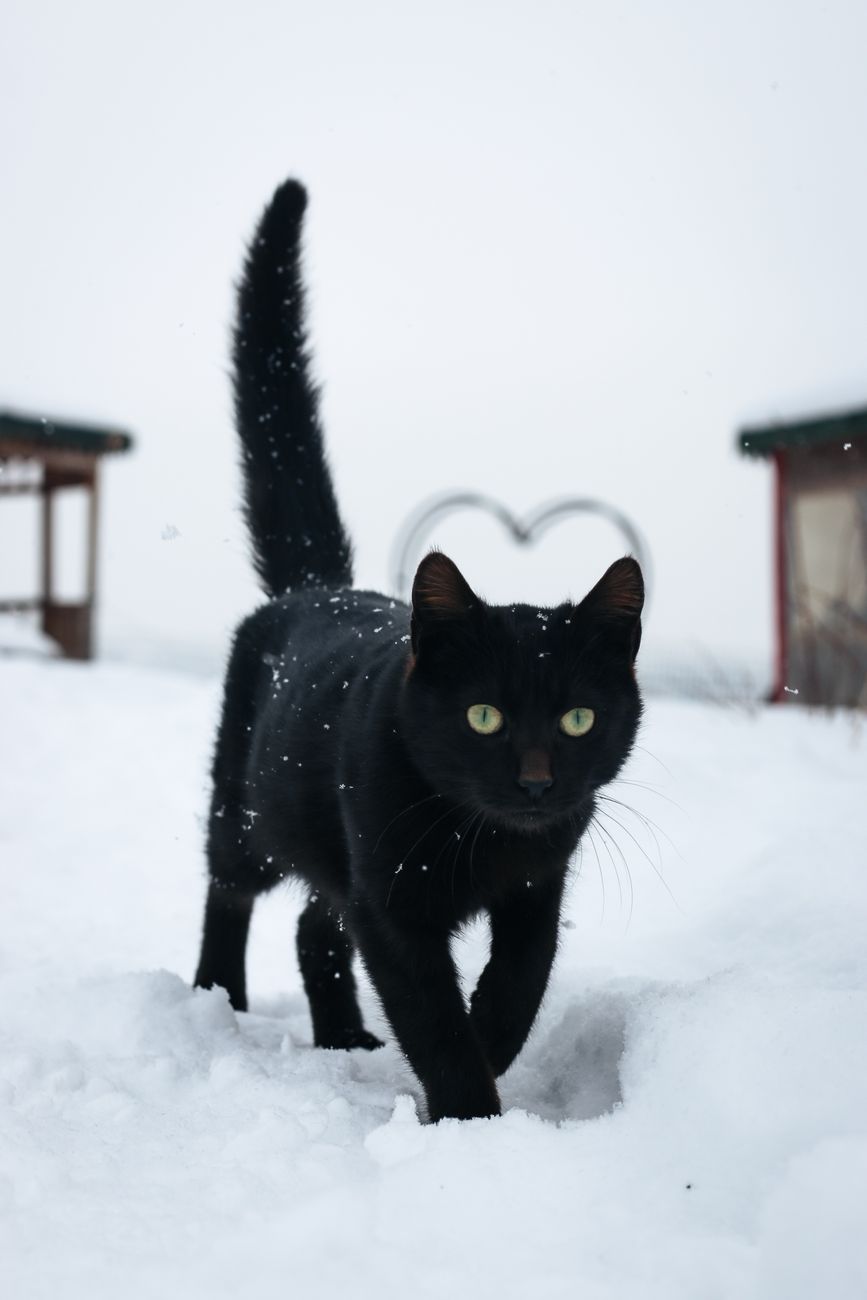
And then, one day, it was gone. The windows dark. The sign removed. The fire extinguished forever. Another bar opened in the same space—brighter, louder, more modern. But Czarny Kot was something else. Something small, fragile and perfectly timed. A bar that existed exactly when I needed it.