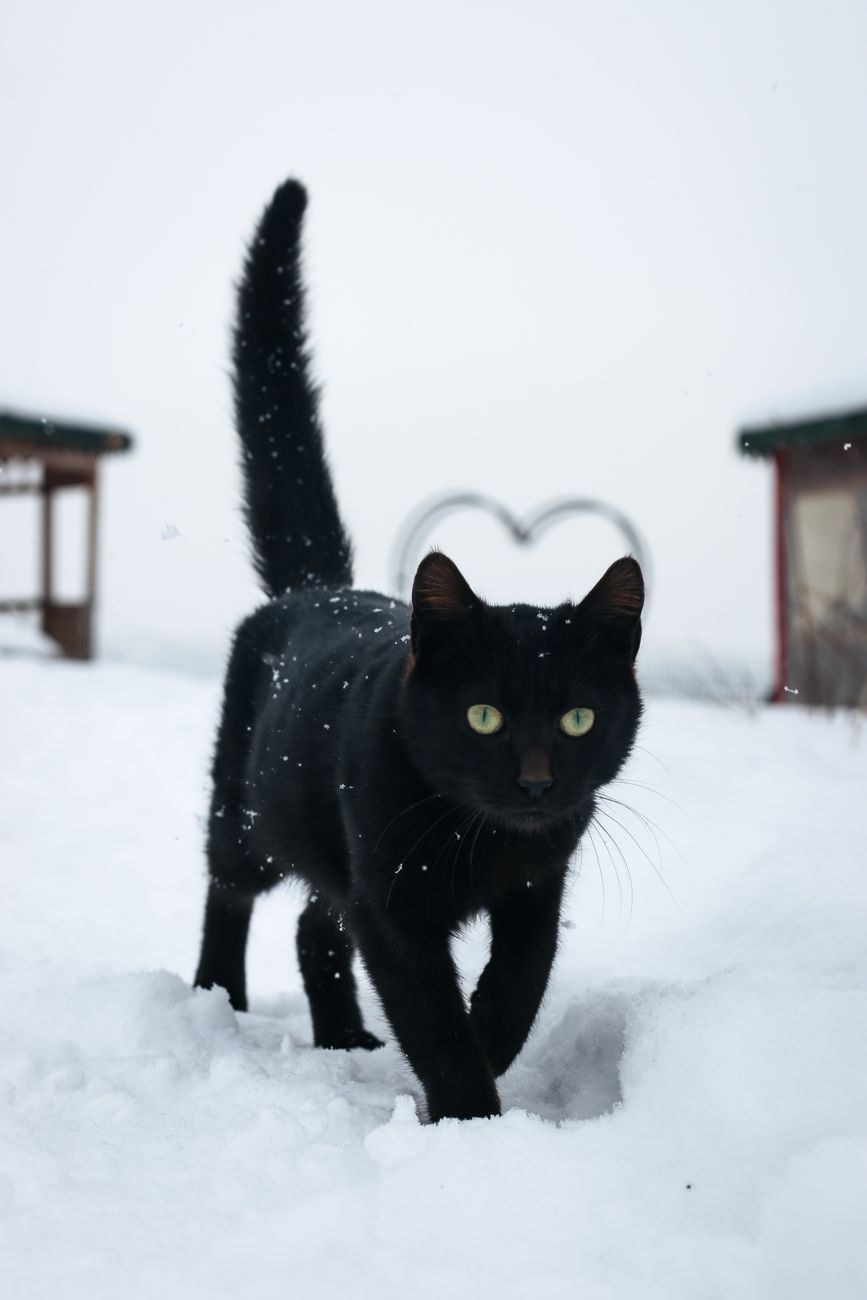
Czarny Kot
Well before discovering Czech and Slovak beer and finding my own true local, there was Czarny Kot — a small pub tucked away on a side street, just outside the Rynek in Gliwice. I didn’t go that often, but it left a lasting impression.
That first Polish winter was harsh. The cold was deep, the air heavy — the kind that makes your breath feel almost solid. Older Poles might have laughed at me calling it cold. It wasn’t Zima stulecia, the legendary winter that paralysed the country. But to a newly arrived Englishman still finding his feet in Silesia, it felt close enough.
After classes in Katowice, I’d travel back to Gliwice by train, still unsure about the buses and feeling like every street was a new challenge. I often walked along Ulica Zwycięstwa, the city centre bathed in that special Silesian winter light; the snow had long since lost its whiteness. Weeks of boots and traffic had ground it down into something like black sugar, frozen and granular beneath the sodium lights, amidst the thick smell of exhaust mixed with cold stone.
One night, the cold seeped into me — not just physically, but emotionally. I wandered around the Rynek, passing bars that seemed too loud, seemingly too sure of themselves and too full of people who already knew each other. I was still in that visitor phase where you hover at the edge of places, unsure if you belong.
Then I spotted it: a small pub on a side street, empty except for a man and a blonde woman behind the counter, both looking a bit worn. I peeked through the window. No customers. No noise. Just a quiet room and the glow of an orange coal fire.
When I pushed the door open, I hesitated. For a moment, I thought I’d made a mistake. The fire was real, burning behind its glass screen, but the room wasn’t cosy or cheerful the way I’d imagined. The warmth didn’t reach the tables. It was the kind of place where you had to sit almost touching the glass to feel the heat. But the quiet suited me, and I stayed.
It did get better on later visits, but not much. On a scale of one to ten, it was maybe a four or five. The couple behind the bar weren’t rude or dismissive, nor were they particularly warm — just two people enduring slow nights in a quiet bar. But I wasn’t there for cheerfulness or gratitude. I was there to sit quietly, and in that small, faintly cold room, I began to feel okay.
I often wonder what they must have thought of me. Obviously, a foreigner, flushed from a brisk walk through the city. A long black parka coat, dusted with a layer of fine, powder-like snow, and beneath the pulled-back hood, a black beret tugged down low — as if I were trying to hide a little from the world. Bags of books and gear hanging off me like I was trying to escape a border crossing, weighed down not just by the winter, but by the strange heaviness of living somewhere new. Not the usual stag-party tourist mispronouncing piwo. Just a man who looked like he had crossed a tundra and chosen their empty bar as his last stop, hoping for a moment of stillness.
They never said much beyond “dobry wieczór and do widzenia“. No questions, no curiosity, no small talk. But sometimes — and this is the strange part — I felt they looked at me with a quiet pity. Not unkind, just perceptive. As if they saw what I didn’t want to admit: that I was slightly homesick, a little lonely, wrapped in my own private weather system and still unsure whether I belonged in the country I had chosen.
The beer — ice-cold, absurdly cold — refreshed me in a way that made no sense. Warm body, cold drink. Firelight on brick. Condensation forming on the glass like a private Ice Cold in Alex moment. How strange that something so cold could make me feel so alive.
One night that loneliness felt heavier than usual. I sat there, staring into the firelight, wishing I’d just gone straight home. I was tired in that profound winter way, when the cold seems to settle inside you. Then my mobile rang. A close friend.
“Where are you?”
“In a pub near the Rynek.”
“Who with?”
“I’m on my own.”
A pause — the kind that carries concern. “What’s the pub called?” I told her, and she didn’t hesitate. “No. I’m nearby. I’m coming to take you home. Stay there. Don’t move.”
Less than ten minutes later she arrived, slightly flustered, clearly worried. She didn’t want a soft drink or even a coffee. She just wanted me out of there. I finished my beer, and she drove me back to my apartment, talking softly, as if she knew I needed gentleness more than anything.
And what stayed with me — what still stays with me — is how it felt for the couple behind the bar to witness it. For them to see that someone cared enough to come for me on a cold night. That I wasn’t just the solitary man in the corner, drifting through their quiet bar like a ghost. It warmed something in me. It mattered. It was a small moment, but it made me feel less adrift.
And then, one day, it was gone. The windows dark. The sign removed. The fire extinguished forever. Another bar opened in the same space—brighter, louder, more modern. But Czarny Kot was something else. Something small, fragile and perfectly timed. A bar that existed exactly when I needed it.
Begin here to follow the story.
 Ghosts to Carry, Stories to Keep
Leave a comment