Koneser Pub
If Czarny Kot had been the quiet, melancholic anchor of my arrival, what came next was the real awakening.
By the spring of 2012, I had evolved from a timid visitor into a budding local. Which brings us back to ulica Plebańska, a narrow cobbled street just off the Rynek. It was late April, and the bar hadn’t officially opened. The windows were completely covered, hiding every hint of what was taking shape inside.
As my friend and I walked past, we noticed the door standing wide open. The two young owners were outside, stealing a moment of fresh air from the chaos of last-minute renovations. Sensing an opportunity, I didn’t hesitate. I poked my head straight through the doorway.
The sight of us caught them completely off guard. There I was, a loud, wildly enthusiastic Englishman, excitedly talking about a bar that wasn’t even open yet. My friend quickly came to the rescue, translating my chaotic enthusiasm and smoothing everything over with a laugh. In a culture known for its initial reserve, I must have arrived like a small hurricane. Yet from that wonderfully awkward first encounter grew a lasting kindness. They welcomed us inside, and only days later we watched their dream officially open on 1 May 2012.
To understand Koneser, you first had to understand its physics.
The pub was essentially one long room with a single entrance that also served as the exit. As you stepped inside, the main seating area greeted you immediately, dominated by a television mounted high on the wall facing the street. Whenever football was on, this front section became a roaring furnace of excitement. There was no carefully curated soundtrack, only the intoxicating blend of conversation, clinking glasses and the warm, comforting scent of fresh beer and crowded humanity.
Halfway down the right-hand wall stood the bar itself. Behind the counter, the workspace was so tiny it seemed miraculous that anyone could work there at all, let alone dance around each other while changing kegs, pouring beer and warming plates of nachosy z serem. Back in 2012, melted cheese over tortilla chips still felt wonderfully exotic compared with the traditional bowl of peanuts or bag of crisps found in many British pubs.
Running alongside the counter was another small novelty. Proper bar stools. My friend often told me how unusual they were in Poland at the time. Traditional Polish pubs tended to be arranged around separate tables, where groups kept largely to themselves. These stools changed the chemistry of the room. They encouraged conversation with the bartenders, with the stranger beside you, and with anyone else who happened to become part of your evening.
Opposite the bar, tables stretched in an unbroken line along the left-hand wall until they reached the very back of the pub. When Koneser was full, and it often became so packed you could barely move, the layout left only a narrow human corridor through the middle. Anyone heading for the single toilet at the far end had to squeeze, shuffle sideways and politely apologise their way through a sea of locals.
Naturally, I developed a strategy.
I always tried to claim the table closest to the toilet. It hardly sounds glamorous, but in a crowded pub with only one toilet it was a position of enormous tactical importance. From that table I knew the precise moment the lock clicked open, giving me an advantage that still makes me smile.
It was around that strategic little table that many of my happiest memories were made.
Koneser’s real genius wasn’t simply the two young owners. It was the beer. Long before Poland’s craft beer revolution gathered pace, they regularly drove across the nearby Czech border to collect unpasteurised kegs from small regional breweries that the major distributors ignored.
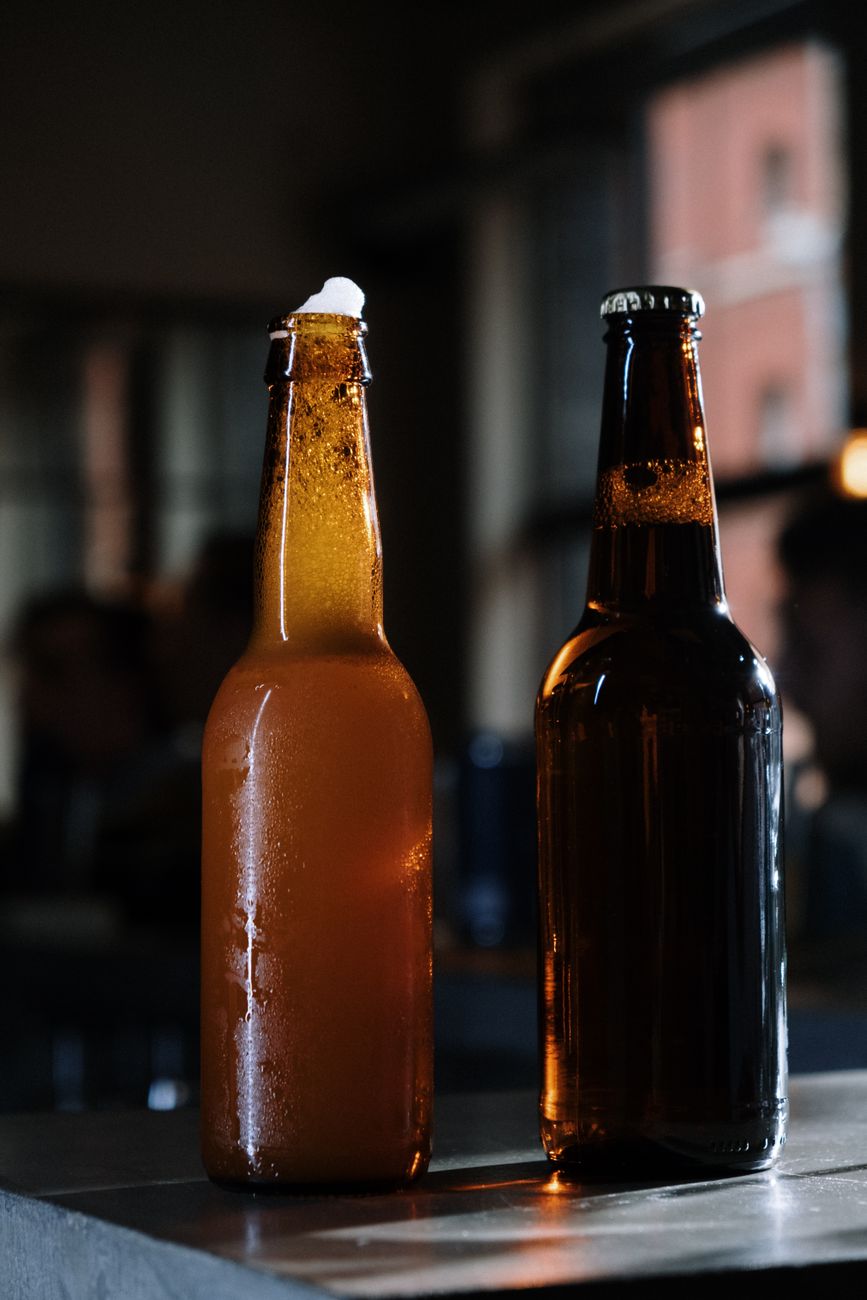
My favourite, unquestionably, was Holba Šerák, a jasny leżak brewed with mountain spring water. It poured a rich honey gold, carried a satisfying malt sweetness, and finished with the clean, crisp bite of Saaz hops. I loved it.
My friend, meanwhile, always chose the dark Czech beer. Usually, a černé pivo such as Litovel or Merlin, it poured almost black yet drank with the surprising lightness and crispness of a pale lager. Sitting beneath the low lights at the back of the pub, she would glance at my glowing golden pint, then at her own dark glass, before laughing openly at my choice of what she teasingly called “sweet” beer.
It was a lovely reversal of expectations. The rugged Englishman happily drinking the sweeter golden lager, while the Polish woman confidently worked her way through the dark beer.
Around us, the room carried on exactly as it always did. The football flickered on the distant television. Conversations rose and fell in waves. Somewhere behind the bar another plate of nachosy z serem emerged beneath melted cheese. And at our little table, tucked away at the very back of a long, crowded room in southern Poland, I realised something quietly important.
I wasn’t visiting any more.
I belonged.
Begin here to follow the story.
 Ghosts to Carry, Stories to Keep
Leave a comment