Bigos and Hospitality
Years later, I finally stepped through the doorway those Krakus jars had quietly opened.
When I finally travelled to Poland in 2007, it felt foreign — unmistakably so — but not in the way I’d expected. I’d drilled my basic phrases, rehearsed airport conversations, and carried my phrasebooks like survival gear, yet something about the place felt half‑known, as if I’d walked into a story I’d been circling for years. Still, nothing prepared me for the moment the plane doors opened, and the air hit my face — colder, sharper, carrying a scent I couldn’t name. I walked across the tarmac with the strange feeling that I was both a visitor and someone returning to a place he’d never been.
Inside the terminal, I spotted them immediately: my friends, two women waving Polish flags with the enthusiasm of a welcoming committee who had decided, unanimously, that subtlety was overrated. Their laughter, their excitement, the way they pulled me into a hug before I’d even cleared the doorway — it was my first real taste of Polish hospitality, and it arrived long before the food did.
Weeks earlier, they had asked what I wanted to eat on my first night in Poland. Wanting to honour the moment — and completely unaware of the culinary consequences — I’d chosen what I believed to be the most Polish dish imaginable: bigos. I had no idea I was requesting something that required days of preparation, resting, reheating, and more resting.
As we drove through the outskirts of Kraków, the winter light fading into a blue‑grey dusk, everything felt unfamiliar and strangely gentle at the same time. Road signs I couldn’t read. Buildings that looked both Soviet and European. A landscape that didn’t match anything I’d imagined, yet didn’t contradict it either.
When we reached my friends’ home, the smell met me before the door did — rich, smoky, sour‑sweet. My friend’s mum hadn’t just made bigos; she’d made the kind families save for holidays. On the table waited thick slices of bread, an ice‑cold beer, and, of course, vodka.
My friend frowned when she saw me agree to another shot. “Please… don’t drink vodka,” she said, with the weary affection of someone who had watched foreigners make brave but regrettable choices. But the vodka didn’t flatten me. It sharpened everything — the sourness, the smoke, the meatiness — and somehow made me hungrier.
The first mouthful of bigos was a shock. Not unpleasant, just intense. Deep, wintry, full of flavours — sauerkraut unmistakable, cutting through smoked sausage, other meats and mushrooms. There was a hint of gaminess too, something ancient and forest‑like. It was the kind of dish that didn’t just sit on the tongue but travelled upward into the nose and down into the chest, warming places I didn’t know needed warming.
Then came dessert — makówki. Cold, dark, heavy, soothing. Nothing like the bread‑and‑butter pudding I knew. The poppy seeds, dried fruit — now softened and plump — and just a note of rum, a sweetness that felt oddly festive, as if Christmas had been compressed into a bowl. I remember pausing after the first spoonful, not because I disliked it, but because I needed a moment to understand it. It was unfamiliar, yes, but also strangely comforting, like being handed a family tradition without the instructions.

By then the room had settled into that soft, post‑meal tiredness where everyone leans back a little. My friend slipped away to rest her voice after an evening of interpreting, and I stayed at the table with her brother, whose English was excellent and whose enthusiasm was undimmed.
He suggested seconds. Before I could protest, he was already at the fridge, spooning out portions that looked suspiciously like both seconds and thirds. When he set the bowl in front of me — poppy seeds glistening under the kitchen light — I realised this was the real test of belonging.
And somewhere between the second helping and the laughter around the table, something shifted. I stood up and insisted on helping with the washing up. My hosts reacted as if I’d offered to dismantle the boiler. A guest does not wash dishes in a Polish home — but I wasn’t trying to behave like a guest any more. I was trying, in my own small way, to say: I’m here. I’m part of this now.
Second Breakfast
Years before I ever set foot in Poland, I’d already encountered the custom of drugie śniadanie in a British office. Each Friday, over a three-month period, I worked alongside a Polish interpreter whose live cognitive speed was staggering. Document translation is one thing, but watching her interpret the spoken word in real time — navigating the razor-thin margins of courtrooms, translating for distressed victims, or holding her ground with hostile suspects — was a masterclass in focus and poise. Yet, every Friday morning at ten o’clock sharp, this same intellectual powerhouse would pause, place a foil‑wrapped parcel on the desk between us, and command:
“Przyniosłam nam drugie śniadanie, Gary. Nic nie kupuj.”
(I’ve brought us second breakfast, Gary. Don’t buy anything.)
She was the first Polish person I’d ever truly known, and for weeks I dutifully ate whatever she handed me, assuming she had simply taken personal responsibility for keeping me alive. When I finally mustered the courage to ask if a second breakfast was strictly necessary given my standard noon lunch, she gave me the specific, pitying look Poles reserve for Englishmen who have missed something entirely obvious. I wasn’t correcting her English; I was being given my very first lesson in her culture.
Fast-forward to 2007. I still can’t quite believe I had the nerve to accept an invitation to stay in a Polish household where neither parent spoke a single word of English. The morning after my arrival—feeling distinctly fragile from the long journey, the late-night meal, and the relentless flow of hospitality vodka—I dressed quickly and crept downstairs, feeling thoroughly sheepish as I tried to assemble my features into something vaguely human.
I walked into a bright kitchen where her parents had already been up for hours. The table groaned under a daytime feast: sliced ham, cheeses, sausage, radishes, homemade jams, and soft bułki — bread rolls that seemed explicitly designed to soak up the consequences of a proper Polish welcome.
Leaning over to my friend, I whispered, “Is this first or second breakfast?”
She roared with laughter, quickly translating my confusion for her parents.
“To twoje pierwsze śniadanie, ale może być naszym drugim.”
(Your first breakfast — but it can be our second.)
Standing there in a kitchen where I couldn’t communicate through words, watching her parents nod in smiling agreement as my friend laughed, I realised language didn’t matter half as much as the shared table. Somewhere between the ham, the cheese, and the sliced tomatoes, I found myself officially eating on Polish time.

The Mundur Górniczy
Kotlet Schabowy and the Mundur Górniczy
A few days later, I visited another friend’s home. By then, I’d already learned that Polish families take genuine delight in hosting, and her family was no exception. But this meal felt different from the ceremonial bigos of my first night. This wasn’t a dish prepared for a grand occasion. This was simply what they ate — and that made it feel even more intimate.
Her mum served kotlet schabowy: pork cutlets, breaded and fried until crisp and golden. It came with boiled potatoes, the cooking juices and oil spooned generously over the top. I cannot overstate how quickly this became one of my favourite meals. It was simple, honest, and deeply comforting.
Beside it sat mizeria — cool, creamy cucumber sliced so thin it was almost translucent. I didn’t know then that every family had their own version, or that this quiet little side dish would become something I’d crave years later. At the time, it was just refreshing, unexpected, and perfect alongside the kotlet.
And then there was the salad.
My friend brought out a glass bowl so large it could have doubled as a fish tank. Inside was a layered salad — colourful, meticulous, almost architectural. Each layer was distinct, a literal rainbow of vibrant vegetables; it looked like a celebration disguised as a weekday dish.
What I didn’t realise then was that this was the very heart of Polish home cooking: not grand gestures or special-occasion meals, but the everyday generosity of a family table. The kind of food that appears without fuss, made simply because that’s how they feed the people they care about.
And yes — vodka appeared again, as inevitable as the bread on the table. I tried to pace myself, but refusing a shot felt impossible. You raised the glass, thanked your hosts, drank — and somehow it was full again before you’d even set it down.
After the meal — after the kotlet, the potatoes, the mizeria, the layered salad, and the vodka that refilled itself whenever I looked away — my friend’s father did something I will never forget.
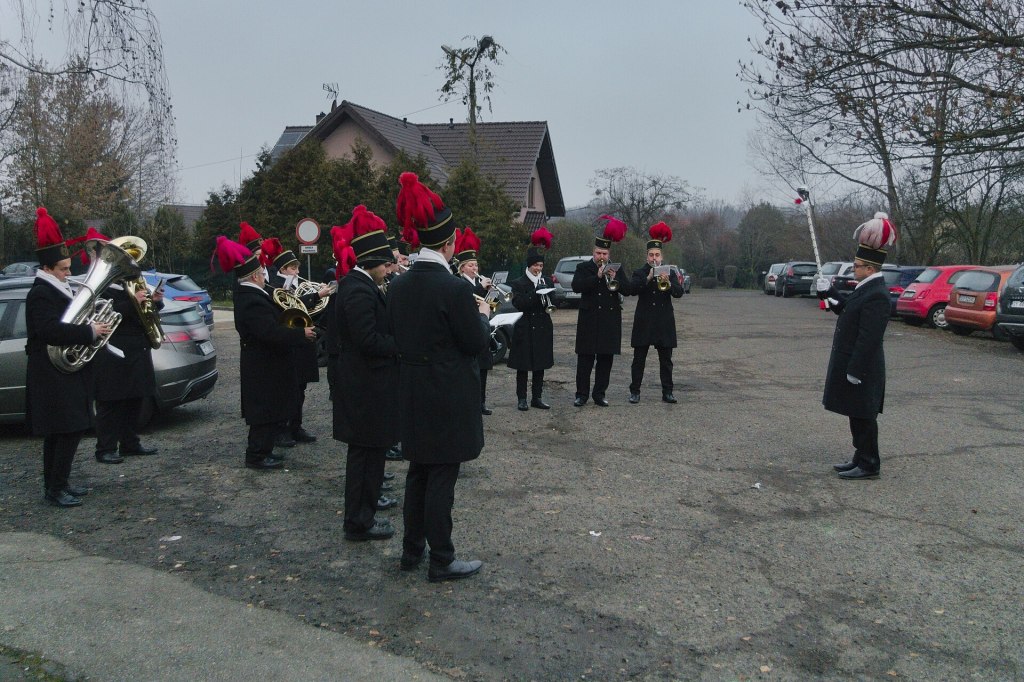
He disappeared for a moment and returned carrying his ceremonial miner’s uniform — known as the Mundur Górniczy — together with the szpada górnicza, a miner’s ceremonial sword. In Silesia, mining isn’t just an industry; it’s a heritage, a responsibility, and a source of pride woven through generations. The uniform reflects that. The jacket, the distinctive hat with its plume, the sword — each piece carries profound meaning.
He was a serious man: quiet, direct, the kind of person whose presence filled a room without effort. A manager, with the weight of countless responsibilities on his shoulders. And yet, that evening, he smiled — a warm, unmistakable smile — and insisted that I try on his uniform.
I had worn a uniform myself since I was seventeen years old, first in the Navy and later in the police. I knew what a tunic represents — the pride, the responsibility, and the quiet reverence it is owed. Confused as I was, and more than a little drunk, I was incapable of treating it as a costume. I couldn’t treat his life’s honour as a joke.
My friend, her mum, and her brother laughed loudly as I stood there, solemn and slightly overwhelmed. But her father didn’t laugh. He watched with quiet pride.
There are photographs of that moment somewhere — me standing stiffly, wearing a jacket that didn’t quite fit, a hat with a plume denoting a rank I didn’t yet understand, and holding a real ceremonial sword. My face in those pictures is deadpan, without a trace of amusement; in truth, I looked completely terrified. The memory remains vivid. Not because it was surreal, though it certainly was, but because it was a gesture of trust. A welcome far deeper than I realised at the time.
He passed away in 2021, and my friend is still devastated by the loss. When I think back to that evening now, I feel it differently — not as something strange or humorous, but as a quiet honour. A small, extraordinarily generous moment from a man who, without saying a word, chose to share a piece of who he was with me.
That first visit stayed with me in ways I didn’t fully grasp at the time. There are countless books about Polish food and culture written by people far more knowledgeable than I am. This isn’t one of those. It’s simply the story of what I was given — the meals, the kindness, and the small rituals that opened a door for me. I grew to love Polish food, but more than that, I grew to love the people who placed it in front of me.
In 2010, when I returned not as a visitor but to live and work, I realised just how much that first welcome had already prepared me.
Featured Image Photo credit: “Bytom-Miechowice Barborka 2022 2” by Adrian Tync is licensed under CC BY-SA 4.0.


Leave a comment