Somewhere in those earliest memories, long before my love affair with the AeroPress blossomed, back when I still routinely ordered a large mug of filter coffee or a mild, milky latte, I was offered a choice.
“Would you like to try a flat white?” Paweł suggested one morning, explaining its origins with quiet enthusiasm.
I agreed, completely unprepared for how that single cup would redefine my routine.
Moving from a latte to a flat white felt like stripping away the filler. Where my usual drink felt like a tall, comforting bowl of warm milk with a gentle coffee whisper, this was an awakening. The first sip brought a powerful espresso-forward hit that woke up my senses, but before the bitterness could bite, it was wrapped in a velvety, almost buttery sweetness. The milk was seamlessly woven into the espresso, creating a texture so rich it felt luxurious.
It was so smooth it was easy to forget just how potent it was. I often discovered this the hard way while hunkered down at KAFO, intensely focused on drafting lesson plans. Lost in my work, I would eventually look up to realise I was typing at double speed, over-animated, and riding a massive vibrating caffeine wave.
Soon, the flat white became my absolute go-to.
Then came the next gentle nudge.
“I can do you a cortado?”
Me? A cortado? I didn’t even know there was such a thing. Looking around the café, I don’t think I’d ever seen a single soul drinking one.
How did Paweł even know this stuff?
Before I knew it, he was breaking down flavour profiles and milk ratios, explaining with a quiet smile that it was a traditional Spanish drink, its name coming from cortar, meaning “to cut”, because the small splash of warm milk was just enough to cut through the sharpness of the espresso. He presented me with a perfectly layered, caffeinated work of art served in a glass tumbler.
The cortado offered the same intense coffee clarity as a flat white, condensed into a smaller, punchier ritual. Looking back, I realise that what Paweł offered wasn’t just coffee. It was an invitation into a world that most people, myself included, passed through without ever really noticing.
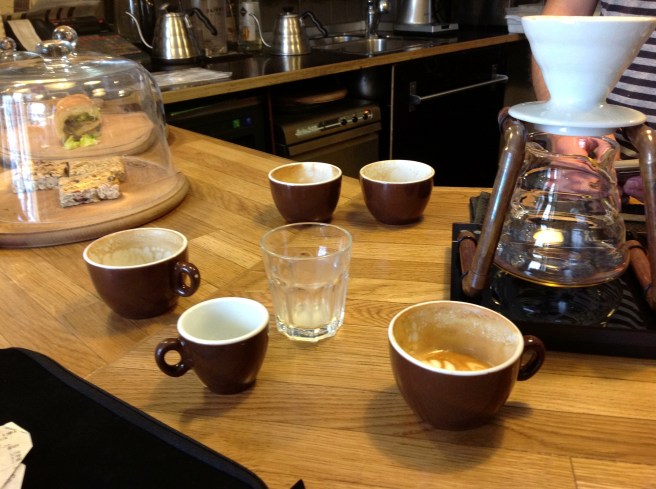
I don’t think these were all mine — but on reflection — they may have been.
Paweł was a man of meticulous, uncompromising standards.
If I arrived early on a quiet morning, it was not unusual to find him crouched beneath the counter, tinkering with a complex water filtration unit. When I once asked if it was really that important, I received a highly detailed lecture on the mineral composition of Silesian water and its effect on extraction. It was a classic response from him: deeply technical, completely earnest, and fiercely dedicated to the unseen mechanics of a perfect brew.
Yet despite this purist dedication, he possessed the grace of a true diplomat.
Running a bustling café meant navigating rotas, suppliers, business pressures and difficult customers, but like a swan he kept any frantic paddling strictly below the surface.
I once watched a customer complain that their coffee wasn’t hot enough.
Paweł didn’t sigh or roll his eyes. He calmly explained that overheating milk scorches it, ruining the flavour. He wasn’t rude or patronising. Nor was he about to compromise his principles. Yet the true mark of his hospitality came immediately afterwards. Having delivered this gentle education, he turned around and remade the drink to the customer’s exact, scorching requirements anyway.
He understood that being right and looking after people were not always the same thing.
That same constructive honesty extended beyond coffee.
I remember a local character named Bella bringing in homemade cakes to see if they might sell in KAFO. She loved baking and was tentatively exploring a business venture of her own. Paweł tasted them and offered a straightforward assessment: if she wanted them to sell, the sweetness would need adjusting for local tastes.
Even back in 2011, he was suspicious of excessive sugar, well ahead of the dietary curve.
What struck me was that he took her seriously. He didn’t offer polite encouragement or vague praise. He treated her like somebody capable of succeeding. The feedback was direct, practical and useful. It helped her launch Good Cake, and in doing so introduced another familiar face into the wider KAFO story. Bella became somebody I was always delighted to see, invariably sitting down beside me for a chat.
The truth is that for the longest time, coffee simply tasted like coffee to me.
Single-origin versus single-estate, washed processes, growing regions, altitude above sea level… I appreciated the vocabulary, but I couldn’t truly relate to it. I knew I preferred chocolate and nutty notes, and I secretly envied people who could swirl a cup and confidently identify hints of brown sugar, plum compote or burnt cinder toffee.
I’d nod along enthusiastically.
“Yeah!”
Then I’d take a sip and think:
It’s coffee. Nice coffee. Would make a great flat white.
I even bought an SCA Coffee Taster’s Flavour Wheel poster, privately thanking my lucky stars that I’d never tasted anything falling into the category labelled simply “Other”.
When invitations to cupping sessions appeared, I declined with genuine sadness. I didn’t want to feel as though I was participating in the Emperor’s New Clothes.
Yet while I never developed a sophisticated palate, I never lost my admiration for the craft.
What places like KAFO taught me was an appreciation for balance, ratio and technique. For the difference seemingly tiny adjustments could make. For the simple pleasure of someone caring enough to get things right.
Naturally, I bought an AeroPress and a bamboo paddle of my own.
Fourteen years later, I continue to use one of the three AeroPresses I seem to have accumulated over the years. In my opinion, it remains the most forgiving and consistently delicious way to brew coffee on Earth, largely because I lack the discipline to check water temperatures or use scales.
I still use that original bamboo paddle, too. Darkly stained by years of coffee oils and worn smooth by time, it has survived countless mornings and even a temporary disappearance during a frantic camping trip. Whenever I pick it up, I am instantly transported back to that quiet morning in KAFO when I asked whether the bamboo paddle changed the science. It didn’t. But it was nicer than the plastic one.
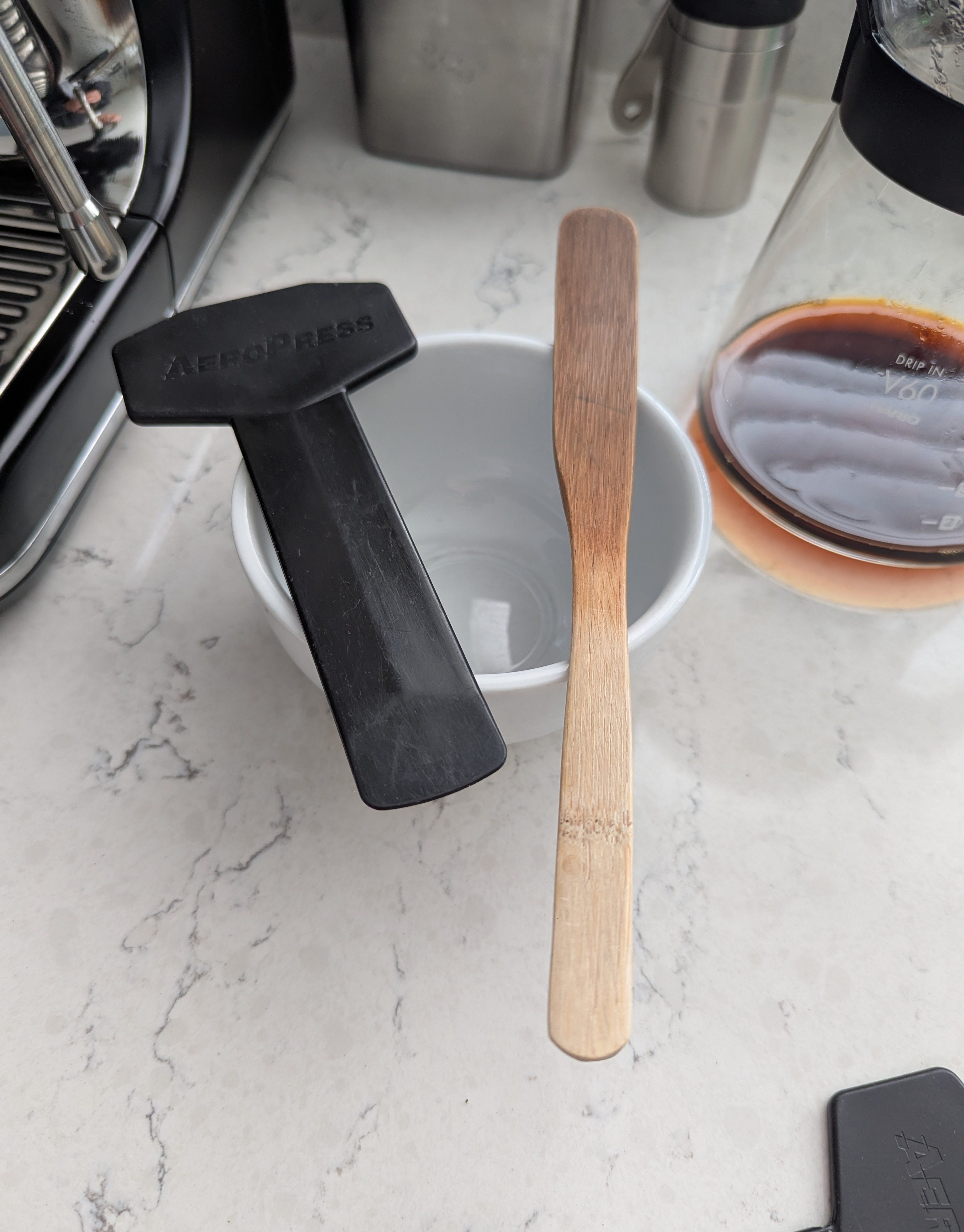
Two rather worn items, the much-beloved bamboo stirrer on the right, both survivors from 2011
If you spend enough time in a city, you eventually find your third place: that essential sanctuary between work and home.
For me, in Gliwice, that place was KAFO.
I spent much of my spare time there socialising, working or running free English conversation groups, a venture Paweł graciously permitted. My obsession soon became fully entrenched. I visited day after day, sometimes two or three times daily, perfectly happy to pour my money across the counter.
To me, it was an investment in happiness.
To everyone else, it appeared to be a structural anomaly.
Pan Bronek became intensely curious about the sheer number of hours I clocked at those wooden tables. One of my students concluded that native English speakers must earn enormous salaries, judging solely by my extravagant caffeine budget.
To the local eye, a man sitting all afternoon surrounded by books, an iPad, a MacBook and a growing collection of empty cups looked less like a teacher and more like a visiting technology magnate.
Looking back, KAFO was part of something larger.
Long before third-wave coffee became ubiquitous, it was helping to elevate the daily habits of everyone who walked through its doors. Conversations flowed there. Friendships formed there. Businesses were quietly born there.
Paweł didn’t achieve that alone. He had a remarkable team of baristas, relationships throughout the coffee world and connections to a wider movement of independent makers, craftspeople and entrepreneurs that was only just beginning to find its feet in Silesia.
There was an intimacy to that moment because the culture was being built in real time. The owners, baristas and regulars were all contributing to it together. Looking back now, it feels like a tipping point. Small, courageous independent spaces were appearing across the region, quietly altering the rhythms of industrial towns and planting seeds for the kind of urban Polish life that feels commonplace today.
And Paweł stood right in the middle of it all: passionate, knowledgeable and endlessly devoted to the pursuit of the perfect cup.
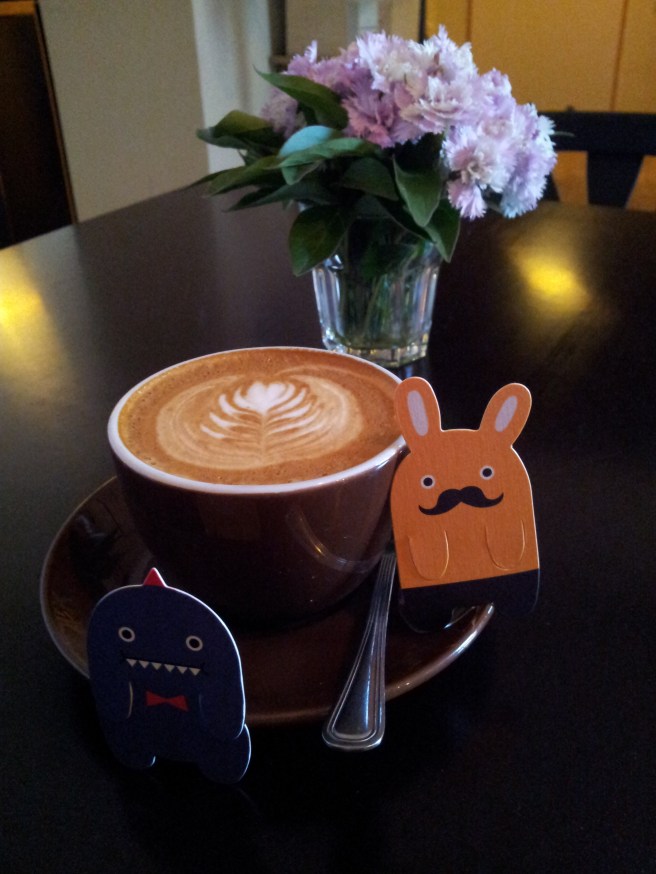
Which is why one morning stands out above all the others.
Despite his encyclopaedic knowledge, his uncompromising standards and his unwavering devotion to the bean, this pioneer of Silesian coffee culture leaned across the counter, glanced around to make sure nobody was listening, lowered his voice, and quietly admitted that he actually preferred tea.
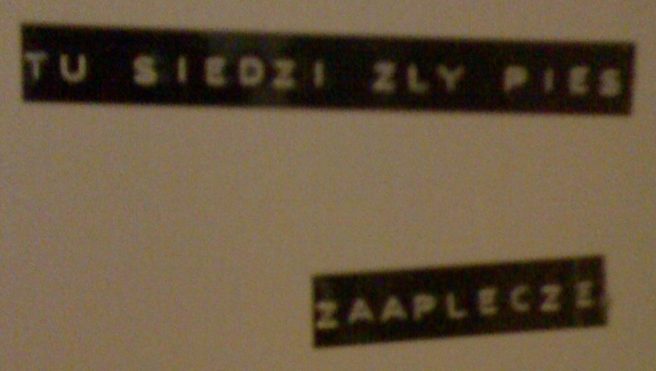
THERE IS A BAD DOG SITTING IN THE BACKROOM 🤔 (I never saw a dog in there, but I could be wrong) 🤣

 Ghosts to Carry, Stories to Keep