Tsintskaro
A companion piece to ‘Kalimankou Denkou’ (Калиманко Денко)
Unlike hearing and then owning a 4AD label vinyl copy of Le Mystère des Voix Bulgares during the 1980s, I would have heard “Tsintskaro” through Herzog’s Nosferatu and later through Kate Bush’s “The Ninth Wave”. Yet if I am honest, I cannot claim to have truly heard it at all. At nineteen, sitting in a Hamburg cinema, bewildered and vaguely horrified by Klaus Kinski’s Count Orlok, I found Georgian polyphony to be the furthest thing from my mind. Years later, when I bought Hounds of Love on a rainy trip to Salisbury, my attention was elsewhere again. The song passed me by twice without leaving a footprint.
It would take another forty years before it finally stopped me in my tracks as I walked through the Chester Rows.
It was only quite recently, when on a shopping trip to Chester and using my earbuds to listen to an episode of BBC’s Ultimate Calm via the Sounds app, that a guest on the programme began to describe how and why he had chosen Hamlet Gonashvili’s, Tsintskaro as his own “safe haven” track. Admittedly, I had no idea who Hamlet Gonashvili even was. I caught something about how he had climbed a tree to pick an apple and, whilst doing so, had fallen to the ground with fatal consequences.
I continued to walk around the Chester Rows, listening. After no more than twenty seconds, I had to stop. I stood listening as this remarkable vocal range and atmosphere transported me outside the commercial centre of a city and far beyond. I pulled out a notebook and wrote down a reminder to discover more about the track.
If the voice of Yanka Rupkina is a confession trapped within the human chest, the voice of Hamlet Gonashvili is that same confession dissolving into the ancient earth. It belongs to the same architecture of silence, but here the unyielding law casts a different shadow.
While “Kalimankou Denkou” mourns a love forbidden because the two people are bound too closely by sacred village kinship, “Tsintskaro” seems to mourn something different: the sudden, impossible distance between two strangers.
And perhaps that is what lies behind the encounter in “Tsintskaro”.
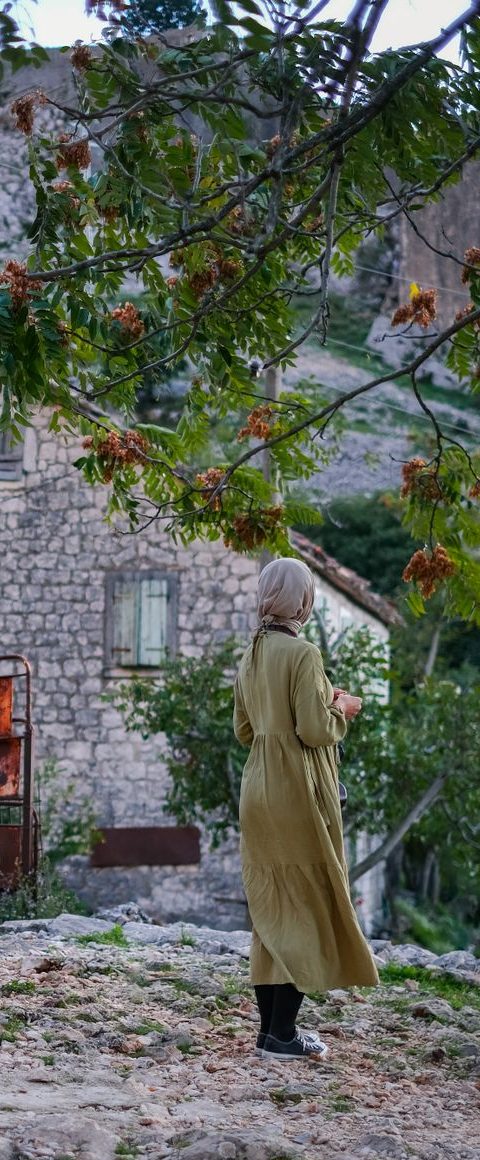
A man passes the village spring and sees a beautiful girl carrying a water jar. He speaks a single word, perhaps a greeting, perhaps something more. Whatever he says, she becomes angry and steps away, protecting herself from the attention of those around her.
What, I wondered, could have made her so angry?
The answer may lie somewhere in the social world from which the song emerged, in customs and expectations that a modern English listener can easily overlook. As I read further, I came across the notion of namusi (ნამუსი), a concept of honour and propriety that once shaped much of daily life throughout the Caucasus.
The more I read, the more I found myself imagining the village spring differently. What appears, at first glance, to be a simple meeting between two young people might have carried meanings invisible to an outsider. Perhaps a brief exchange could invite gossip. Perhaps a young woman might be expected to guard her reputation carefully in a public place.
But perhaps I was also doing what outsiders so often do: filling a silence.
One of the things I have come to love about traditional songs is their refusal to explain themselves. They offer a glimpse through a doorway, then leave the listener to wonder what lies beyond. The further I followed this particular trail, the less certain I became that I understood the girl’s anger and the more certain I became that the uncertainty itself was part of the song’s power.
It is an extraordinarily small human encounter. Yet Hamlet Gonashvili’s magnificent three-part polyphony gives it the scale of something much larger. The deep bass seems to carry the weight of the world around them, while the soaring voice above it gives expression to something fleeting and painfully human. The music transforms a moment beside a village spring into something timeless: attraction, restraint, misunderstanding, and the invisible boundaries that separate one person from another.
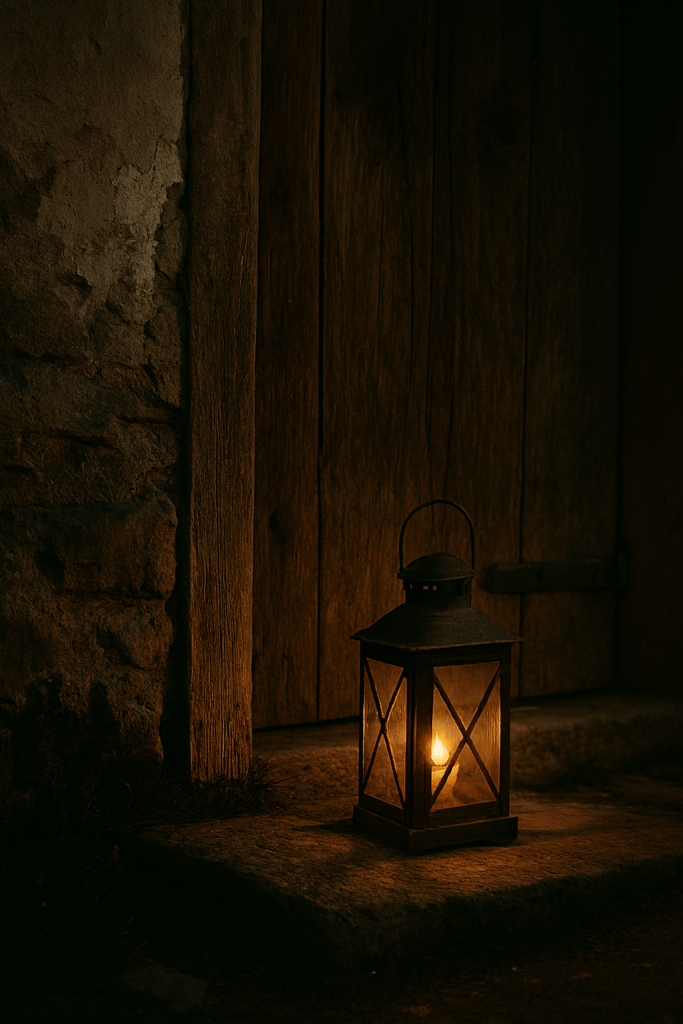
By the water, the door is closed, just as firmly as it was at Denka’s threshold.
So I place this second track beside the first…
Click to listen on Apple Music

Or if Spotty is your preferred platform
დადგი აქ (dadgi ak)
ლამპართან (lampartan)
მე გისმენ (me gismen)


Leave a comment