I arranged to meet a friend for obiad. I suggested Bar Teatralny — her home was a mere five minutes away, and I’d already been to Teatralny a few times to eat. I thought: convenient, affordable, and I was beginning to enjoy visiting there despite having settled into a pattern without quite meaning to: fasolka po bretońsku and a bread roll, every single visit. It was safe. It was familiar. It was the first item on the menu board. And I must have mentioned this to her as we queued.
It was winter — properly winter — the kind that makes the air outside feel sharp and the air inside feel heavy with steam and humidity. The queue even snaked back into the dining area. This wasn’t the kind of weather you’d want to queue in outdoors, and Bar Teatralny was packed in that particular way it had: loud, humid, busy, alive.
I wanted to show her I could order something. I wanted to prove I wasn’t helpless. So I went for my default meal again.
We managed to find two seats that had just been vacated. As we began to eat, she asked, almost casually, what other Polish food I liked.
I told the truth.
“Oh… the first thing I see on the menu. Fasolka po bretońsku — and a bread roll. I really like schabowy, but I get it from the other milk bar near my apartment. A change would be nice though.”
She didn’t laugh.
She didn’t tease.
She didn’t make me feel small.
But something in her expression shifted — a tiny, thoughtful pause.
A seed planted.
Whatever seed had been planted the day we met for obiad grew into yet another kindness my friends offered me in Poland.
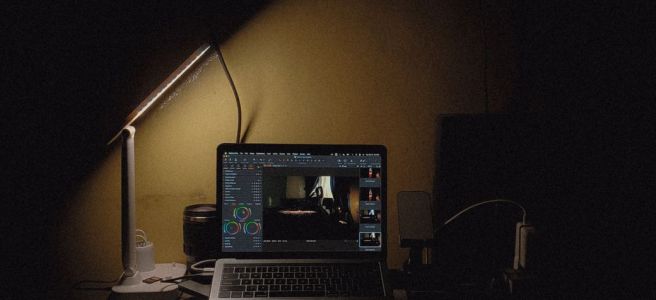
A day or two later, I was still up, working under the small desk lamp, long past the hour when I wanted to be awake. Living on the top floor of my block meant the nights were utterly still — no footsteps above, no voices drifting through walls, just the hush of the building settling around me. My inbox was usually just as quiet. I hardly received mail then, not even spam.
So when the first ping broke the silence, I froze. It was such a small sound, but in that deep quiet it felt almost startling, like someone tapping lightly on a door I hadn’t expected anyone to find. I paused, listening, curiosity rising through the tiredness.
The second ping followed a moment later — not a surprise this time, but something else entirely. If the first had been an interruption, the second felt deliberate, almost like an invitation. A message meant for me. A reason to turn toward the screen instead of the grammar book open in front of me. I should have ignored it, should have stayed disciplined, but I literally stopped in my tracks. Someone was reaching out.
My friend hadn’t explained the menu to me in person. She hadn’t sat beside me and gone through each dish. Instead, very late one night while I was still working, those two pings carried her care across the quiet.
The first email had a subject heading, Bar Teatralny Menu part 1, and contained a single word — “smacznego” — with a smile. I opened the second with a growing sense of astonishment. She had taken photographs of each side of the Bar Teatralny menu board, then embedded them into Word documents and translated every single item: every soup, every cutlet, every dumpling, every offal stew. It must have taken hours.
I knew how much academic pressure she was under, and I was stunned she’d spent her evening doing this for me. She signed off with a small, tired flourish of her own voice:
“I’m happy I could do this. 🙂
And now I can go to bed :-)”
I opened the attachments and felt something warm and quiet settle inside me. It wasn’t just a menu translation — it was care. It was her noticing my hesitation in Bar Teatralny: how I paused at the counter, how the menu rose up like a wall of unfamiliar words, how I retreated to the same safe meal each time — and choosing to help.
I still have the photographs she took in Bar Teatralny: two quick shots of the menu board, slightly blurred, slightly tilted, taken in the heat, steam, and noise of the place. They’re treasures to me. I’ve tidied her documents for myself and made a clean version I can use, but I keep her originals too — the ones with her comments, her humour, her small admission of not knowing how to describe some foods, and her explanations of Polish food culture. I won’t include every translation, only a handful of my favourites — the ones that still make me smile even now.
Bar Teatralny Menu 1

Fasolka po bretońsku – “I guess I don’t have to translate this.”
I laughed when I read this — so gentle, so funny, so typical of my friend.
Flaczki – “A traditional Polish meat stew. It can be an acquired taste, but is one of the many soups that are an important part of the Polish diet. Its name is derived from its main ingredient: thin, cleaned strips of beef tripe.”
Flaczki was already on my personal list of foods to avoid — a name firmly imprinted on my memory’s “do not eat — ever” list.
Bogracz – “Hungarian goulash soup (‘to be honest I’ve never eaten it’).”
I had eaten it, from a jar I simply reheated, and actually liked it.
I was especially grateful for my friend translating the list of gulasz (goulash) dishes. Not being a fan of offal, I wouldn’t attempt to sample any of them. I have no wish to cause offence; they are simply dishes I have no experience eating, nor any desire to try.
- Gulasz z żołądków drobiowych – Chicken gizzard goulash
- Gulasz z serc – Heart goulash
- Gulasz z ozorków – Tongue goulash
- Gulasz z nerek – Kidney goulash
- Gulasz z płuc – Lung stew
I realised I had almost ordered lung stew until friends gently suggested I wouldn’t enjoy it. It became another food imprinted on a growing “do not eat — ever” list.
And finally, describing a food item handwritten on that scrap of paper above the door to the kitchen — papryka faszerowana – my friend wrote “On the white sheet of paper: stuffed pepper (no idea what they stuff it with ;-))”
Bar Teatralny Menu 2

I especially enjoyed these comments:
Mizeria – “I remember you called it ‘white cucumber sauce’.”
Tacka / Kubek – “This last thing is not a meal… it’s a container for food if you want to take it away.”
I won’t name my friend. She has her own life, her own struggles, and I don’t want to disturb her peace. But I will say this: those documents are one of the kindest things anyone ever did for me in Poland. They helped me understand a place I loved but lacked the confidence to order from — a place whose menu felt like a foreign language. They helped me belong.
I don’t recall how often we ate there; Bar Teatralny was five minutes from her flat, practically part of her neighbourhood. I do recall the first meal we shared there thanks to her menu translation: Placki ziemniaczane. More specifically, Placek po węgiersku. A proper dish. A dish with weight. A dish that arrived on the plate like a challenge. A crisp, golden potato pancake folded over a rich, paprika‑heavy goulash, steam rising from the edges, the smell of peppers, meat, and fried potato drifting up as if to say: you’ve graduated now.
I wouldn’t have dared order it without her translations. I had no idea what placki was. But she sat across from me, five minutes from home, perfectly at ease amid the kitchen clatter, the scrape of chairs, and the summer traffic drifting through the open windows of Bar Teatralny. I realised that this place — this chaotic, intimidating, wonderful place — was part of her everyday life.
And now, slowly, it was becoming part of mine.
Further Reading below.

 Ghosts to Carry, Stories to Keep