“Names and some identifying characteristics have been changed to protect the privacy of individuals mentioned in this post.”
There are travel days that go smoothly, and then there are travel days that feel like the universe is improvising wildly just to see what you’ll do.
This was the latter.
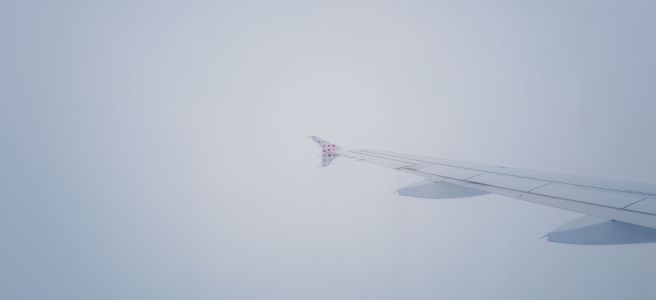
It began with an early-morning flight from the UK, scheduled to land in Kraków mid-morning. I had teaching arranged for the afternoon, and a friend — kind beyond measure — had offered to drive from Gliwice to collect me. A simple plan. A normal one. A plan that would not survive contact with Polish weather.
The descent into Kraków felt familiar… until it didn’t.
Engines surged. The aircraft climbed.
A go-around.
Then another.
Then the Captain’s voice: “Due to fog, we cannot land. We will divert to Katowice.”
Katowice? Closer to home than Kraków, and for a moment I thought the day might still make sense. But I knew my friend would already be waiting at Kraków airport, ready to greet me, and when Katowice turned out to be impossible too, the whole situation tipped from frustrating into surreal.
Katowice couldn’t take us either — same conditions as Kraków.
Fog again.
We flew to Warsaw.
As we approached Warsaw, I pressed my forehead to the cabin window and spotted the Palace of Culture and Science below — the first time I’d ever seen it, and of course it happened on a day when I wasn’t supposed to be anywhere near Warsaw. Was this really happening?
For over two hours we waited on the tarmac for the airline to confirm whether the fog over Kraków had lifted. It was also the one time we were permitted to use our phones. I called my friend; she was already in arrivals.
“I’m in Warsaw,” I said. “I think we’re going to wait here until the fog clears at Kraków. I’m sorry.”
She’d been there a while and was concerned why our flight had not landed. I found out later that the authorities had provided almost nothing by way of information to the people waiting — families, drivers, and, as I later discovered, others expecting judges from Liverpool — and that my friend had quietly taken it upon herself to explain the situation to those around her. She also said she would wait. That was entirely her.
With nothing else to do, we spoke among ourselves and accepted a small plastic cup of water offered to us by the cabin crew. I’d been talking to the passengers beside me — a young couple who’d planned a two-night visit to Kraków. In fact, it turned out that most of the passengers around me were on short, city-break holidays. I told them about Gliwice, the local area, about the language school, about what it was like to actually live and work there rather than visit on holiday or just pass through. The woman in the row ahead had been half-listening. “Would you be able to help the elderly couple a few seats up?” She pointed to who I discovered to be Liverpudlians, Keith and Maggie.
Keith and Maggie were a delightful couple, born and bred in Liverpool. They explained to me that they were experienced dog breeders, and due to their specialist knowledge, they were often called upon to act as judges of specific dog breeds. World-renowned experts in English Bulldogs, French Bulldogs, Boston Terriers, and Boxers. They were due to be met at Kraków and then driven to Katowice where they had been invited to be judges in a very important dog show scheduled to take place in the city. Keith described the venue as “the spaceship place”; I knew instantly it had to be Spodek. I mentioned I knew Katowice quite well, and lived not too far away from the city. They had a hand written contact number on a folded scrap of paper and a mobile phone, a heroic little Nokia‑era brick that looked ready to outlive all of us, but it absolutely refused to acknowledge the existence of any Polish network. Could I help them?
I called the number using my own mobile, answered by a rather worried and stressed-out Polish lady. She demanded to know who I was. Where were the judges? They were extremely important. I tried to explain our situation as best as I could and that we would hopefully return to Kraków as soon as the weather allowed us to do so. The conversation made it perfectly clear to me:
These weren’t just judges.
They were the judges.
I formed the opinion Keith and Maggie were clearly the equivalent of rock stars in the dog world — real dog-show royalty and essential to the success of the show. They simply had to be present. I explained our situation as best as I could, ended the call and reassured Keith and Maggie it would be OK; their driver would be waiting at Kraków.
Not too long afterwards, our captain told us that he had a go-ahead from Kraków; we could try again. I called my friend just before we taxied.
“See you soon, fingers and toes are crossed!”
We couldn’t land.
Fog still.
The aircraft returned to Warsaw.
The airline promised buses to Kraków.
Arrivals, Warsaw Chopin Airport.
No obvious airline staff waiting to direct passengers to any bus.
I helped Keith and Maggie to a table in one of the terminal cafés, bought them tea, and sat down with them while I tried to work out what was actually happening.
My fellow passengers wandered.
Some passengers gathered.
Many passengers fumed.
I called their contact again. I was worried my battery was draining faster than I would have liked. I was never quite sure of her role — she was speaking quickly and urgently, and the connection was just good enough to catch the shape of the conversation, if not every word. Keith and Maggie watched me with the patient trust of people who have decided, without much evidence, that I know what I’m doing.
I understood enough. They were not to get on the bus. A car and driver were being arranged for them. For some strange reason, I began to doubt I’d understood the conversation at all.
I told Keith and Maggie not to worry.
Desperate, I called my friend — the saint of this story — and asked her to call the frantic dog-show organiser on my behalf. She agreed. She always did.
My friend called back, her tone having changed.
“Gary… you didn’t tell me how important they are. The organisers are desperate. They’re sending a private driver to Warsaw to collect them. Nothing must happen to them.”
Nothing must happen to them.
No pressure.
I turned off my phone to preserve what little battery remained and waited.
I noticed fellow passengers were still waiting for a bus that hadn’t appeared. Some continued to wander, and many were still fuming. Some came to ask me how long the journey to Kraków would take, because somewhere along the way I had become the person who apparently knew things. I had accidentally become “the English-Polish-speaking guy who lives in Poland.” I told them the truth as gently as I could. In 2011 it was a long ride. They did not look pleased.
Keith and Maggie drank their tea.
My own phone battery was now on life support. I decided that I wasn’t going to get any bus to Kraków; it would be madness, I would probably arrive there around midnight, or later — then I would have to get to Gliwice. Decision time: I would make my own way home, by rail. I’d never been to Warsaw, and had no idea where the railway station was located. I would worry about that later; I had to make sure Keith and Maggie would be OK. I simply could not leave them alone.
For the next hour or so I drifted. That’s the only word for it. Out through the doors to check the drop-off area, eyeing every dark car that slowed, then back inside to Keith and Maggie, then out again. I checked my voicemail in bursts and switched the phone off immediately after to save what little battery remained. The terminal had its own exhausted rhythm by now — passengers still waiting, still hoping, the promised bus nowhere.
And then he was just there.
He hadn’t been there before — I’d have noticed.
He stood in the arrivals area with the stillness of someone who has come with a clear intention, and is simply waiting for the purpose to present itself. No name board. No sign. He checked his watch, then his phone, then scanned the hall with the calm, systematic attention of a man entirely unbothered by airports or delays or much at all.
The coat was what you noticed first. Black leather, three-quarter-length. Black trousers, white shirt, black tie. Broad across the shoulders, as if the coat had been chosen carefully.
I want to be honest: something about him unsettled me slightly. I’m aware of the stereotype I was reaching for, and I’m not proud of the instinct — but it was there. He looked equally capable of chauffeuring a diplomat or running a small and efficient operation that didn’t require much paperwork.
I had nothing else to lose. I approached him and asked, in my best Polish, whether he was here to collect Keith and Maggie.
He looked at me for a moment.
“Yes,” he said. “My car is outside.”
Of course it was.
I ran.
Back through the terminal to the café where I’d left them, already composing how I’d explain it — the car, the driver, how everything had somehow come together —
They were gone.
The table was empty. Their luggage was gone. No Keith. No Maggie. Just two empty cups and the faint possibility that I had failed two elderly dog show legends from Liverpool after everything.
My heart dropped through the floor.
Then someone — a café worker, a stranger sitting in the café, I’m not entirely sure — pointed.
There they were. Sitting on a bench a little way off, side by side, luggage at their feet, with the complete and absolute serenity of people who had never been remotely worried about anything.
I could have wept with relief.
I gathered them — gently, quickly — downstairs and out through the doors, where the luxury Mercedes was waiting exactly where he’d said it would be. Long, dark, immaculate. The driver was already there, exchanging a word with an airport official with the ease of someone who does this regularly and finds it entirely unremarkable.
Keith and Maggie climbed in without hesitation. Of course they did.
I loaded the luggage into the boot, closed it, with that solid, expensive sound that good German cars make.
And that was that. Job done. I’d done what I said I’d do. I was already turning it over in my mind — the station, Warsaw, a city I’d never been to, no idea where to get a train or whether one was even still running at this hour that would get me anywhere near Gliwice.
Time to say goodbye to Keith and Maggie — “Lovely to meet you both. Good luck at the show. Safe journey.”
Keith looked at me.
“Ey, not so quick lad.”
He said it with the full authority of a man who has judged a great many things in his life and has reached a verdict.
“You’ve helped us out no end. You said you lived near this Kato place, yes?”
“Yes…”
Maggie didn’t even look up from settling herself in, she waved a hand in my direction — the royal summons.
“Come on love, front seat. You’re coming with us.”
It wasn’t really an invitation. It was a Scouse fait accompli.
I looked at the driver standing ready to close the door, pointed to the car, myself and the front seat. He nodded, I got in the front, as simple as that.
So there I was, in the front seat of a luxury Mercedes. The driver didn’t hang about.
We left Warsaw’s lights behind and hit the open road — not a motorway, which surprised me. I’d assumed, somehow, that a car sent urgently across the country for two internationally renowned dog-show judges would take the fast route. On reflection, I don’t think there was actually any motorway connection in 2011.
Instead we moved through the dark on Polish A-roads, the car covering ground at a pace I chose not to think about too carefully, the Mercedes suspension doing exactly what it was designed to, smoothing out whatever the road threw at it.
I called my friend: “You’ll never guess what has just happened, I’m on my way to Kato with Keith and Maggie!” My friend simply said, “Tell me which hotel. I’ll come get you. Doesn’t matter if it’s 10 or 11 or whatever time, just give me a call when you’re nearer Kato.”
Keith and Maggie were asleep within twenty minutes. Deeply, completely, peacefully asleep, like people with no outstanding concerns left in the world.
I did not sleep.
I’m not sure I could have, but I also felt — irrationally, given that my role had technically ended the moment that boot closed — that someone ought to be awake. Keeping watch. Witnessing.
The driver certainly didn’t need me. He stared at the road ahead with the same calm purposefulness he’d had in the terminal, entirely uninterested in conversation, entirely in control.
So I watched Poland go by in the dark. Road signs. Tree lines. The occasional light from a village set back from the road. Silesia getting closer, while Keith and Maggie slept peacefully in the back like retired monarchs.
As we began to pick up more signs for Katowice, estimating we were about forty or fifty minutes away, I called my friend as she had asked. With her usual patience and care, she said she would set off immediately.
Arriving at the hotel, I could see my friend was already there, standing outside, and when she saw the Mercedes — long, dark, pulling up with quiet authority — her eyes went wide. She had spent the entire day on the end of a phone, calling organisers, relaying messages, explaining a stranger’s predicament to strangers in an airport arrivals hall, driving out at a very late hour without complaint. And now here was the evidence of all of it, finally, in one gleaming, improbable package.
She looked at me climbing out of the front seat.
I shrugged, smiled and said thank you.
There are moments that don’t need explaining to the right person.
Keith and Maggie emerged from the back with the unhurried dignity of people arriving exactly as planned. They thanked the driver. They thanked me. And then Keith turned to us both and said that if we had nothing better to do tomorrow, we should come to the show as their guests.
We went.
Spodek from the outside is already something — that low flying saucer of a building sitting in the middle of Katowice like a piece of the future that arrived early and decided to stay. Inside it was warm and loud and smelled of dogs, the smell not unpleasant when accompanied by the particular energy of people who have devoted serious portions of their lives to something they love completely.
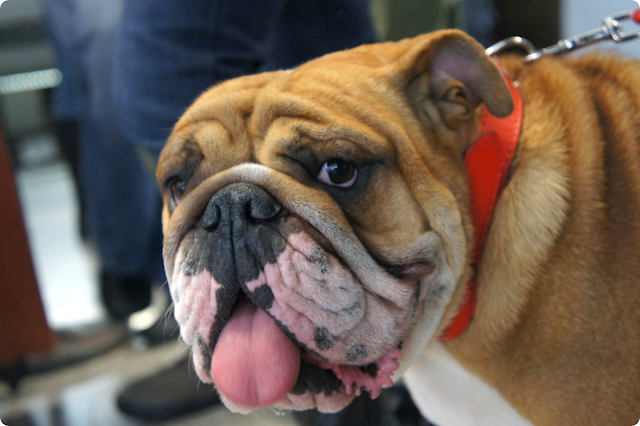
Keith and Maggie were transformed. The confusion of the terminal was gone. Here, in the ring, they moved with quiet confidence — recognised, respected, completely in their element. When they saw us again, their joy was genuine, but they were already deep in their work. We didn’t join them for lunch; we simply watched them, and I took photographs.
It was, in the end, a very good day — the kind that only makes sense once you’re already inside it.
A day that began with fog and frustration ended with kindness, absurdity, unexpected adventure, and two Scouse dog-show legends who treated me like family.
Travel chaos rarely rewards you. But that night, after fog and frustration and a journey I could never have planned, I stepped out of a Mercedes in Katowice and saw my friend waiting — the one person who had steadied the whole day from afar.
And in the end, that was the real story: not the fog, not the panic, not even the dog‑show royalty asleep in the back.
It was kindness.
It was friendship.
And it was the strange, improbable adventure that happens only when the right people appear at exactly the right moment.
Podsumowanie przygody
Mój lot do Krakowa zamienił się w komedię. Samolot próbował lądować, nie udało się. Spróbowaliśmy jeszcze raz — też nie. Kraków w mgle. Katowice w mgle. W końcu wylądowaliśmy w Warszawie, gdzie nikt nie wiedział, co się dzieje, łącznie z liniami lotniczymi.
W samolocie poznałem Keitha i Maggie z Liverpoolu — bardzo mili, bardzo spokojni i, jak się okazało, supergwiazdy świata psów. Ich telefon nie działał, organizatorzy byli w panice, a ja nagle zostałem ich tłumaczem, przewodnikiem i człowiekiem od wszystkiego.
Autobus do Krakowa? Nie ma. Informacji? Nie ma. Mgła? Jest.
Organizatorzy w końcu wysłali po nich prywatnego kierowcę aż z Katowic. Kiedy pojawił się w terminalu — wysoki, w czarnym skórzanym płaszczu — wyglądał jak ktoś, kto potrafi rozwiązać każdy problem… albo stworzyć nowy.
Po wielu przygodach znalazłem Keitha i Maggie, wsadziłem ich do wielkiego Mercedesa, a oni powiedzieli:
„No chodź, jedziesz z nami.”
I tak spędziłem noc w luksusowej limuzynie, jadąc z Warszawy do Katowic, podczas gdy Keith i Maggie spali jak królowie, a kierowca jechał tak szybko, jakby goniła nas mgła z Krakowa.
Na miejscu czekała już moja przyjaciółka, która przez cały dzień ratowała sytuację przez telefon.
Następnego dnia byliśmy zaproszeni jako goście specjalni na wystawę psów w Spodku.
Tak wygląda dzień, który zaczyna się katastrofą, a kończy przygodą, nowymi znajomościami i wieloma psami.

 Ghosts to Carry, Stories to Keep