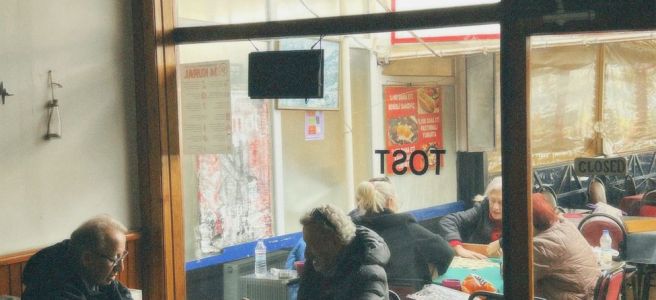
After the first visit, I now knew what to expect. It didn’t make it any easier, but the place truly fascinated me. I don’t remember every visit to Bar Teatralny, but I remember every meal—at least in those early weeks.
I ate the same thing each time: fasolka po bretońsku and a bread roll (bułka).
It wasn’t a habit so much as a refuge. It was the first item on the menu board, the one thing I recognised. The one thing I knew I wouldn’t stumble over, mispronounce, or misunderstand. I’d eaten it on one of my first visits to Bytom, long before I ever set foot in Bar Teatralny. I’d even recently bought a jar of it, I rather liked it; I liked bułki even more. And in those early weeks, liking something was enough.
I didn’t want to look foolish. I didn’t want to slow the queue to a polite, patient crawl. I didn’t want to ask for help. So I clung to the safe choice, the familiar one, the dish that felt like a small, warm victory.
It helped that it was worlds better than any shop‑bought jar of fasolka po bretońsku I’d ever tried—richer, deeper, generous in a way that felt almost indulgent. I’d never been fond of butter beans, those pale, oversized things I vaguely remembered from my grandmother’s table. But fasolka po bretońsku used Jaś beans: large, creamy, soft, nothing like the tinny, uniform beans swimming in British‑style baked bean sauce.
And I had a peculiar little ritual of my own. I’d gently mash a few of the beans against the side of the bowl, just enough to break them open so they melted into the stew. They thickened it, deepened it, soaked up more of that rich, smoky sauce until each spoonful felt slower, heavier, more deliberate — something shaped quietly by my own hand.
In those early days, when everything else felt foreign and fragile, that small act of coaxing the stew into comfort felt like a way of steadying myself too.
I’d never understood why the women behind the counter weighed everything with such brisk precision — kotlet, fasolka, stuffed peppers and the like. It always felt faintly extreme to me, as if the meal were being audited. Only years later did I realise the logic behind the menu board: waga and cena — weight and price. You paid for exactly what you took. It was simple, honest, and perfectly suited to a place that fed half the city.
And one other detail: you always cleared your own plate. Everyone did. When you finished, you picked up your tray, your bowl, your cutlery, and carried it to the pot-wash hatch or the metal counter where used crockery was stacked. No fuss, no ceremony. It was part of the choreography, the etiquette, the unspoken agreement that made Bar Teatralny work.
I learned that quickly. Clearing your tray was a small act of respect, a way of saying: I’m part of this. I know the rules.
In Poland, saying “Dzień dobry” when you walked into a room wasn’t really optional — it was just what you did. Bakeries, tiny shops, milk bars, anywhere people were working hard and expected a bit of courtesy. Not friendliness, not small talk — just a simple acknowledgement.
I actually grew to love those little greetings and goodbyes. You’d step inside, say “Dzień dobry,” and the room sort of absorbed you. You weren’t announcing yourself or trying to start a conversation; you were just joining the space. And when you left, you’d toss out a “Do widzenia,” even if nobody looked up or the queue behind you kept inching forward. It was part of the rhythm — the etiquette, the way the room breathed.
The strangest thing was how few tables there were for somewhere so popular. You could sit down, but you couldn’t expect to keep the space. Strangers would sit down at an empty chair, often one after another, offered a quick “Smacznego,” ate quickly, and left. It was not uncommon that three strangers would join the table in succession. It was like sharing a bench at a railway station—temporary, polite, utterly impersonal.
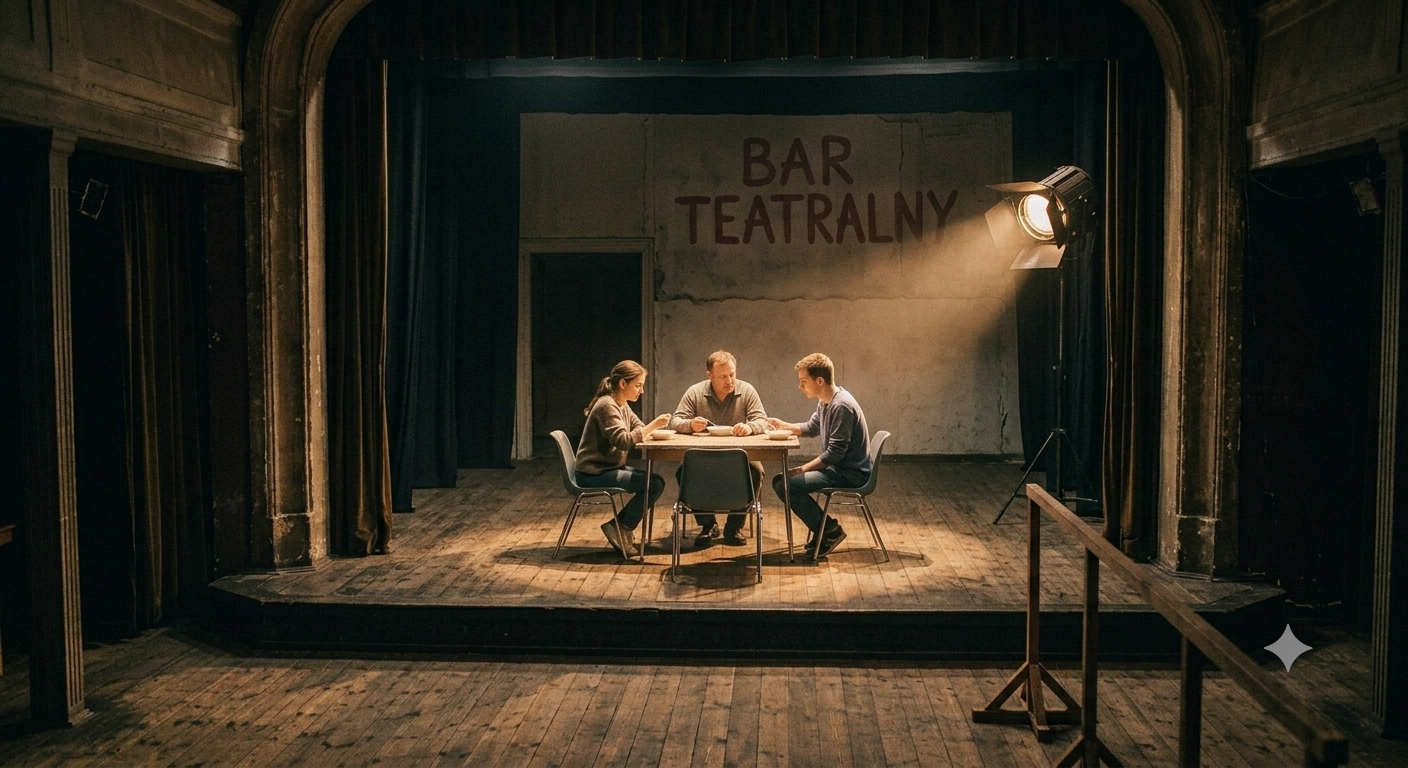
It took two or three more visits before I began to feel at ease with the table-sharing. Eventually, I surprised myself by joining strangers in exactly the same manner—the polite “Smacznego”, the quiet “Do widzenia”, the small acknowledgement of the unspoken rules.
And somehow, that was part of its charm. You weren’t there to linger. You were there to take part in a ritual that had existed long before you arrived and would continue long after you left.

 Ghosts to Carry, Stories to Keep