Part 3: Pizza and Groats (but never together).
Between Dominium and Da Grasso, I felt I had the town’s pizza landscape mapped out. Yet I soon realised they were just two-thirds of a Holy Trinity of Silesian pizza chains. The final, mythic member was Gruby Benek — another thoroughly Polish company named, so I was told, after a fictional chubby chef.
To be honest, I rarely ate there, maybe twice; it was on the opposite side of town. But it had its own folklore. You didn’t order a Margherita or Hawaii; you ordered a Goły Benek (Naked Ben), a Hawajski Benek (Hawaiian Ben), or a Mięsny Benek (Meat Ben). Everything revolved around Benek. If Dominium was tradition and Da Grasso was energy, Gruby Benek was the king of ma być grubo i na wypasie — make it thick, make it massive, load it to the absolute max. I checked Google Maps recently; Gruby Ben has not only left the building, he’s left Gliwice completely.
Gliwice was a small city back then, and the Rynek felt even smaller — a handful of places that became familiar simply because they were the ones that existed. My culinary map began to expand far beyond the pizza trinity. I ate widely: late-night kebabs, burgers from metal kiosks, quick lunches in the local food halls, or vibrant salads and fruit juices at Bistro Gliwice.
Every so often, I’d drift into somewhere new. One place in particular stayed with me.
In 2012, my corner of the Gliwice Rynek switched to a quiet rebellion against the loud, neon-lit landscape of post-communist fast food. Next door to it, my pizza haven, Dominium was still a popular but fading relic of the nineties, and a few streets away, Da Grasso remained a cacophony of shouting delivery drivers, pop radio, and grease-spotted cardboard.
But at Rynek 3, housed in the thick, fortress-like walls of a historic tenement house, sat something very different; a restaurant called Dobra Kasza Nasza.
Because of the old building’s bones, the layout was a cellular rabbit warren of semi-private alcoves connected by short, arched brick passages. You were never seated in a grand, echoing hall, but rather tucked away in your own low-ceilinged chamber with perhaps three other tables.
Inside, it had a strange, hybrid feel I never quite placed at the time: something of 1950s Copenhagen in the furniture, all pale wood and clean lines, crossed with the deep-carpeted hush of a 1990s British pub chain trying to look respectable. It shouldn’t have worked. It did.
The aesthetic was pale pine tables devoid of traditional heavy carvings, paired with upholstered chairs in muted, earthy tones that swallowed up the sound. Overhead, woven wicker pendants cast warm, intimate pools of light, keeping each table in its own private sanctuary.
And it was quiet. Not comfortably quiet — properly, oddly quiet, the way a library is quiet. Conversations stayed low without anyone asking them to, muffled by the heavy curtains, the carpet, and the cellular walls. Staff moved like they’d been trained not to let plates clink.
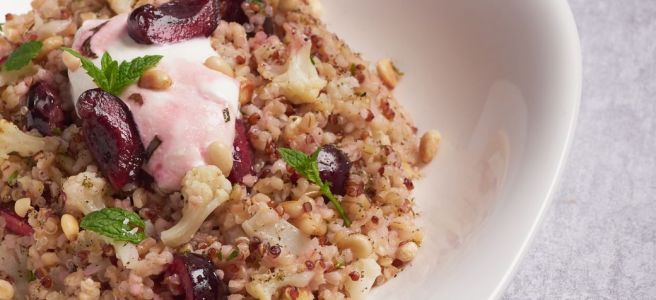
The food matched the room, now that I think of it — nothing showy, nothing that announced itself. My order rarely changed: boczek ze śliwkami suszonymi — salty, baked bacon against sweet dried plums, tossed with buckwheat and baked in a heavy, hot clay pot that sat neatly in its own wooden platter, carried out by staff who were always gentle, always kind. It felt as unmistakably Polish as anything I ate that year. It was accompanied by a horseradish salad I initially mistook for coleslaw, until the first forkful corrected me with a jolt sharp enough to make my eyes water and my colleague laugh.
There must have been music. Some low murmur of Muzak piped in to soften the silence, the way these places always have something running under the surface. I’m fairly sure of it. But memory has a way of editing out what doesn’t fit the story it wants to tell, and mine insists, quite stubbornly, that the room was silent. I’ve stopped arguing with it.
And somewhere between Dominium, Da Grasso, Gruby Benek, Kafo, the milk bars, and those quiet bowls of kasza, I realised I wasn’t just eating in Gliwice anymore. I was eating as someone who was very happy to live there.
Twelve years on, Dominium has gone, its familiar red-and-cream world swallowed by the global Domino’s machine. It now wears the unmistakable blue glow of an international chain — bright menus, delivery counters, and an interior shaped for students, hurried orders, and travellers who recognise the brand from far away. It’s efficient, recognisable, and entirely different.
Next door, the old “Kasza Nasza” has shed its name and become simply Dobra, trading heavy curtains for linen cloud lamps and hanging green plants. Yet the bones of the building remain, and in the hush of those thick stone walls, aromas — possibly baked buckwheat or sharp horseradish — probably still linger.
And so, in 2026, I find myself walking the Rynek again — not in reminiscence, but in a Google Street View frame from around 18:35 on a September evening in 2025. Eleven years have passed since I was last there. The light is soft, the air warm, and people are sitting out on benches, under awnings and parasols, in ogródki — the fenced-off summer terraces that bloom each year outside Polish restaurants — eating, talking, leaning back in their chairs as if they’re reluctant to let the day slip away. I drift past them and see which places are busy, witnessing the quiet happiness of an ordinary evening unfolding. And then, at the corner where Dominium once stood, my gaze settles on Domino’s ogródek — empty. Just a still doorway in a square full of life. Memory doesn’t always choose the important moments. It’s nothing dramatic. Nothing symbolic. Just the truth of that moment.
And somehow, that’s the perfect way to leave it.

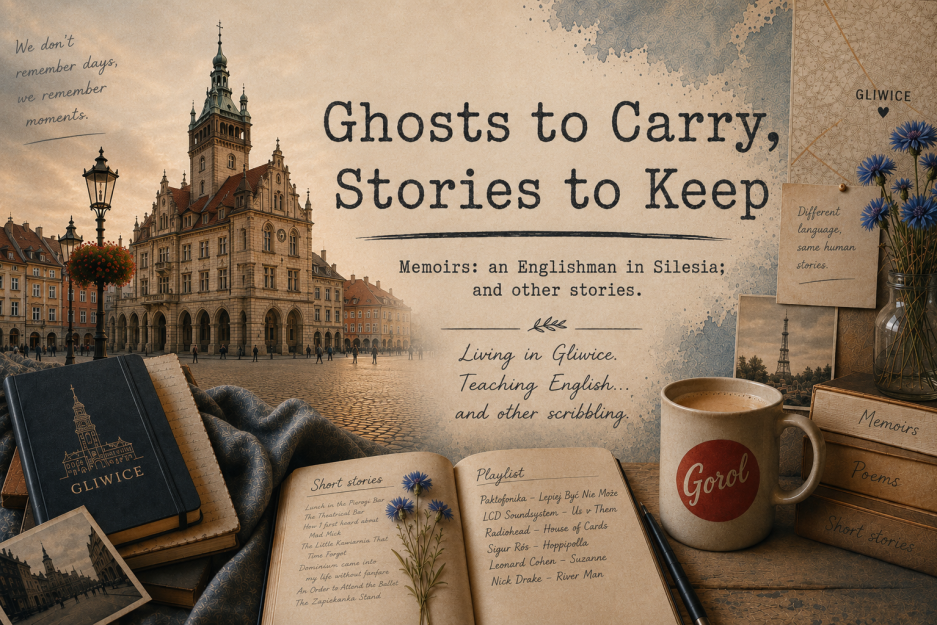
 Ghosts to Carry, Stories to Keep