The Szkloki Girls
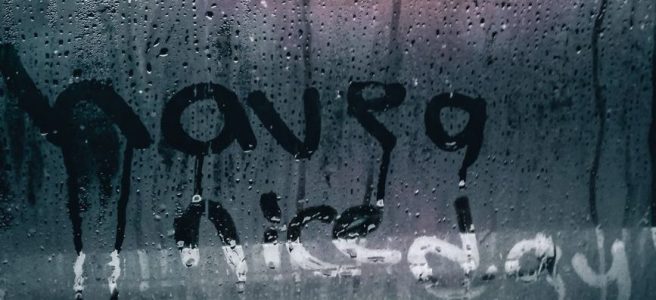
On a cold, wet March afternoon, I sat by the window of a crowded EN57 train rattling back from Katowice.
I had my headphones on, listening to a mix of Polish hip‑hop a friend had made for me, periodically wiping condensation from the glass to watch for the landmarks that meant I was nearly home.
When the train rolled into Ruda Śląska, the couple opposite me stood up, slid the door open, and left, pulling it shut with the soft thud of people who had done this a thousand times.
Seconds later, the train squealed to a stop—a long, metallic complaint shivering through the carriage. Footsteps scuffed along the corridor, a brief murmur of voices, and the door slid back open.
In they burst.
Four teenage girls, all elbows and energy, arriving with the kinetic presence that always precedes a crowd of adolescents.
Skinny jeans worn pale at the knees, trainers scuffed grey, puffer jackets uneven from winters that outnumbered their birthdays.
They carried the unmistakable scent of a wet afternoon—the damp exhale of school corridors and coats shrugged off after a long walk in the cold.
Their clothes steamed faintly in the compartment’s heat, releasing a lived-in warmth that was immediate and utterly alive.
The bench seats opposite me were empty, and they collapsed into them, squeezing together until our knees almost touched. Old Polish train compartments never allowed for polite distance.
They whispered, giggled, and nudged each other.
I wiped a patch of condensation from the window and pretended to look out—the international sign for I’m not listening, while absolutely listening.
After a few minutes under their collective gaze, I reached into my bag and pulled out a packet of Silesian Szkloki, a hard rhubarb boiled sweet.
As I unwrapped it—a tiny sound that instantly activated their radar—one nudged another. A suppressed laugh followed. A look that said: go on, ask him.
Just as I was about to pocket the bag, the smallest of them—a stick-thin girl with the clear authority of a leader—asked:
“Można… jednego…?”
Could we… have one…?
I shrugged and offered her the bag. A slight hesitation, then she reached in. I held it out to the next, then the next.
One of the girls shook her head. She looked uncomfortable, tired, and deeply invested in distancing herself from the exuberance of her friends. It wasn’t rudeness; she just seemed to want to dissociate entirely from the spectacle.
A few minutes later, the leader spoke to me again. I didn’t catch the words over the music. My fellow passengers were already glaring, clearly irritated by the girls’ unembarrassed confidence.
I removed my headphones completely and blurted out a flat, direct:
“Co?”
The compartment exploded.
Shoulders, hair, and elbows flew everywhere as the girls dissolved into performative laughter.
The tired girl didn’t flinch at my bluntness, nor did she join the mocking roar. Instead, she just shoved her friend’s shoulder, a weary gesture that said: you started this, you deal with him.
The leader asked what I was listening to. I passed the headphones across.
They leaned in, four heads forming a perfect teenage constellation, hair brushing my sleeve. Even the tired girl dropped her head into the circle, listening with the sudden seriousness of people auditioning for a role in my life.
One nodded. “Fajne…” (Cool)
They appeared totally mystified by my choice of music. More whispering followed.
Perhaps they thought I was Polish, despite an appearance that usually marked me as an outsider. They seemed slightly unsure of themselves now.
I slipped my headphones back on and sat back, suddenly aware of the space — of them, of the irritated passengers, of how the whole thing looked.
Lacking the fluency to navigate the interaction further, I did the safest thing I could think of: I took out my notebook and pretended to write. I doodled loops and nonsense lines, anything to look occupied and give the moment space to settle.
It did settle, naturally, the way teenagers sense when the fun has reached its limit. Their energy softened.
When we pulled into Zabrze, they burst out as quickly as they’d arrived, drifting off into the cold and leaving the carriage a little emptier, a little quieter, as if the air itself was settling after a brief storm.
I still don’t know why I remember them so clearly.
Maybe because they were the first Polish youngsters who treated me not as a foreigner, but simply as a person.
Perhaps because they were brave enough to ask.
Or possibly because, for a few stops, they filled that rattling old train with something bright, chaotic, human, and gone too quickly.
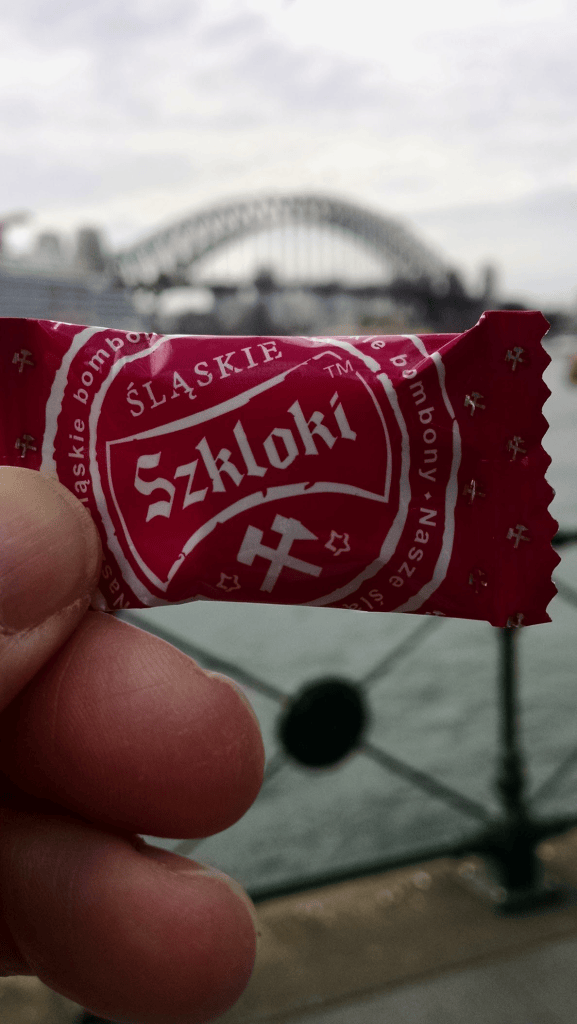
Szkloki ‘On Tour’ Sydney, Australia
The Mooning Trio
A warm Saturday morning in June.
The kind of morning where the sun settles on your face through the train window and makes everything feel softer.
I was on my way to Katowice to meet friends for lunch, half‑daydreaming, half‑watching the landscape roll by.
Somewhere between Gliwice and Zabrze, I saw them.
Three girls standing on a small hill to the right of the tracks.
Teenagers, silhouettes sharp against the sky, close enough to see clearly, but far enough to feel like part of the scenery. They stood together, perfectly still, as if waiting for something.
I thought maybe they were going to wave.
They didn’t exactly wave.
In perfect unison, they turned around, pulled down their trousers, and presented their bare bottoms to our passing train.
Just like that. No hesitation. No shame. No giggling.
A single, choreographed act of mischief.
And then they were gone — jumped out of sight beyond the hill. The train rolled on, and the moment vanished behind us.
No mirage. No hallucination. Just three mischievous girls who decided that a passing train deserved a performance.
I smiled, and shook my head. What else could I do?
Then I leaned back, let the sun warm my face, and let the absurdity of it settle into memory.
It was such a small thing, but it stayed with me — a reminder that life, especially in Silesia, had a habit of surprising me in ways I could never predict.
Years later, I discovered this surreal sight wasn’t a one-off anomaly along the railway tracks — it is a deeply rooted local custom. Showing a “goła dupa” (pronounced gowa doopa, literally “bare butt”) to passing trains, tour buses, or school trips is practically a vintage rite of passage for mischievous Polish kids! If you grew up anywhere near a railway line or spent summers in rural Poland, you either did it, watched your friends do it, or had it done to your train.
How a casual British scarf accidentally gave me a VIP pass into a football firm.
During a visit to the UK, I’d bought myself a rather fetching cotton scarf from White Stuff. It featured fine checks of red, blue, and white. Wrapped around my neck and tucked into my beloved bleu de travail French work jacket, I found it incredibly versatile.
It was a win‑win. It kept my neck warm, was light enough to wear in spring, and was easy to fold up and pop into a pocket if not needed.
Little did I understand that as I proudly wore my scarf around Gliwice, it was probably drawing a lot of attention. In fact, to some people, it marked me as someone perhaps a little crazy, fearless, or just plain stupid. Or a combination of all three.
I had been firmly warned by friends never to get drawn into any discussions involving the three main football teams of Silesia. The easy way out was always: “I don’t like football.”
Walking around the city, it was easy to see by the street graffiti tags exactly whose turf you were on.
By now, you might be thinking: What on earth has this got to do with trains?
Dear reader, for your information—if you weren’t already aware—the official team colours for Górnik Zabrze, known locally as the Trójkolorowi (The Tri-colours), just happen to be red, blue, and white.
The next story in this series will relate one of the most surreal situations I think I have found myself in.

 Ghosts to Carry, Stories to Keep