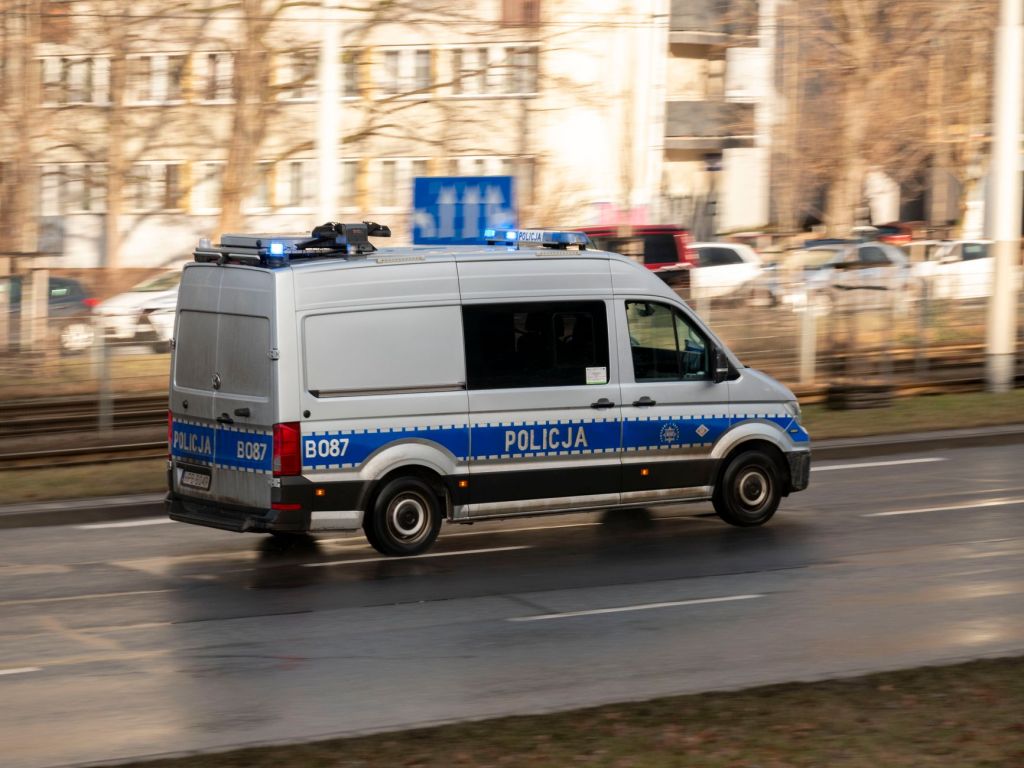
In The Middle
A quiet Sunday morning, October 2013.
A message from a friend suggesting we meet somewhere closer to Katowice, cycle around the outskirts, then grab some lunch. Perfect.
We agreed to meet on the train — she’d board at Chorzów Batory; I’d get on at Gliwice.
I cycled down to the station in the warm morning light. Beautiful, calm, almost empty. As I approached, I noticed several police cars and a couple of those personnel carriers they use for riot units.
Odd, but everything outside seemed quiet enough.
I pushed my bike into the ticket hall. Still quiet. No officers, no commotion. I bought my ticket from the kasjerka, who behaved as if it were any other Sunday.
Down in the subway, the departure board showed a train to Katowice leaving in a few minutes. Perfect timing. I’d get on, call my friend, and tell her I was on my way.
Ahead of me, an elderly lady in a heavy coat and headscarf — despite the warm weather — was making her way toward the stairs to Platform 1. She carried a bag full of leafy vegetables, the kind of bag that looks heavier than she is.
I followed her around the corner.
That’s when I saw them.
Two police officers, halfway up the stairs, in full riot gear: helmets, visors down, body armour, shields, and — as well as their sidearms — each carrying what I recognised as a tactical shotgun.
I froze.
The old lady was already remonstrating with them, clearly unhappy about being told she couldn’t pass. I had no idea what was happening.
I’d grown used to seeing Polish police with pistols, and I’d seen riot police in Kraków on Cracovia and Wisła Kraków derby day — the so‑called “Holy War” — but this was different.
This was a quiet Sunday morning in Gliwice different.
One of the officers directed a sharp command at me. I didn’t understand the exact words, but I didn’t need to — the authority was obvious, and I stayed rooted to the bottom of the steps.
Looking at the shotguns, my brain automatically assumed the worst. I figured I had stumbled into an active firearms operation, or possibly a public order exercise.
The old lady, however, was having none of it.
After a moment, one officer shrugged and waved her through. She marched past them with the determination of someone who has potatoes to peel and no time for nonsense.
I thought, Well, if babcia can go up there, so can I.
I hoisted my bike and followed. The officers didn’t stop me.
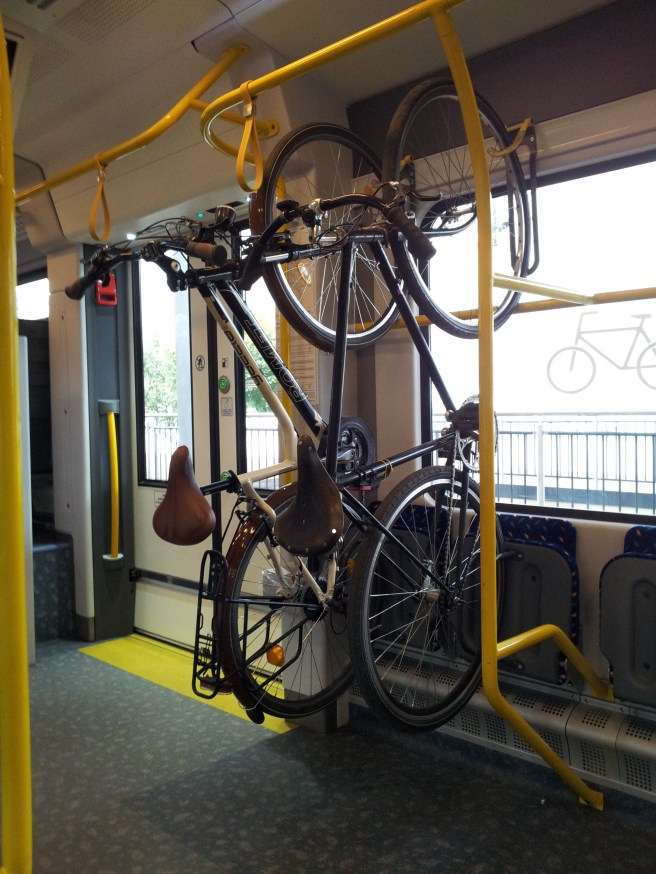
On the platform, more riot police. All in full gear. A newer train was waiting, the one I needed — I saw the huge bicycle symbol on the door; the new ELF trains made it impossible to miss — so I headed straight for it with the confidence of someone who knows exactly where they belong.
What I didn’t know was that the police had chosen the same carriage for entirely different reasons. I pressed the button, the door opened, and I rolled my bike inside.
Straight into the back of a police shield wall.
The vestibule was wide, bright, and spotlessly new, but five riot officers stood shoulder to shoulder, their interlocking shields completely blocking the aisle.
The doors hissed shut behind me, trapping me in the yellow-trimmed entryway. One officer turned her head slightly, giving me a glare that said: What on earth are you doing here?
In hindsight, I can’t blame her. I had recently treated myself to a very short, tight haircut. I was pushing a minimalist, single‑speed fixie bike hand‑built by Paweł from KAFO. And, of course, I was wearing my blue, red, and white checked scarf.
To a stressed riot squad, I didn’t look like a confused British commuter. I looked like a hardcore, aerodynamic away-team supporter who had boldly breached a police containment line on a custom bike just to join his fellow lads in the dead zone.
Every survival instinct should have told me to hit the door release button, step backward, and get off. But I hesitated. In that split second of confusion, my brain couldn’t reconcile the clean, modern bike compartment with an actual ongoing police operation.
Stranded in the open space, I pointed foolishly past the shields toward the empty bike racks as if I genuinely intended to walk through them.
To my astonishment, two officers shifted just enough for me to squeeze past with my bicycle. Their shields slammed shut behind me like a gate.
Beyond the clear plastic of the shields sat a group of about ten hungover Górnik Zabrze football hooligans, occupying the seats on both sides of the aisle, including the folding seats located beneath the bicycle racks.
They smelled strongly of stale alcohol and defeat.
Any hope of hanging my bike on the rack evaporated. I was now standing directly in the dead zone between a line of police shields and a group of rather subdued, fed‑up hooligans.
As an ex-British police officer who had served on Police Support Units, carrying shields and working as a tactical medic, my brain short-circuited.
We would never, under any circumstances, allow a member of the public to breach a containment line, let alone wander into a hostile sector with a cobbled-together single-speed bike.
Yet here I was, trapped in the middle of a tactical failure.
Without looking directly at them, I just had this overwhelming feeling of being stared at. The lads stared at me. Behind my back the police were probably staring at me. I stared at the floor, at my bike, out of the window, trying to look as humanly unfazed as possible.
Then a bizarre, heavy silence settled over the compartment. It was the kind of absolute quiet that happens when your body tunes into a threat and filters out the world.
Somewhere in the front of the compartment, but out of my view, the muffled, low murmurs of someone arguing with the officers drifted through, underscored by the faint, rhythmic ticking of the train’s electric generator.
But inside the dead zone, nobody moved. I gripped my handlebars, trying to project the calm, casual aura of a man who always travels inside a police containment unit on a Sunday morning.
After a few minutes, the conductor arrived from the opposite side, flanked by two more officers…
He looked exasperated and exhausted. From the conversation — what little I understood — it was clear the hooligans had no tickets and were refusing to pay. Finding themselves on Piast Gliwice turf might have made them think twice about getting off the train; I will never know, but after five or ten minutes, some left quietly.
Four or five remained, stubborn and defiant.
Then my phone rang. I instinctively checked it and saw my friend calling.
I took the call and whispered in English: “Not now. Sorry. Situation here. Will explain later.”
Every head turned. The hooligans stared. The conductor stared. The police stared.
I could almost see the thought forming: Ah. He’s English. That explains everything.
Eventually, the conductor told the remaining hooligans the train wasn’t going anywhere until they got off. After a minute or so, one of them muttered something, stood up, and signalled to the others. They shuffled out, cursing. With the police trailing closely behind them to ensure they cleared the station territory. The tense, bubble had finally popped.
As the carriage emptied, I finally did what I had intended to do the entire time: I casually lifted my bike and hung it securely on the rack. The conductor, looking completely exhausted and visibly relieved to have survived the stand-off, walked back down the aisle. I reached into my pocket, pulled out the little paper slip I had bought from the ticket hall, and politely presented it to him.
In a carriage that had just been locked down by a shield cordon to quarantine a group of hostile, fare-evading away-team ultras, I was probably the only person on that entire half of the train who had actually bought a ticket. He checked it and hurriedly scribbled something across it with a look of profound, bewildered gratitude. Looking at that very ticket today, that little pen stroke remains the ultimate souvenir — an official receipt certifying the time I accidentally broke through a police containment line just to be a law-abiding commuter.
I called my friend back and explained the delay.
Her response: “Only you, Gary. This could only happen to you.”
An Epiphany — Maybe it Was The Scarf?
It wasn’t until a few weeks later, around two in the morning inside my local bar called Koneser, that the missing piece finally clicked into place — or at last I think so.
Earlier that evening I’d been in Katowice with the friend who had laughed her way through the bicycle fiasco a few weeks earlier. We’d had a couple of beers in a new bar, and eaten some great food, it had been a fantastic evening. We literally had to sprint to the station to catch the last rain back to Gliwice. Only to find a delay and the train we’d hoped to take cancelled. After a short while we discovered another train had been laid on. Instead of the usual route through Ruda Śląska, our train was going to be diverted via Bytom. My friend ended up ringing her brother for a lift because she could no longer get off where she’d planned. None of us seemed particularly bothered. As we’d met a couple, a man and a woman waiting at the station and who sat with us on the train, we’d got on really well. The couple turned out to be lecturers at the Uni Tech in Gliwice — fluent English speakers and absolutely hilarious. My friend confirmed her brother was waiting at Bytom, so when the train pulled in, and she bid us a farewell and disappeared off into the station.
At some point before arriving in Gliwice, my new friends and I agreed to grab a quick night cap at Koneser — I was delighted that they too had been regulars since it’s very recent opening, and shared the same passion for Czech or Slovakian beer as myself. I’d taken my White Stuff scarf out of my coat pocket, and wrapped it around my neck — probably as we were leaving the train station. The brisk walk in the cold night air had woken me right up. I didn’t usually stay out that late, but I was clear-headed and refreshed. The night wasn’t over yet.
The bar was surprisingly busy for the time of the morning. Unlike traditional Polish pubs where everyone kept to their separate tables, Koneser had a handful of bar stools right at the counter, or you just stood there, I loved this bar and felt so much at home. We initially all stood at the bar were having a brilliant time. One minute, I was completely absorbed in the vibe, laughing at a story they were telling. Then, the atmosphere shifted. I am normally excellent at perception, peripheral vision, and general awareness, but I never even saw these two men approach. Maybe they had been in the pub all along, but to me, they appeared as if by magic. Suddenly, they were just there.
They zeroed right in on my scarf. Their posture was a slow-burning, territorial stance — that chest-puffing vibe of, “How dare you wear those colours on our patch?”
They were implying I was wearing the colours of Górnik Zabrze, Piast Gliwice’s bitter rivals.
Moj szalik? (My scarf?)
Barwy? (Team colours?)
I was more than surprised. I can distinctly recall saying with astonishment, “but… it’s not a football scarf, it’s from White Stuff,” as if an explanation about which store I’d bought it would have made it any clearer.
Before the tension could build, my new friends and one of Koneser’s co-owners stepped in with good-humoured firmness. They made it clear to the men that it wasn’t a football scarf, smoothing the situation over in minutes. The strangers slipped away, and my new friends completely dismissed the encounter, offering simple, grounded advice:
“Just be careful where you wear it, Gary.”
I tucked it away for a long time after that.
A week or so later the penny dropped.
That confrontation in the bar provides the missing key that completes the entire narrative arc. It’s remarkable how a moment that felt so bewildering at the time — standing in a familiar local haunt facing two potentially hostile Piast fans — turns out to be the exact epiphany that makes the train station absurdity make sense.
I had worn the same scarf that day.
When the officers at Gliwice station saw someone with a close-cropped haircut, pushing a single-speed bike, and wearing a scarf in the bold red, blue, and white Trójkolorowi colours, it could have been they didn’t see an English teacher out for a Sunday morning ride. Perhaps it’s that they saw a Górnik Zabrze supporter who belonged inside the containment zone with the rest of the group. The police didn’t let me pass out of negligence — they let me through because, in their eyes, they were simply keeping all the fans bundled together in one place:
It also might explain why the hooligans themselves didn’t immediately turn on me in the vestibule despite the police presence. Surrounded by riot shields, they likely assumed this guy nonchalantly rolling a custom bike into a police blockade was either extraordinarily brave or a local character from their own firm. Seeing me answer my mobile phone, and hearing me whispering to my friend in English, must have stunned everyone in that compartment.
Looking at it now, resting on the desk in 2026, the fabric is faded, but the memory is sharp. It no longer belongs to police shield walls or late-night bar posturing. It belongs to the warmth of friends who looked out for me when I didn’t know the unwritten rules of their land.
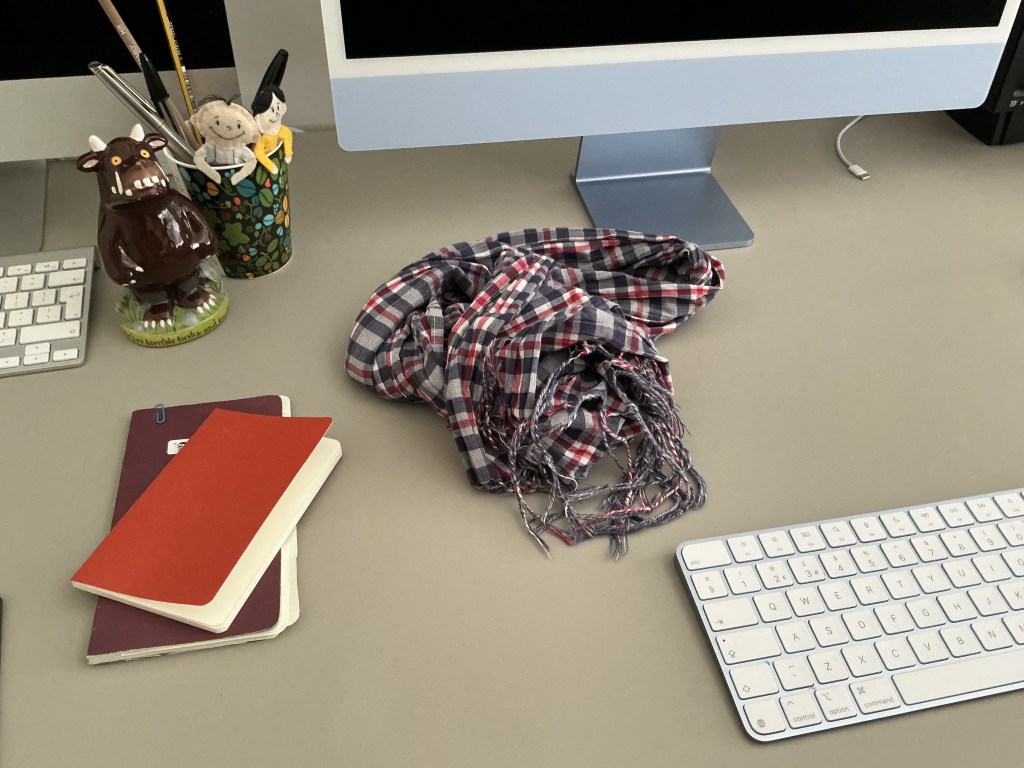
The scarf, a little more faded, in red, blue and white, much loved — still being worn in 2026, without fear or concern
Post Script
To a reader unfamiliar with the intensity of Polish football subculture, a scarf is just a cozy winter accessory. But in the Upper Silesian industrial basin, it functions as a tribal passport. Fans call them barwy — the club colours—and they are treated with the gravity of a military uniform or a gang flag. To a local, there is no such thing as an “accidental” colour combination. You are either marking your territory or actively seeking confrontation. My simple cotton scarf featured a prominent blend of white, blue, and red — the exact, unmistakable barwy of Górnik Zabrze, the bitter, historical arch-rivals of Piast Gliwice, the very town I was living in.

 Ghosts to Carry, Stories to Keep
Leave a comment