
During my time living across three different flats in the area, my daily commute into the centre of Gliwice became a familiar and well-trodden path. I would head down Kozielska and cut onto Jana Siemińskiego, a short street that soon became the anchor of my daily routine. I’d discovered a kawiarnia — with a difference — called KAFO.
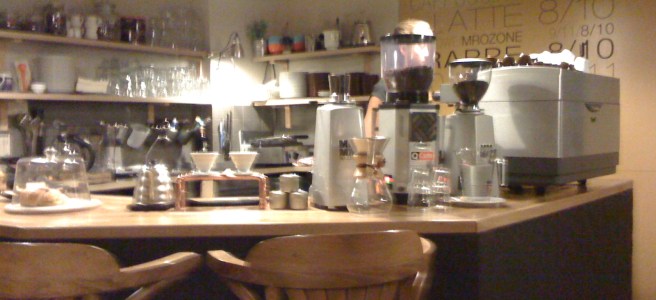
The interior of KAFO was defined by a simple, highly effective functionalism. The moment you crossed the threshold, you were just a few steps away from the masterfully proportioned counter, loaded with a tempting spread of morning treats that inevitably sold out too quickly. Beyond the counter lay the engine room, where sleek espresso machines and heavy grinders hummed and clicked, providing a rhythmic mechanical bass line to the room.
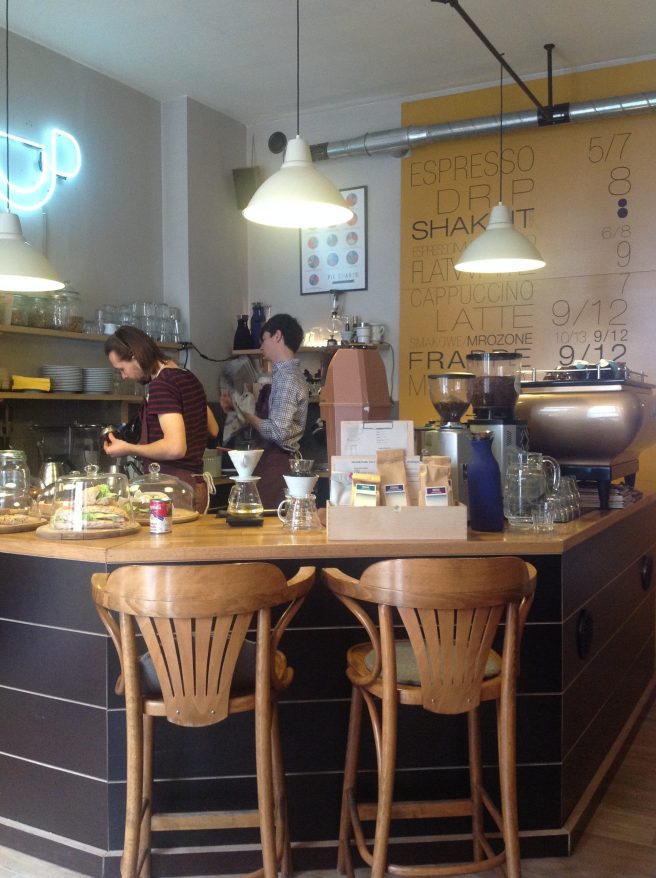
I seem to think that the Campbell’s soup can on the counter was an upcycled tips container
The ritual of the place was effortless. You walked in, were instantly seen, warmly greeted, and had your order taken. From there, you could either perch on one of the two bar stools or plonk down onto the long bench running down the front half of the room. I loved the simplicity of the small tables in this area. It was the definitive place to sit. The large front windows let natural daylight stream across the wooden surfaces, making it the perfect vantage point to watch the world pass by outside on Siemińskiego. It was a wonderful spot to listen to the cadence of the local language, a makeshift classroom where I tried my best to absorb and learn Polish.
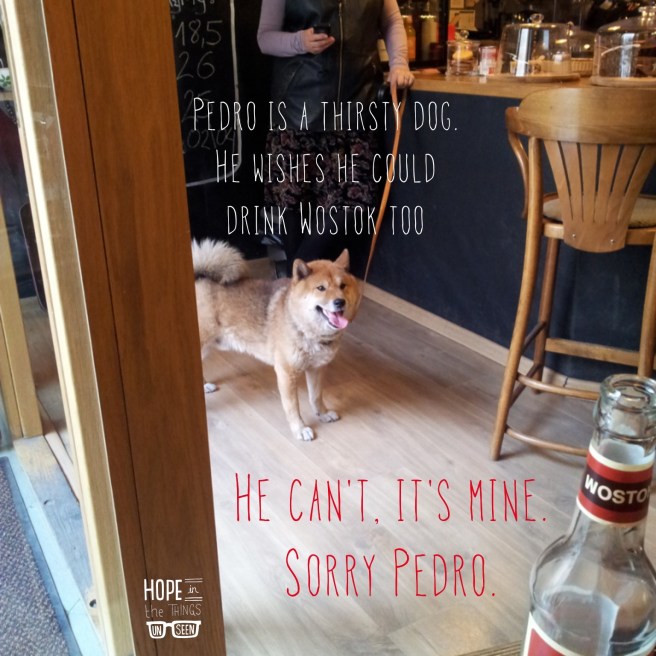
Pedro the Shiba Inu, as viewed from the best seat in the kawiarnia. I liked Wostok, Not too sure about Pedro — but you never know..
The back room offered a completely different energy, a quieter enclave split from the front, furnished with low, comfortable sofas, tables, and chairs that were perfect for mornings of lesson planning, long afternoons spent chilling out, meeting friends, or simply getting lost in a book.
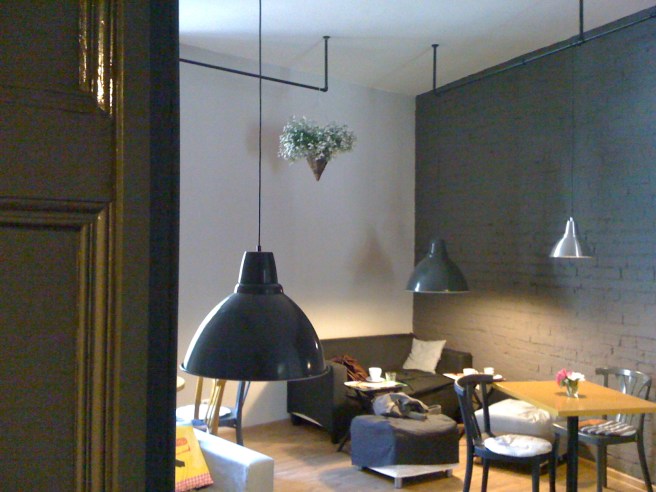
The layout, colours and design changed frequently, this shot of back room was taken in June 2011
It was back there that I set up camp, desperately trying not to look like a stereotypical hipster while failing spectacularly. Spread across the table would be the ultimate 2011 tech layout: an iPhone, a MacBook Pro, and an iPad, all meticulously integrated and humming away. I sat there in the corner as if the room were my own personal, rent-free executive office space. I thought I looked like a serious educator at work, but to anyone else, I must have looked like the absolute poster child for the new café counterculture.
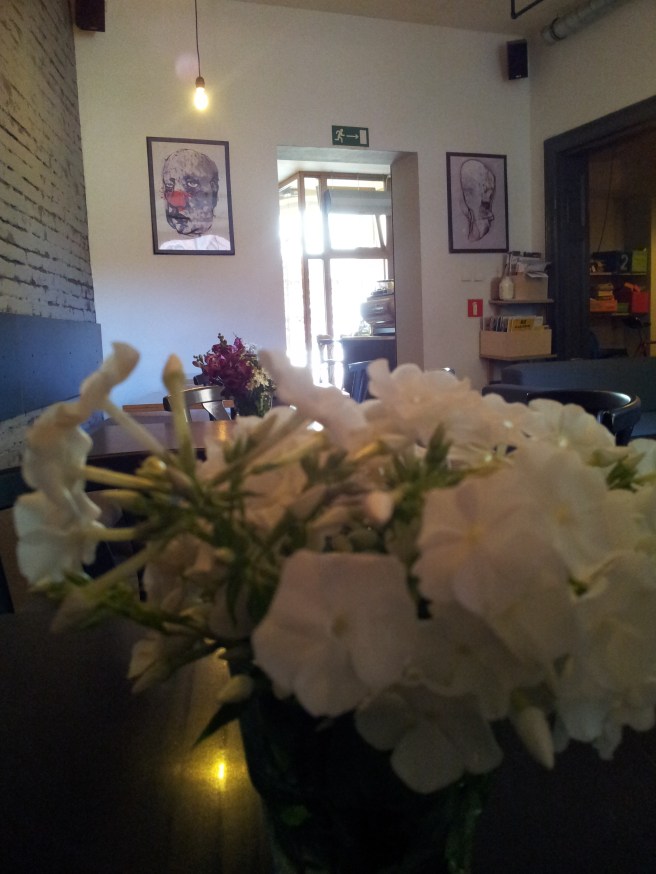
Looking out from a table in the back area. I think the record player may have been removed by the time I snapped this.
Before finding KAFO, my concept of coffee had been entirely utilitarian: a standard Americano splashed with milk, or a latte at a push. I had never even considered that an entire, vibrant world of specialty coffee existed. It was while perched on that front bench that I saw a pour-over being made for the very first time. I remember watching the barista and thinking, What on earth is going on here?
The whole process looked less like a morning routine and more like a precise chemistry experiment. There were digital scales measuring to the gram, tiny stopwatches ticking away, and a glass Chemex sitting on the counter that looked far more like an elegant wine decanter or a laboratory flask than a coffee pot. They spoke of equipment with a reverent, technical vocabulary, names like Hario and Kalita, treating the bean not as a commodity to be scooped, but as a craft to be engineered. Intrigued, I took my first sip of a filter coffee, and my perception shifted instantly. I fell completely in love with how clean, vibrant, and wildly different coffee could taste when stripped of heavy milk and bitterness. It was an awakening.
That fascination didn’t stay behind the counter at KAFO. The crew’s passion was contagious, and it rewired my own morning rituals. Before long, I bought my own gooseneck Hario kettle and a complete V60 ceramic setup. I thought it was a beautiful set, though it required the patience of a saint to consistently dial in the right taste for myself.
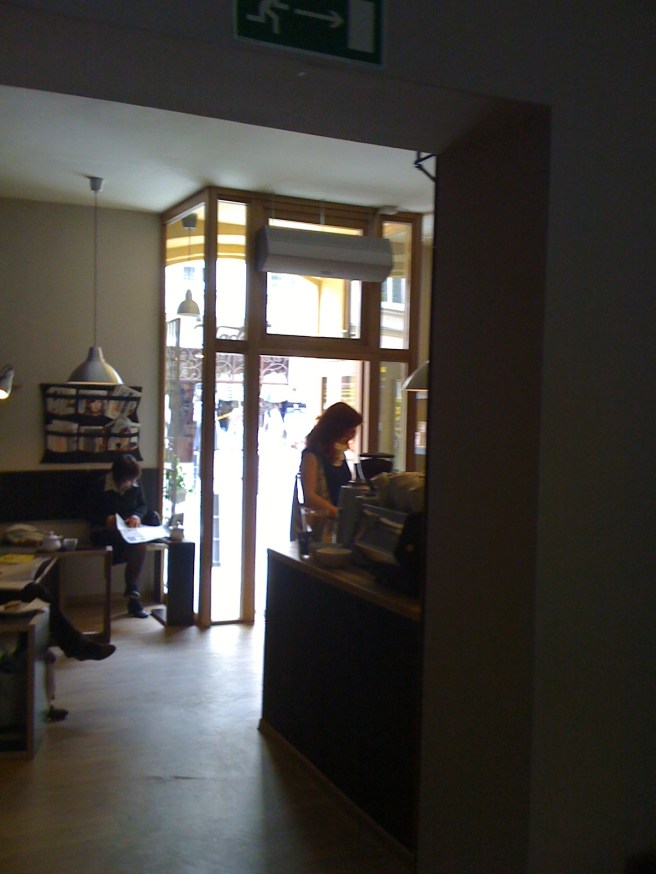
The undisputed best seat in the house. ☕️📖 Tucked in the corner by the door, under the magazine rack. If you know, you know.
Yet, right nearby on a shelf sat a small stack of cardboard boxes holding a coffee-making gadget for sale. I had stared at the packaging for weeks, utterly baffled by the picture on the box. AeroPress. What a name! Hario, Chemex, and Kalita sounded like they were born to make great coffee. AeroPress sounded like something you would use to fire up a jet engine. How on earth could this cheap-looking plastic tube produce anything drinkable?
During a quiet spell, that morning gap — a pause in the day when everyone else seemed to have finally got to where they needed to be — I noticed Paweł busying himself behind the bar. I picked up the box.
“Paweł… is this thing really any good?” I asked. “It looks so ugly compared to the elegant glass carafes.”
Paweł smiled broadly. “I can make you one right now, Gary.”
“Yes, please.”
I watched, completely fascinated, as the maestro produced the bizarre apparatus. In all honesty, it looked less like a high-end coffee brewer and more like a medical syringe, or something a vet might use to medicate a rather large animal. Paweł placed a small dish on a blocky digital scale, weighing out a precise measure grams of single-origin beans before grinding them to a precise, sandy texture. He didn’t just boil a kettle; he submerged a digital thermometer into the water, waiting with absolute patience until the temperature dropped to an exact 89°C. (Really? I thought. Note to self: buy a thermometer.)
He explained that while there were multiple ways to brew it, he was going to show me the inverted method. To my surprise, he assembled the giant syringe completely upside down and dumped the fragrant grounds into the open chamber. He added that he preferred a steel filter over the standard paper ones supplied. (Second note to self: buy a steel filter.) Clicking a timer, he poured just enough water to wet the grounds. I watched intently as the coffee bubbled, bloomed, and expanded like a living thing. After filling the chamber to the brim, he took a small bamboo paddle and stirred the slurry exactly three times with the quiet, focused grace of a chemist.
“Why the bamboo?” I whispered. “Does it change the science?”
Paweł’s smile widened. “No. But it is much nicer than the plastic paddle that comes in the box.”
He screwed on the cap, flipped the entire apparatus onto a glass server, and used his steady body weight to press down with an unwavering, deliberate slowness. The mesmerizing process ended the exact second a soft, collective hiss of air escaped the rubber gasket. He poured the amber liquid into a small ceramic cup and handed it over with a knowing look. I took a sip, bracing myself for the bitter, over-extracted bite I still subconsciously associated with drip coffee. Instead, I tasted a remarkably clean, sweet, and vibrant brew with absolutely zero bitterness.
I was so profoundly blown away that I insisted on buying one right then and there, before I had even finished drinking the cup. Paweł reached onto the shelf, handed me the box, and charged me exactly what it had cost him to buy it. He had no real desire to make a profit on the gear; he just wanted another person in the world to experience the joy of a proper brew. It was the mark of a true teacher.
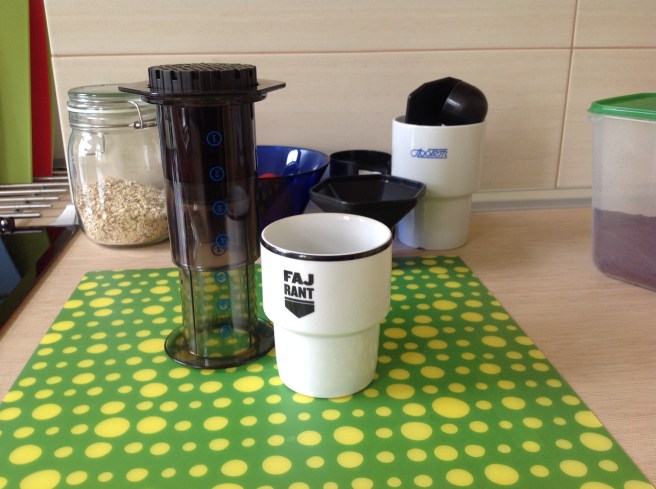
AeroPress No1: An original Społem „kubek barowy” (Bar Mug) in the background, sadly missing in action.

 Ghosts to Carry, Stories to Keep